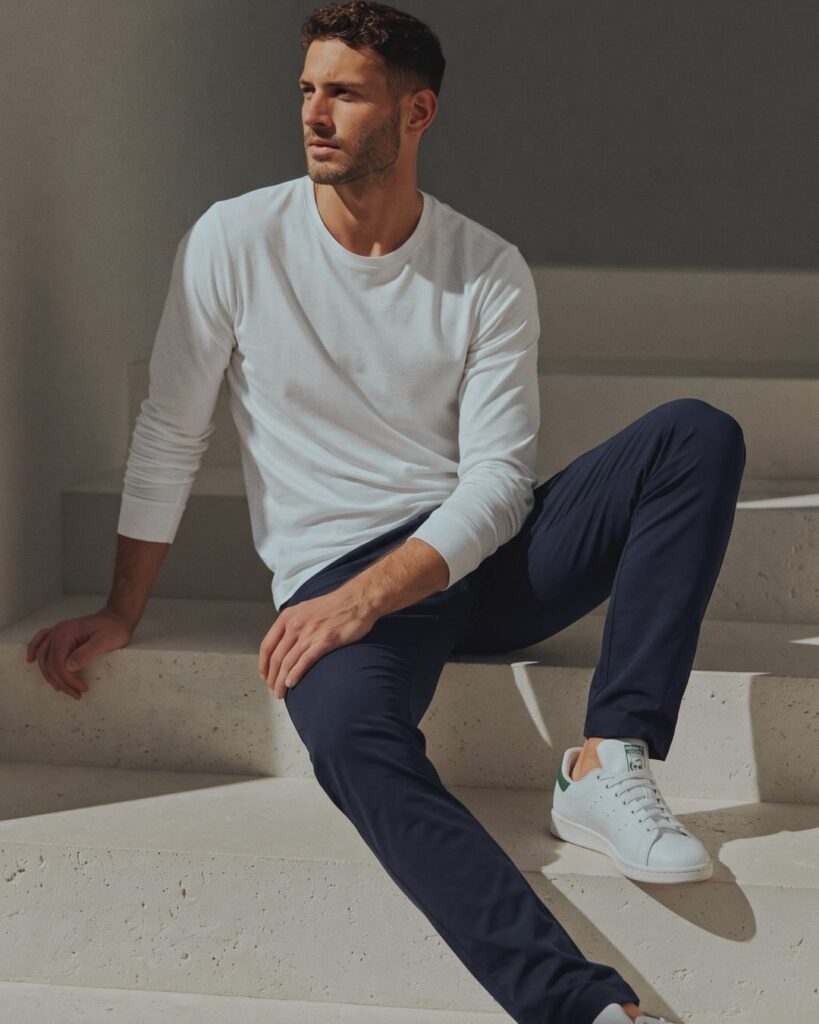
Which of these looks fits you comes down to how strict your office is, so the Smart Casual for Work and Weekend Smart Casual entries are the place to start.
The ideas run from a zip-up merino sweater or a shirt jacket standing in for a blazer to a tailored overcoat, with white sneakers at the relaxed end and leather loafers or derbies at the stricter one.
A new piece earns its place only if it pairs with at least 3 things already hanging in your closet.
1. Slim-fit Chinos
Denim gets a pass in plenty of offices and restaurants, but not all of them.
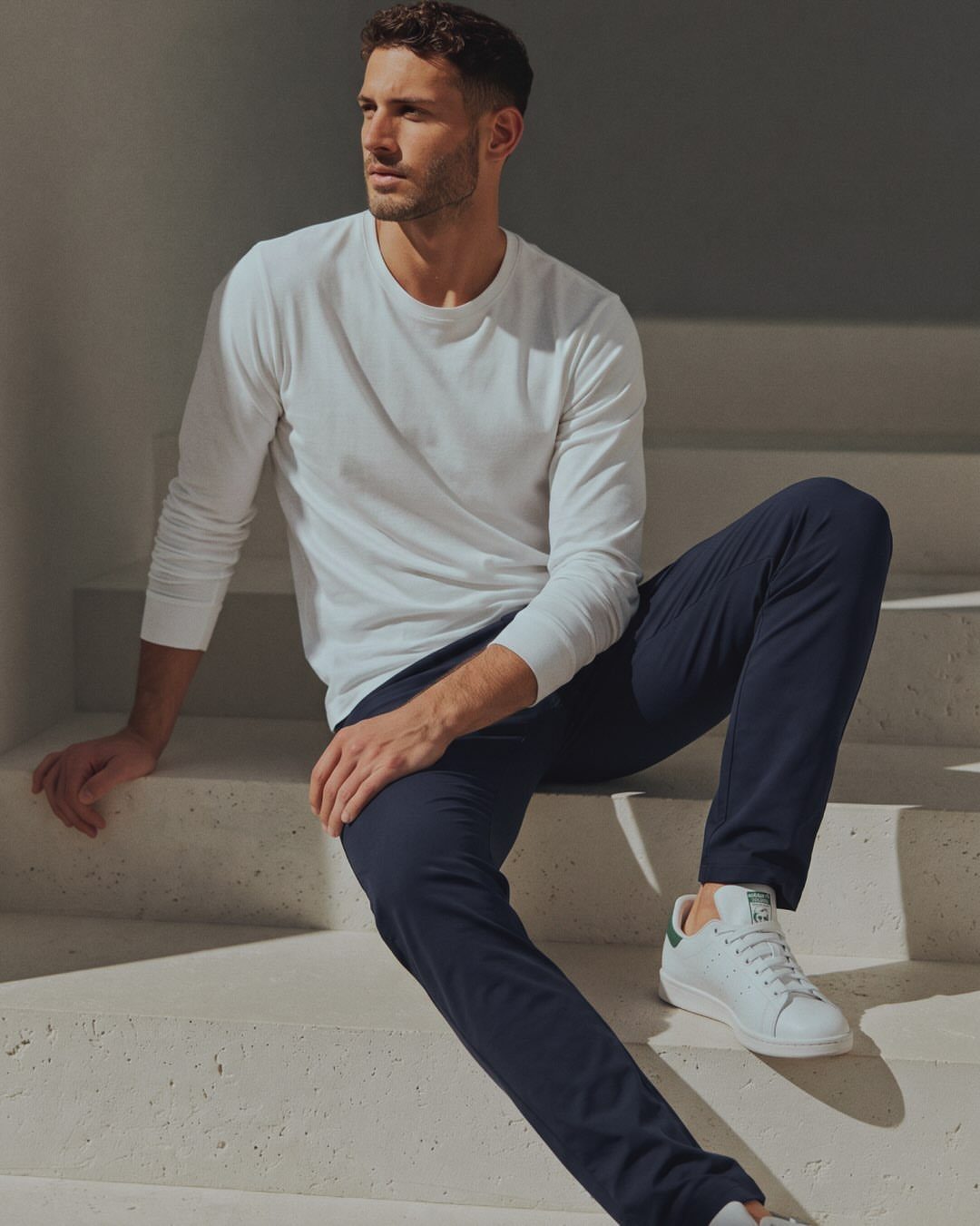
Chinos settle the question. Navy is the easiest color to wear, and a slim cut keeps the leg clean above the shoe.
White sneakers keep slim chinos relaxed, while a white shirt on top keeps the outfit sharp. If you only own one pair, make it navy.
2. Blazers
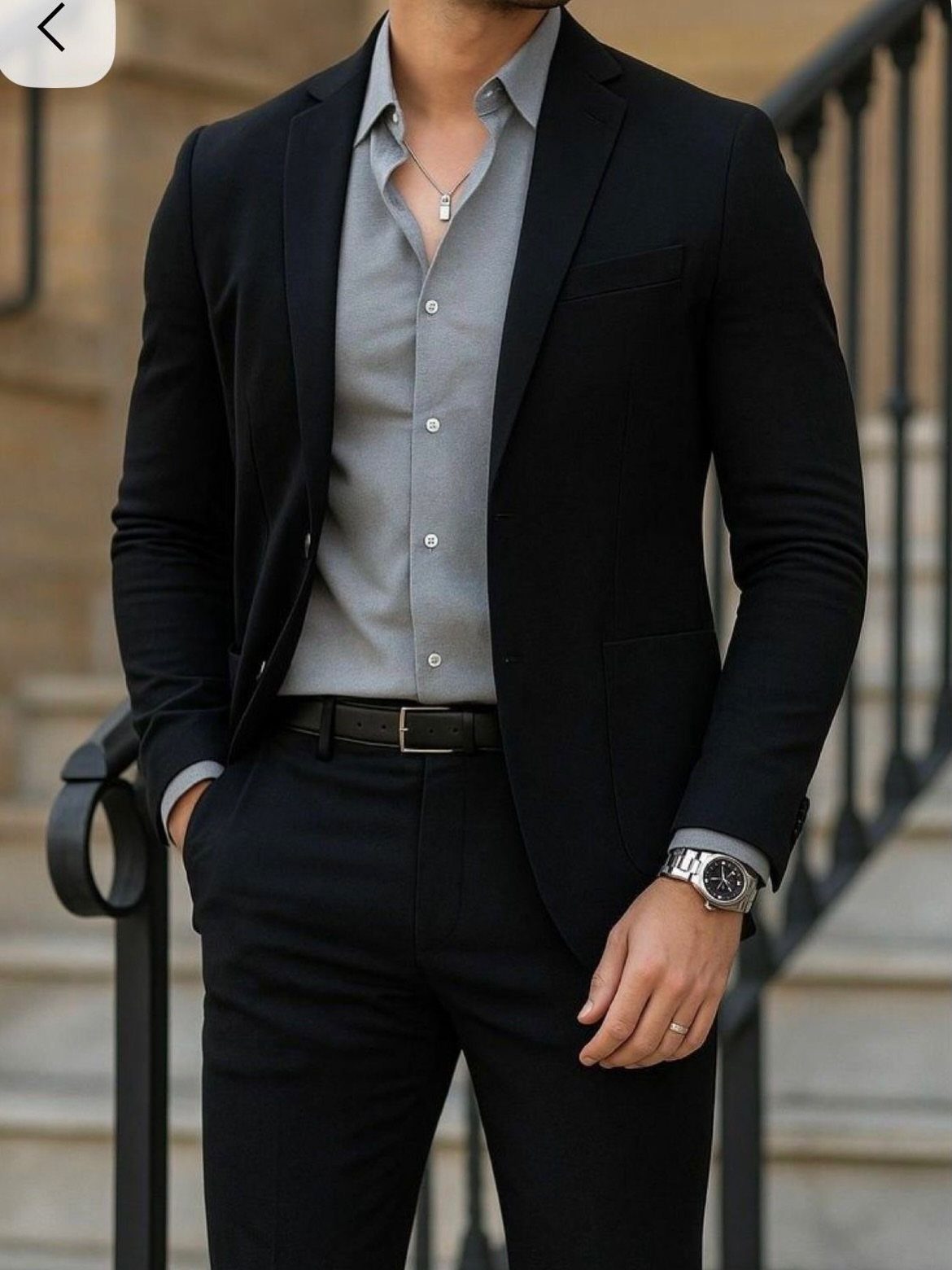
A black blazer works as the layer you reach for when a plain shirt needs more structure. Over a grey shirt and black trousers, it gives you a tonal outfit that looks deliberate with almost no effort.
I’d keep the fit close through the shoulders and body, since a boxy blazer undoes the whole look. Leave the shirt open at the collar for a relaxed finish, or button it up for something sharper.
3. Smart Casual Look
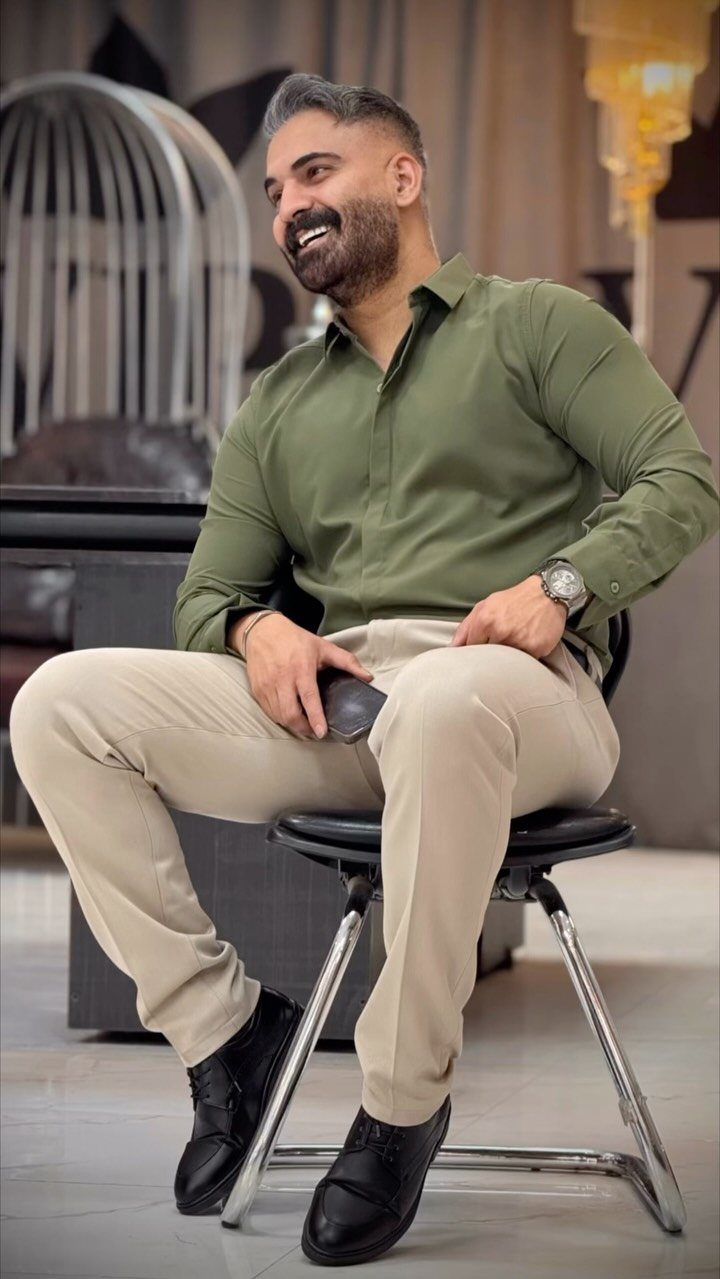
Olive and beige sit close enough on the color wheel that they never fight, and that is why an olive button-up over beige chinos reads as finished without trying hard.
Black dress shoes push it toward formal; brown would soften it.
Smart casual is a mix of dressy and relaxed pieces, so you can swap one item at a time. Change the shirt color first, since it changes the mood the most.
4. Fit and Proportions
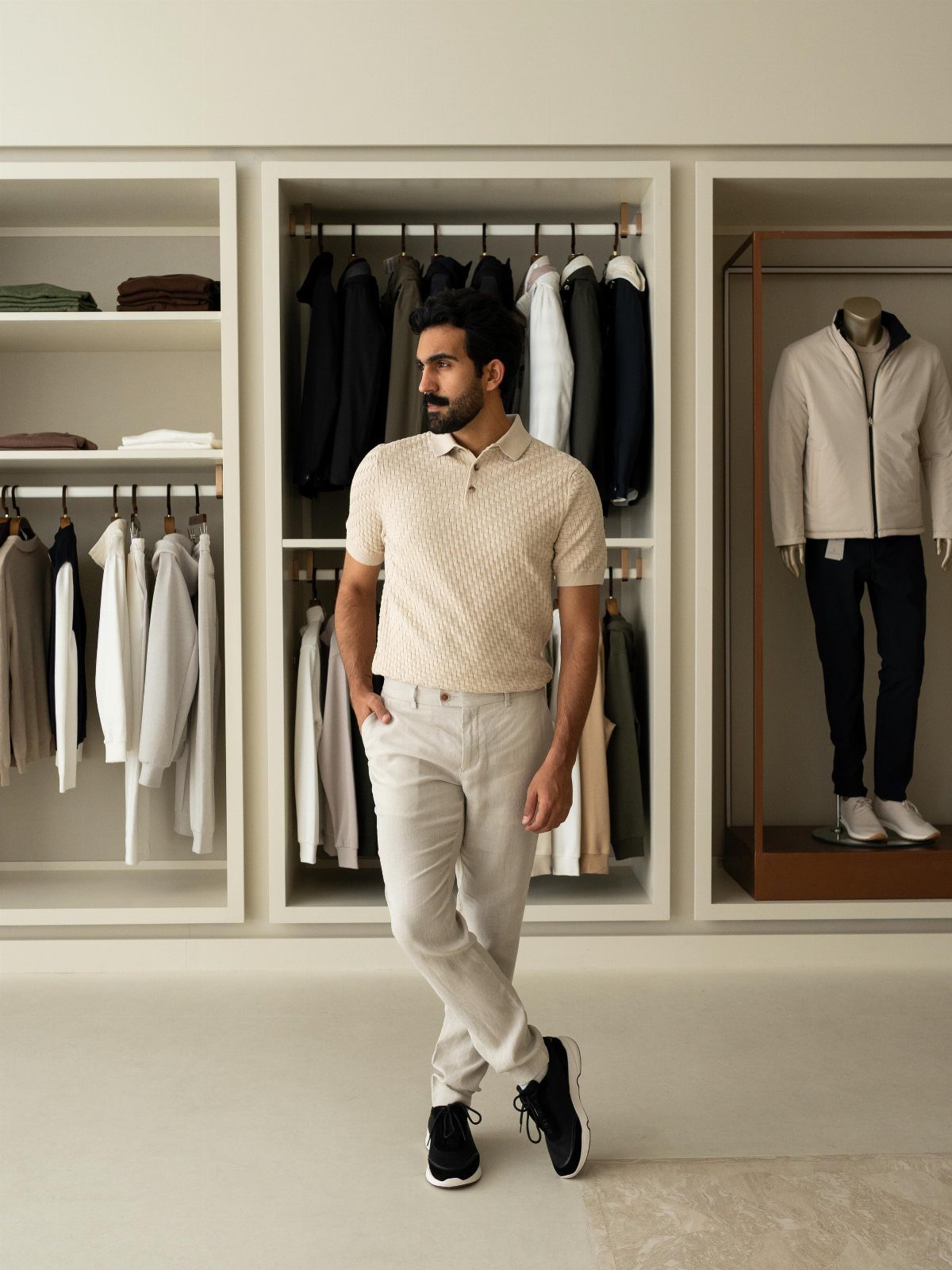
Fit matters more than price. A cream knit polo that skims the chest and tailored off-white trousers that end cleanly at the shoe will look better than expensive pieces hanging loose.
Check 3 spots: shoulder seams should sit at the edge of your shoulder, sleeves should stop at the wrist, and trousers should break lightly or not at all.
A tailor can fix hems and waists cheaply. Shoulders are much harder to alter, so buy those to fit.
5. Smart Casual for Work
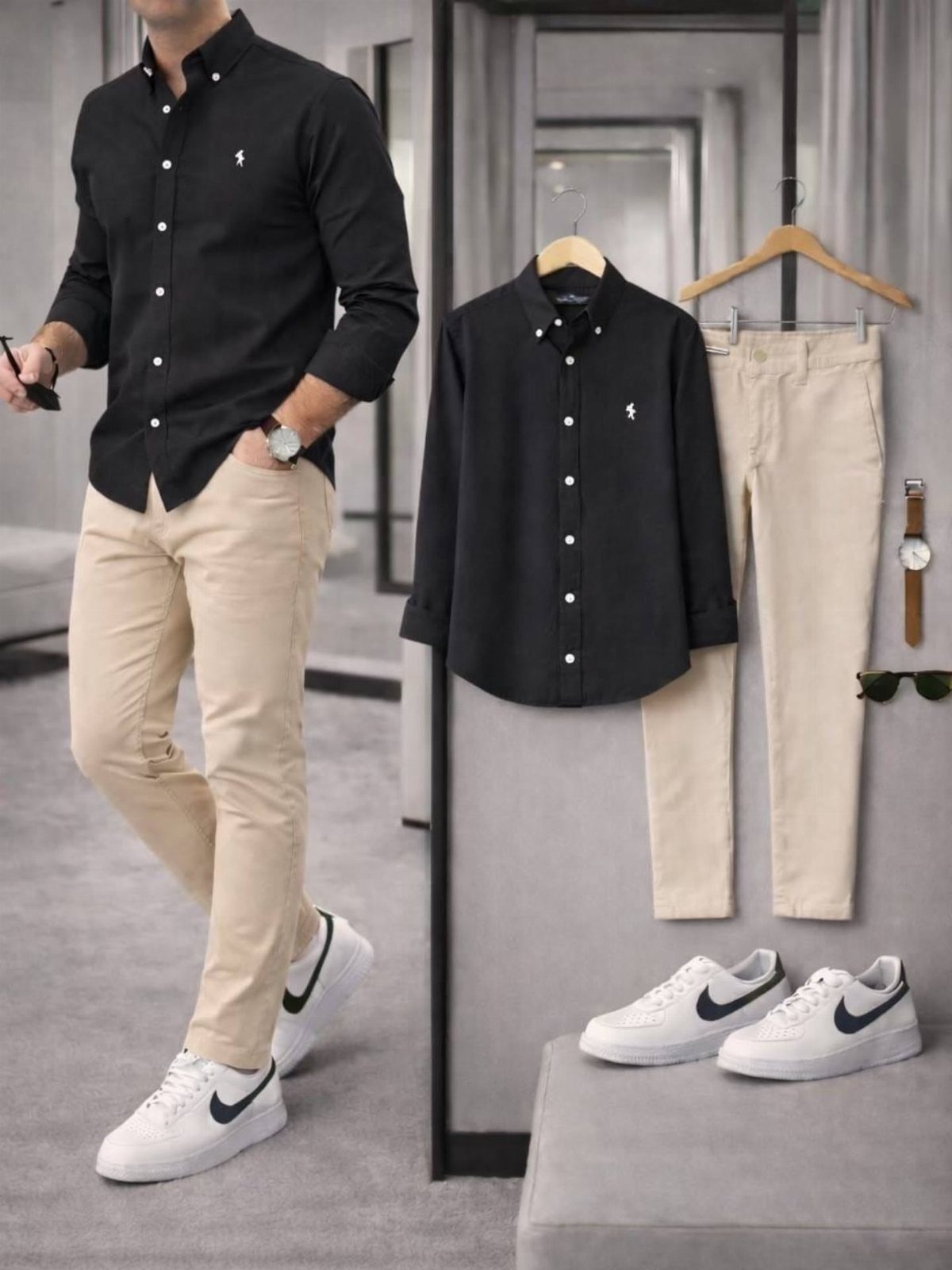
A black button-down with khaki chinos is about as easy as office dressing gets: two pieces, one strong contrast, no tie. A crisp, tucked-in shirt and pressed chinos are what make this read as work and not weekend.
White sneakers suit offices with a relaxed dress code. If your office leans stricter, I’d swap the sneakers for leather loafers or derbies, and everything else can stay exactly as it is.
Because business casual doesn’t have to be boring. You should still look like you: Your job is just to find which pieces land on the bullseye in the Venn diagram featuring your job and your sartorial vibe.
— GQ
6. Weekend Smart Casual
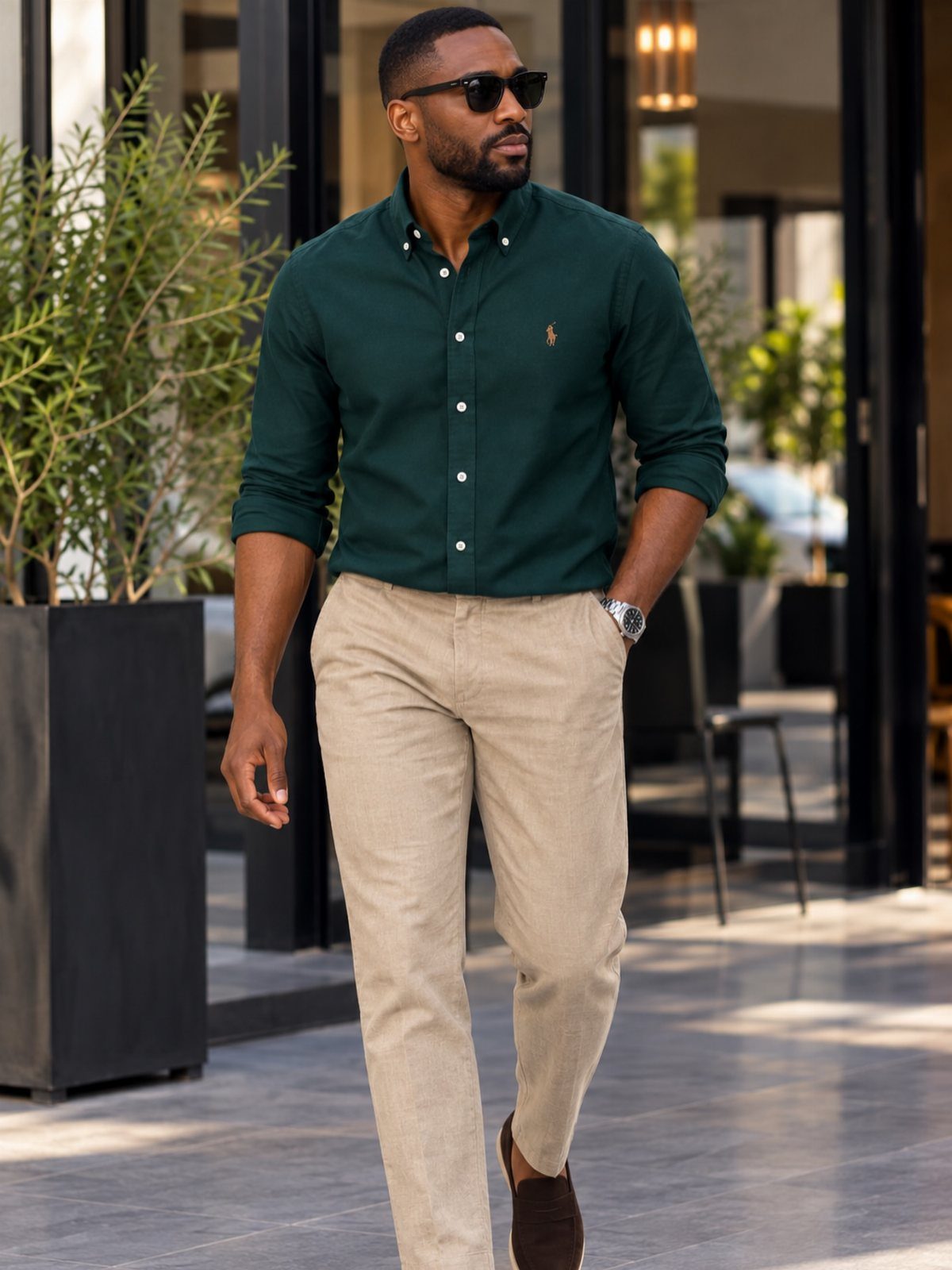
Sleeves rolled, a dark green shirt over beige trousers, and loafers: that formula carries you from brunch to an afternoon walk without a change. Brown loafers warm up green nicely, and the pairing works with olive, forest and sage alike.
Roll the sleeves to just below the elbow so they stay put and look neat.
Sunglasses finish it. For hotter days, go sockless in loafers, which is a choice I’d make myself.
7. Robust Merino Wool Zip-Up Sweater
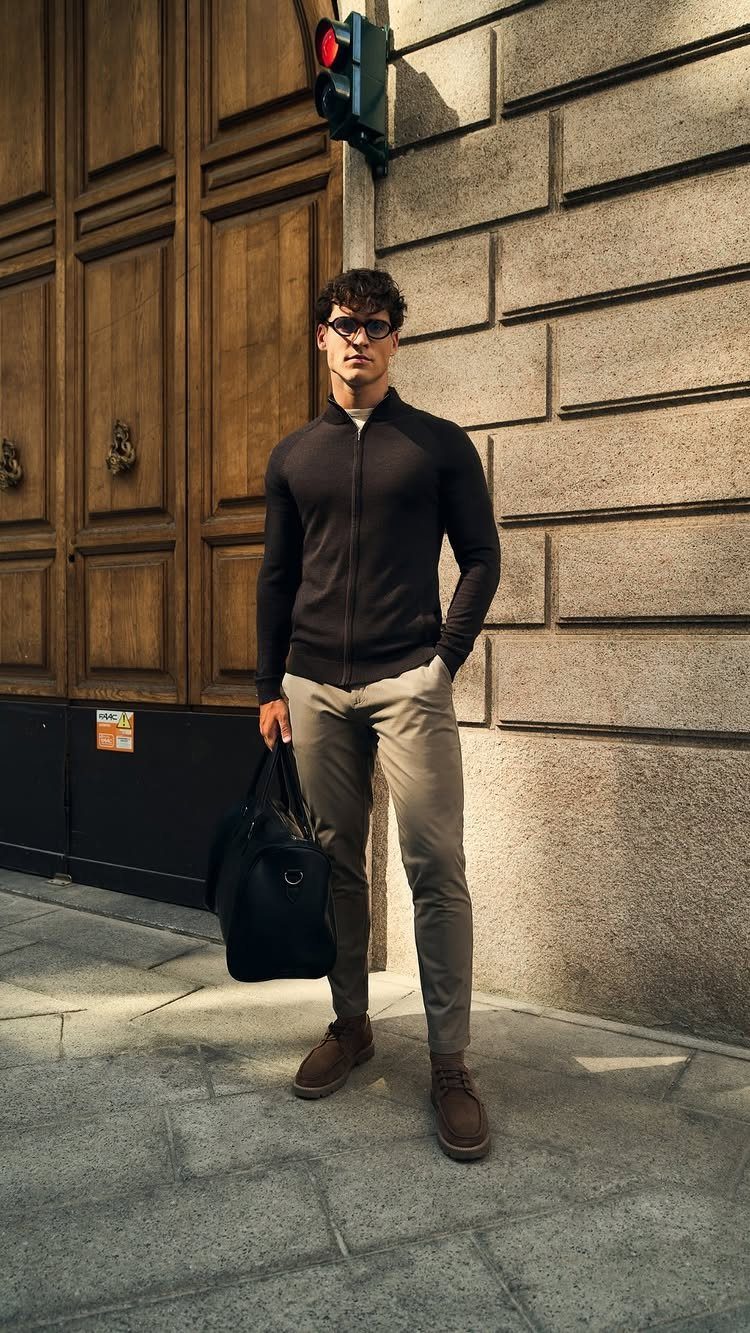
A zip-up merino sweater does the job of a blazer for the man who would rather not wear one. Black over grey chinos is quiet and easy, and brown suede shoes warm it up without adding a single loud piece.
Pick a slim knit that sits close at the chest, so the zipper lies flat. Wear it over a plain tee or an open-collar shirt.
8. Do: Get Your Coat
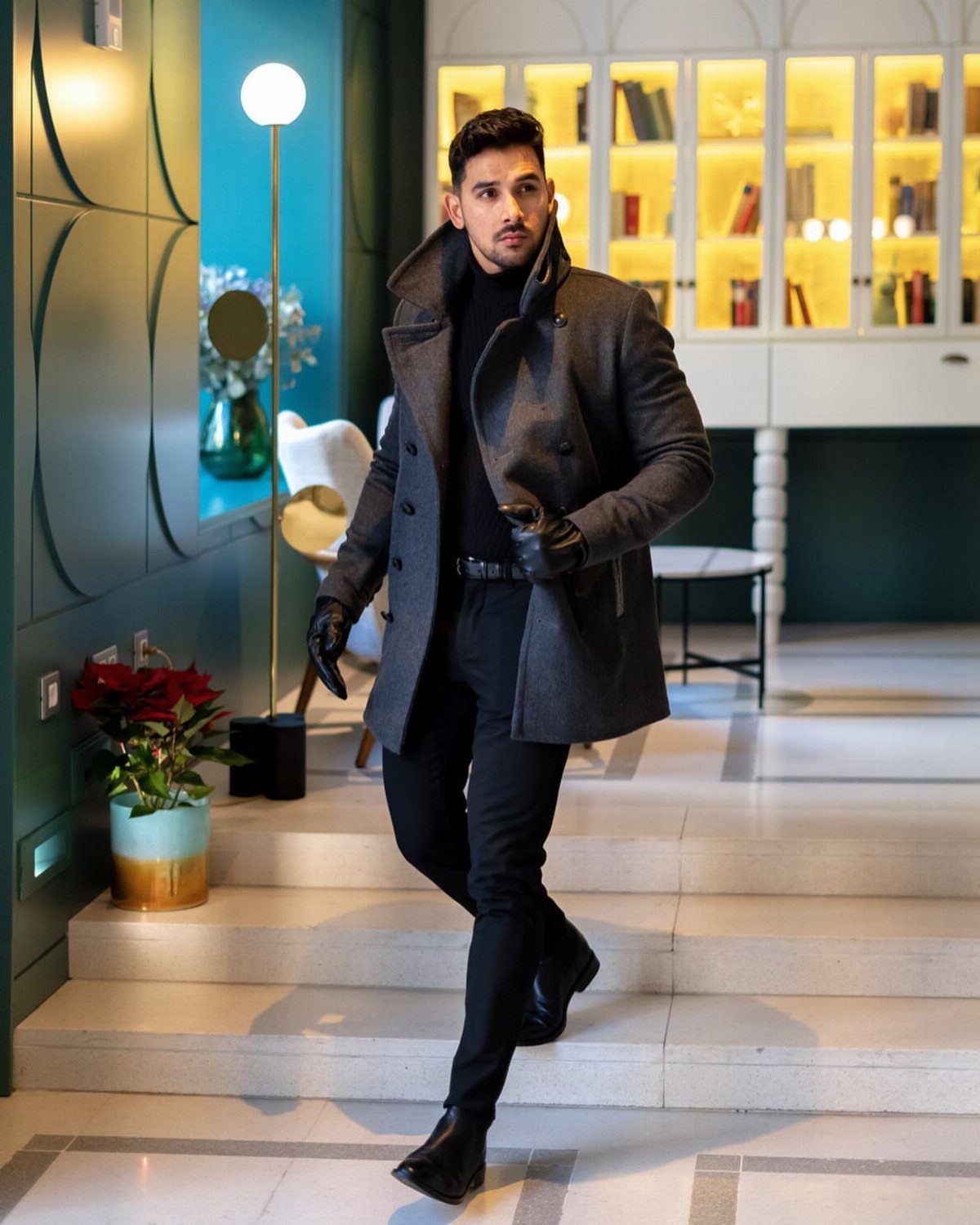
A neatly cut overcoat can stand in for a blazer at informal smart casual events, and it does the same sharpening work.
Double-breasted is the more formal cut, so I’d keep everything under it plain.
Leather gloves and boots finish it. Check that the shoulders fit well, since a coat hides a lot but not a sloppy shoulder.
9. Minimalist Sneakers
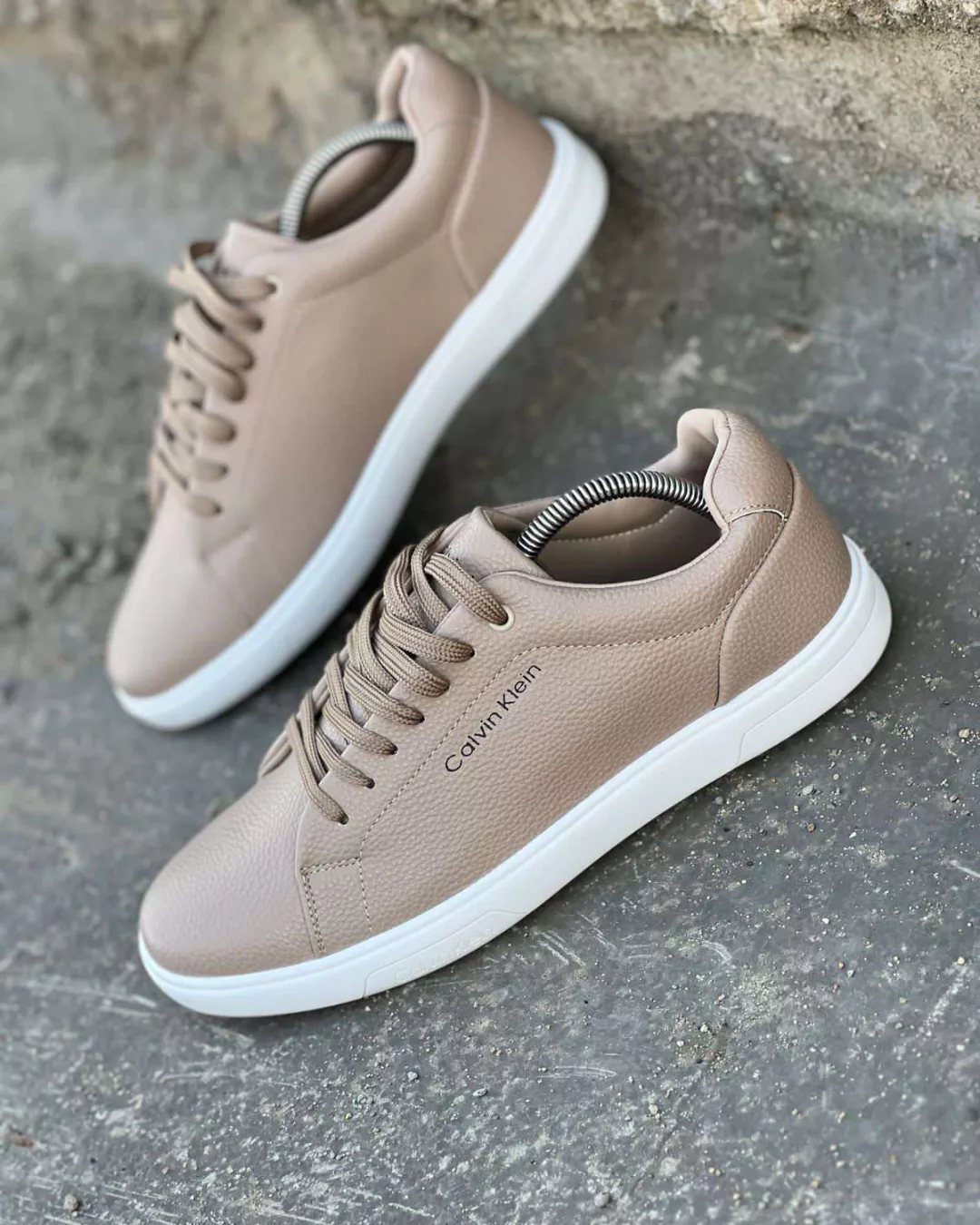
Tan leather sneakers with white soles are my pick over stark white pairs, because the warmer color works with navy, grey and olive trousers alike.
Leather reads dressier than canvas, and a clean, plain upper is what keeps them smart.
Wipe them down often. Scuffed minimalist sneakers look careless in a way a loafer never does.
10. Long-Sleeve Henley and Trousers
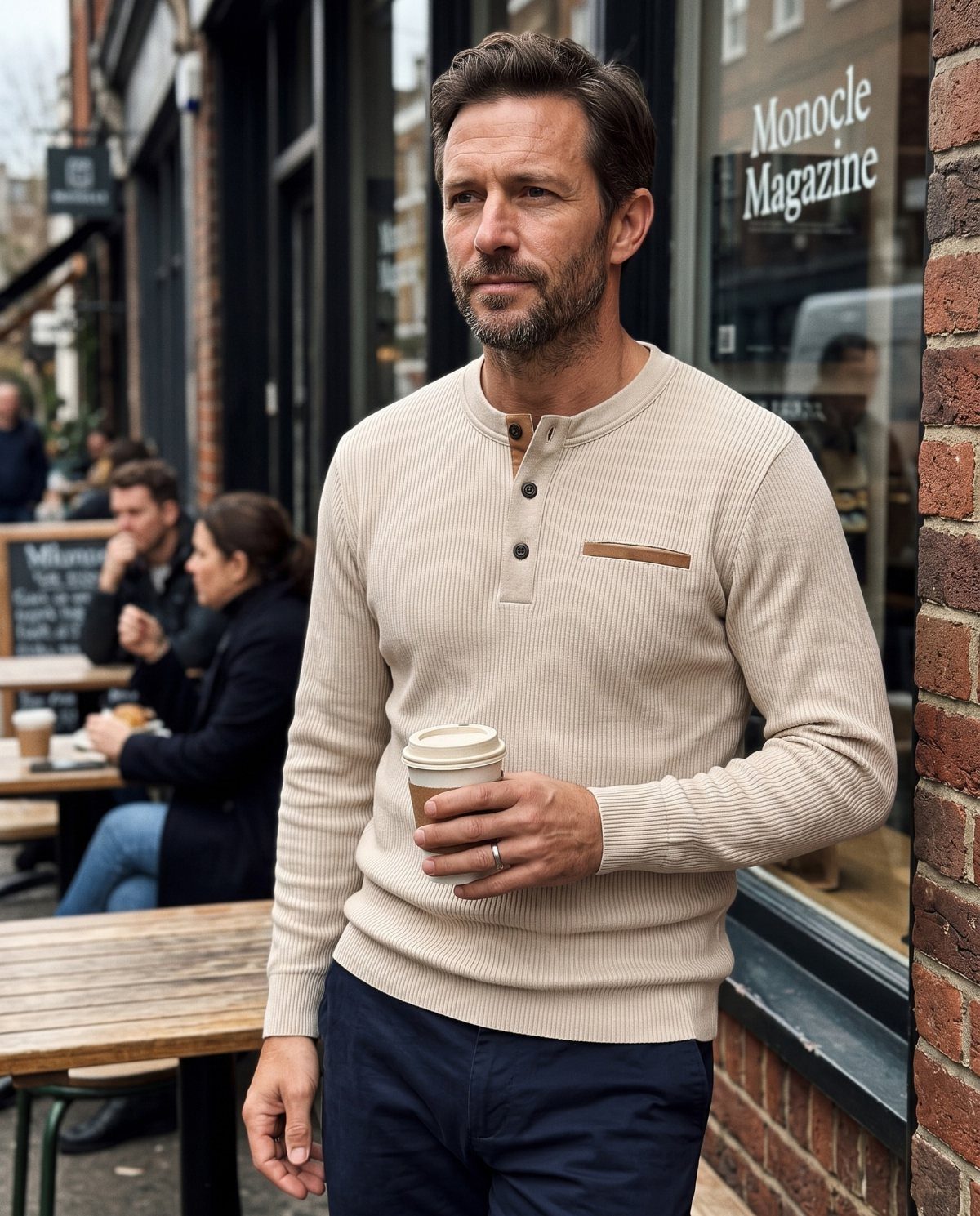
A ribbed long-sleeve henley in beige, paired with navy trousers, replaces the shirt and tie with one soft, textured layer. Beige and navy sit well together, and the ribbing adds interest without any pattern.
Keep the placket buttoned to the second button, and choose trousers with a clean taper. This is a good coffee-run and casual-office combination, with leather shoes or minimal sneakers.
11. Button-Down Shirt with Shoulders Sweater
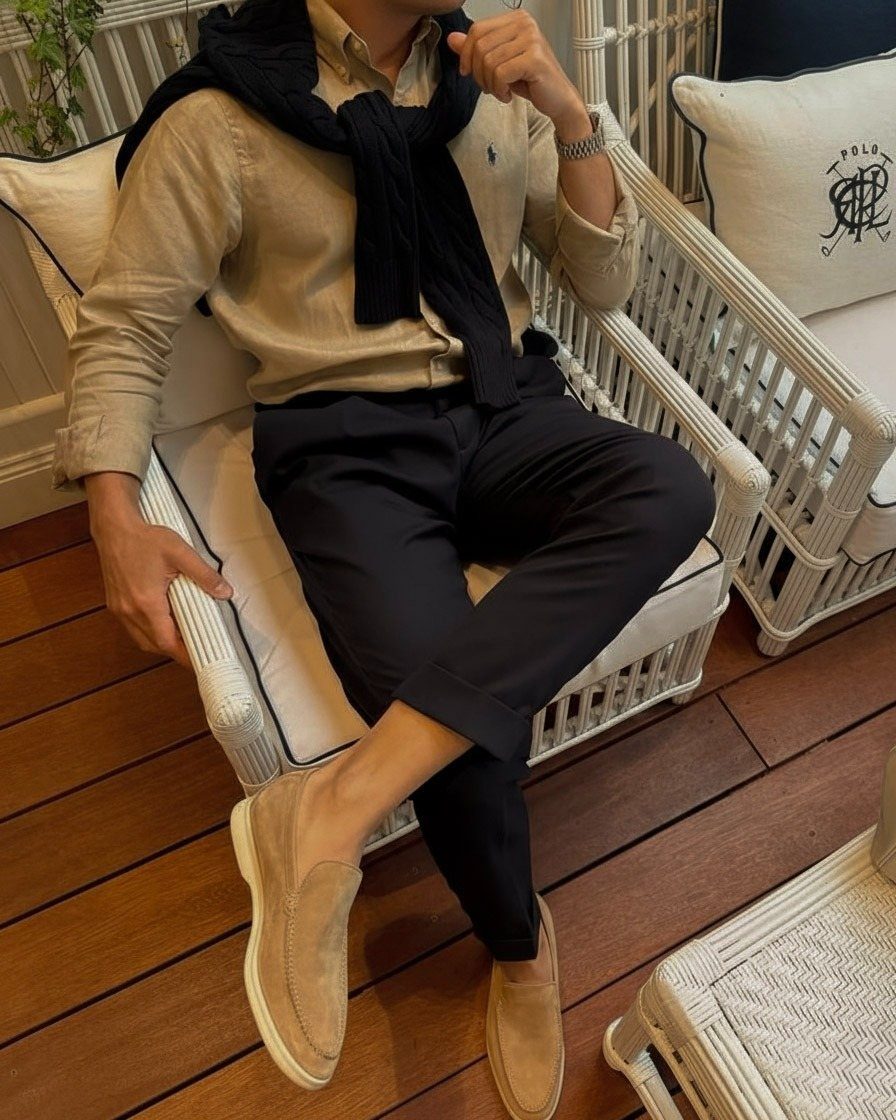
Draping a black sweater over the shoulders of a tan button-down is a small move that looks European and deliberate. Black trousers and tan suede loafers keep the palette tight.
Tie the sleeves loosely around the front of your shoulders and keep the knot slack, because pulling it tight bunches the knit.
It works best with a lightweight knit. A bulky one will slide off and look like an afterthought.
12. Striped Shirt with Wide-Leg Trousers
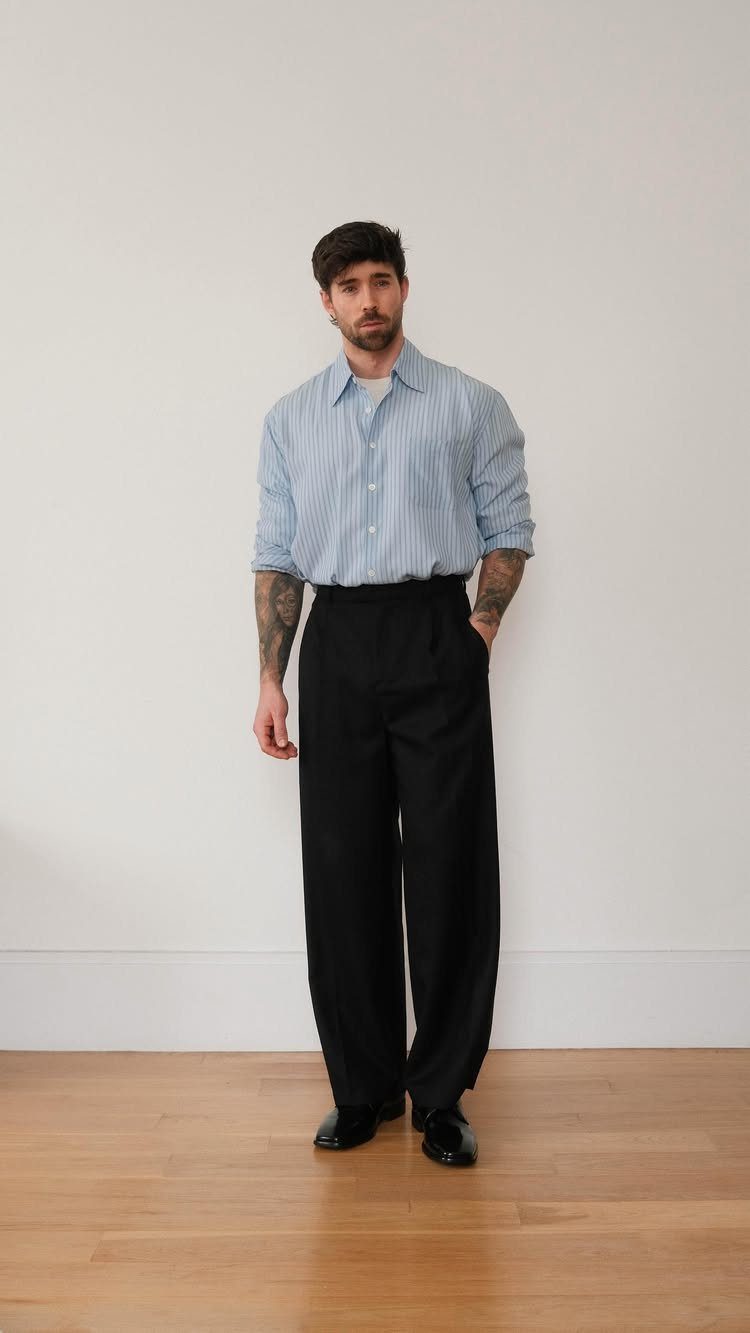
Wide-leg black trousers need a sharp top, and a light blue striped shirt tucked in does that, defining the waist so the fuller leg looks intentional.
Choose a trouser that falls straight to the shoe with a slight break, and keep the shoes black and simple.
Fine stripes read cleaner than bold ones. With full trousers, a fitted shirt balances the outfit better than a roomy one.
13. Polo Shirt with Tailored Trousers
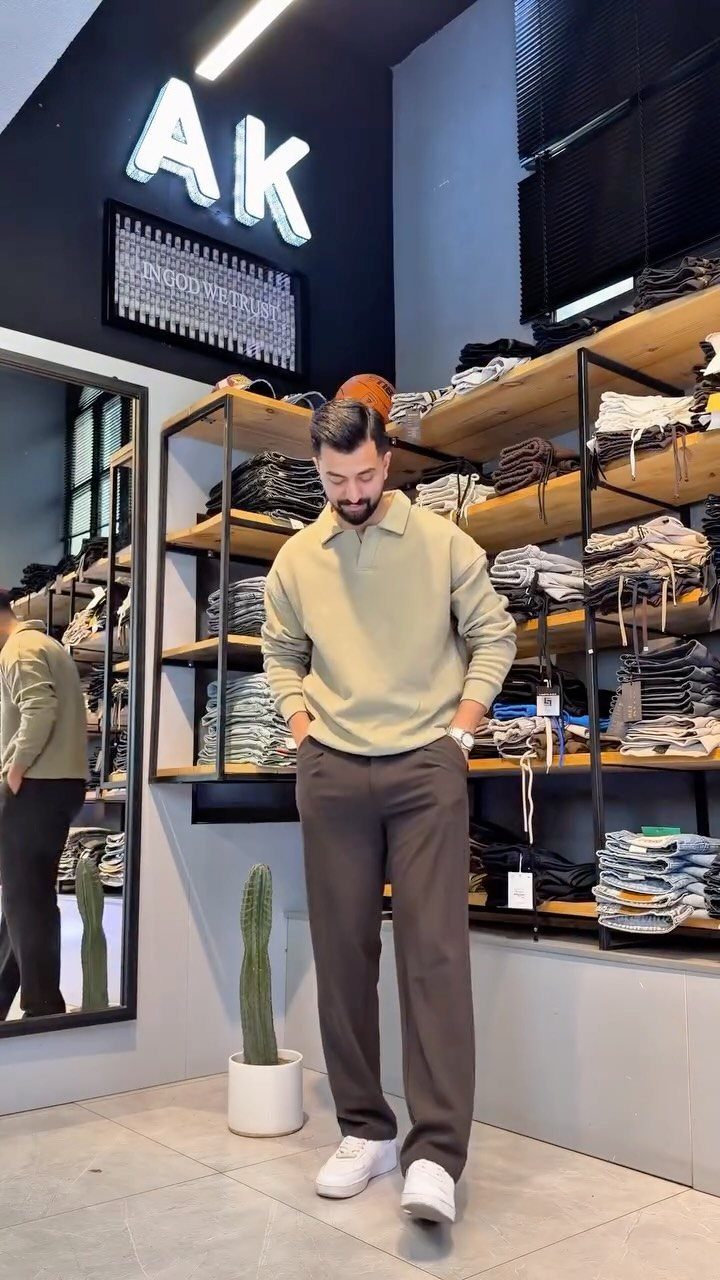
A long-sleeve polo in light olive does what a plain tee can’t: the collar gives the chest a little structure while the knit stays relaxed. Grey trousers keep the palette quiet, and white sneakers finish it without fuss.
Wear it untucked only if the hem sits at the belt line; otherwise a light tuck looks neater. Leave the top button open and the collar flat.
14. Cardigan with Neutral Trousers
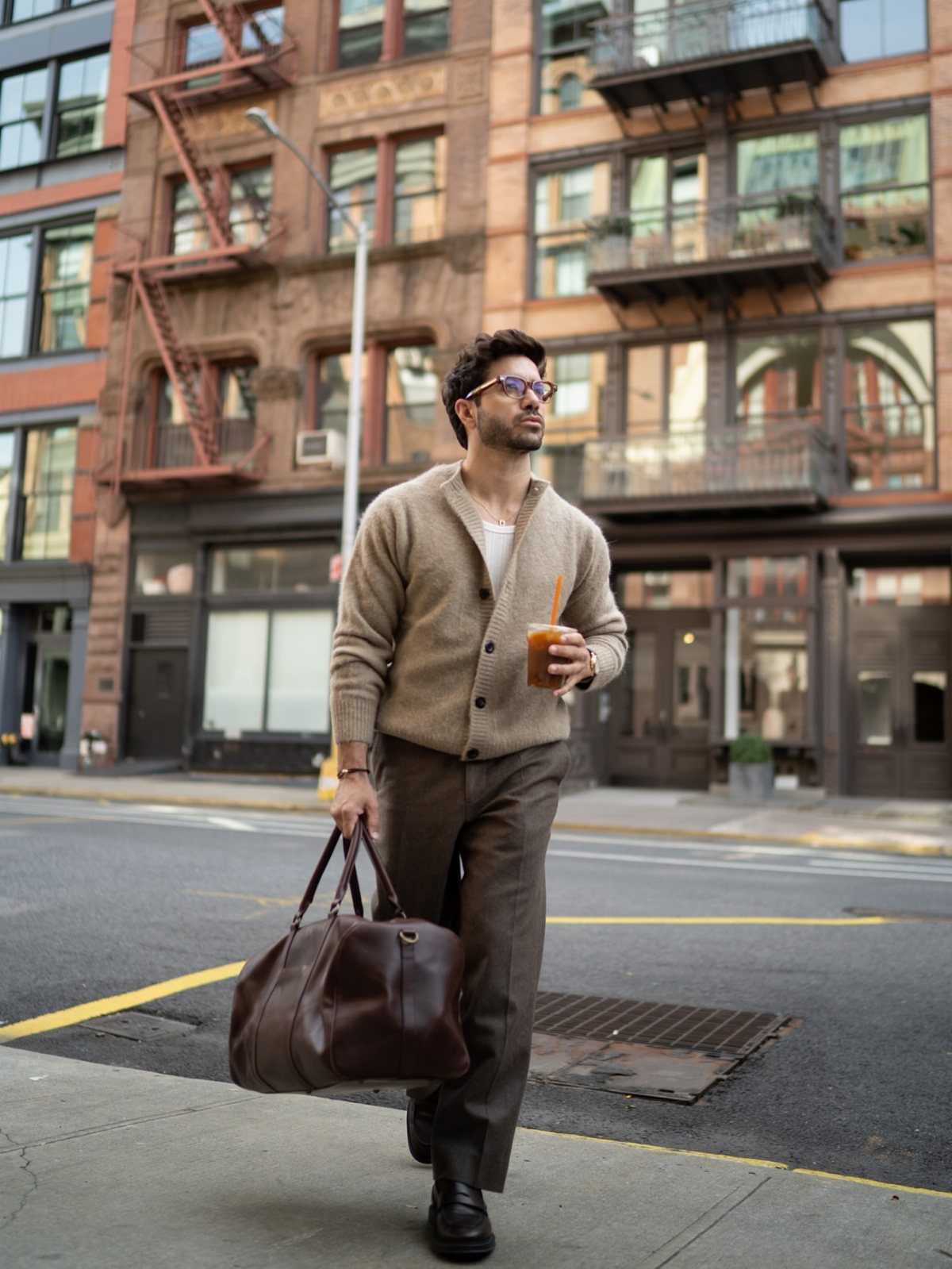
Brown trousers under a beige cardigan make a warm, low-contrast outfit, and loafers keep it on the dressier side of casual.
I like a buttoned cardigan over a simple tee or shirt, since it stands in for a jacket on days when a blazer feels like too much.
Choose a fine knit that lies flat against the chest. A bulky cardigan sags at the pockets and shortens the whole torso.
15. Shirt Jacket and Light Trousers
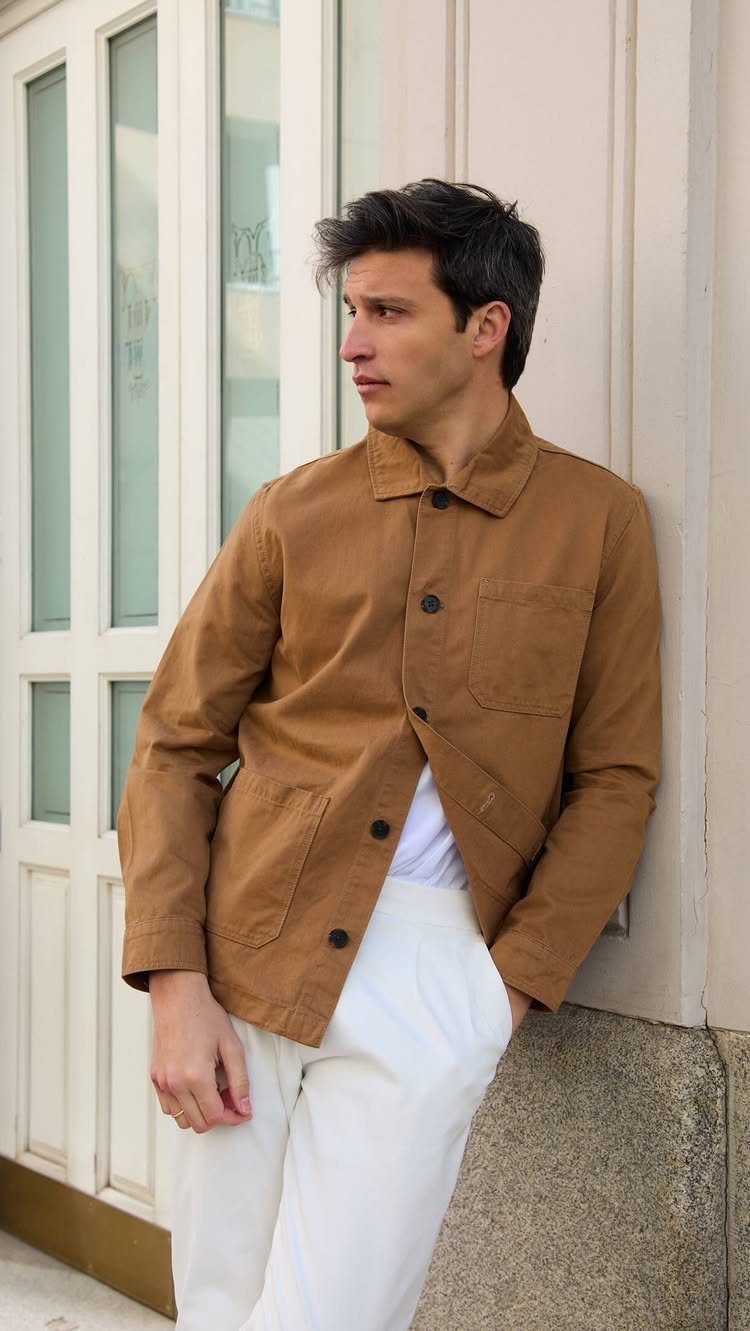
A shirt jacket is the easy way into layering: it has the structure of a jacket and the ease of a shirt. Brown over white, with white trousers, gives you a clean light-and-dark split.
White trousers show everything, so I’d pick a medium weight that isn’t see-through and keep the shoes plain. Button the jacket or wear it open over the shirt; both work, and open is the more relaxed choice.
16. Quilted Vest Layering
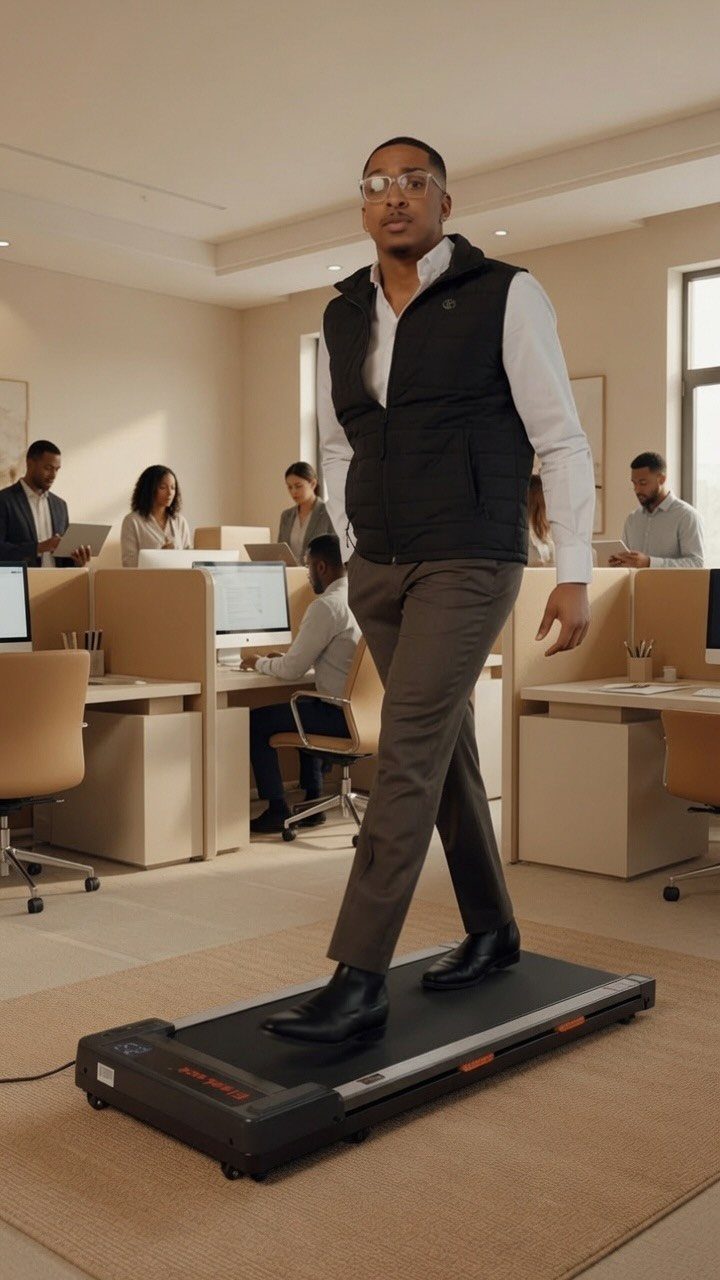
A slim black quilted vest over a white collared shirt adds a layer without adding sleeve bulk, which makes it a good pick for a cool office.
Smart trousers keep the look reading as work, even with a quilted vest layered over a shirt and knit.
Keep the vest slim through the body so it doesn’t puff over the shirt. Tuck the shirt in, and let the collar sit clear of the vest’s neckline.
Understanding Smart Casual
The easiest way to get it right is to pair one refined piece with one relaxed piece. A blazer or dress shoes on one side, chinos or well-fitted jeans on the other.
Think of the test as a single room.
A good smart casual outfit works in 2 rooms: it looks right at a gallery opening, and nobody at the pub afterward would think you came from a wedding. If you’d look out of place in either, change one piece.
That range is why the style works for the office and for social plans alike. Polished without being stiff, tailored without being fussy.
Color and Fabric Choices
Color and fabric are where a smart casual outfit gets its polish, and the same rule applies to both: keep the base simple and let one piece carry the interest.
Start with a wardrobe of quiet shades, then add a single texture or tone that stands out.
Pick fabrics that breathe, such as cotton, linen blends and fine wool knits. They hold a shape without feeling stiff, and they keep you comfortable through a full day.
Before you buy, check that each new piece mixes with at least 3 things you already own. If it only works with one outfit, it is a costume piece, not a staple.
Frequently Asked Questions
What is smart casual attire for men?
The formula is simple: one dressier item balanced by one easygoing one, like a navy blazer over a T-shirt, or leather derbies under chinos or dark, trim jeans.
I run it through 2 rooms: a gallery opening, where you should look put together, and the pub afterward, where nobody should guess you left a wedding.
What is the 3-3-3 rule for men’s clothing?
I can’t point to a fixed 3-3-3 rule in smart casual dressing, but a related check works well: before buying a piece, make sure it mixes with at least 3 things you already own.
This keeps a wardrobe small and every item useful.





