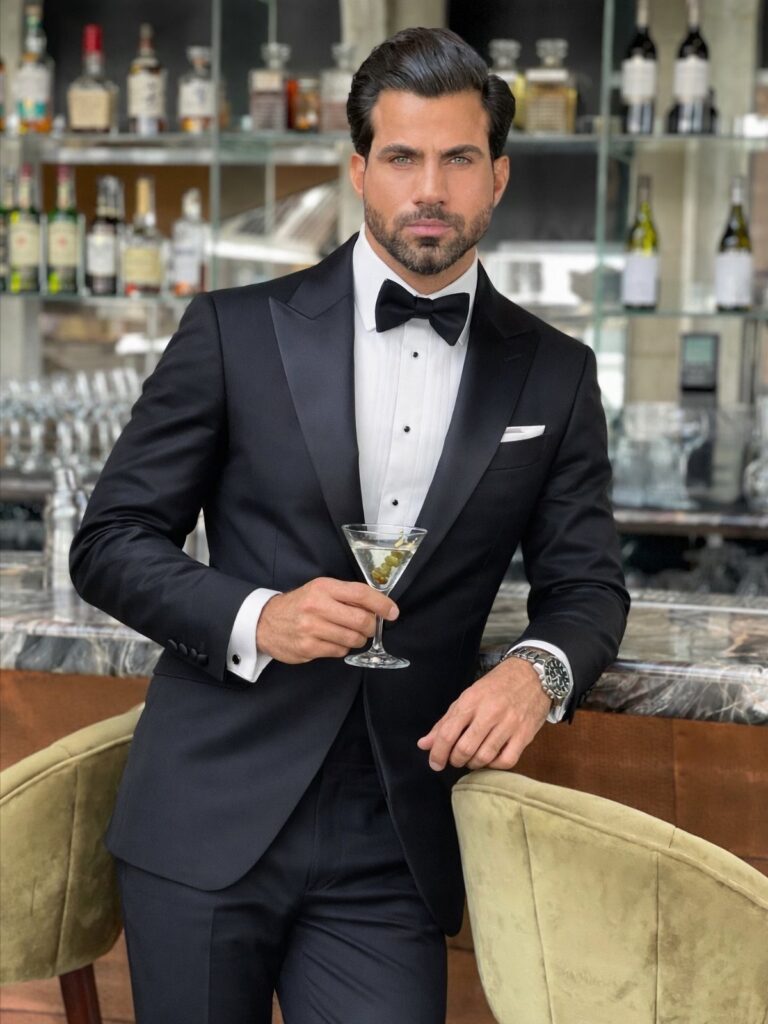
Dress code decides men’s formal style, and the list below runs from Black Tie and White Tie to a Well-Fitted Suit, so read the invitation’s wording before you pick anything.
The ideas here run from a Smart-Casual look up through a Navy Double-Breasted Suit to White Tie, the strictest of them, where little can be swapped. A printed code like black tie or white tie settles the outfit for you.
1. Black Tie
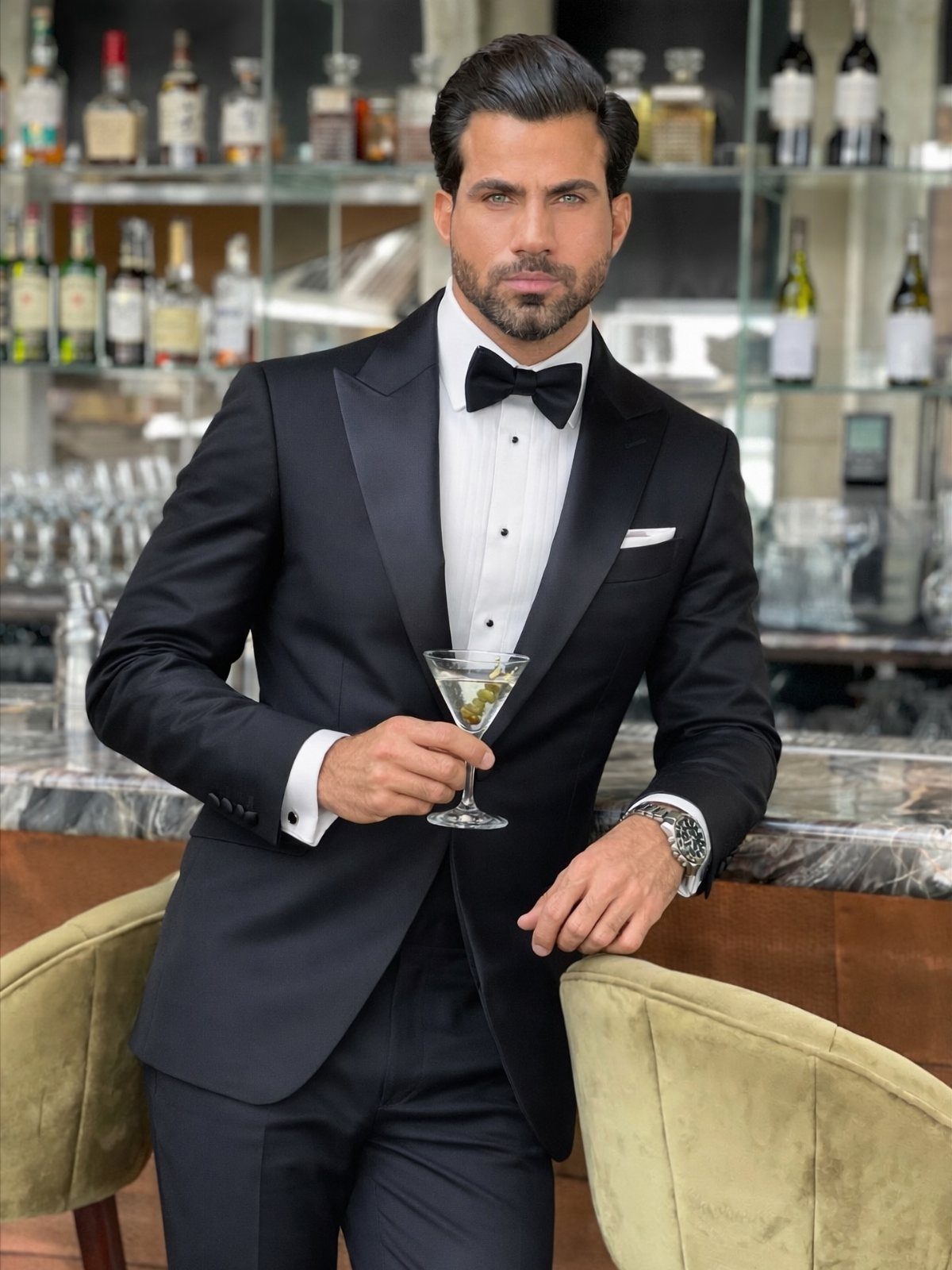
A black tuxedo, a white dress shirt and a bow tie make up the standard for formal evening events, and I’d keep it exactly that plain. The look works because nothing competes with it.
Wear the bow tie in black, and make sure it is a real one you tie yourself rather than a pre-tied shortcut. If an invitation says black tie, this is the outfit to build.
2. Well-Fitted Suit
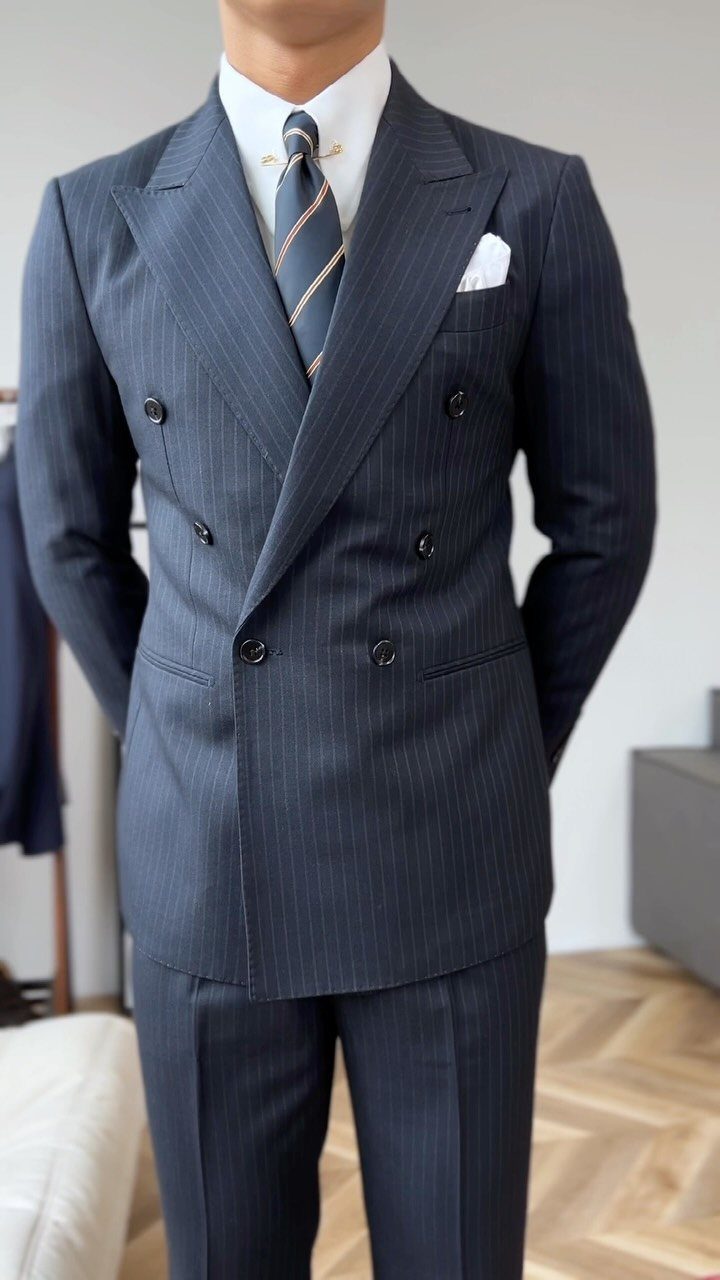
Shoulders decide a suit before anything else does. If the seam sits past the edge of your shoulder, no amount of tailoring downstream will rescue the jacket.
A polished look depends on fit more than price, and a double-breasted cut like this one makes that obvious, since the front has to close cleanly without pulling.
I’d spend part of the budget on a tailor rather than a fancier label. With limited time, ask for the sleeves and trouser hem first.
3. Smart-Casual
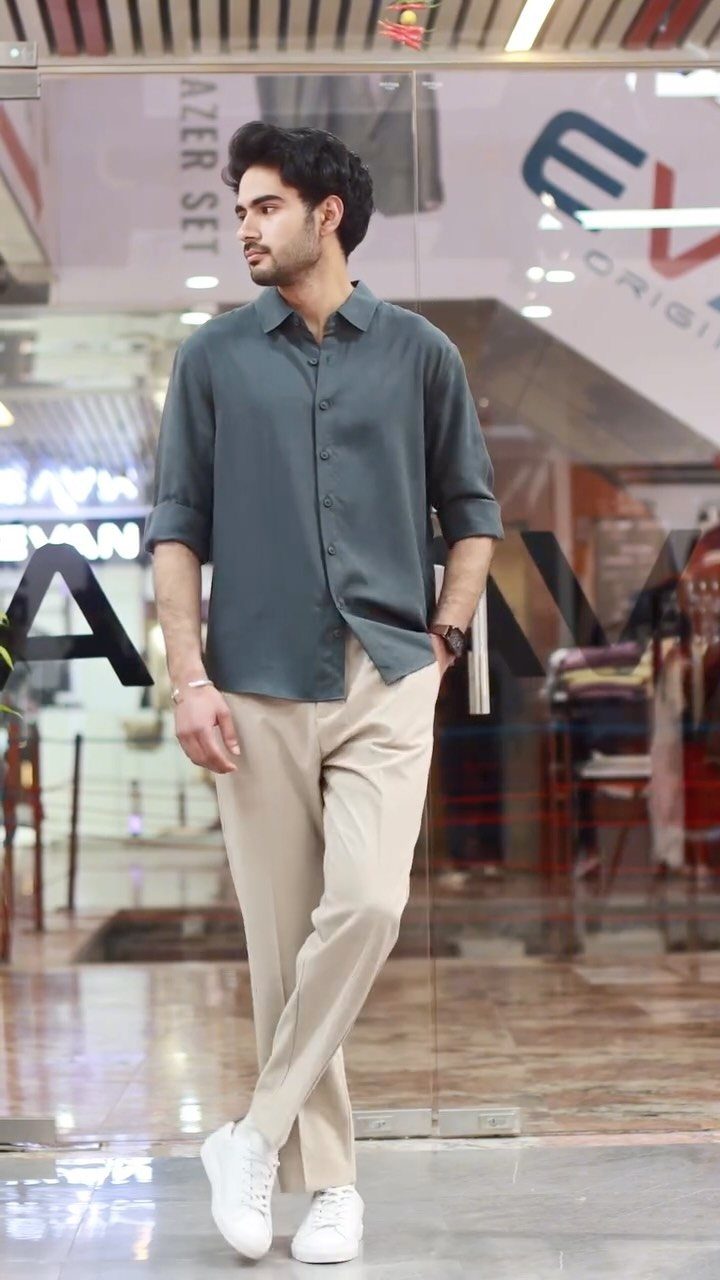
Smart-casual sits between a suit and weekend clothes, and the easiest version is a button-up shirt, beige trousers and clean white sneakers. Leave the shirt untucked only if its hem ends around mid-fly; any longer and it reads sloppy.
Keep the sneakers spotless, since they are the casual piece doing all the work. Pick a dark or saturated shirt against the light trousers so the outfit has contrast.
I like this for dates and relaxed office days. It is the wrong call for anything with a printed dress code.
4. White Tie
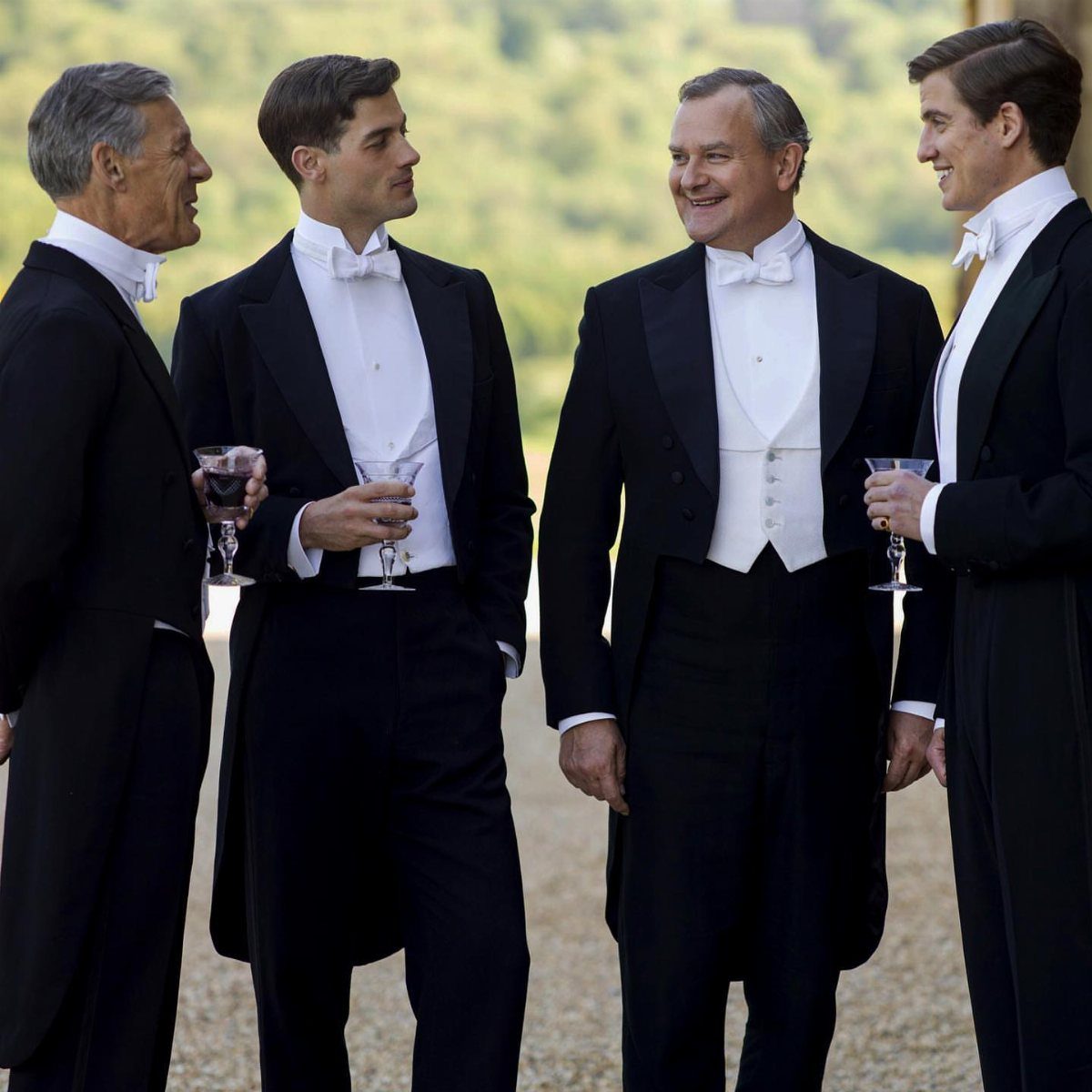
Black tailcoat, white pique waistcoat, wing collar and white bow tie: every piece is specified, and swapping one breaks the look.
No dress code is more formal than white tie, and unless you expect to wear it more than once, renting or borrowing makes more sense than buying.
If an invitation names it, don’t improvise with a tuxedo, because the difference shows immediately.
5. Formal Accessories
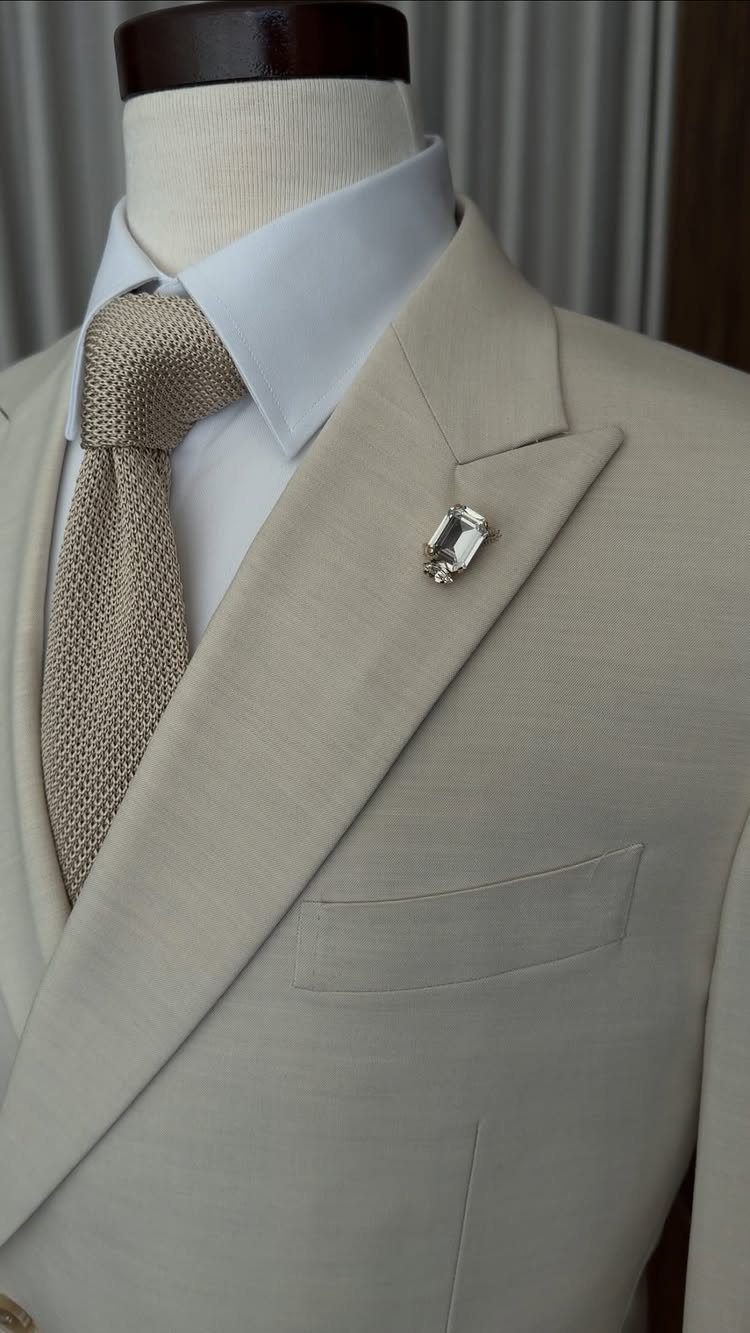
A lapel pin, a woven tie in champagne and a clean white shirt: small things finish a suit like this beige double-breasted.
Accessories complete the look, and on a pale suit they carry more weight because there is less contrast to hide behind.
I’d pick one statement piece, like a crystal pin, and let the tie stay quiet in both tone and texture.
A tie slightly darker than the suit gives the pin room to stand out. Add more than 2 accents and the outfit starts to look busy.
6. Double-Breasted Suit and Tie Display
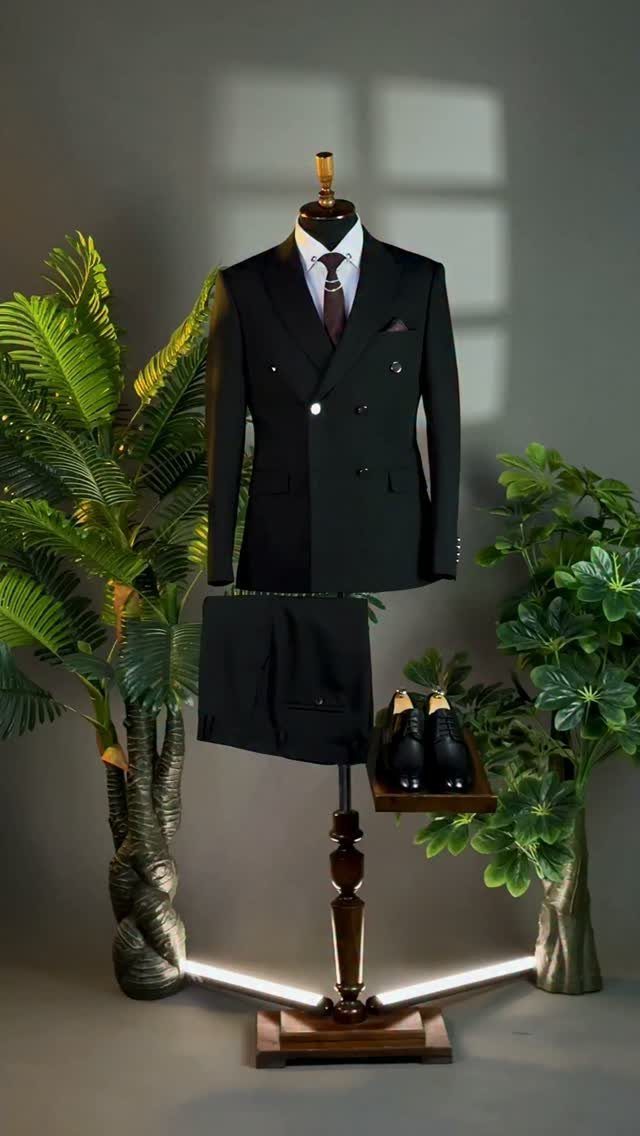
Black double-breasted jacket, white shirt, maroon tie, matching trousers and black dress shoes: this is the full kit, and buying it as a set removes guesswork. A dark tie against a white shirt is the safest pairing for formal events.
If time is short, match the shoes to the suit first, black with black.
Then add the tie. A deep maroon gives some color without breaking the formality, which is why I prefer it over a bright option.
7. Navy Double-Breasted Blazer and White Trousers
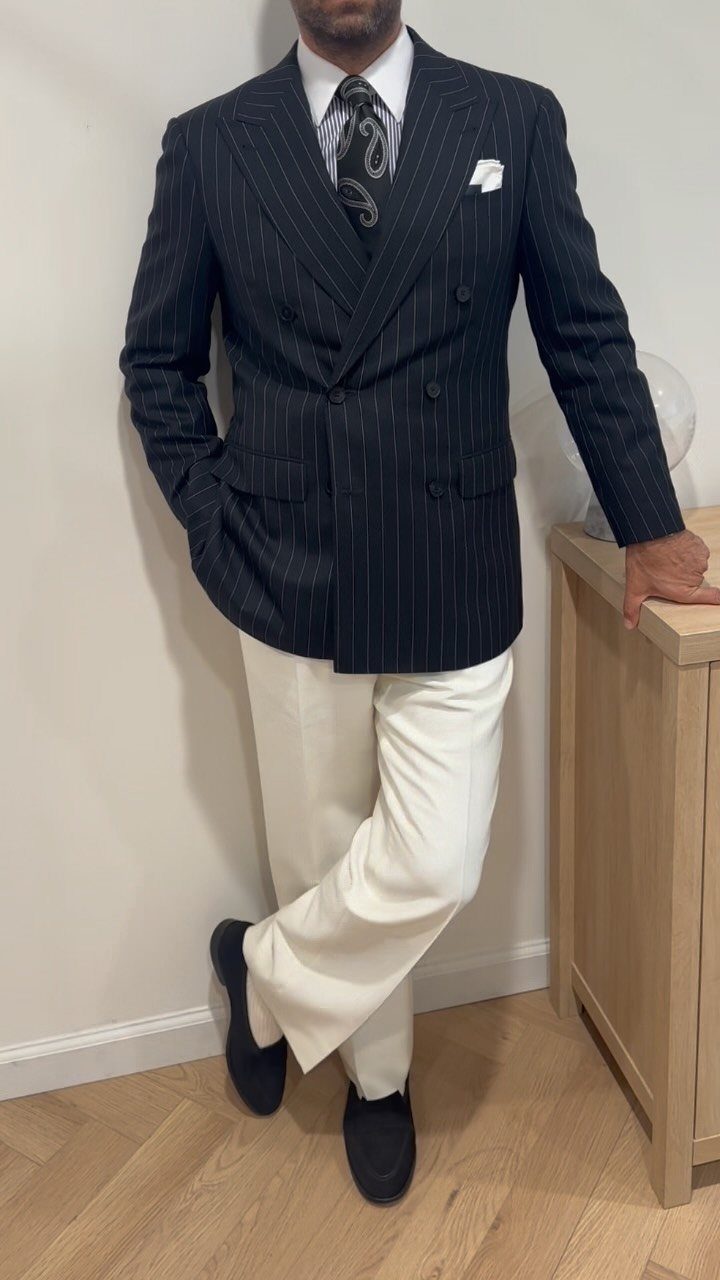
Pinstripes on top and white below make a summer-leaning outfit that still reads as dressed. The jacket does the formal work, so the trousers can be light and wide.
The pattern mix works because each piece has a different scale.
Under a pinstriped jacket, a shirt with a different stripe scale works if the 2 patterns differ in width, and off-white trousers with a black paisley tie keep the whole outfit from looking busy.
A dark tie works best here, since it leaves the stripes alone and lets them do the talking.
This is a call for daytime events, not a printed black-tie invitation.
8. Formal Nehru Jacket
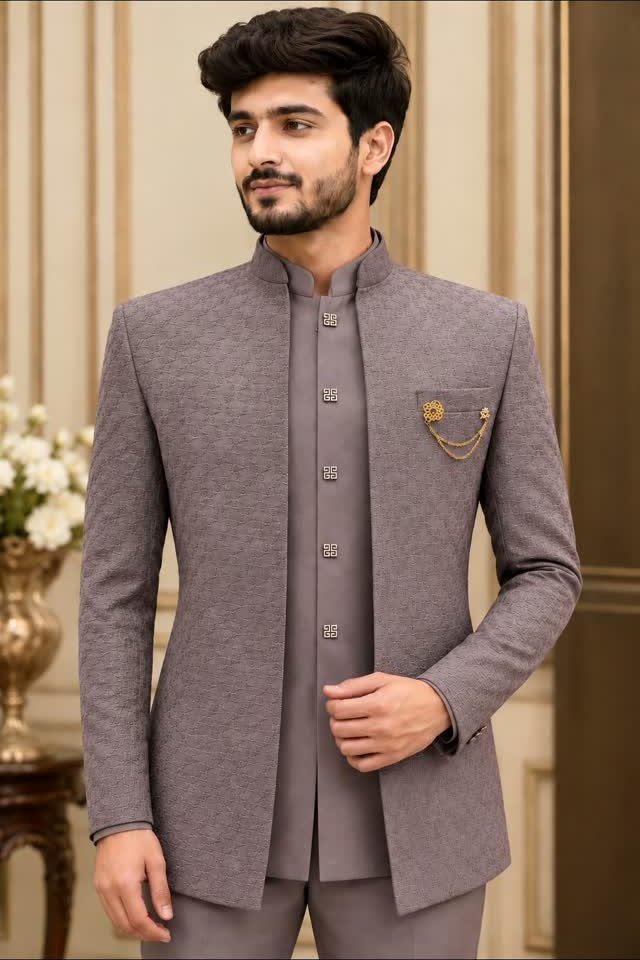
A Nehru jacket swaps the lapel and collar for a short stand-up neckline, and in grey texture it looks formal without a tie. Matching trousers keep the line clean from top to bottom.
A chain brooch like this gold one is the only ornament I’d add. Texture already gives the grey cloth interest, so a second accent would crowd it.
For a wedding or festive evening, this is a strong option if a standard suit feels too familiar. It is not a stand-in for a tuxedo when black tie is stated.
9. Navy Double-Breasted Suit
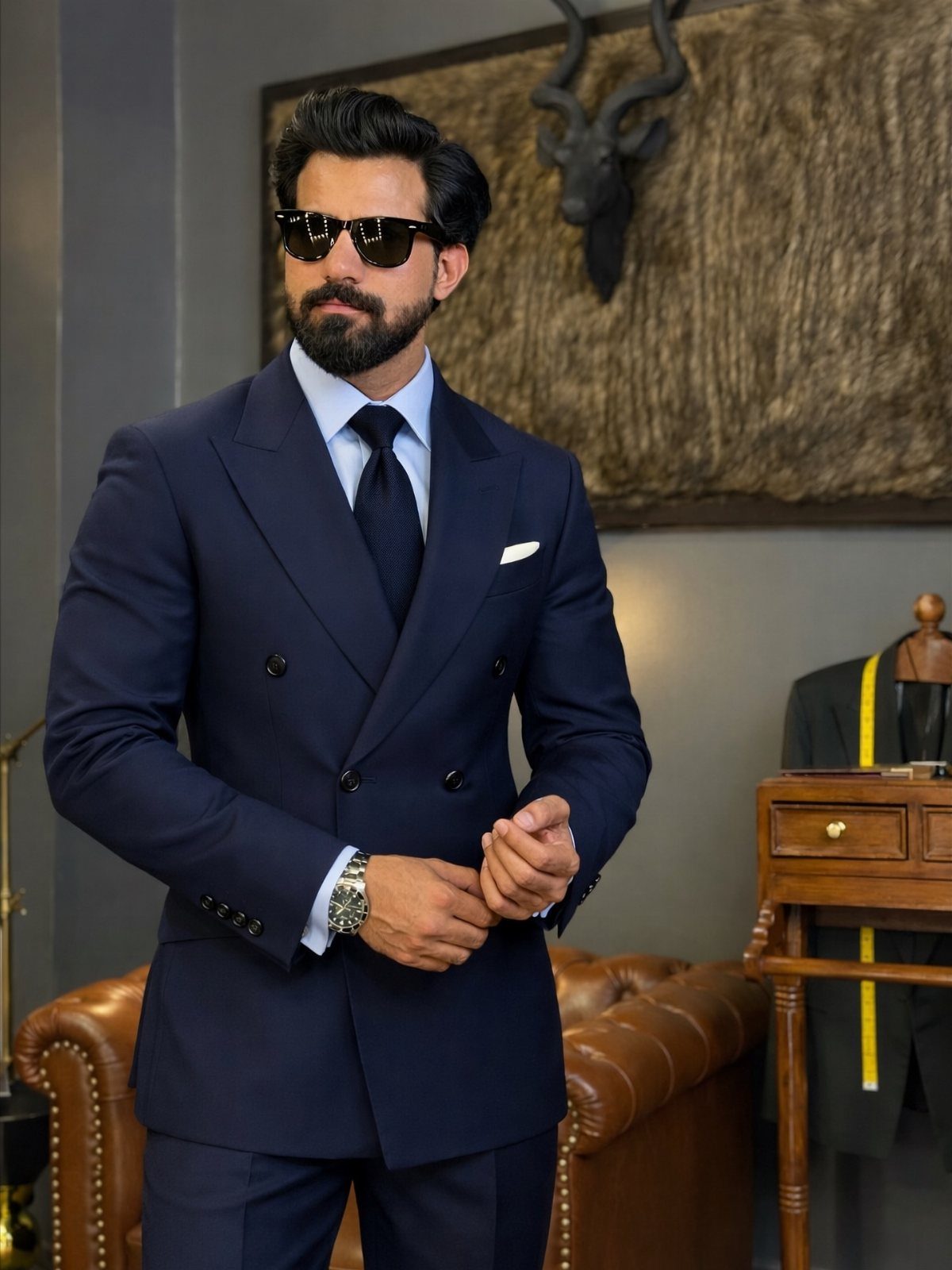
Navy double-breasted, light blue shirt, dark tie: if you own one suit for events, I’d make it this one. Navy is easier to wear than black across daytime and evening, and the light blue shirt softens it without losing sharpness.
Keep the jacket buttoned when standing, and pick a tie darker than the shirt so the contrast reads clearly. A pocket square is optional; with a double-breasted front already making a statement, I’d often skip it.
Pair it with dark leather shoes and the outfit is done.
Understanding Dress Codes
"Optional" on an invitation means the hosts will wear the listed code and would like guests to follow if they can. Nobody expects you to rent a tuxedo or buy one just for the night.
Meeting the listed code is always correct. Overdressing past that line is a real misstep, though, and a white tie at a "black tie optional" event just looks like you misread the invitation.
The effect is just as severe and formal, and you never have to rent anything.
For other "optional" codes, read the tone of the event. Lean dressier for professional settings and more relaxed for social ones.
Importance of Accessories
Keep accessories minimal. Every piece should back up the outfit instead of fighting it for attention.
Here’s a quick test at the door: if someone would remember the accessory ahead of the suit, take it off. Two pieces that agree with each other beat four that each want attention.
Choosing the Right Shoes
Shoes signal formality faster than almost anything else you wear, so pick them by occasion before you pick anything else.
Sleek leather Oxfords suit conservative formal settings.
Derbies are the more flexible choice when the dress code is unclear. Loafers fit relaxed tailoring, and refined leather sneakers work for modern smart-casual outfits.
Color matters too. Check how the shoes sit with your trousers, and keep them polished, since scuffed leather undercuts a good fit.
If you are building a small shoe lineup, a formal pair, a casual pair of sneakers and a comfortable pair of loafers cover most situations.
Frequently Asked Questions
What is formal attire for men?
Formal attire for men usually means a suit or dinner suit, a formal shirt, a tie or bow tie, and polished shoes.
Cufflinks or dress studs can finish it. The strictest versions are black tie, with a tuxedo and black bow tie, and white tie, with a tailcoat, white waistcoat and wing collar.
Does formal attire require a suit?
Usually yes: a suit or dinner suit is the standard base for formal dress.
Smart-casual is the step below, a button-up shirt with beige trousers and clean white sneakers, and it is the wrong call for anything with a printed dress code. An invitation that says formal calls for a suit.
What should men wear to a black tie event?
Wear a black tuxedo, a white dress shirt and a black bow tie.
Tie the bow tie yourself instead of using a pre-tied one. Keep the rest plain, since the look works because nothing competes with it.
What is the difference between black tie and semi-formal?
Black tie is the more formal code and calls for a tuxedo with a bow tie. A navy double-breasted suit with a light blue shirt and a darker tie is a safe pick for the second.
What are the different types of formals?
The main ones are white tie, black tie and the formal suit. Strictest of all is white tie, which calls for a black tailcoat, a white pique waistcoat, a wing collar and a white bow tie.
A tuxedo and bow tie cover black tie; for nearly everything else, a well-fitted navy suit does the job.





