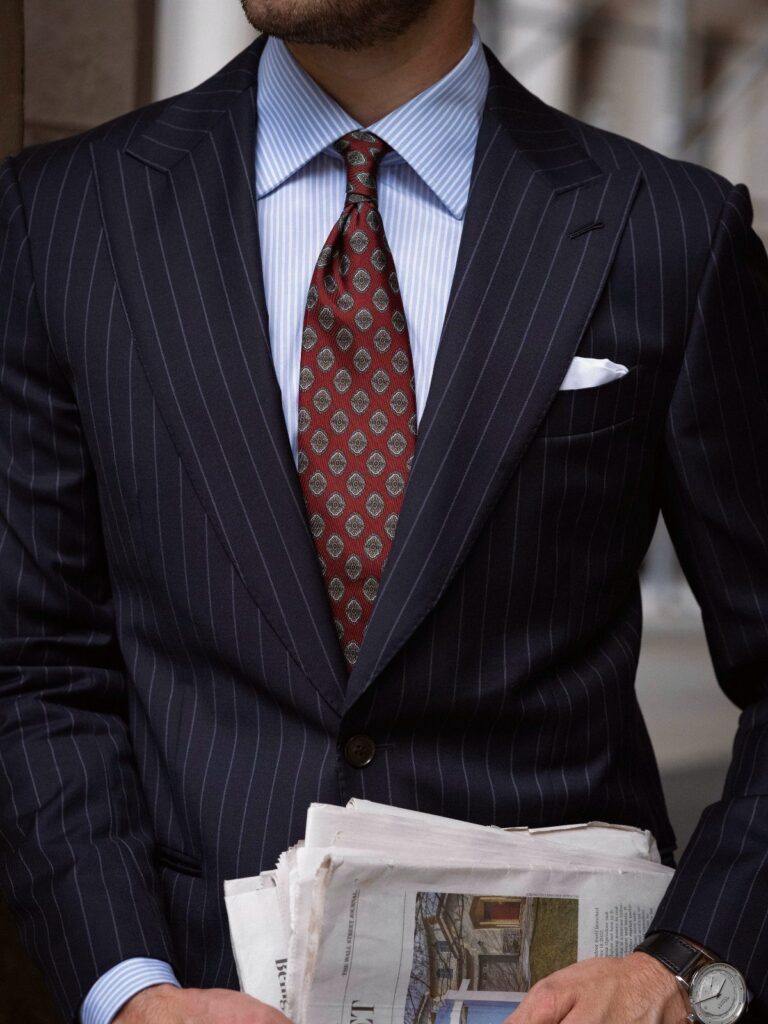
The shirts in this list start at crisp white and end at a dark navy that nearly matches the suit, and the occasion decides which one you wear more than the shade of blue does.
Pick the room first: white is the shirt nobody questions at formal events, pale pink reads warmer at a wedding, and a light blue stripe gives you more slack at casual ones.
1. White Shirt

A white shirt is the one that never argues with a blue suit. Crisp white against navy or mid blue gives the cleanest contrast you can get, and it lets the tie do the talking.
Warm ties, like peach or gold patterns, work well against a white shirt and a blue suit. If you own one white dress shirt, make it this one, and keep the collar pressed.
2. Navy Blue Suit
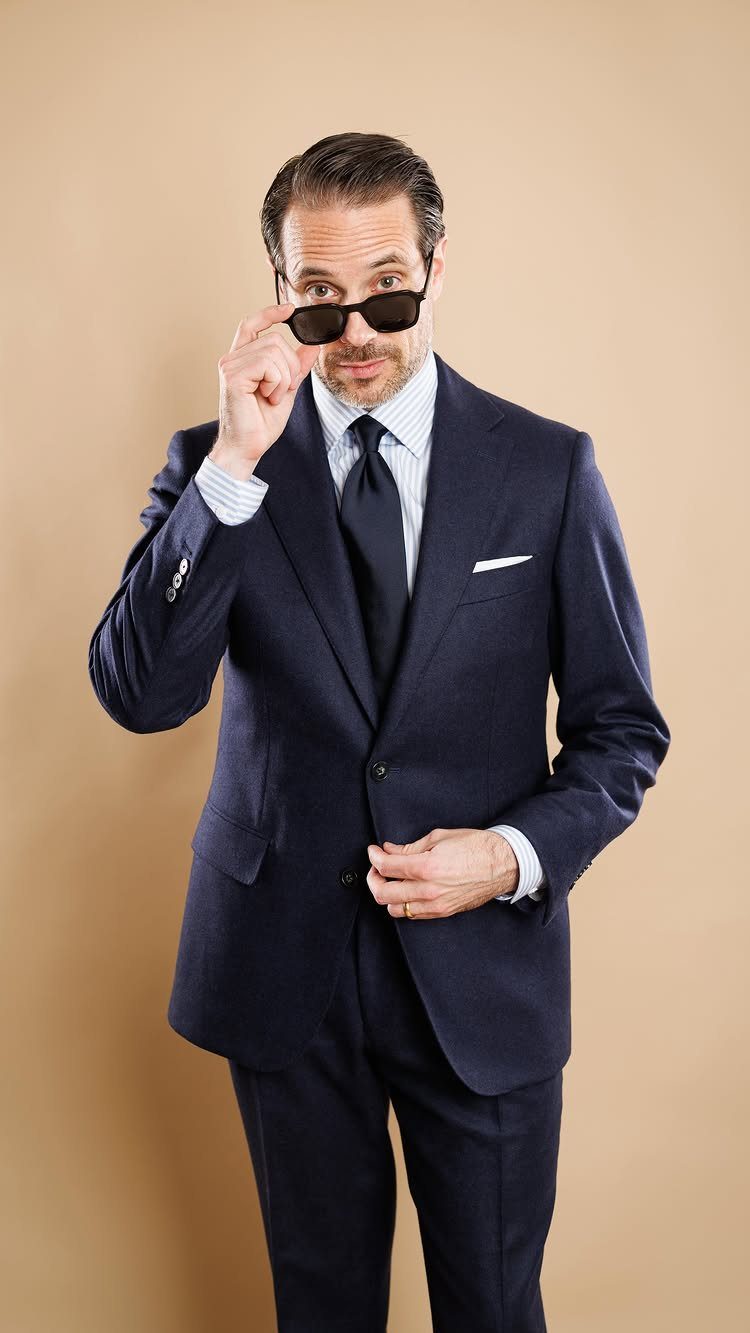
Navy is the shade I would buy first. It sits between black and the brighter blues, so it handles a striped shirt, a solid one, or a plain white without any fuss.
Get a jacket that fits at the shoulders before anything else, because a tailor can adjust almost everything but those.
3. Pink Shirt

Pink brings warmth to a blue suit that white can’t. A light pink shirt softens navy and reads friendly rather than stiff, which suits dates and daytime events.
Matching the tie to the shirt, say a striped pink one, is a confident move, though a navy or burgundy tie is the safer pick. Brown dress shoes sit well with it.
4. Black Shirt

Black under blue is a loud choice, and I’d say so plainly. The contrast is dramatic, best saved for evenings, parties and men who are comfortable standing out.
A bright blue jacket with black trousers and an open collar leans fashion, not office. Skip the tie, keep everything else clean, and don’t wear it to a job interview.
5. Lilac or Lavender Shirt

Lavender is a quiet step away from the usual light blue. Against navy it looks refined and a little modern, with enough color to be noticed without being loud.
A dark textured tie and a white pocket square, as above, keep it grounded. I’d choose a pale, grayish lilac over a bright one; it’s easier to wear and looks right with most navy suits.
6. Light Blue Striped Shirt
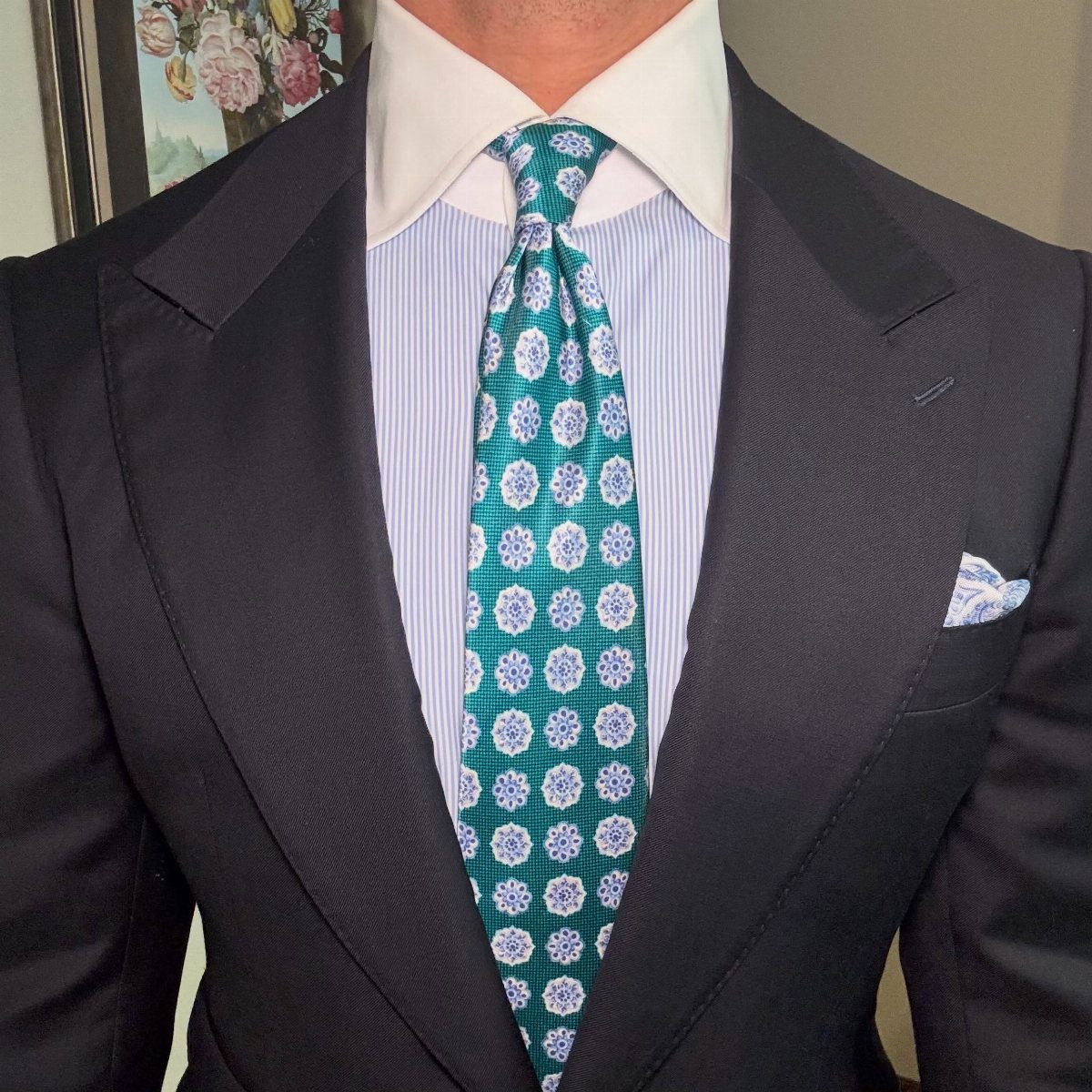
A light blue striped shirt adds pattern while staying in the same color family as the suit. Under a dark navy jacket, it looks calm and tonal, which is why it works so well for the office.
Pick a patterned tie with a different scale from the stripes, such as a teal pattern. A white collar on a striped body gives it a sharper, dressier feel.
7. Light Blue Dress Shirt
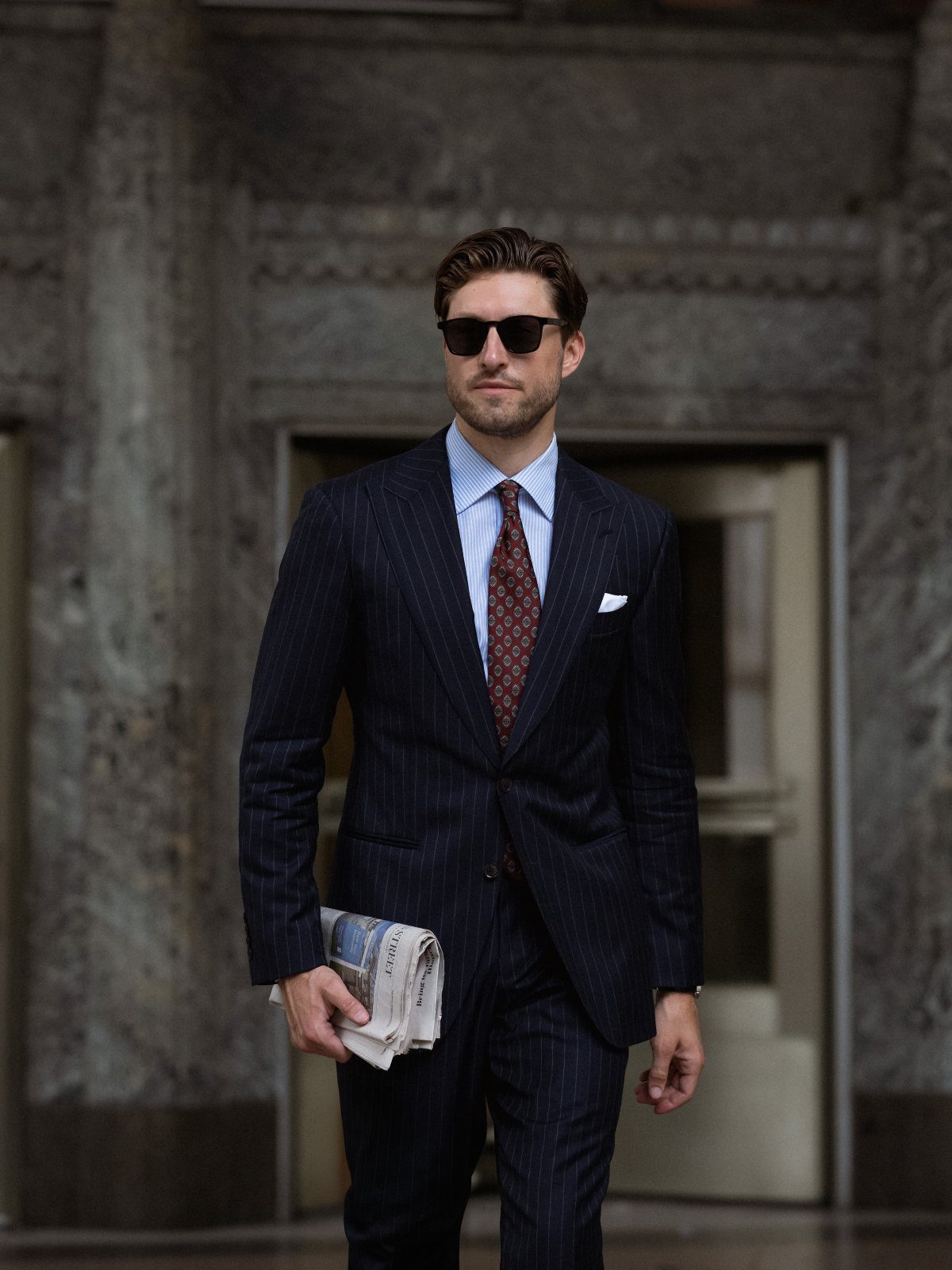
Light blue is the shirt I reach for when a navy suit needs to look like business and nothing else. Against a dark pinstripe jacket it stays calm, and the tie carries the interest.
A tie in reddish-brown with a small pattern works well here: the warmth plays against all that blue, and it stays conservative. A crisp collar and a snug tie knot make the whole look sharper.
Brown shoes finish it better than black.
8. Dark Navy Dress Shirt
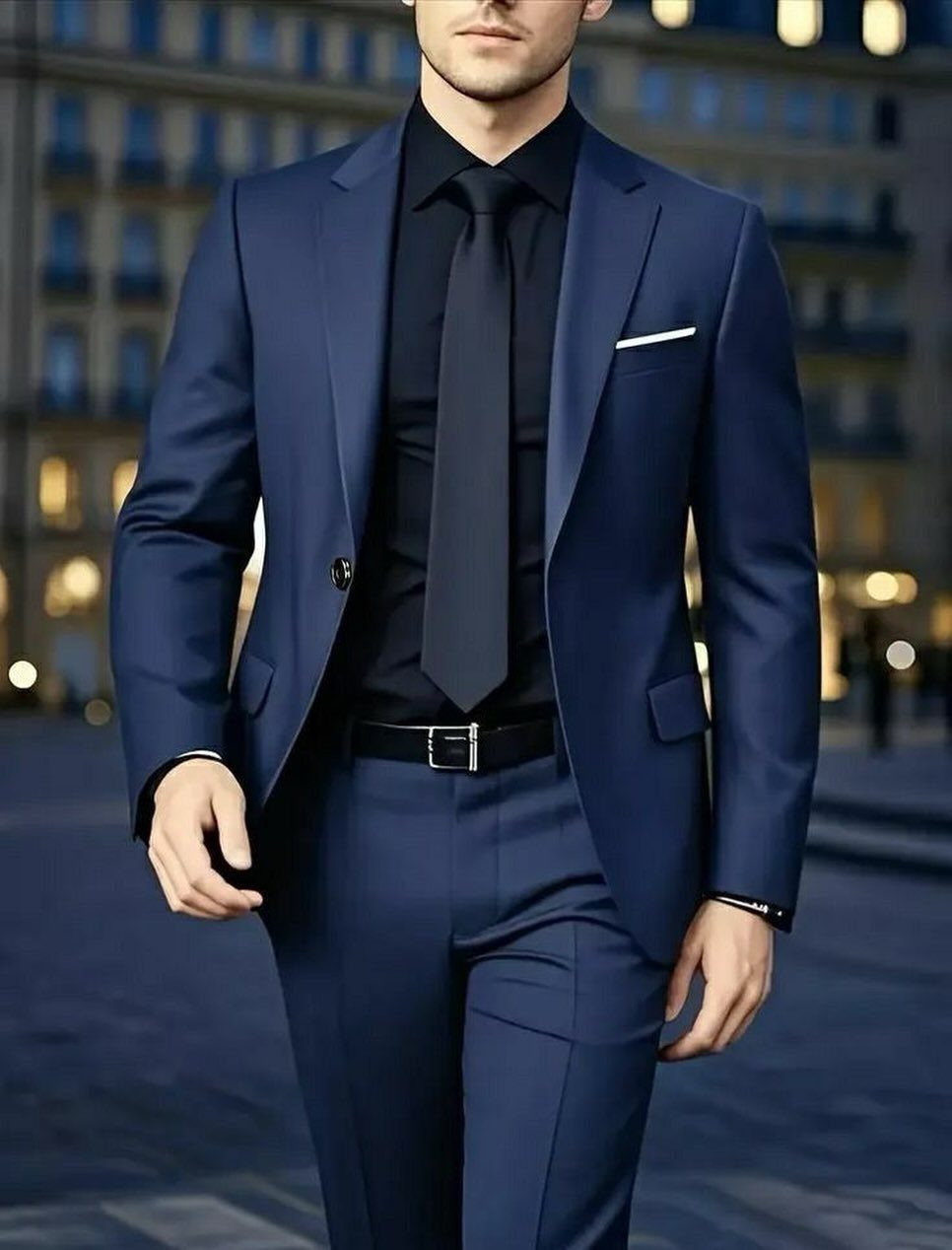
A dark navy shirt under a navy suit is a tonal move, and it only works when the shades sit close enough to read as one deliberate color. Too far apart and it looks like a mistake.
A black tie and a pocket square give a dark navy shirt some contrast across the chest, which it needs so the look doesn’t read as one flat block.
Go with a pocket square a shade or two lighter than the shirt.
It suits evenings better than a day at the office, and it leaves little room for a loud tie.
Occasion Suitability
A navy suit for a job interview calls for a different shirt than the same suit at a July wedding, so pick the shirt for the room you’re walking into.
The shade of blue is only half the decision; where you’re wearing the suit counts just as much.
At formal events, a crisp white shirt is the one that never gets questioned.
For a wedding, a pale pink shirt reads warmer and more celebratory. For casual events, a patterned shirt gives you room to relax without looking sloppy.
Decide the occasion first, then pick the shirt. Doing it in that order saves you from standing at the closet at 7:30 a.m. with a shirt that fits the suit but not the day.
Shirt Fabric Considerations
Most men fixate on color, but the weave and weight of the cloth decide how a shirt sits and feels under a blue suit. Choose by season and occasion.
For summer I reach for cotton; linen suits casual events and destination weddings, though it creases fast and looks looser. Fabric changes formality, so a linen shirt under a sharp business suit will look off.
Wool and wool blends suit formal, business and year-round wear. For colder months, textured wool brings a heritage feel.
Want something darker for hot weather? A navy linen suit handles summer weddings and destination events well.
Tie and Shoe Pairings
A tie ties the suit and shirt together, and I treat it as the piece that links the two. Pick it after the shirt, not before.
Burgundy is the classic power tie, and it works with white or light blue. Brown and earth tones feel warm and approachable against cream or white.
A few pairings I trust:
- White shirt with a navy tie: clean and formal
- Pale pink shirt, navy tie: balanced and polished
- Striped shirt, solid tie: sharp and professional
A patterned tie works over a solid shirt, and over a striped one too if the scale of the pattern differs from the stripes. Scale it to your build: smaller patterns suit leaner men.
Frequently Asked Questions
What kind of shirt goes with a blue suit?
A white shirt is the safest pick, since it gives the cleanest contrast against navy or mid blue and lets the tie carry the look.
Light blue, pale pink and a light blue striped shirt also work well. Louder shirts make the suit read more casual, so match the shirt to the room you’re walking into.
Is it okay to wear a blue suit?
Yes. Navy is the shade I’d buy first, because it sits between black and the brighter blues and handles a striped shirt, a solid one or a plain white without fuss.
It works for interviews, offices, weddings and dates, with the shirt chosen to fit the occasion.





