Your climate and your dress code decide which of these 13 pieces you buy first, since the list runs from a thrifted plaid midi skirt to a full-length grey wool overcoat that costs more than most fall pieces.
Office days point to the overcoat, black pants or the blazer; weekends and dry, mild days point to desert boots, a crewneck sweatshirt or a scarf.
Rain matters most for the suede pieces, because the desert boots and the slouchy brown suede bag stain and darken fast, while a tote shrugs off scuffs far better.
1. Oversized Sweaters
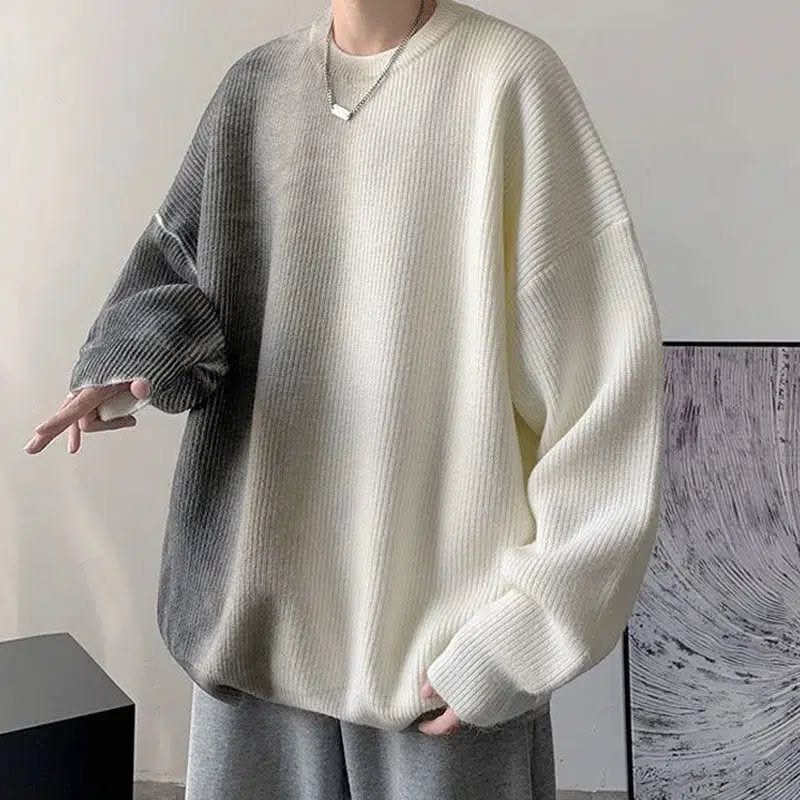
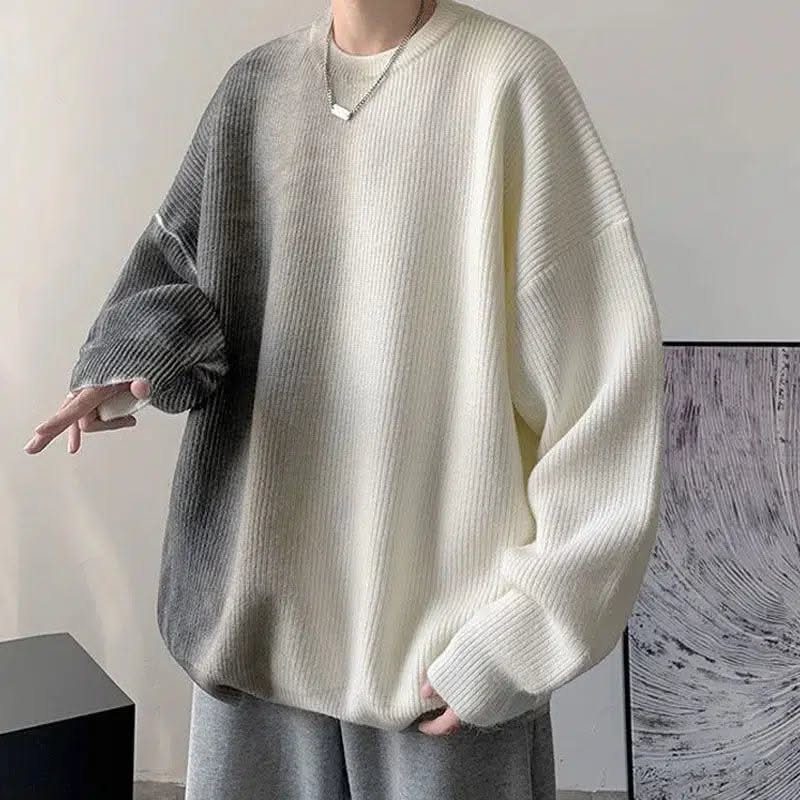
A ribbed knit with real volume keeps the rest of the outfit quiet. Slim or straight grey trousers balance the bulk, and the white-to-grey ombre does the decorating, so I’d skip a pattern anywhere else.
Keep the hem long enough to cover your belt line, and let the sleeves fall a little past the wrist. A sweater this loose on top and this loose below reads as sloppy, so taper one half.
2. Leather Jacket
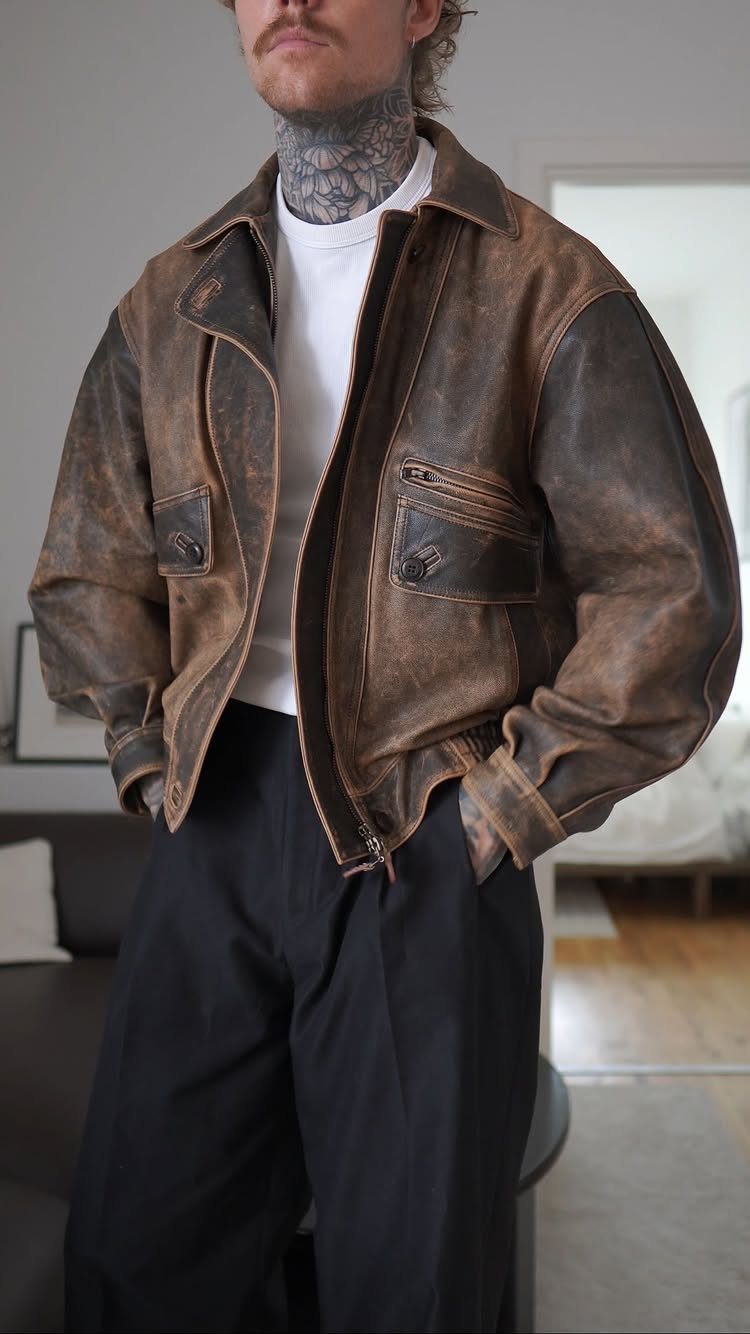
Distressed brown leather does a lot of work with very little help. A plain white crew-neck tee and dark trousers are all a leather jacket needs underneath, and I’d leave the outfit there.
Brown leather softens a black-and-white base better than a black jacket would, which can look severe next to a plain tee. A bomber cut sits at the waist, so it suits shorter and average torsos especially well.
Wear it open. Zipped to the collar, the whole look gets stiff.
3. Black Pants
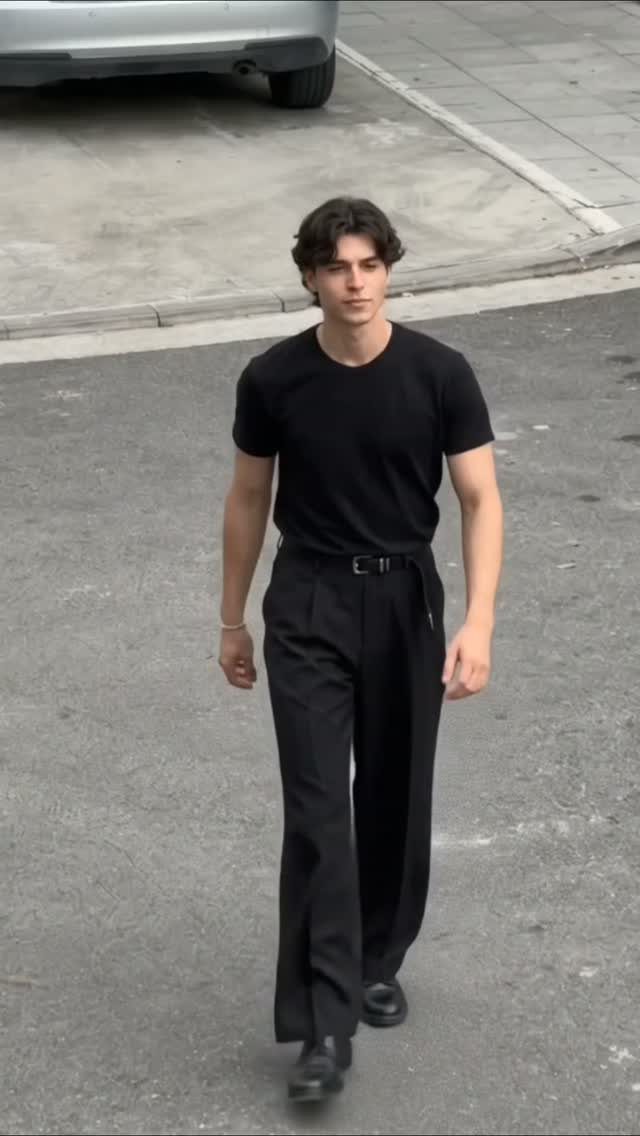
Wide-leg black trousers worn with a tucked black tee make a long, unbroken line, and a belt keeps the waist from disappearing. Black shoes finish it.
Pick the break carefully: the hem should graze the top of the shoe, not pool around it.
For a normal weekday, this is the pant I’d buy before any other dark one, because the top half can change daily while the bottom stays put.
4. The Blazer
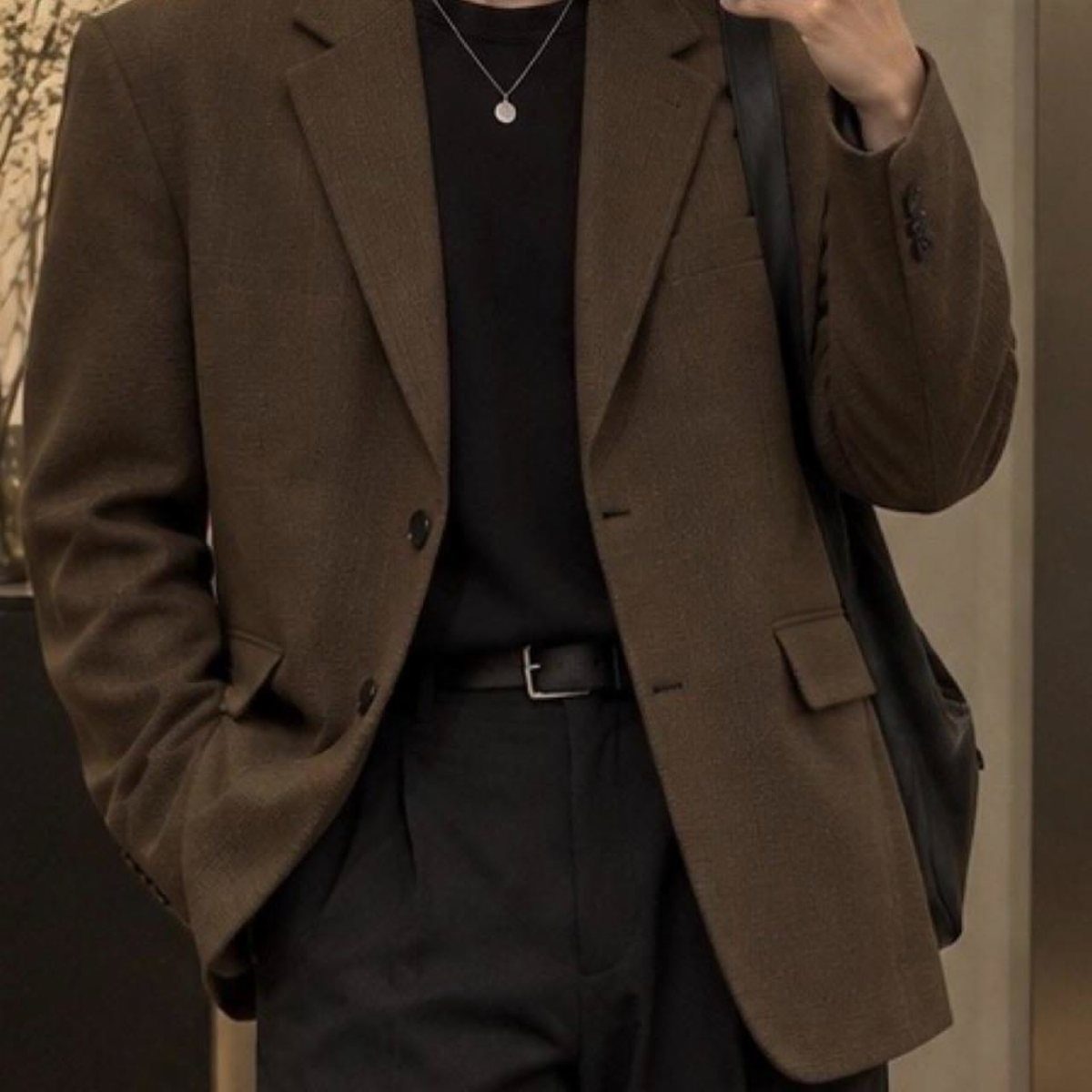
Texture makes a brown blazer worth owning. A nubby weave over a black shirt and black trousers gives you depth without adding a single extra color.
Tuck the shirt, add a belt, and keep the jewelry to one piece, like a pendant.
Shoulders matter most in a blazer: the seam should end where your arm begins, because a tailor can shorten sleeves easily but can’t fix the shoulders.
5. The Button-down Shirt
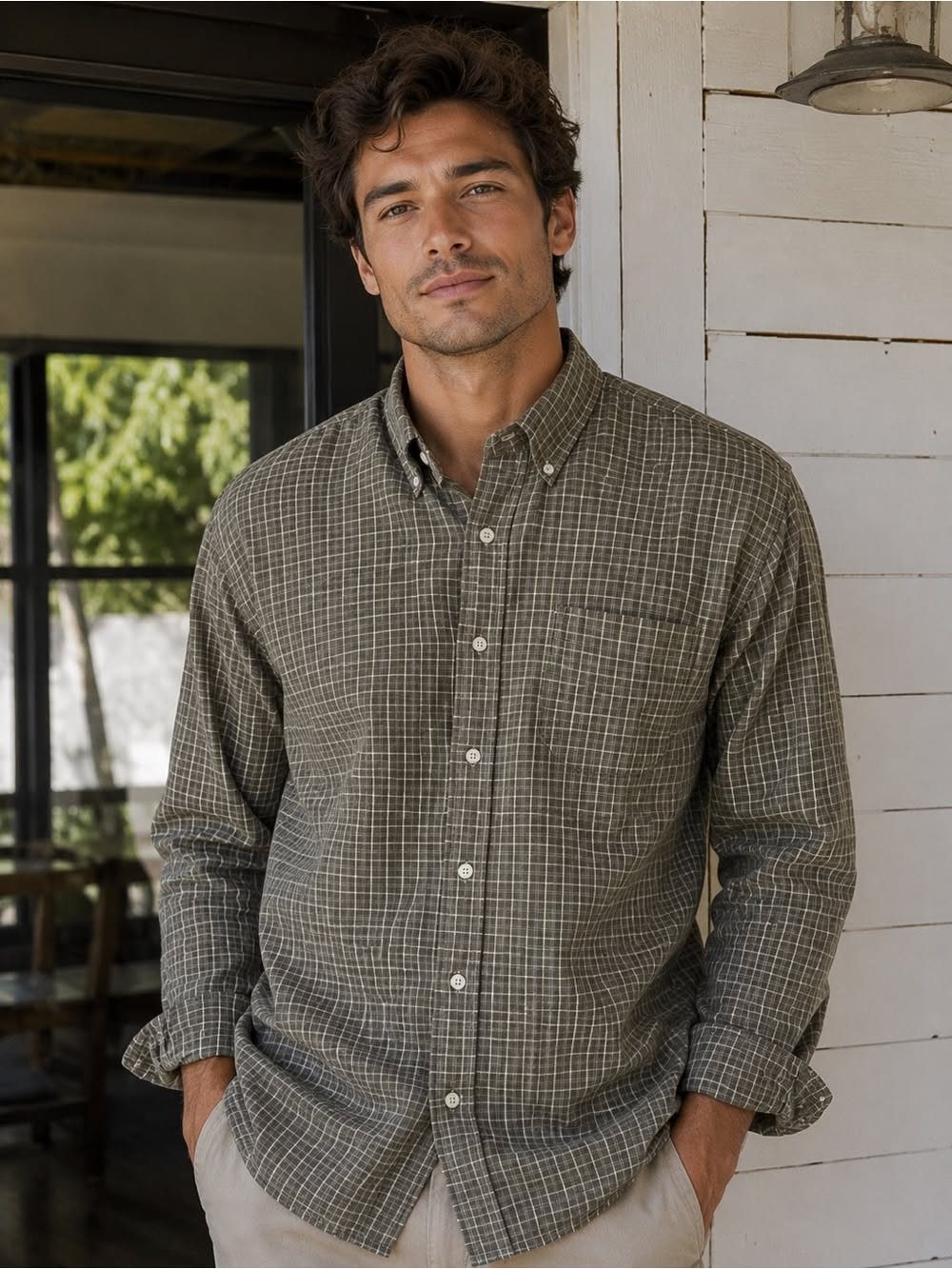
A grid-pattern shirt in olive-grey reads as a neutral, which makes it easy to pair with beige pants and almost anything else in your closet.
Wear it untucked and open over a tee, or buttoned and tucked for work. Roll the sleeves 2 turns past the elbow, not up to the shoulder.
For a budget buy, I’d pick a small check over a bold plaid. It repeats less obviously, so you can wear it more often.
6. The Everyday Tote
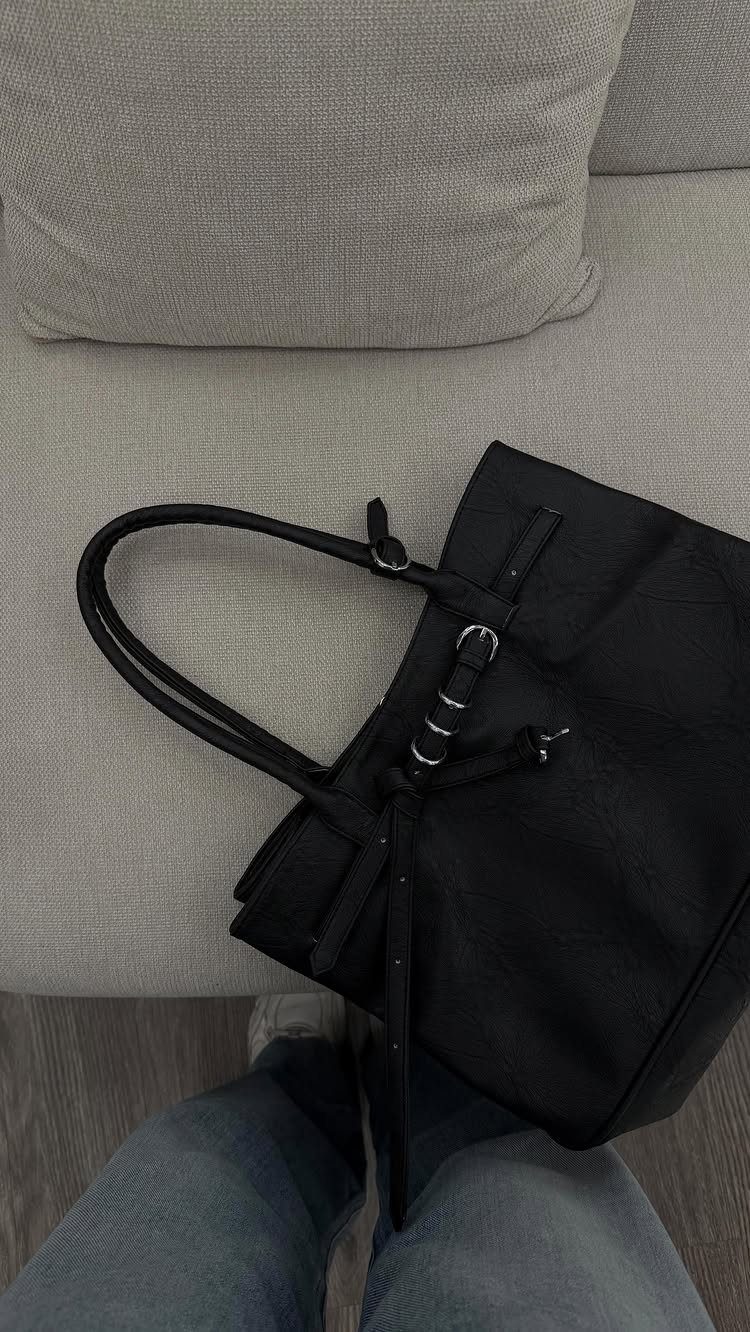
Black, structured and plain: a tote like this lives on the chair by the door and goes with every outfit in your closet. Silver hardware is the only flash it needs.
Choose one big enough for a laptop or a gym layer, with a firm base so it stands upright when set down.
Faux leather keeps the price down, and I’d say black hides scuffs better than any lighter color. Skip logos if you want it to last past a single season.
7. Fitted Long Sleeve
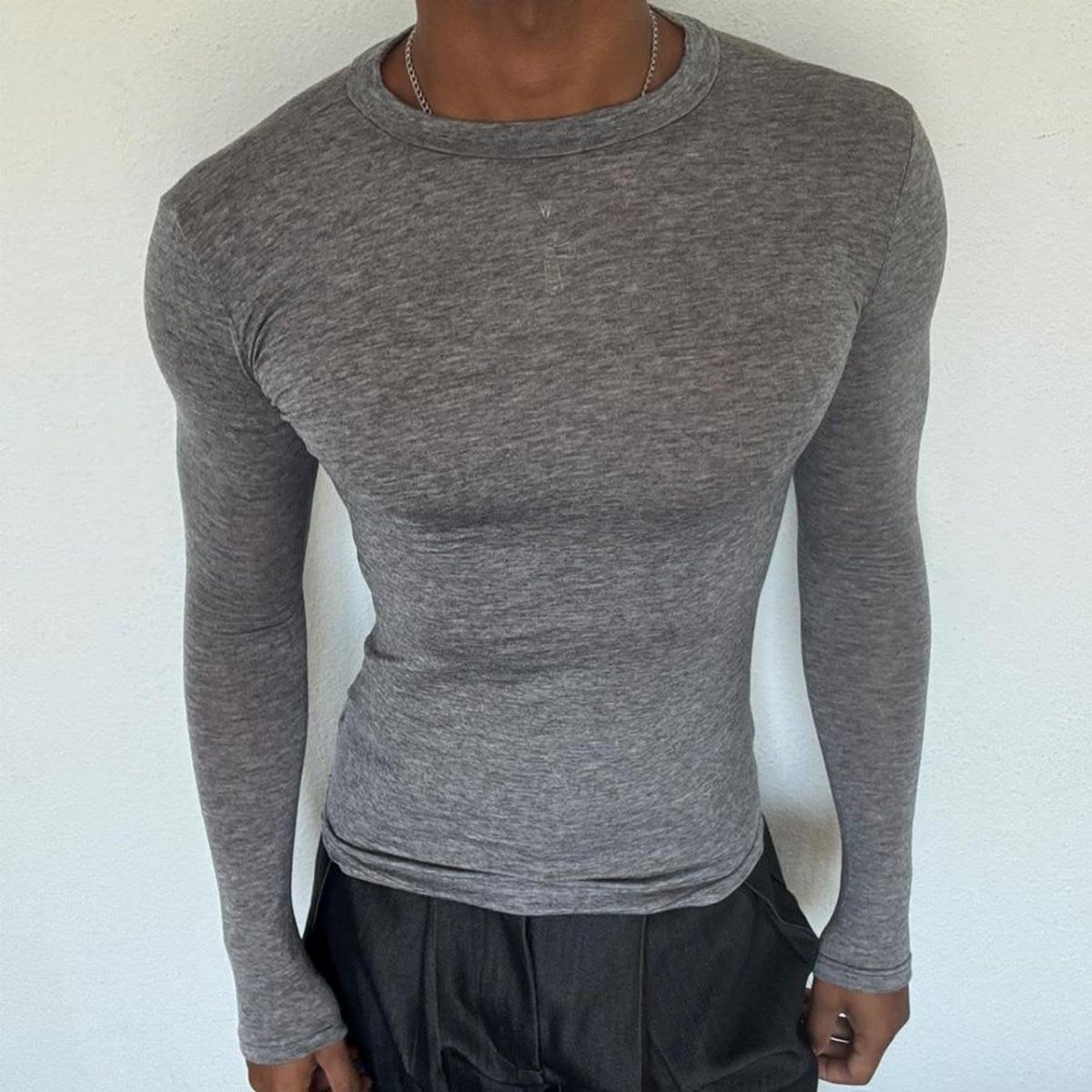
Heather grey is the easiest long sleeve to wear: it sits between black and white, so dark trousers and nearly any shoe work with it. Pick a cut that follows the chest and arms without clinging.
Sleeves should end at the wrist bone, and the hem should land around mid-fly if you leave it out. Tuck it with a belt and the same shirt looks ready for the office.
For a budget buy, I’d choose a plain crewneck with no logo.
8. The Scarf
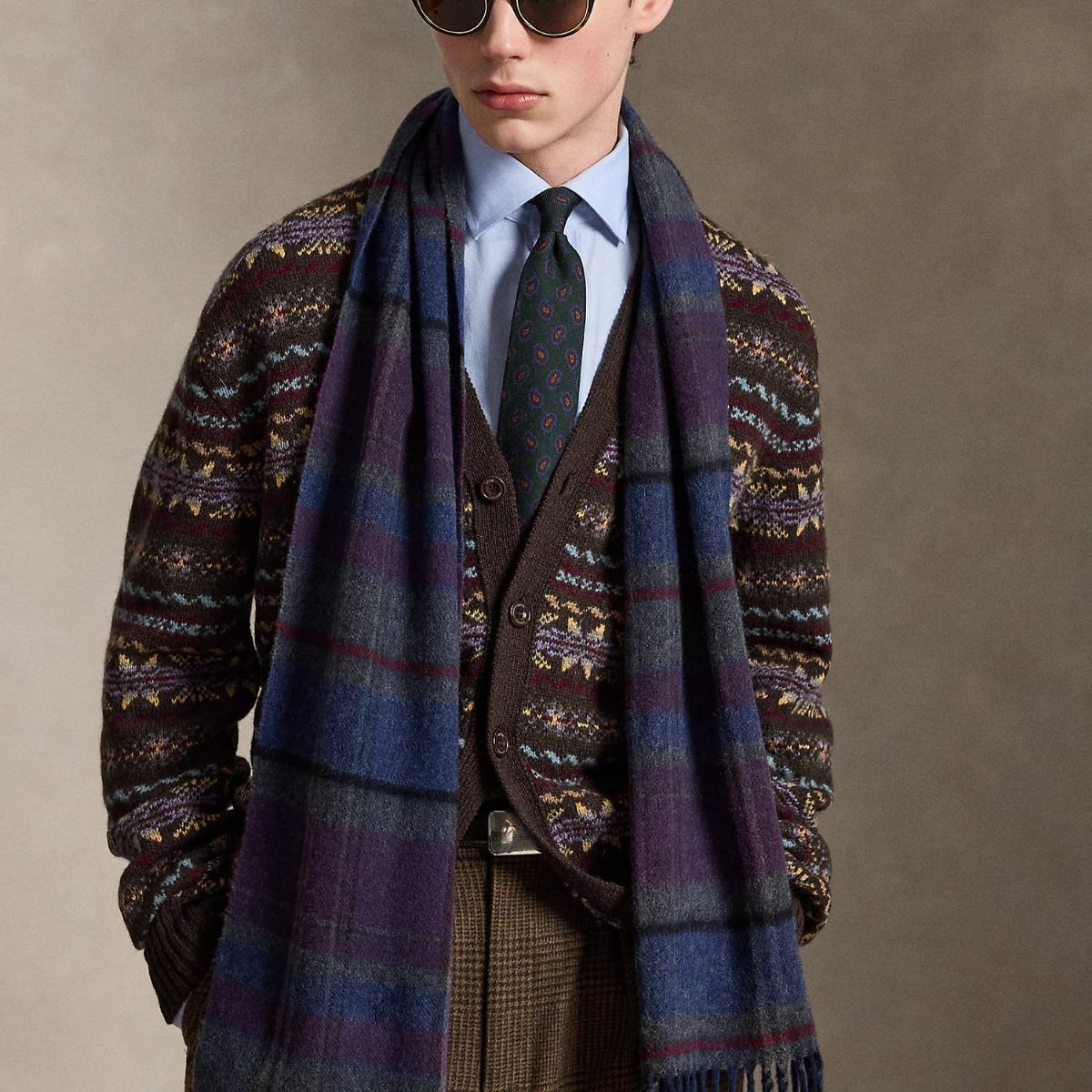
A big plaid scarf in blue and purple can carry an outfit alone, so keep what’s underneath simple. A patterned cardigan already adds a lot, which works only because the colors share a cool range.
If your layers are loud, drop the scarf to a solid. If your layers are plain, let the plaid do the talking.
Loop it once and leave the ends loose. It is the cheapest way to change a fall outfit, and I’d buy one before a new jacket.
9. Slouchy Brown Suede Bag
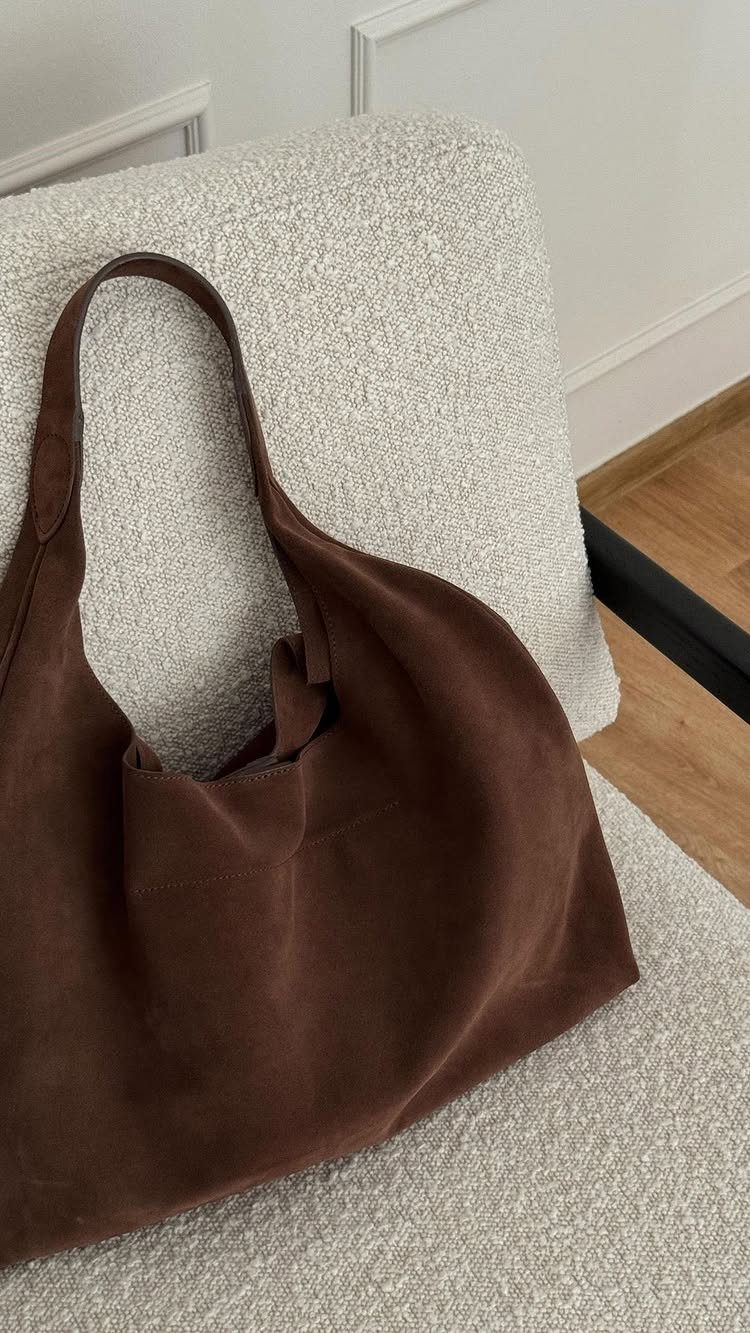
A slouchy brown suede hobo bag looks relaxed because it has no structure; it droops by design, and that droop is what you’re buying.
Rich brown goes with black, grey, cream and denim, so it works with most of a fall closet.
Suede marks easily, so I’d keep it away from rain and hold it for dry days. Choose one large enough for your daily things, since a half-empty hobo loses its shape.
For something firmer, a black structured tote holds its shape, carries a laptop without sagging, and reads as more office than weekend.
10. Tailored Wool Overcoat
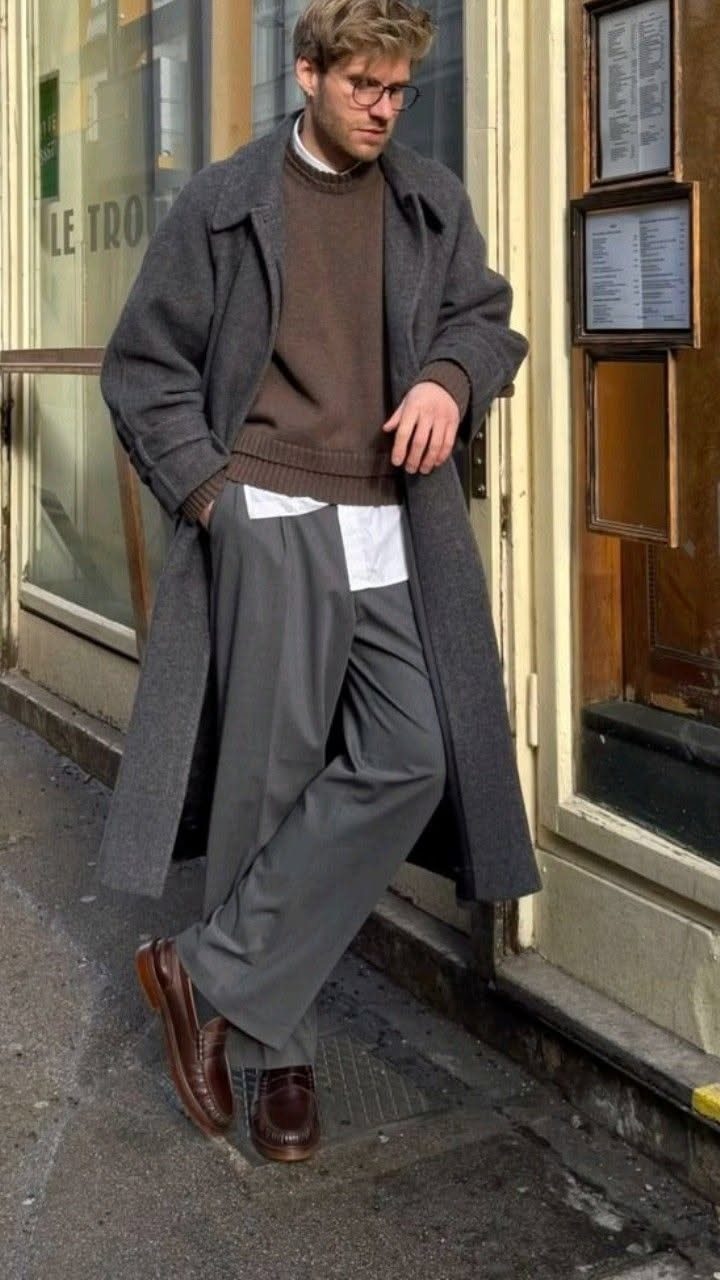
A full-length grey wool overcoat sets the standard for the layers beneath it. Wear it over a knit sweater and a collared shirt, with the collar showing at the neckline, and grey trousers and loafers finish the look.
Wool at this length does a lot of work: it covers the jacket line and makes a plain outfit look planned. Check the shoulders first, since they are the one thing a tailor cannot easily fix.
Choose grey or another neutral and you can wear it for years. It costs more than most fall pieces, so buy one good coat.
11. Classic Crewneck Sweatshirt
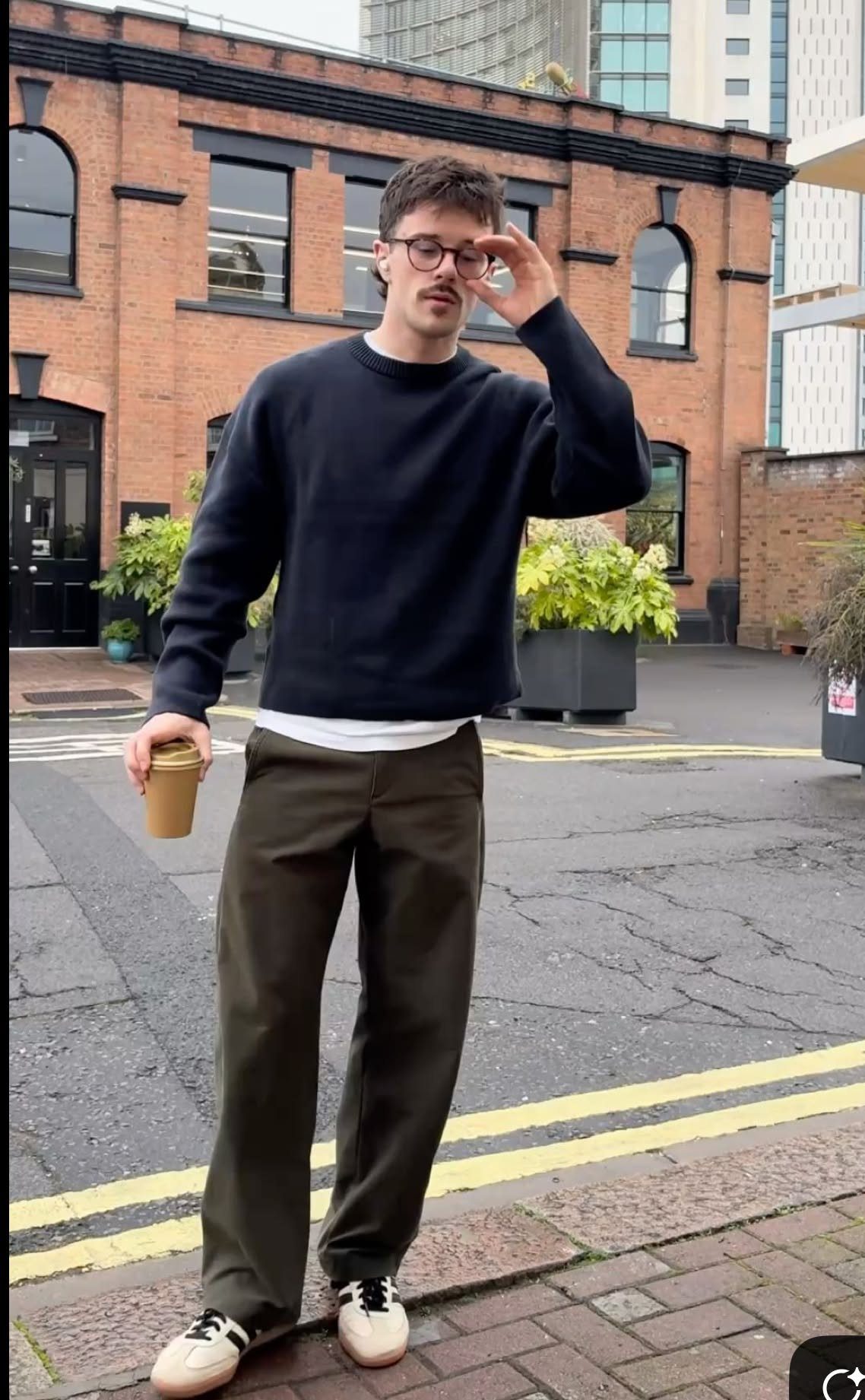
A solid navy crewneck sweatshirt looks sharper than you’d expect when the trousers are tailored. Olive trousers, a white tee peeking out at the neckline and clean sneakers make a casual outfit that still looks pulled together.
Pick a sweatshirt with no graphics and a hem that stops at the belt line. Heavy, boxy ones swallow the trousers, so look for a slim, plain fit.
This is my pick for a weekend errand run or a casual coffee date. It is also easy to find at a low price.
12. Plaid Midi Skirt
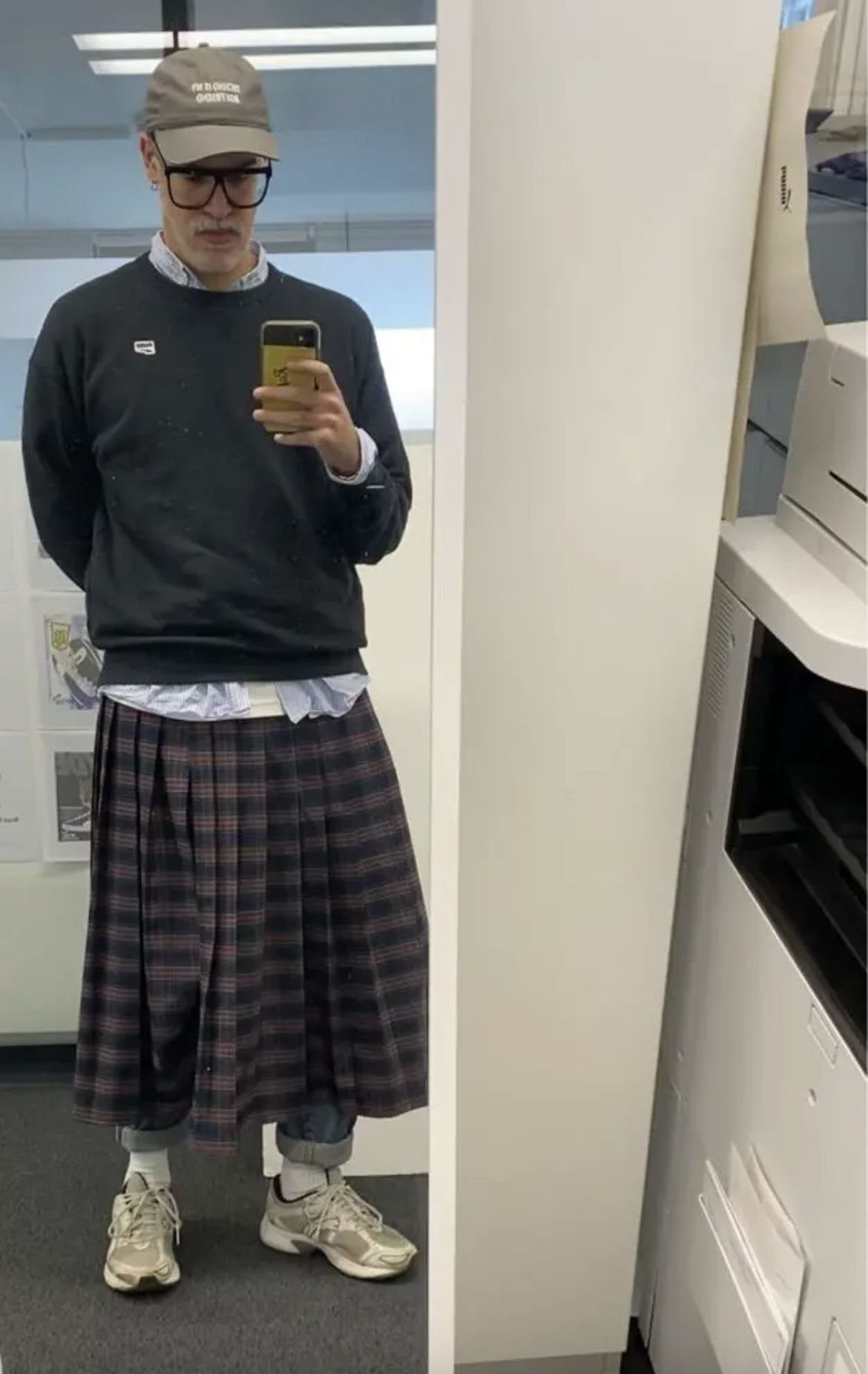
A long pleated plaid skirt over jeans is a bold move, and it works because everything else stays casual: a black sweatshirt, sneakers and a cap. The jeans underneath keep the look grounded.
Keep the plaid in one or two colors and let the rest be solid. Wear the skirt at your natural waist so the pleats hang straight.
I like it as a fall experiment that costs little: a thrifted skirt does the job, and you can see if you like it before buying anything more.
13. Suede Desert Boots
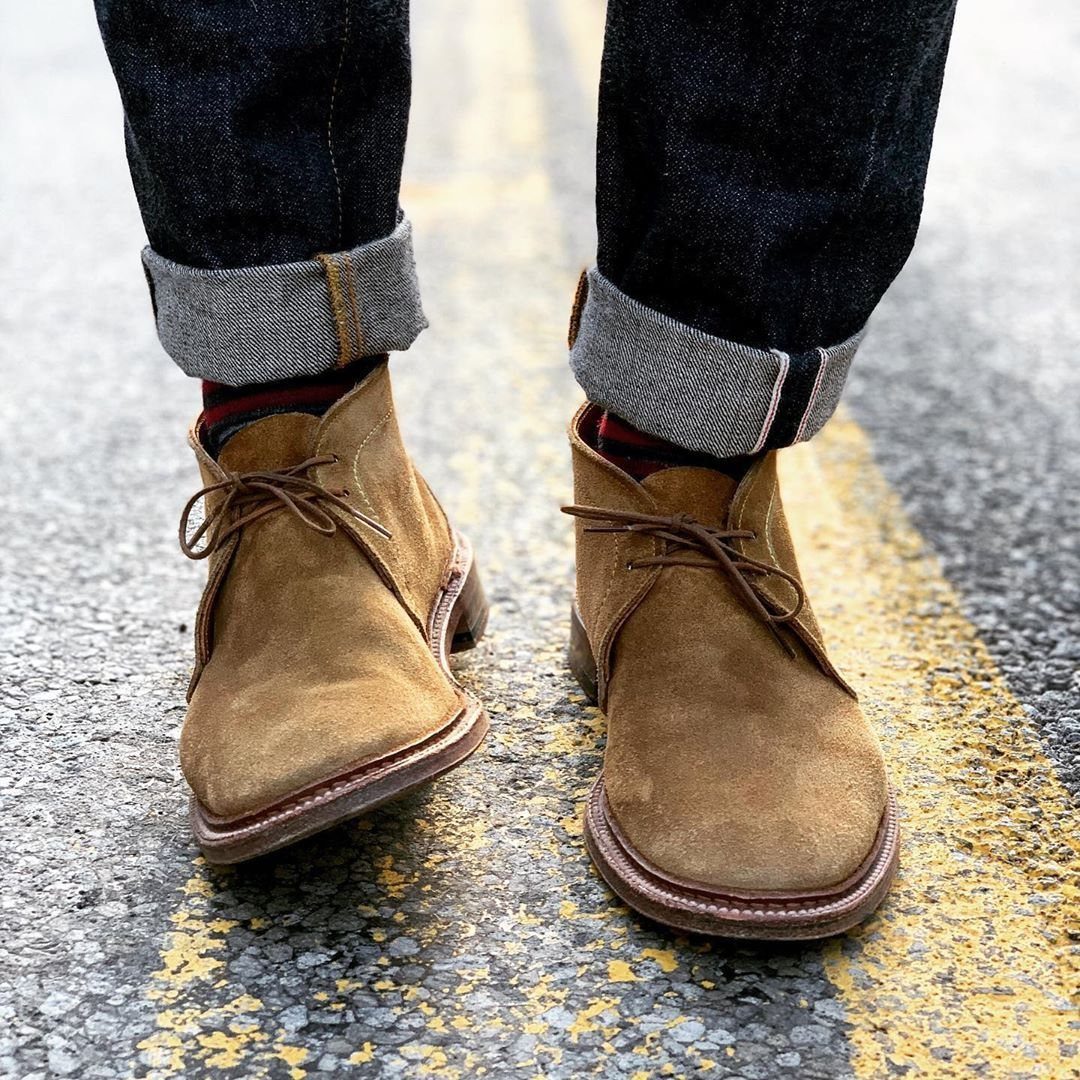
Tan suede desert boots and dark denim are a pairing that rarely misses, because the light, soft boot gives a dark pant something to contrast against.
Cuff the jeans once or twice so the ankle and the boot show, and keep the cuff narrow rather than chunky.
Rain and slush are hard on suede, which stains and darkens fast, so these boots belong on dry days; a spray protector and a brass-bristle brush help, but they won’t save a pair from a puddle.
They’re my pick over a leather boot for a casual fall weekday, since they look relaxed without looking worn out.
A plain tee or a crewneck is all the top half needs.
Layering Techniques
Start with a few plain long-sleeve and short-sleeve tees in basic colors. They are the layer under everything else, so they should be cheap enough to own several of and plain enough to disappear.
A turtleneck is the other base layer worth having, in cashmere or pima cotton. Under a vest or a favorite coat, it adds warmth without adding bulk at the collar.
Pair light with heavy so you can strip down when the afternoon warms up. A tee under a cardigan comes off easily; a turtleneck under a coat stays put all day.
Investment Pieces
Owning fewer pieces you actually love makes getting dressed faster. I would pick classic over trendy every time, because a trendy piece is the one you tire of by the next season.
Neutral colors make that work. When most of your closet goes together, a handful of items produces a lot of outfits.
A relaxed cashmere fisherman sweater is the kind of knit worth the money: it suits cool mornings and the first crisp days, and you can pull it out year after year.
One good base goes a long way: a trench, a pair of well-cut jeans, a plain tee and white sneakers already make an outfit you can wear on repeat.
Swap the trench for a sweater jacket and you have a second outfit. Sweaters are your weakness and you want 10 in the drawer?
I won’t argue, as long as each one earns its spot. Own what you love.
Color Palette
Neutrals do most of the work in fall, and moody tones sit comfortably beside them. Think deep, muted shades rather than bright ones.
A long-sleeve piece in black and white earns its place because it works week after week, and a belt, scarf or different jewelry is enough to make it look new.
A belt, a watch or a different pair of shoes is enough.
Keep the base neutral and let one moody color carry the outfit. That way everything still mixes with the rest of your closet.
Summer is ending soon, which means it’s the perfect time to start building out your fall capsule wardrobe. Think about those essential buys that give a well-rounded closet its flair and functionality.
Frequently Asked Questions
What are some essentials for a fall wardrobe?
Start with a grey wool overcoat, a brown leather jacket, a fitted heather grey long sleeve, dark trousers, and a few plain tees to layer under everything.
Add a plaid scarf, suede desert boots with dark denim, and one good knit such as a cashmere fisherman sweater. Neutrals do most of the work, so most of these pieces mix with each other.
What is the 3-3-3 rule for clothes?
The rule says to own three tops, three bottoms, and three pairs of shoes and mix them into outfits.
It works best when everything is a neutral, since pieces that share a palette combine freely. A fall version could pair grey, black, and olive trousers with tees, a long sleeve, and a sweater.
What are the trendy fall looks?
Moody, muted tones sit beside neutrals this season, and a long pleated plaid skirt worn over jeans is one bold experiment. Brown suede bags, oversized ribbed sweaters, and big plaid scarves are other ways to wear the trend.
A neutral base of navy, gray, and brown works hardest in fall, and a single current piece, like a rust overshirt or a chunky cream knit, can sit on top without making the rest of the wardrobe obsolete.





