The 7 outfits here run from a navy quarter-zip with patterned gray trousers to a cream cable-knit quarter-zip layered over a white shirt and dark tie, so the real range is how much formality you add on top of chinos or trousers.
Your office sets the starting point: where blazers are common, begin with an unstructured blazer, and where a crisp shirt is enough, a well-fitted button-up or a quarter-zip with trousers will do.
1. Unstructured Blazers
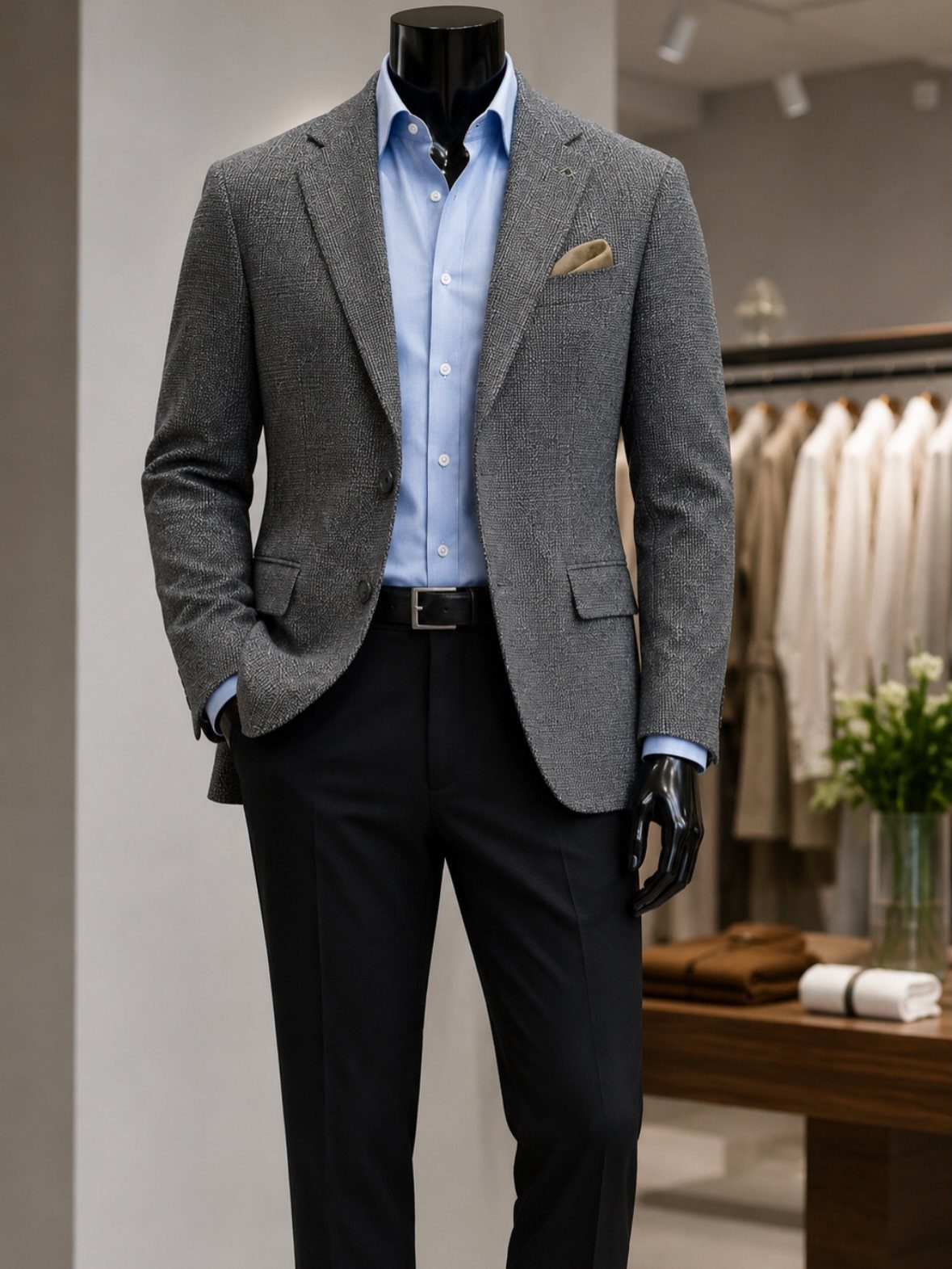
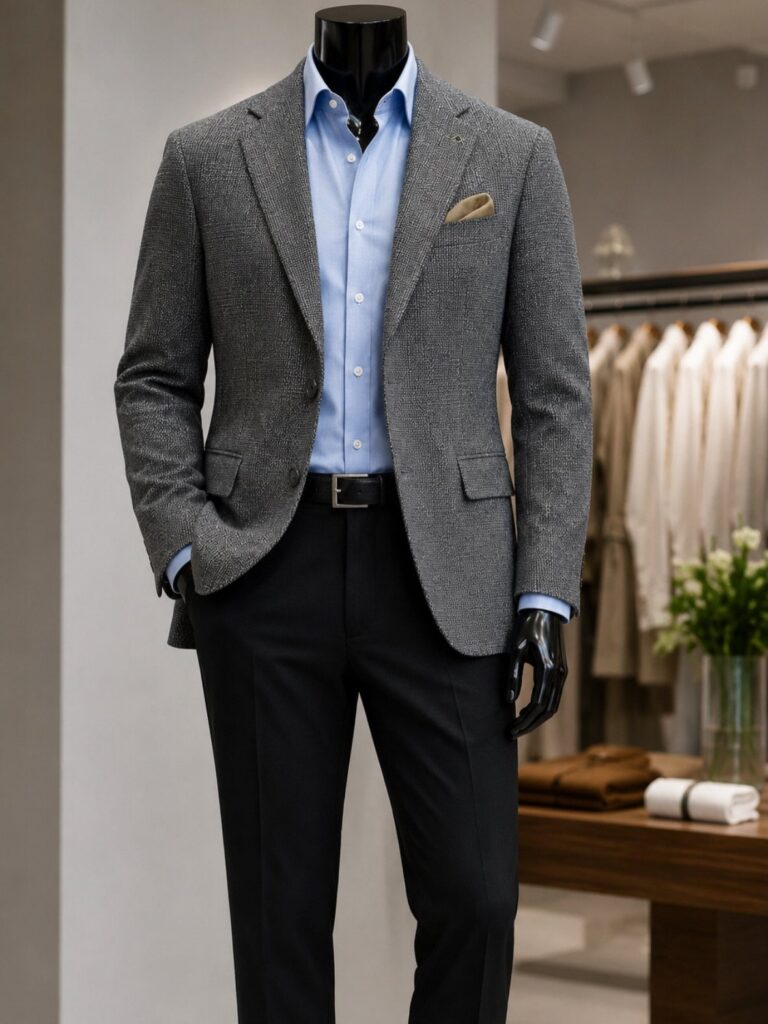
A grey textured blazer with no padded shoulders or stiff lining is the easiest way to make chinos and a dress shirt look planned. Soft construction keeps it relaxed, and the texture adds interest that a flat solid can’t.
An unstructured blazer sits best over a light blue shirt and darker trousers, since the soft shoulder already supplies the texture and the rest can stay quiet; a pocket square in white linen is optional, and it only needs a loose fold.
I’d skip the tie.
Buy it to sit cleanly across the shoulders; that is the one fit point a tailor can’t easily fix.
2. The Jacket

Outerwear gets forgotten, yet it is the first thing a coworker sees. A lightweight navy overshirt jacket does the job well: it covers a plain white tee and reads neater than a hoodie or bomber.
Matching it to your trousers in a similar shade gives a clean, pulled-together line. Keep the pieces simple and let the jacket do the work.
I’d choose navy over black, since it pairs with brown shoes and gray alike.
3. Well-Fitted Button-Ups
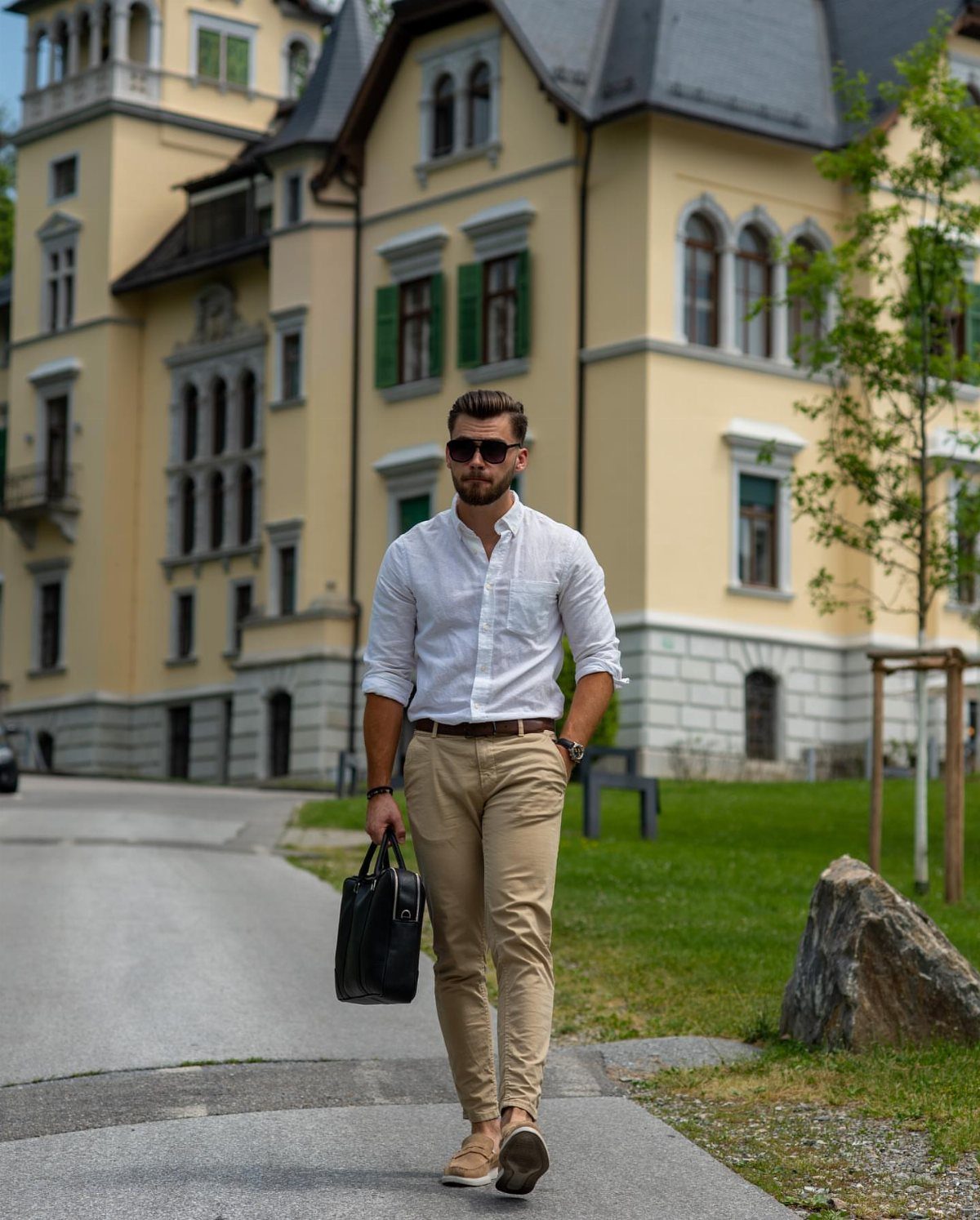
Tucked in and sized right, a white button-up with beige chinos is about as dependable as an office outfit gets. Polos are the other reliable top, and I’d keep them for warmer, looser days.
The shirt should skim your torso without pulling at the buttons, and the sleeves should end at the wrist. Loafers finish it without effort.
A shirt that fits well looks better than an expensive one that doesn’t.
4. Brogues in Brown Suede
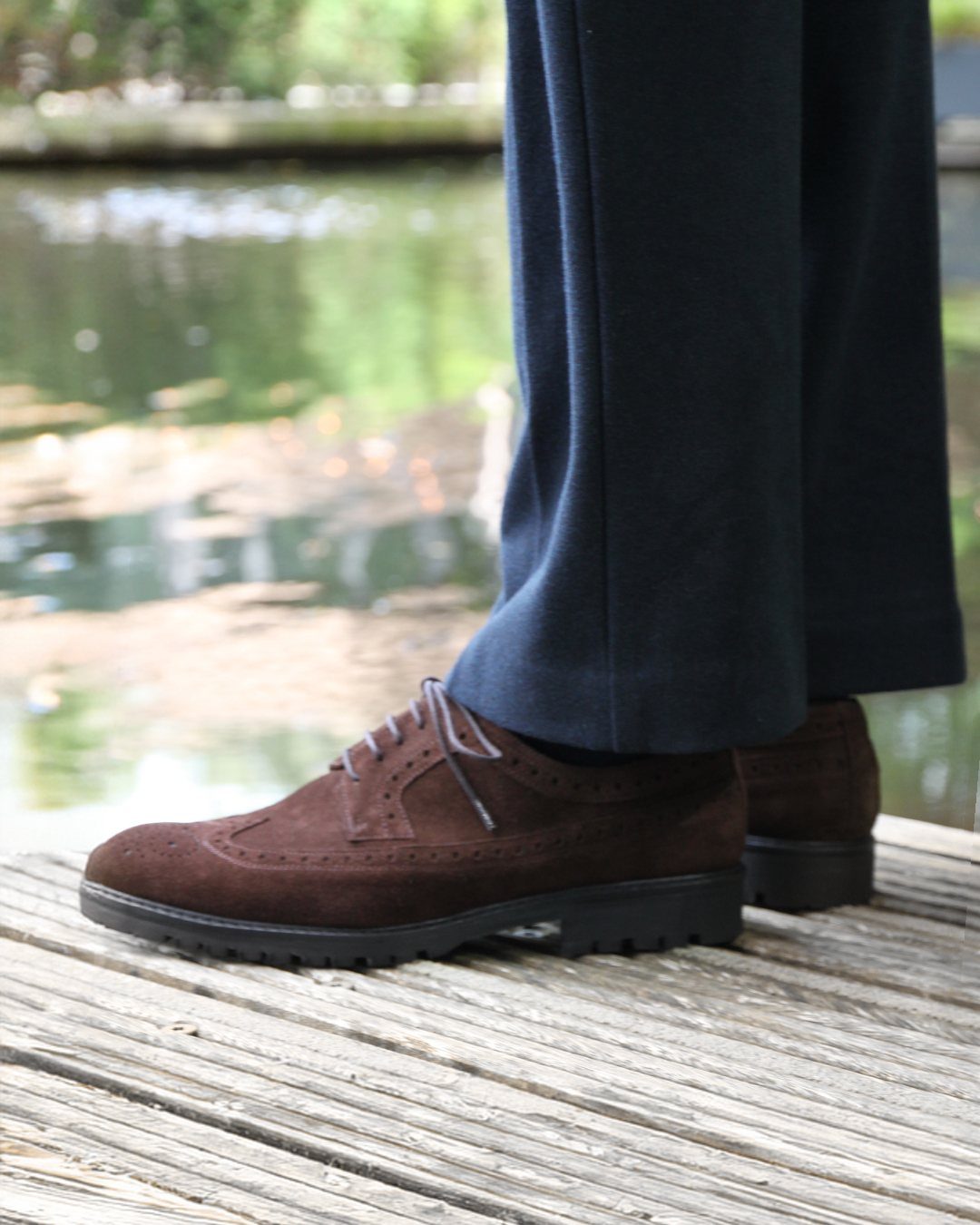
Dark brown suede brogues soften navy trousers in a way polished black leather never does. The perforations add detail, and the suede keeps the shoe from looking stiff.
Clean leather or suede sneakers work with the same jeans and chinos, so let the day decide: brogues for the office or dinner, sneakers for errands and weekends. For a desk and a meeting, I’d reach for the brogues.
Suede dislikes rain, so check the forecast before you commit.
5. Quarter-Zip Over Tie
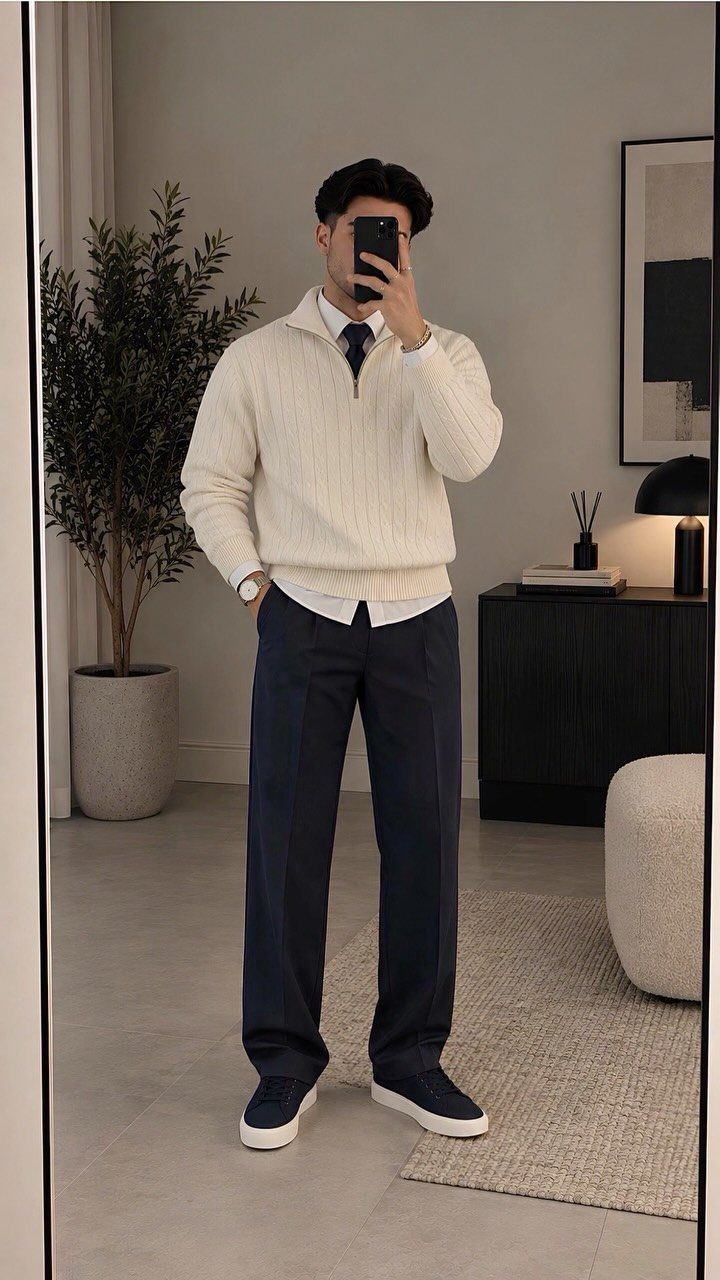
Layering a cream cable-knit quarter-zip over a white shirt and dark tie gives you a tie that feels relaxed. Keep the zip low enough that the collar and knot stay visible.
Navy trousers anchor the look, and clean dark sneakers keep it casual. I like how it handles a cold office without a jacket.
A thinner knit sits better under the collar than a chunky one.
6. Brown Suede Loafers
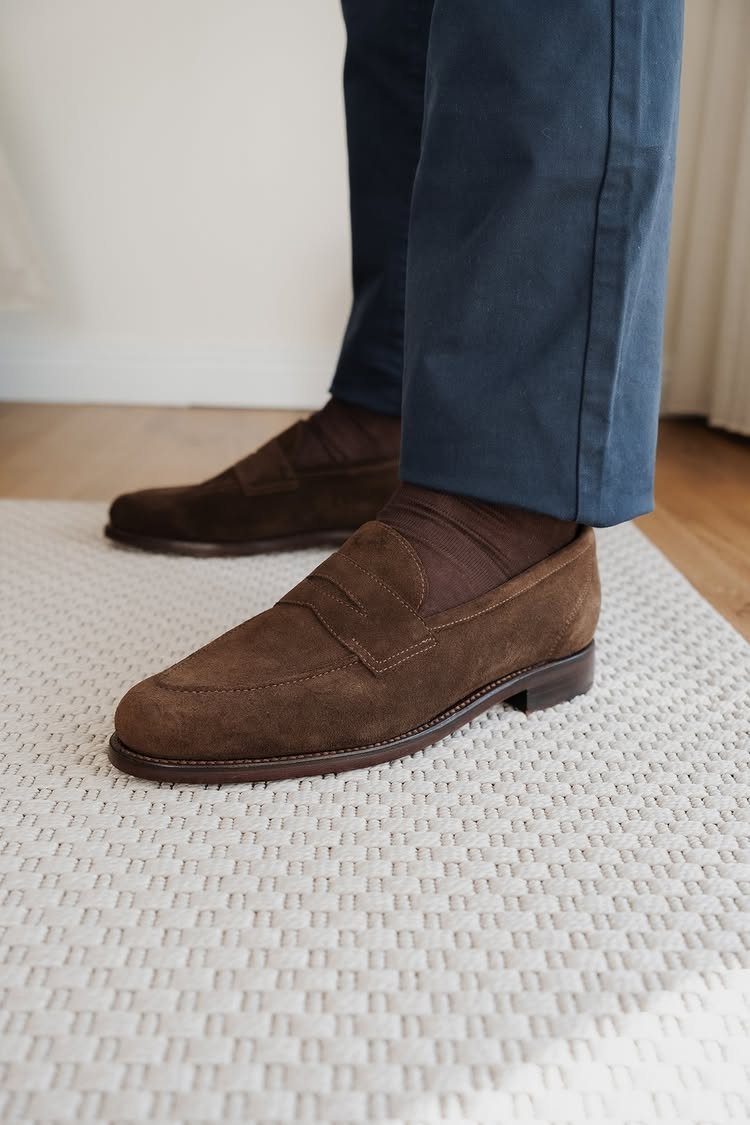
Brown suede penny loafers with tailored blue trousers make one of the easiest pairings in business casual. The suede adds texture, and the brown reads warmer than black.
Matching the socks to the shoe, as brown socks do here, keeps the line from the trouser to the loafer unbroken. I’d hem the trousers to just graze the shoe.
Loafers slip on fast, which is a real perk on busy mornings.
7. Quarter-Zip Sweater with Trousers

A navy quarter-zip with patterned gray trousers is a tie-free outfit that still looks dressed. The knit stands in for the shirt and jacket, so the trousers can carry the pattern while the sweater stays plain.
Keep the pattern low-contrast, as in a blue-gray texture, so navy and gray read as one family. Black leather dress shoes suit the sharper end of this look, and I’d choose them over sneakers for the office.
Zip it partway, and make sure the hem ends at the belt line rather than bunching over it.
Understanding Business Casual
Business casual sits between your weekend clothes and what a midcentury executive would have worn to the office. It looks relaxed but controlled: tailored without being stiff, comfortable without looking slept in.
The dress code shifts by industry and company culture, so treat it as a range, not a single uniform. Business casual draws its line at hoodies, sweatpants, and sneakers that have seen better days.
What it allows is better than that list suggests.
Dark jeans, sweaters, smart shoes and soft blazers all qualify, and they are also the pieces that anchor a whole wardrobe. Buy them for your job first, then check that they still look like you.
Because business casual doesn’t have to be boring. You should still look like you: Your job is just to find which pieces land on the bullseye in the Venn diagram featuring your job and your sartorial vibe.
— GQ
Dressing for Your Role
Each office runs on a dress code nobody wrote down, and the fastest way to learn it is to look at what the people you respect wear.
Notice whether blazers are common or a crisp shirt is enough, and whether jeans and polos show up on ordinary days.
Then dress a half step above that baseline.
If you’re junior, this matters most, because it signals that you take the job seriously. If you’re senior, you set the standard others copy, so the baseline starts with you.
Interviews call for more formality than the daily norm.
A button-down, chinos and a tie is the right answer, even if the interviewer walks in wearing a T-shirt. Walking in underdressed costs you on day one, and a first impression like that takes months to repair.
Color and Fabric Choices
Neutral colors keep an outfit polished: navy, tan, gray, olive, white and soft blue. They pair easily, so most of what you own will mix without much thought.
Bright colors and bold patterns push a polo toward weekend wear, and so do large logos. Keep it plain and streamlined.
Fabric matters as much as color.
For polos, I’d look for a premium double knit jersey, which gives comfort without losing structure. Wear a polo with polished trousers and loafers or dress shoes, never sneakers, and save it for days when your office leans casual.
Frequently Asked Questions
What is business casual attire for men?
Business casual lives in the gap between weekend clothes and a suit and tie: tailored but not stiff, relaxed but never rumpled. Expect the line to move with your industry and your office, so think of it as a range.
What is not acceptable for business casual?
Hoodies, sweatpants and tired, beat-up sneakers don’t make the cut. Shorts, ripped denim and graphic tees are generally out too, and a polo only works where the office leans casual.
What is the 3-3-3 rule for men’s clothing?
I don’t have a firm 3-3-3 rule to give you, and I’d rather not invent one. Build from those and most of what you own will go together without much thought.
Can men wear a polo in a business casual office?
Yes, on warm days in an office that runs relaxed. I’d pick a heavier double knit jersey, since it holds its shape and still feels easy to wear.





