The looks here run from a white polo with no jacket or tie to a grey suit with a purple tie, and the dress code at your workplace decides where you land.
1. THE POLO

A polo is one of the easiest shirts in an office wardrobe to wear well, because the knit collar does much of the work of a dress shirt without the stiffness of one.
White is the safest color, and the one I’d buy first.
Comfort is the main argument for it, and the short-sleeve version makes sense at a desk. Keep the collar flat and the hem long enough to tuck, and it reads as deliberate rather than weekend.
2. Layering Techniques
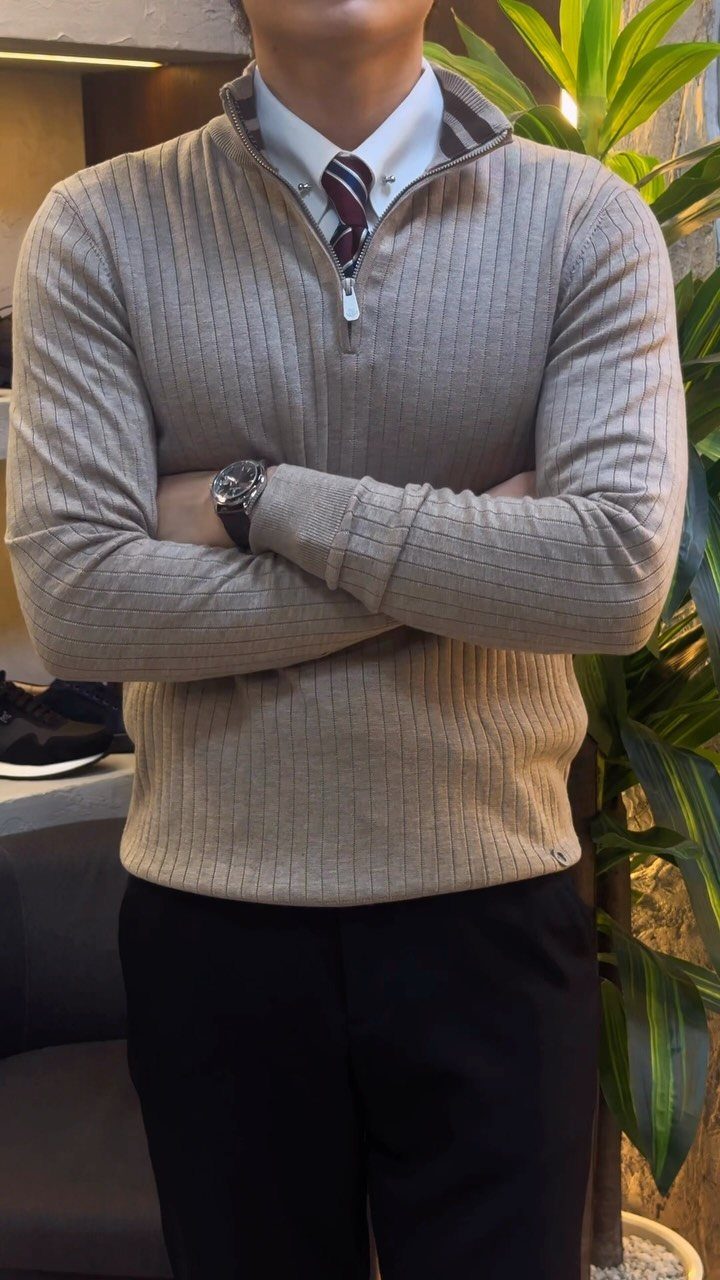
Choose a fine-gauge knit in a neutral like tan; a chunky one bunches at the neck. A tie bar keeps the tie from swinging out when you lean forward.
Dark trousers finish it. Skip a loud tie here, since the sweater already adds texture.
3. Business Casual Definition

Business casual is a step down from a suit: a collared shirt and real trousers, with no jacket or tie required. A white long-sleeved button-down, dark blue trousers and black leather loafers is about as clear a version as exists.
Keep the shirt crisp and the trousers a shade darker than you think you need. Loafers do the work of lace-ups with less stiffness.
White socks are the one detail I’d change; a dark pair keeps the line from trousers to shoe unbroken.
4. Outfit 1

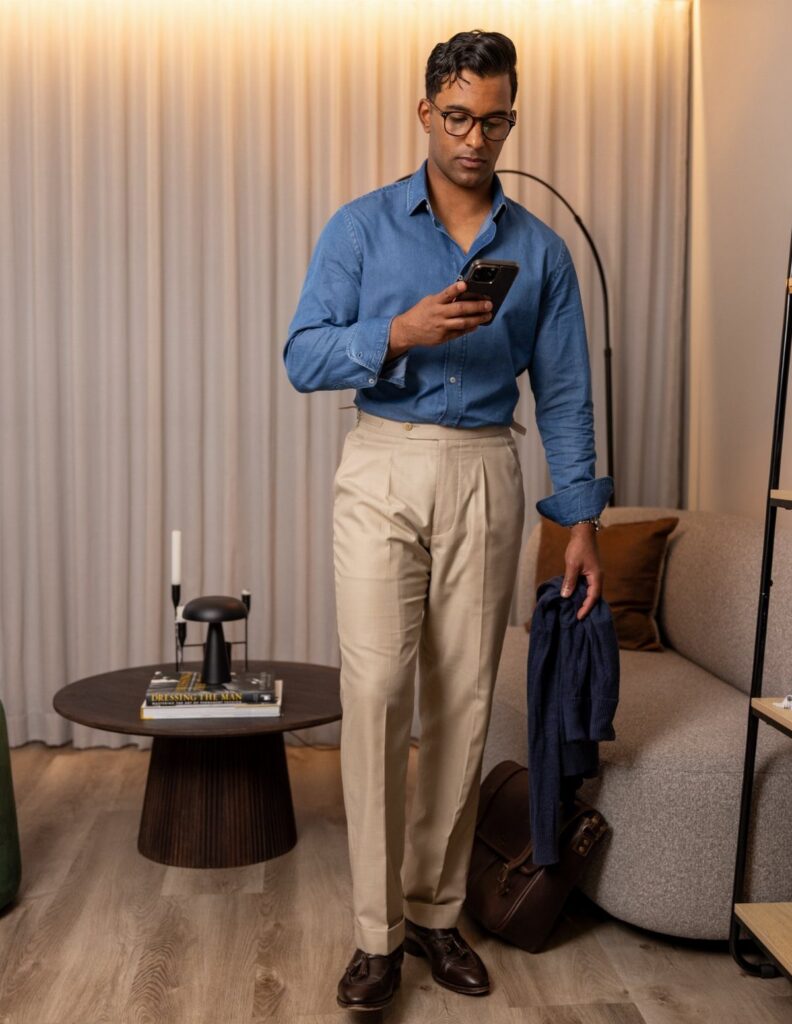
Because the shirt is plain, the tie can carry the pattern.
Pull one color from the tie into nothing else, and let the cream trousers stay quiet. That keeps 3 elements from competing.
Cream shows dirt faster than navy or grey, so I’d save it for days without a long commute. A structured bag in a classic pattern adds character without breaking the look.
5. Patterned Button-Down with Trousers
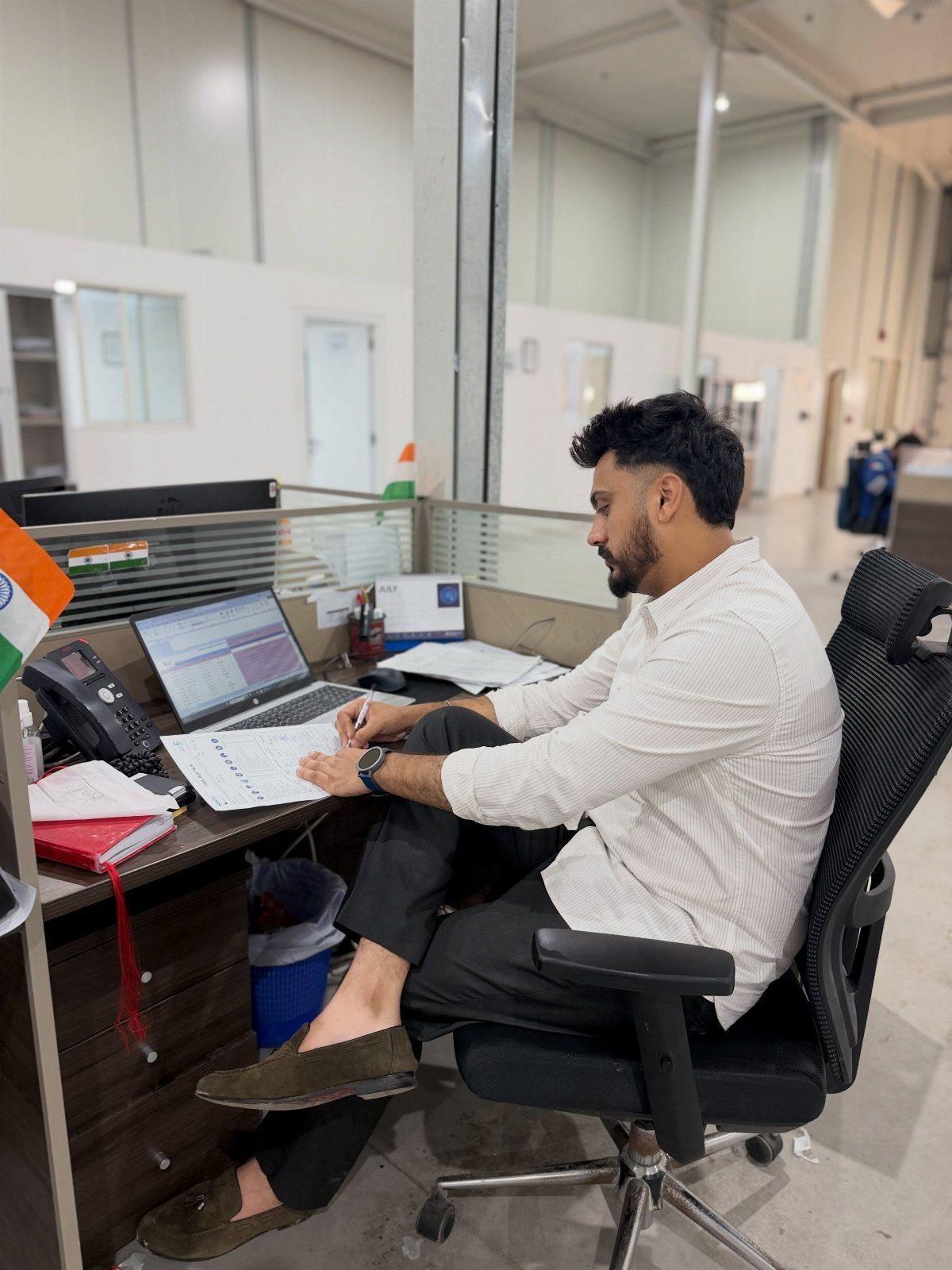
A striped button-down with dark trousers solves the problem of a shirt that feels too plain on its own. The stripe adds interest, and the dark trousers keep it grounded.
Pick stripes of medium width in a muted color; thin, high-contrast ones can look busy under office lighting. Suede loafers soften the outfit, though they dislike rain, so check the forecast.
Leave the tie at home. A patterned shirt already has plenty to say.
6. Classic White Button-Down Shirt

A crisp white button-down is the shirt I’d tell any man to own first. It goes under a jacket, under a sweater, or alone with dark trousers, and it works in a glass-walled office as easily as a traditional one.
Crispness is the whole appeal, so iron it or buy a wrinkle-resistant weave. Check that the collar stands up on its own and the cuffs sit at the wrist bone.
Wear it with glasses, a watch, or nothing extra. It needs little help.
7. Colored Button-Down with Grey Trousers

Purple is a bolder shirt color than most offices see, and grey trousers are what make it work. Grey is neutral enough to let the shirt lead without the outfit turning loud.
Choose a muted shade, closer to plum or lavender than to bright violet, and keep everything else quiet. Tailored trousers matter more here than usual, since a color draws the eye to fit.
The pink-accented socks are a fun touch, but one accent is plenty. I’d keep the belt and shoes plain.
8. Quarter-Zip Sweater with Tie
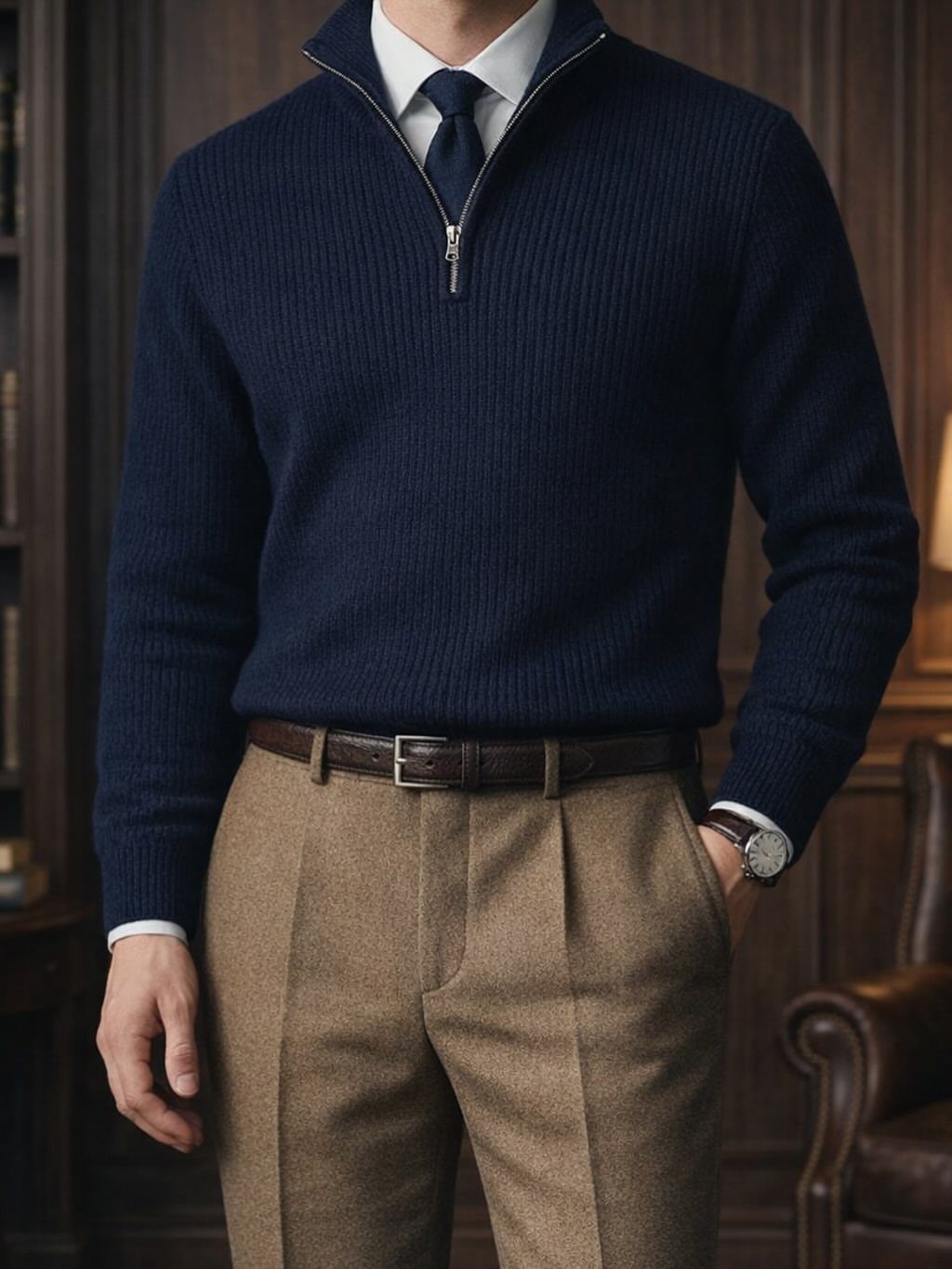
Under a quarter-zip, the collar and tie stay visible while the knit covers the shirt, so you get a layered look that is warmer than a dress shirt alone.
Navy is the easy color to pair with a white shirt and a dark tie. Zip it only partway so the collar sits flat and the knot stays visible.
Brown wool trousers with a pleat give the outfit some weight. A thin knit works best; a thick one will crowd the tie.
9. Classic Grey Suit and Tie

A grey suit is the most forgiving suit color I know, and the white shirt keeps it clean.
Let the tie be the one place for color. Purple works because it sits well against grey without shouting, though navy or burgundy would do the same job.
Spend your money on tailoring before fabric. Sleeves should show a sliver of shirt cuff, and the jacket should lie flat across the shoulders when you sit.
10. Light Blue Button-Down with Tie

Light blue with a red patterned tie is a pairing I trust on a day with meetings. The blue is softer than white, and the red gives the tie some authority.
Keep the pattern small so it reads as texture, not noise. A solid dark jacket or none at all both suit it.
Press the shirt, and knot the tie so a small dimple sits just under the knot.
Understanding Dress Codes
Business casual shifts with the industry, so the same outfit can be right at one company and wrong at another.
Creative shops like small marketing agencies, design studios and architecture firms tend to be relaxed enough that dark jeans and an untucked oxford rarely get a second look.
Finance is a different story: the days run long, the work follows the markets, and I’d leave casual denim at home there altogether.
If you can’t tell where your office falls, look at what people wear to the first casual team hang.
Before that happens, study everyone’s Monday outfits and picture them about 15 percent more relaxed. That is a safe target.
Start a notch dressier than you think you need, then edit as you go. Comfort still counts: an outfit you fidget in won’t look sharp, whatever the dress code says.
A decade ago, it was much clearer: you’d be wearing pants that weren’t jeans and a more casual button-up shirt, and probably only on Friday. And while that formula still very much works, the spectrum has undeniably widened.
— GQ
Dressing for Comfort
Versatility is what a working wardrobe should be built on. Pieces that mix, and that dress up or down, give you far more outfits than a closet of one-offs.
Build on neutrals: navy, black, gray, brown and khaki cover nearly everything and mix without effort.
Then add a few accent pieces for personality. Green, orange or terracotta, and pale blue or pink all stay business appropriate.
For comfort, look at stretch. A twill suit with a bit of stretch moves with you and still keeps a classic tailored finish.
A dress shirt in a performance stretch fabric, in a textured blue, does the same job at a desk and on a commute.
Check the fabric label before you buy, and favor weaves that feel light in your hand. A shirt you forget you’re wearing is the goal.
Importance of Fit
Fit does more for an outfit than price does. A modest shirt that sits right on the shoulders looks better than an expensive one that doesn’t.
Start with the shoulders, since a tailor can’t easily fix them.
The seam should land at the edge of your shoulder bone. Then check the chest: you should be able to move your arms and sit without the buttons pulling.
Sleeve length and trouser hem are quick, cheap alterations that tailors handle all the time. Taking in a loose waist or tapering a shirt is usually simple too.
When clothes fit, you stop adjusting them, and that ease reads as confidence. Colleagues notice the man who looks settled in his clothes.
Frequently Asked Questions
What should men wear to the office?
Pick polished but comfortable clothes that fit your industry.
A collared shirt, real trousers in a dark neutral, and loafers or lace-ups cover most offices. On your first week, dress slightly above the level you expect, and let what your coworkers wear tell you how far to come down.
What is business casual attire for men?
Business casual is a step down from a suit: a collared shirt and real trousers, with no jacket or tie required. Industry changes the answer, so an outfit that works at one company can look off at the next.
How do you figure out the dress code at a new office?
Watch what people wear on Mondays and picture those outfits about 15 percent more relaxed. Design studios and agencies run looser; finance leans dressier, and jeans rarely fit there.





