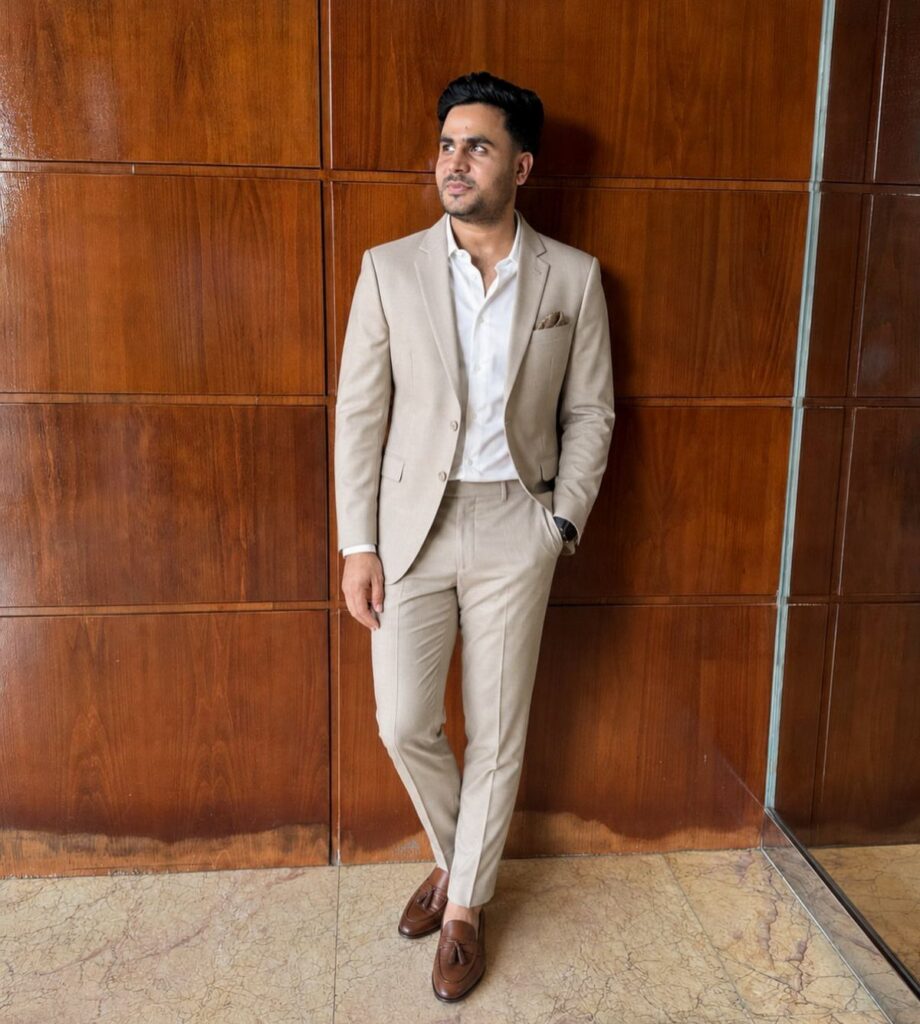
What decides a suit without a tie is how formal the room is: the same open collar that works at a dinner or a warm-weather event can look wrong in an office or an interview.
The list starts with a blue suit and a light shirt, then moves through black, gray, maroon and beige, with a turtleneck and a polo in the mix, and the fit and dress code notes come last.
2 open buttons are enough on a dress shirt, and with no tie the collar carries the whole neckline, so it has to fit and sit flat.
1. Blue Suit No Tie
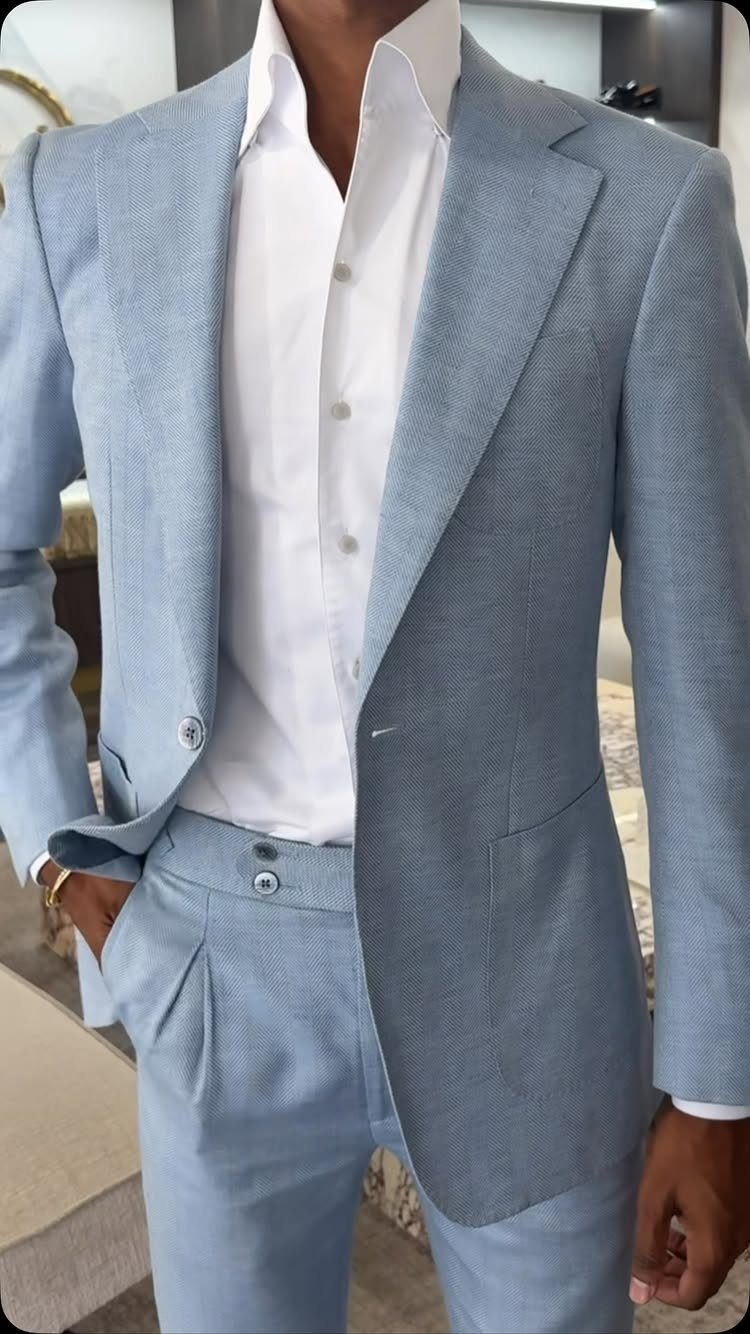
Navy and mid blues are the easiest suits to wear open at the neck. A blue suit reads nearly as formal as black, so losing the tie doesn’t make it look unfinished.
A white button-down works here because the soft collar holds its roll without a knot, so the neckline stays tidy. The herringbone texture in the jacket adds interest, which a tie would otherwise have to supply.
I’d pick blue over black for this reason alone.
2. Light-colored Dress Shirt
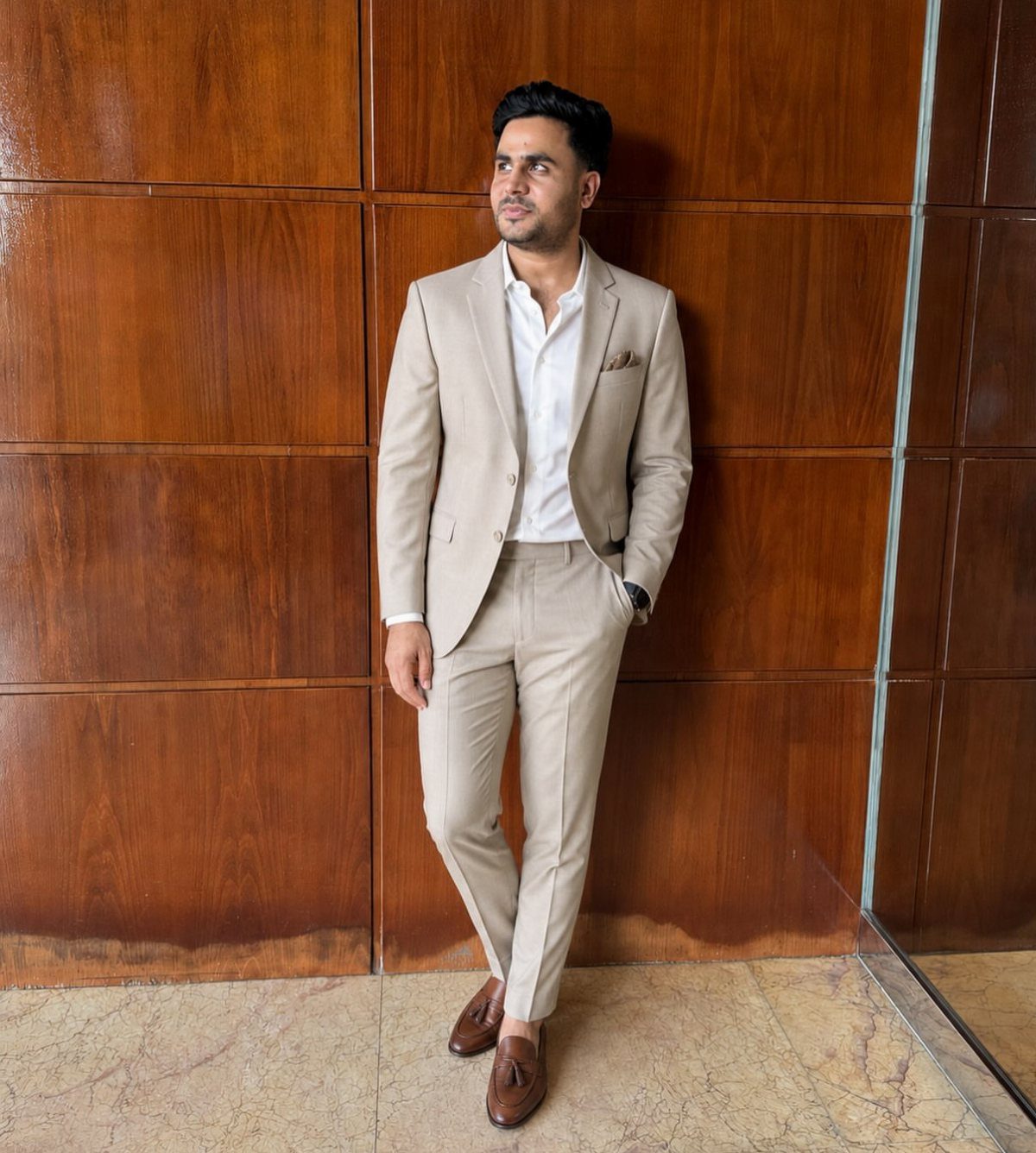
Tan and beige suits ask for a shirt that stays out of their way, and white does that best. White poplin or oxford cloth against a warm fabric like tan or cream reads as deliberate rather than casual.
Pick the shirt after the suit, not before. If the suit is warm in tone, a stark white or soft cream both work; a loud color fights it.
Brown loafers finish the outfit without extra effort. Since there’s no tie, the shirt collar carries the whole neckline, so press it.
3. Unbutton a Few Buttons
2 open buttons are enough. Undo the top button for a relaxed neckline, and the second if you want it looser, but stop there; a third button reads as a night out rather than the office.
A structured collar helps, since it sits up on its own and frames the jacket.
If you wear an undershirt, make it plain and a close match to your skin tone, so it never shows at the open collar. If it shows, button up one.
4. Grey Suit with Black Shirt
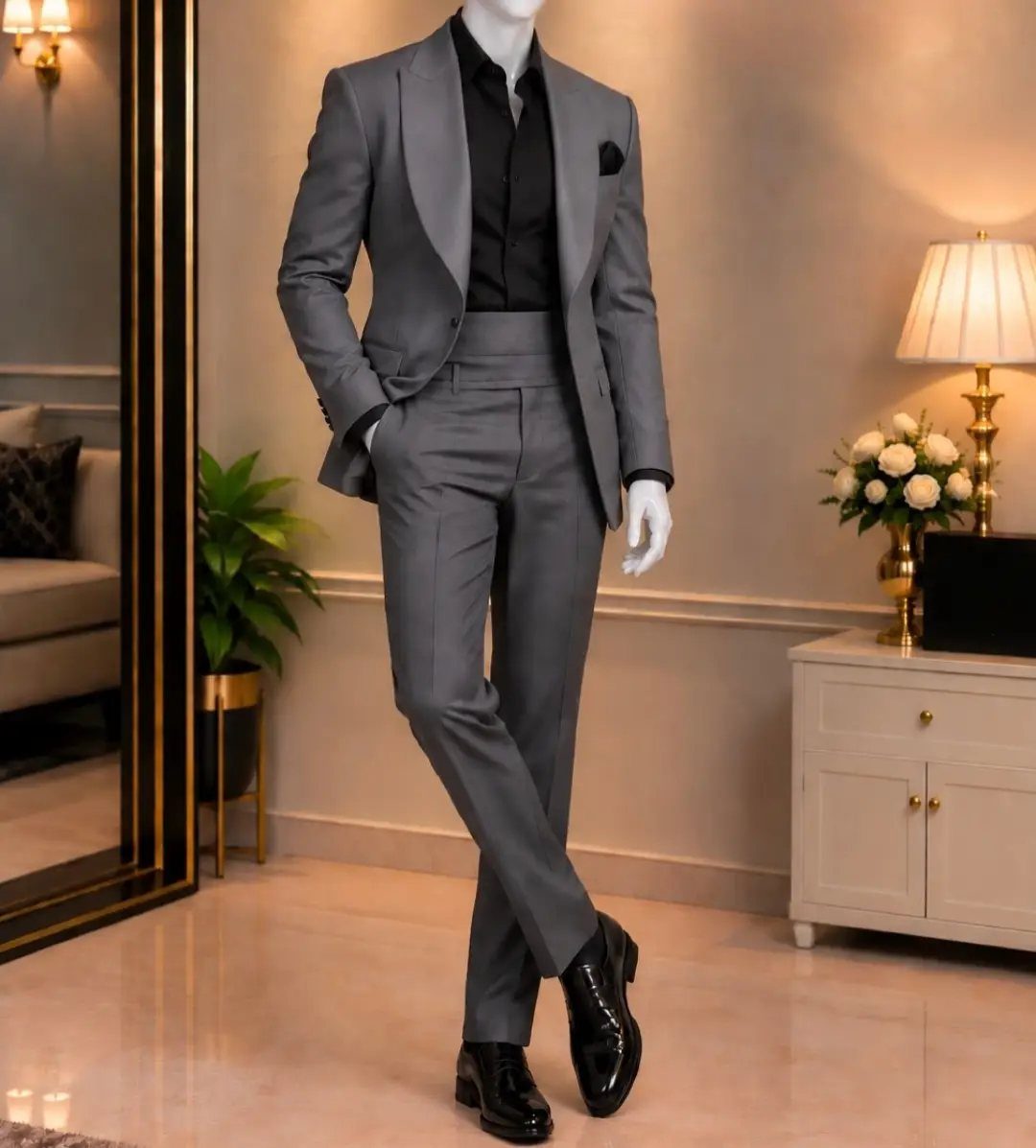
A black shirt under a grey suit is a bolder move than white, and it works because the 2 colors stay in the same quiet range.
Add a black pocket square to repeat the shirt and tie the outfit together, which makes up for the missing tie.
Choose a tailored grey with some depth, mid to charcoal, so the black doesn’t swallow it. Black dress shoes keep everything consistent.
This suits evenings and events better than a daytime office. I’d keep the shirt and tie-free neckline quiet and let the grey suit do the talking, since too much sheen anywhere on a grey suit gets loud fast.
5. Black Suit with Turtleneck
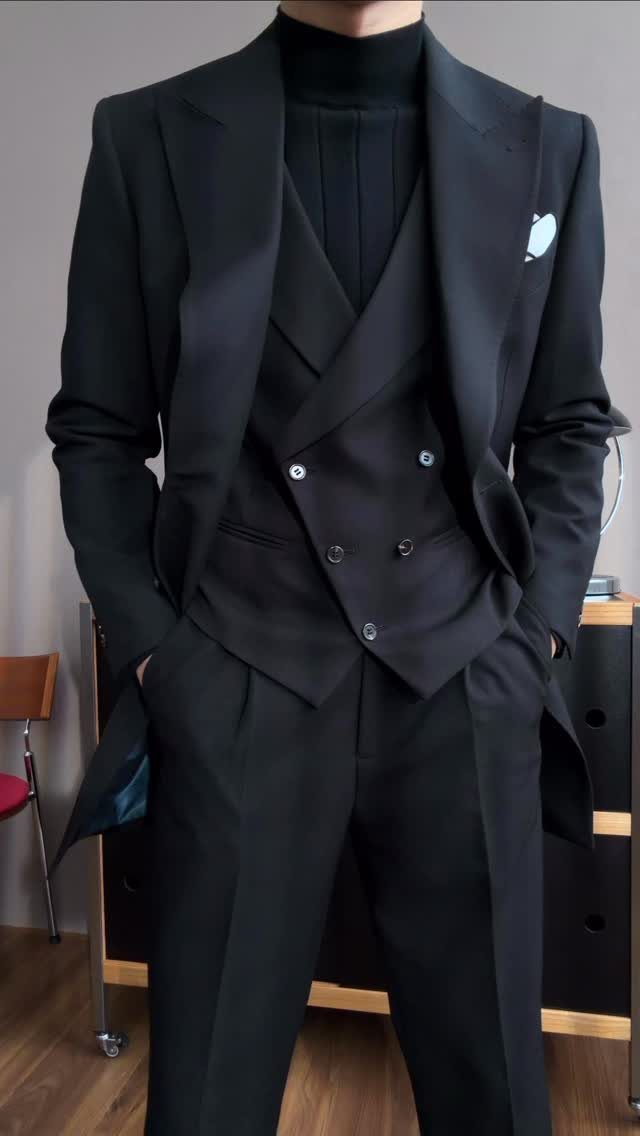
A black turtleneck replaces the shirt and tie in one move. Under a black three-piece suit it gives a long, unbroken line from collar to hem, and the waistcoat keeps it from looking like a plain sweater and jacket.
Pick a fine-gauge knit that lies flat under the vest. A bulky one will bunch at the chest and spoil the fit.
The white pocket square is the one bright note, and it matters: without it, the outfit can look flat. I’d keep it simple and folded straight.
6. Classic Black Suit White Shirt

Black suit, white shirt, no tie: the oldest pairing, just with the formality dialed down a notch. Leaving the collar open softens a black suit that would otherwise feel like a uniform.
Choose a shirt with a crisp, firm collar, because a limp one looks sloppy against black. Undo one or two buttons, no more.
This is a dressed-up evening look, good for a bar or dinner. For daytime I’d go with a blue suit instead, since black can feel heavy in the light.
7. All-black Suit and Shirt
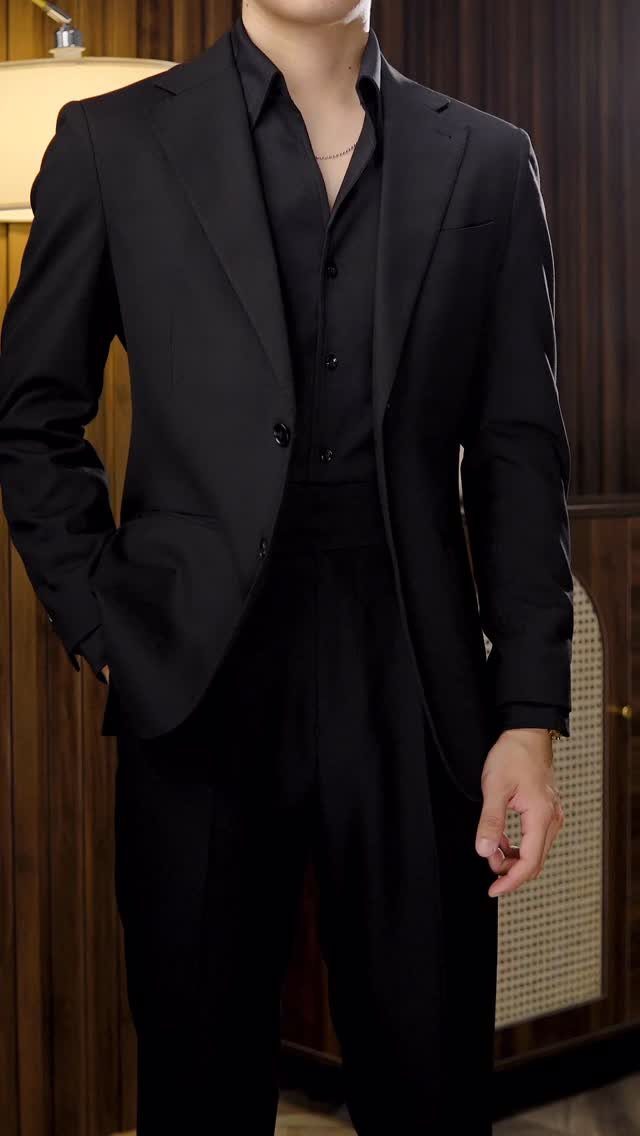
Tonal black works because nothing interrupts the line. Jacket, shirt and trousers read as one dark column, and the open collar keeps it from looking like a uniform.
Choose a shirt with some structure in the collar so it doesn’t flop against the lapels.
Matte fabric beats shiny, which looks cheap in a single color. Black shoes complete it.
I’d keep this for evenings. Black on black has no contrast to soften it, so it feels heavy in daylight.
8. Grey Suit with Polo Shirt
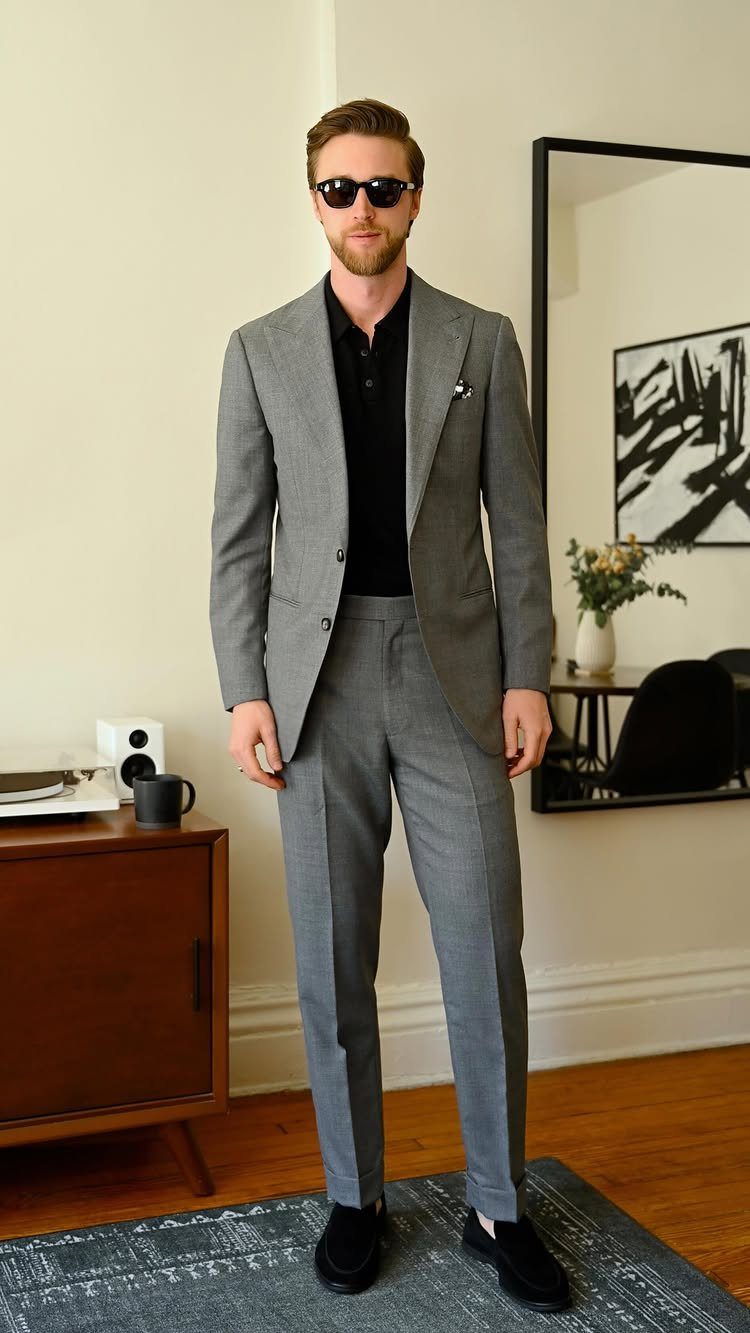
A knit polo under a grey suit is the most relaxed way to go without a tie, and it still looks intentional because the collar lies flat and neat.
Black against grey stays in a quiet range, so the outfit reads calm rather than loud.
Pick a fine knit that sits smooth under the jacket, and wear it tucked or just skimming the trouser waist. Black loafers keep the casual tone consistent.
This is for weekends, dinners and warm days. I wouldn’t wear it to a formal office.
9. Maroon Suit with Blue Shirt
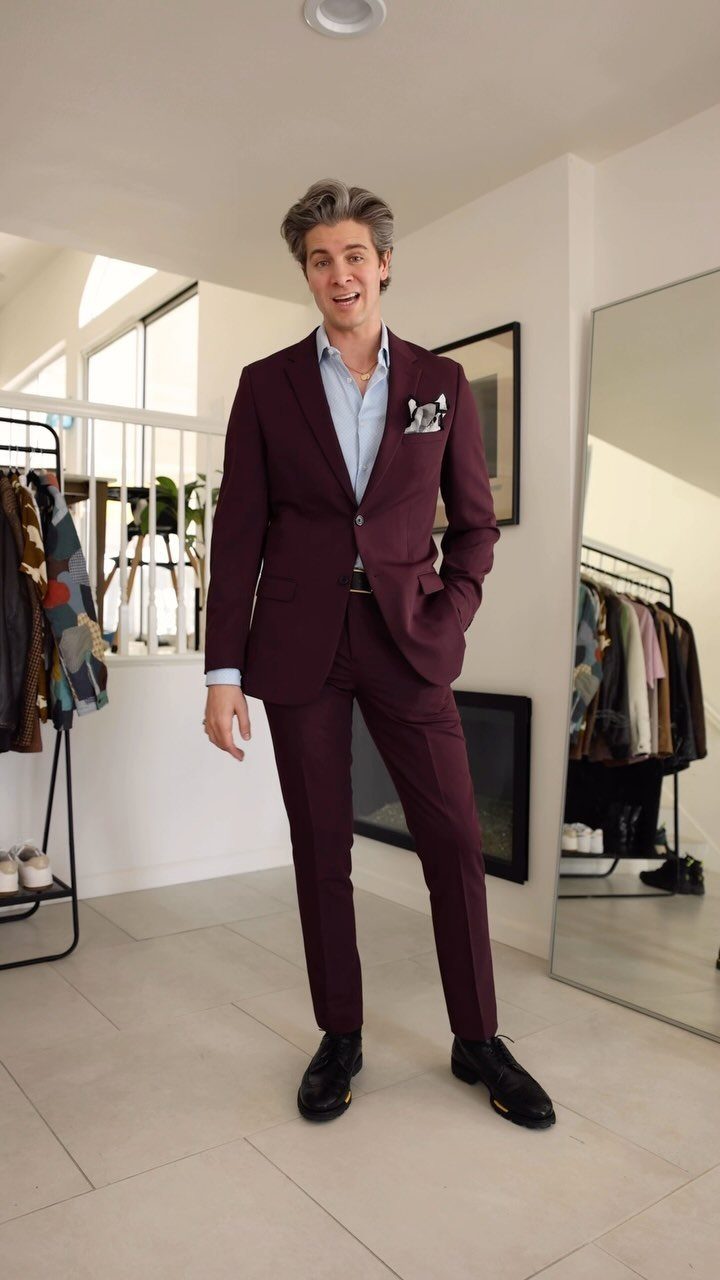
Maroon is a strong suit color, so let the shirt, shoes and belt stay quiet around it. A light blue shirt does that: it’s soft against the red and cool where the suit is warm.
Leave the collar open one or two buttons and choose a plain shirt, with no pattern competing with the cloth. Black dress shoes ground the outfit and keep the maroon from looking costume-like.
I’d pick a deep, slightly muted maroon over a bright one. Without a tie, a bright suit has nothing to calm it down.
10. Beige Double-breasted Suit
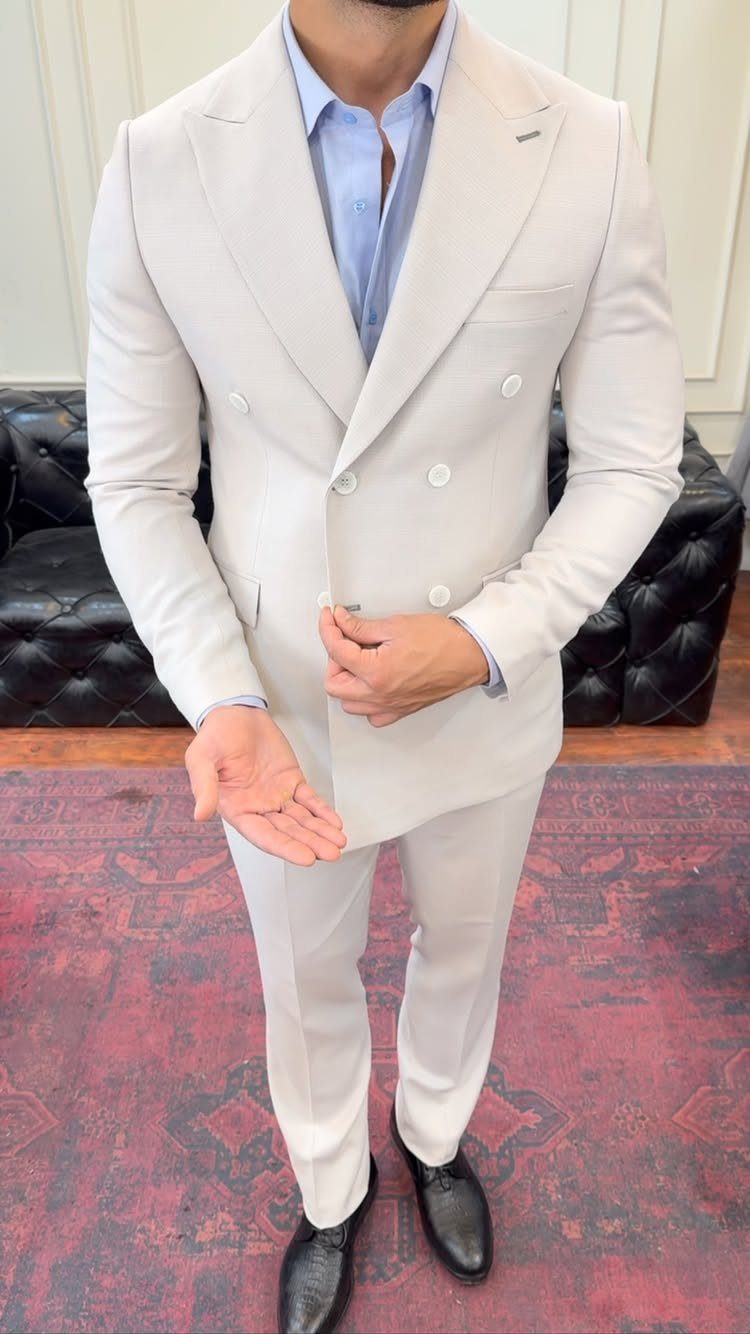
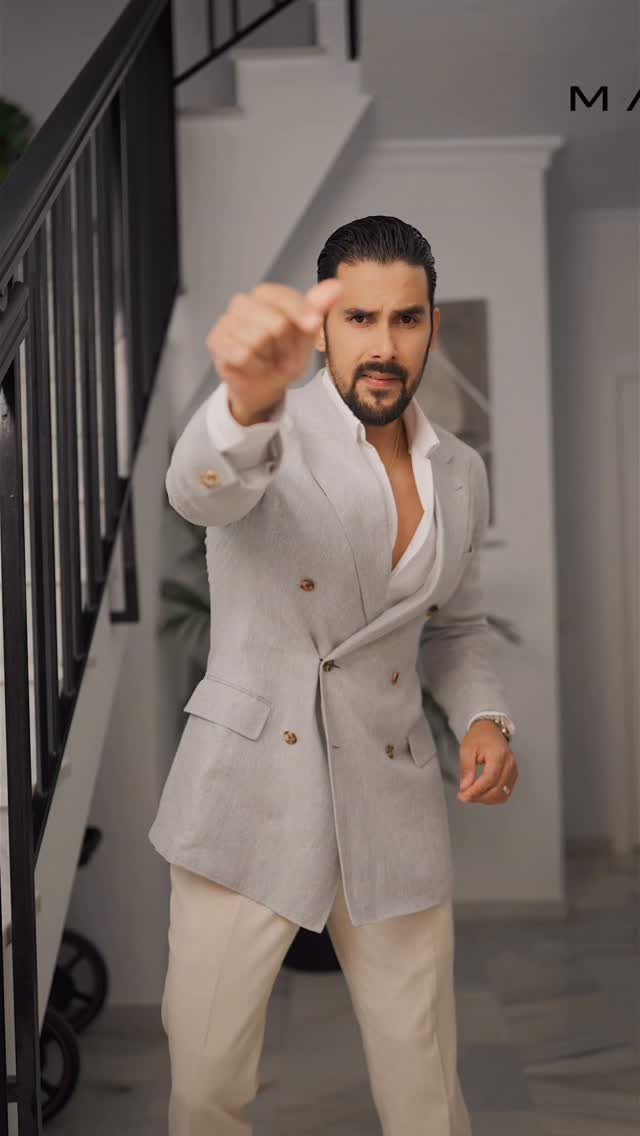
Double-breasted jackets already carry a lot of structure, which is why they handle a missing tie so well. The overlapping front fills the space a tie would, and a light beige cloth makes the whole thing feel easy.
Keep the jacket buttoned, since an open double-breasted front hangs poorly, and let the light blue shirt collar sit open. Black dress shoes give the pale suit some weight.
I’d choose this for warm-weather events over the office. Beige shows creases and marks, so press it and keep it clean.
Dress Code Considerations
Check the dress code before you pick a tie or skip it.
When the invitation or your office spells out a tie, put one on and skip the debate. Black tie and white tie always call for formal neckwear, such as a bow tie.
Interviews are the clearest case for wearing one. Even at a casual company, a tie tells the interviewer you know when to be serious, and you can’t know how relaxed the office really is until you’ve worked there.
Meetings with outside clients often call for one too, unless a higher-up says otherwise.
Plenty of occasions don’t need it: many weddings, parties, networking events and most restaurants.
Even the fanciest restaurants usually just ask for a jacket. At networking events, going slightly casual can make you more approachable.
If you’re unsure, bring a tie and put it on. Taking it off is easy.
Fit and Tailoring
A tie hides a lot of fit problems.
It holds an off-size collar closed and pulls the whole outfit together visually. Without it, a poorly fitted shirt and suit look sloppy and unintentional.
Tailor the jacket first: side seams, sleeve length, width and shoulder placement.
Then check the trousers. The waistband should fit comfortably on its own, because a belt keeps pants up but shouldn’t be taking in a waist that’s too big.
Hem the trouser so the fabric rests on the shoe with a slight break instead of stacking in folds at the ankle.
Shirts need the same attention.
Sleeves and body can’t hide under a jacket forever, and a bunched back shows when you move. A roomier, oversized suit can still look sharp if the shoulders sit right and the lines stay straight and uncluttered.
Confidence in Style
Once the tie is gone, the collar is the first thing anyone sees, so I give it more attention than anything else on the shirt.
Make sure it fits, sits flat and stays fastened where it should, with nothing bunched around the neckline.
A messy, crumpled collar undoes the whole suit. A clean one reads as a deliberate choice and adds a bold touch of its own.
Before you leave, check the mirror once, and then stop.
If the shirt and suit fit and the collar sits right, you’ve done the work. Wear it like you meant it, because tieless looks fall apart when the man in them keeps tugging at his neckline.
Frequently Asked Questions
Is it acceptable to wear a suit without a tie?
Mostly yes: casual and business casual offices, cocktail events, plenty of weddings, parties, networking nights and nearly any restaurant all work with an open collar.
Keep the tie for interviews, black tie and white tie events, and any invitation or office that spells one out. A tieless suit only looks intentional if the fit is right and the collar sits clean.
Is no tie considered formal?
Not quite. A suit with no tie sits one step under fully formal, though a navy or mid blue one still comes close to black in how dressy it reads.
What collar looks best without a tie?
I’d pick a button-down or a spread collar first, since both keep their shape with no knot underneath.
A button-down collar works well here, because the soft roll holds its shape without a knot and keeps the neckline tidy under the jacket.
When should you wear a tie?
Wear one whenever the dress code or invitation asks for it, and for interviews, since even a casual company can be more formal than it looks from outside.
How many buttons should you undo on a shirt without a tie?
Two at most. One undone button gives a relaxed neckline, and two make it looser still.





