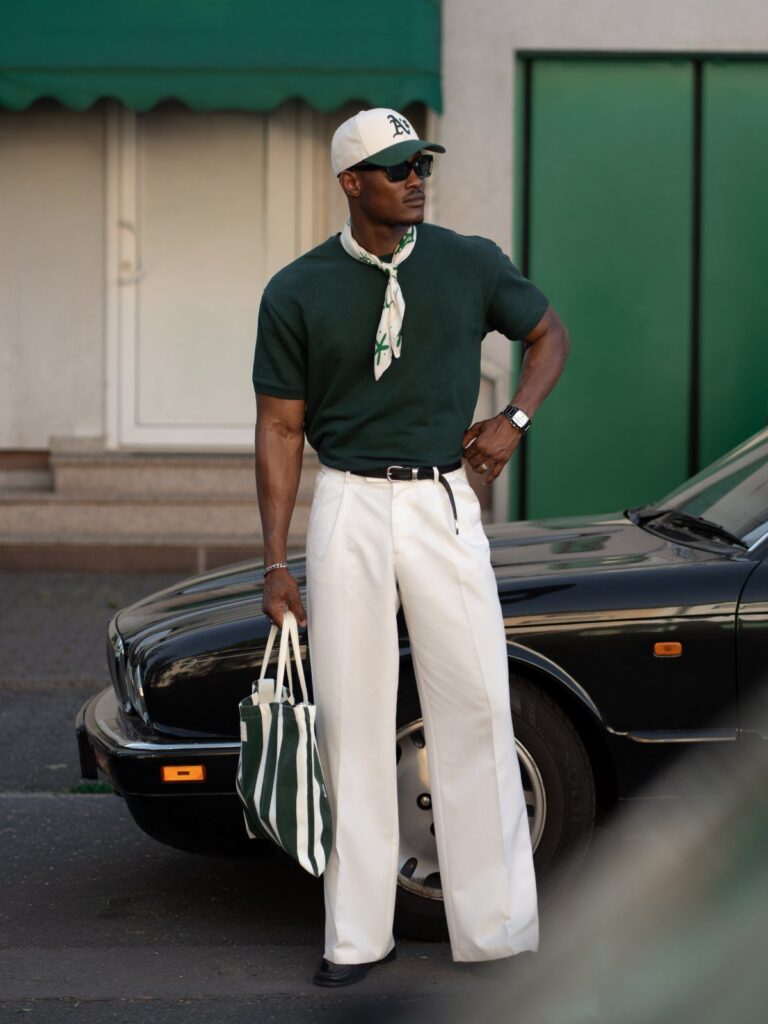
The looks in this list run from a cardigan with trousers and sneakers to a double-breasted jacket with chinos, and the dress code on the invitation or the standard at your workplace decides which one fits.
If a tie might be expected, start from the dressier end and drop pieces from there.
1. Dress Shirts
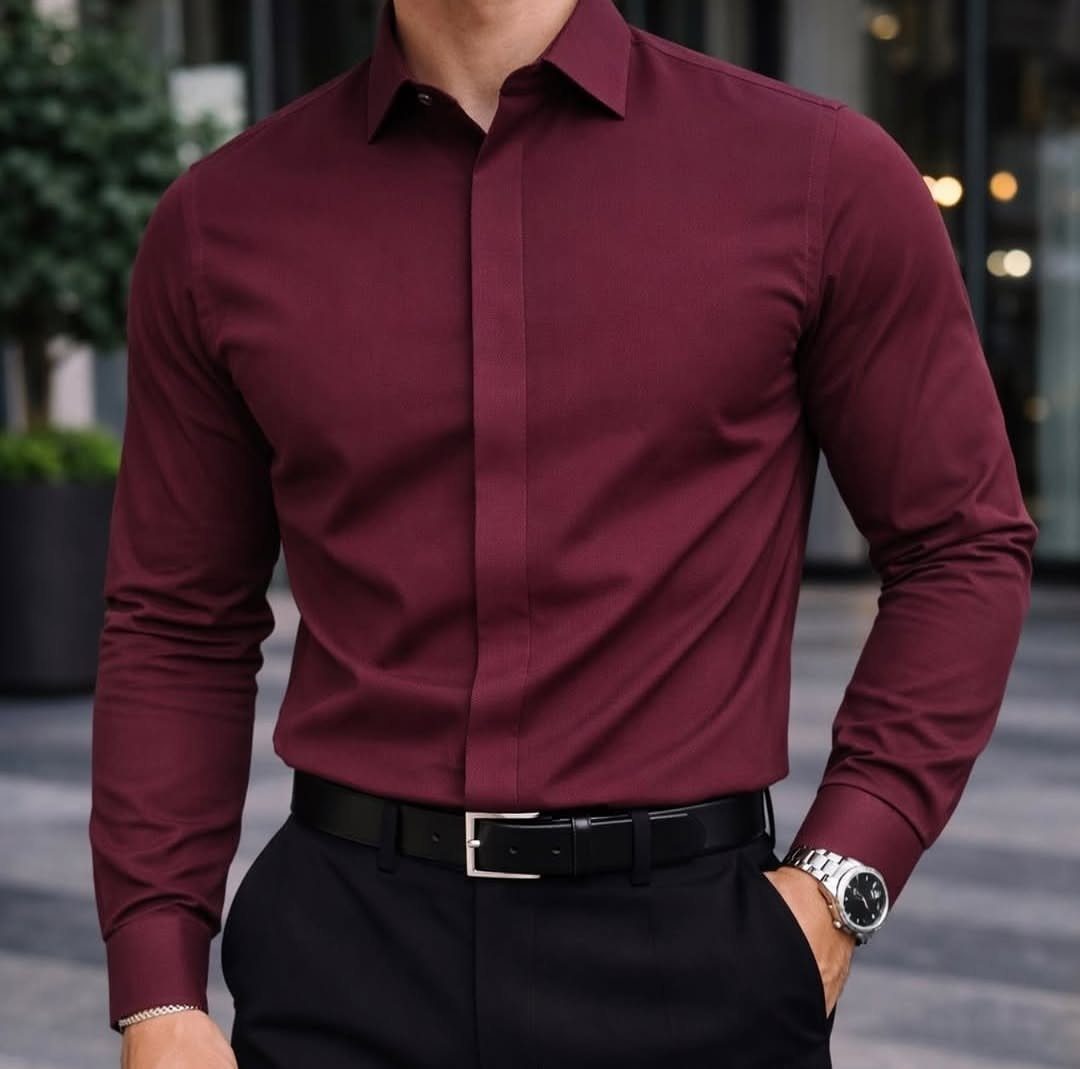
A deep maroon dress shirt tucked into black trousers is about as easy as semi-casual gets: the color reads rich but not loud, and the tuck keeps it sharp.
Deep red reads richer than white or blue and still works with a black belt.
Keep the fit trim through the chest and tuck it fully so the line from collar to belt stays clean. A smart polo does the same job when the day calls for less formality.
A watch is enough accessory.
2. Dress Trousers
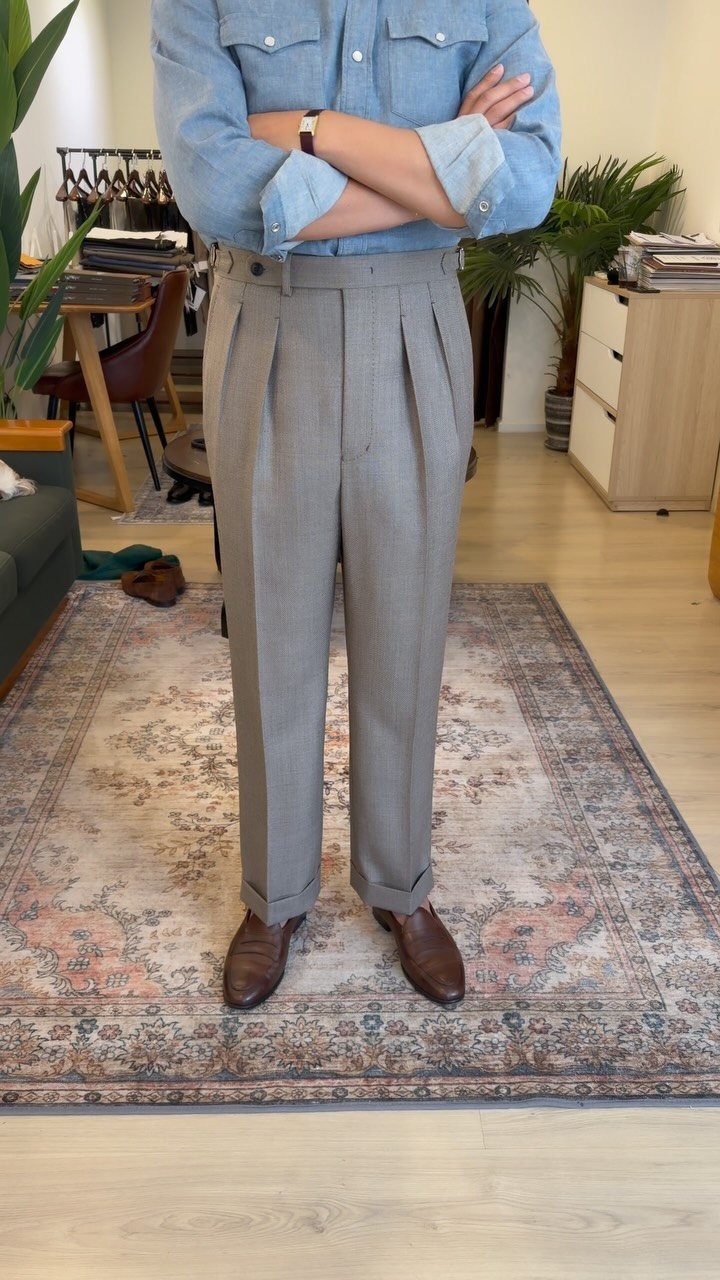
Pleated gray trousers with a high waist change the whole shape of an outfit. They sit at the navel, so the shirt tucks cleanly and the legs look longer.
Chinos are the easier, softer option if pleats feel like too much.
Pick one or the other, and let the shirt stay simple.
3. Smart Casual Definition
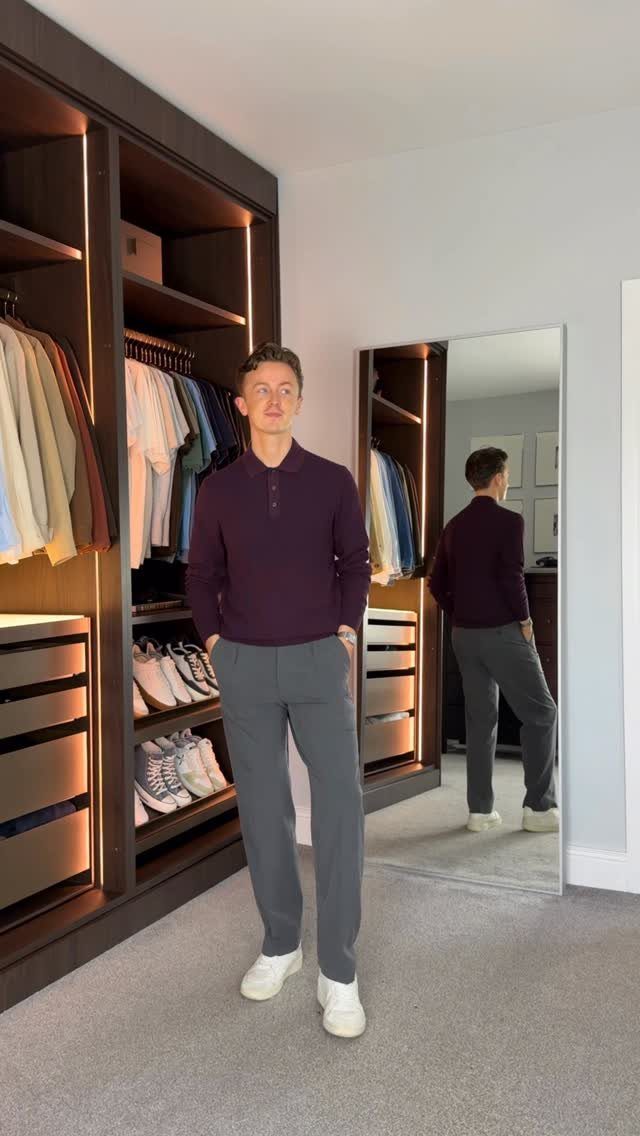
Smart casual means one dressy piece and one relaxed piece in the same outfit, and a plum knit polo with gray trousers and white sneakers shows the split well.
The polo is the dressy half, and the sneakers are the relaxed one.
If an outfit looks too stiff, swap the shoes.
If it looks sloppy, swap the top. That adjustment covers most of the rulebook.
4. Jacket with White Trousers
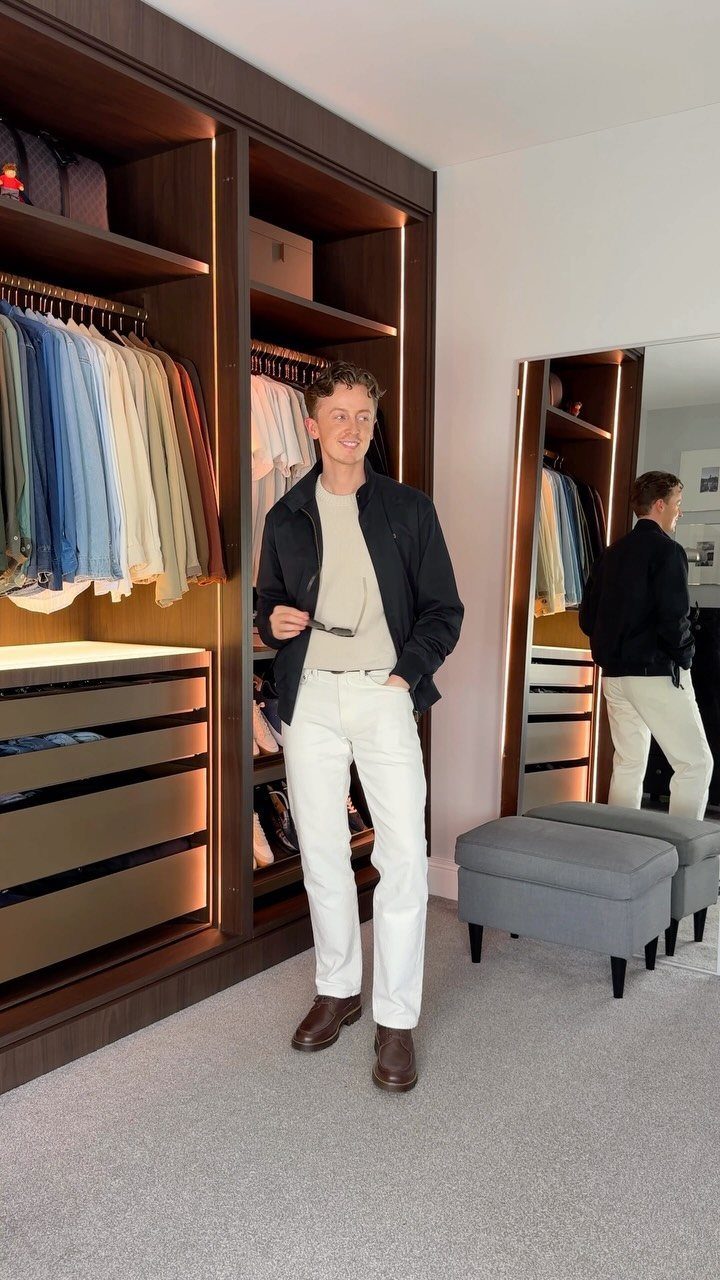
White trousers worn with a black jacket is a bold contrast, and it works because the cream top sits between the two. Without it, the black and white fight.
Brown leather shoes warm the whole thing up. Keep the trousers crisp and pressed, since white shows every wrinkle.
This is a warm-weather outfit I’d save for daytime plans, dinners and weekends rather than the office.
5. Button-Down Jacket with Turtleneck
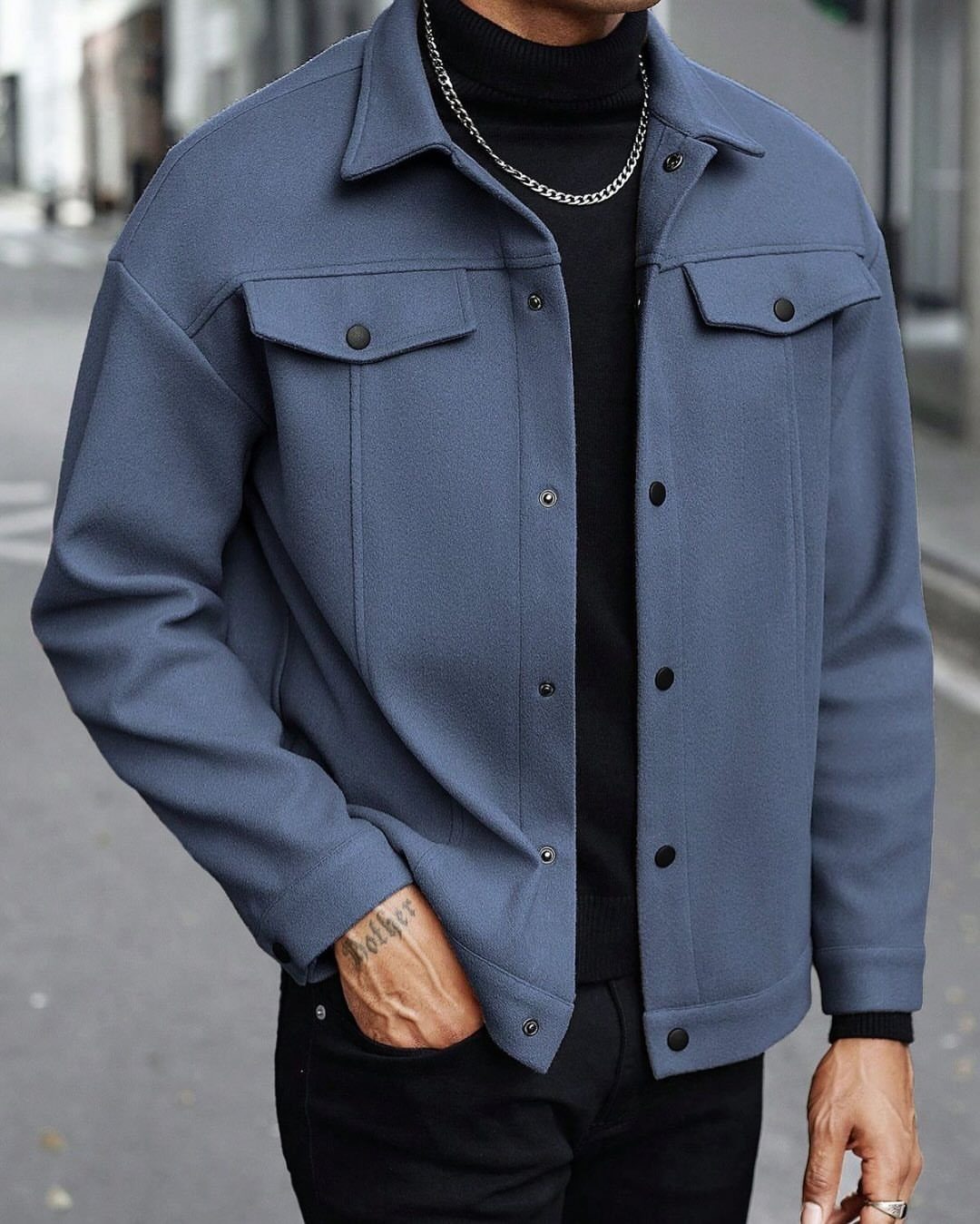
An overshirt-style jacket in slate blue over a fitted black turtleneck is a quiet way to dress up without a blazer. The button-down front keeps it casual, and the turtleneck replaces both shirt and tie.
Wear it with black trousers so the outfit reads as one dark column broken by a single color. A thin silver chain adds a little interest at the neck.
Choose a turtleneck that fits close; a baggy one ruins the line.
6. Cardigan with Trousers and Sneakers
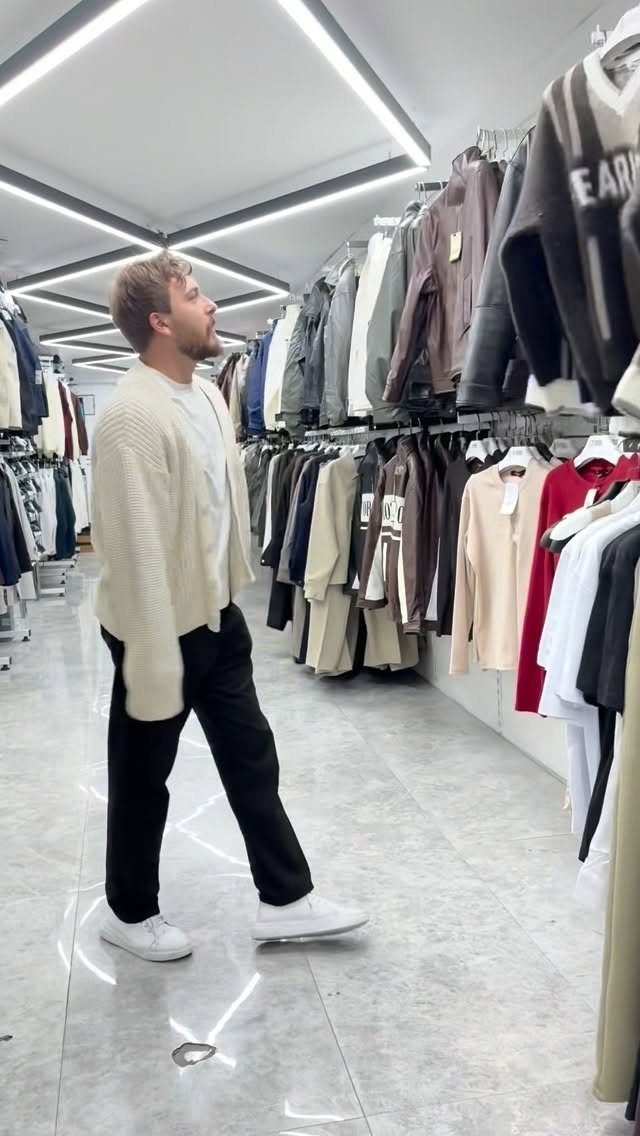
Oversized in a cream knit cardigan is the point: it drapes loosely over a white t-shirt and gives dark trousers a softer look. That combination feels relaxed without looking careless.
Black trousers and clean white sneakers keep the palette tight. The sneakers have to be spotless, because scuffed ones turn the outfit from casual to tired.
I’d wear this for a shopping day or a casual dinner, and skip it for anything formal.
7. Textured Blazer with Light Jeans
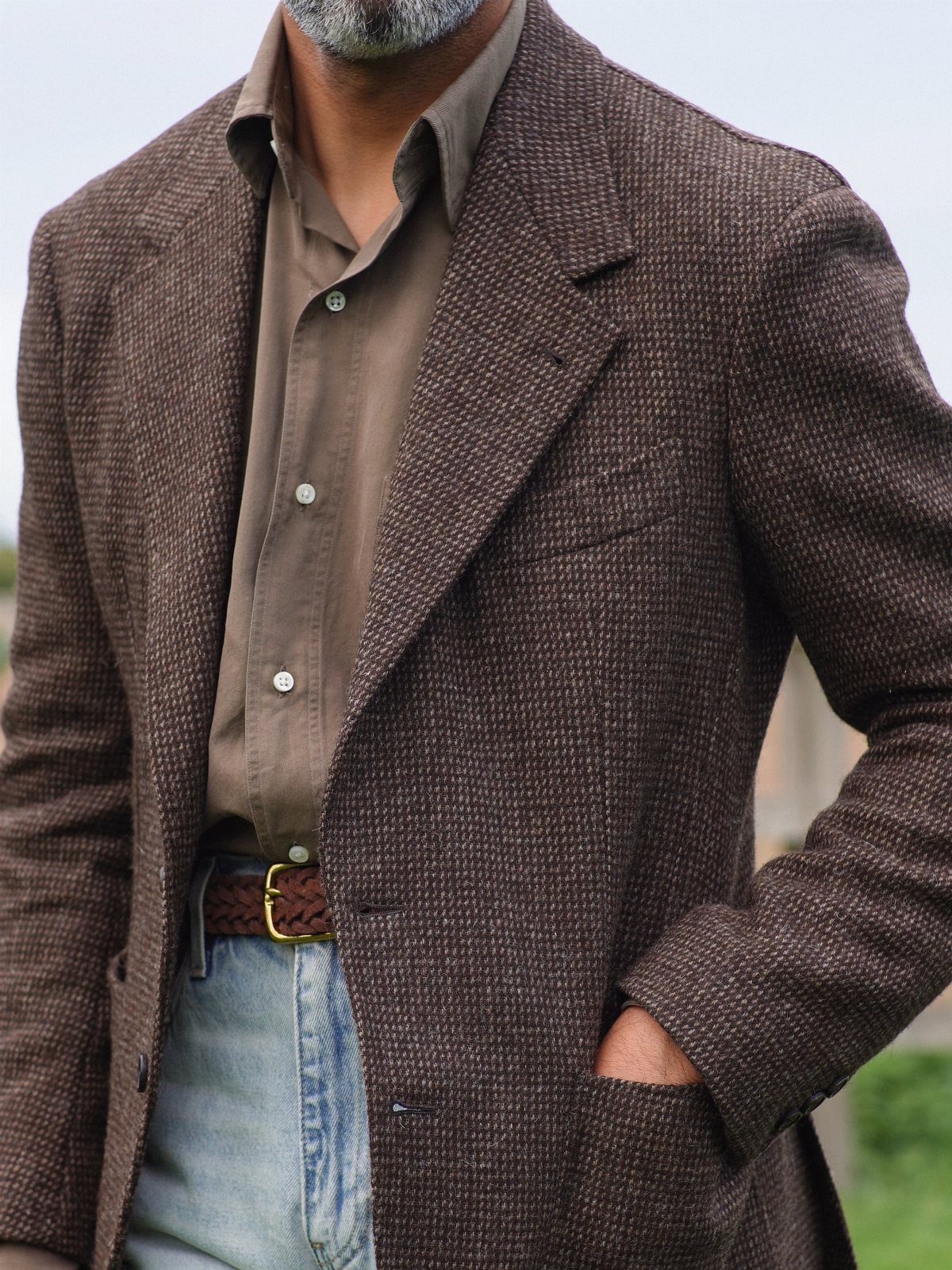
Brown on brown does the quiet work here: a textured blazer over a tonal button-down, with light-wash jeans breaking up all that earth tone.
The texture keeps the jacket from looking like office wear, and the light denim keeps it relaxed.
A braided leather belt suits this outfit better than a flat dress belt. Choose a shirt just a shade off the blazer’s color, and let the jeans supply the contrast.
8. Knit Polo with Pleated Trousers
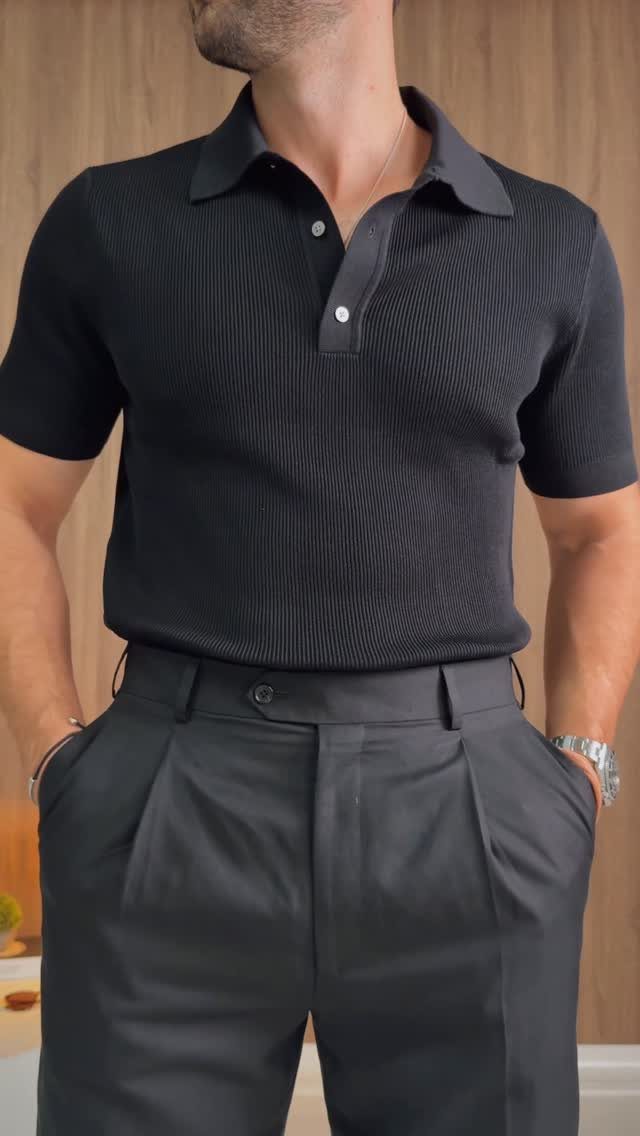
A black knit polo with a ribbed texture, tucked into dark gray pleated trousers, gives you a dark outfit that still has some surface interest. The texture does what a pattern would, without adding a second thing to match.
Tuck it fully so the pleats and the polo’s hem sit cleanly at the waist. Keep the polo fitted rather than boxy.
Dark on dark is easy to repeat, and I like that it needs no jacket.
9. Blazer with Crewneck Sweater
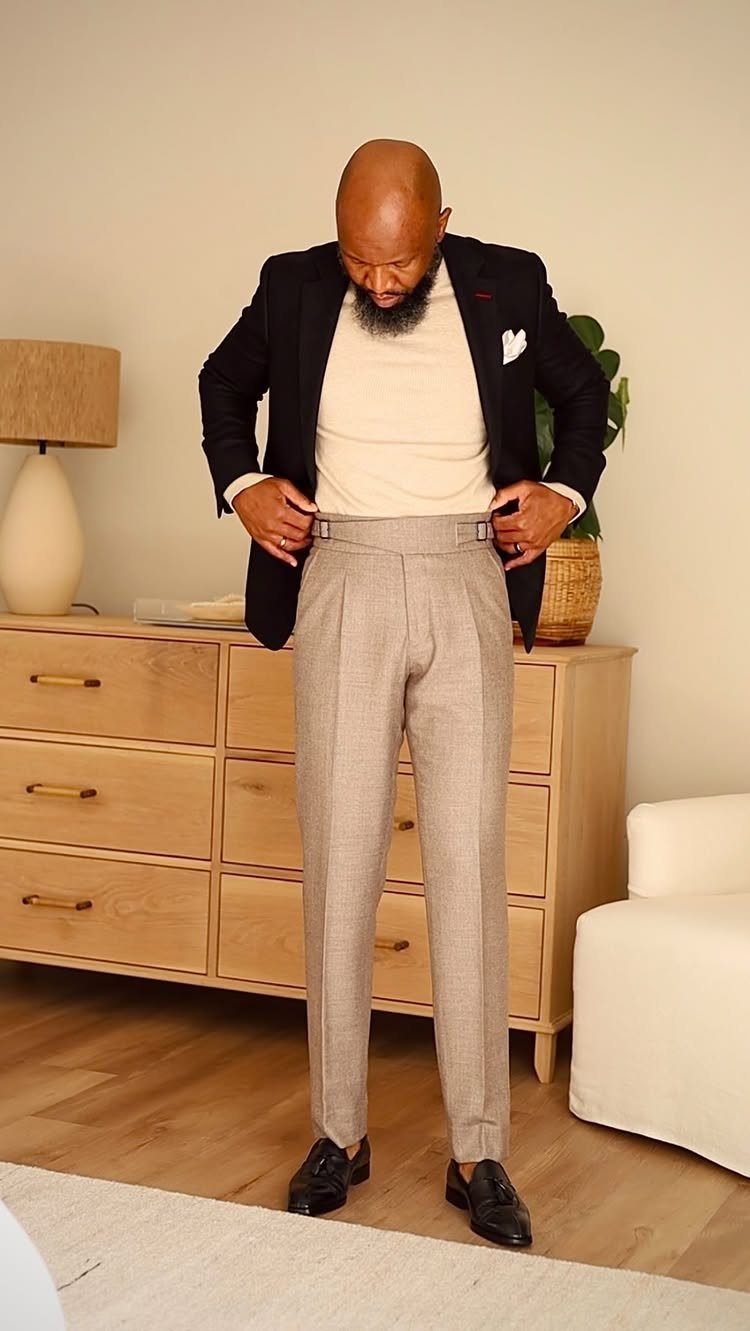
Cream under a dark blazer is the softest way to wear a jacket I know. A crewneck sweater in place of a shirt drops the tie and the stiffness, and the light color stands out against the dark.
Gray trousers with a subtle pattern and a high waist make the sweater easy to leave untucked or half-tucked without looking sloppy. Dark loafers finish it cleanly.
A thin knit works best, since a bulky one makes the blazer bunch and pull at the front.
10. Double-Breasted Jacket and Chinos
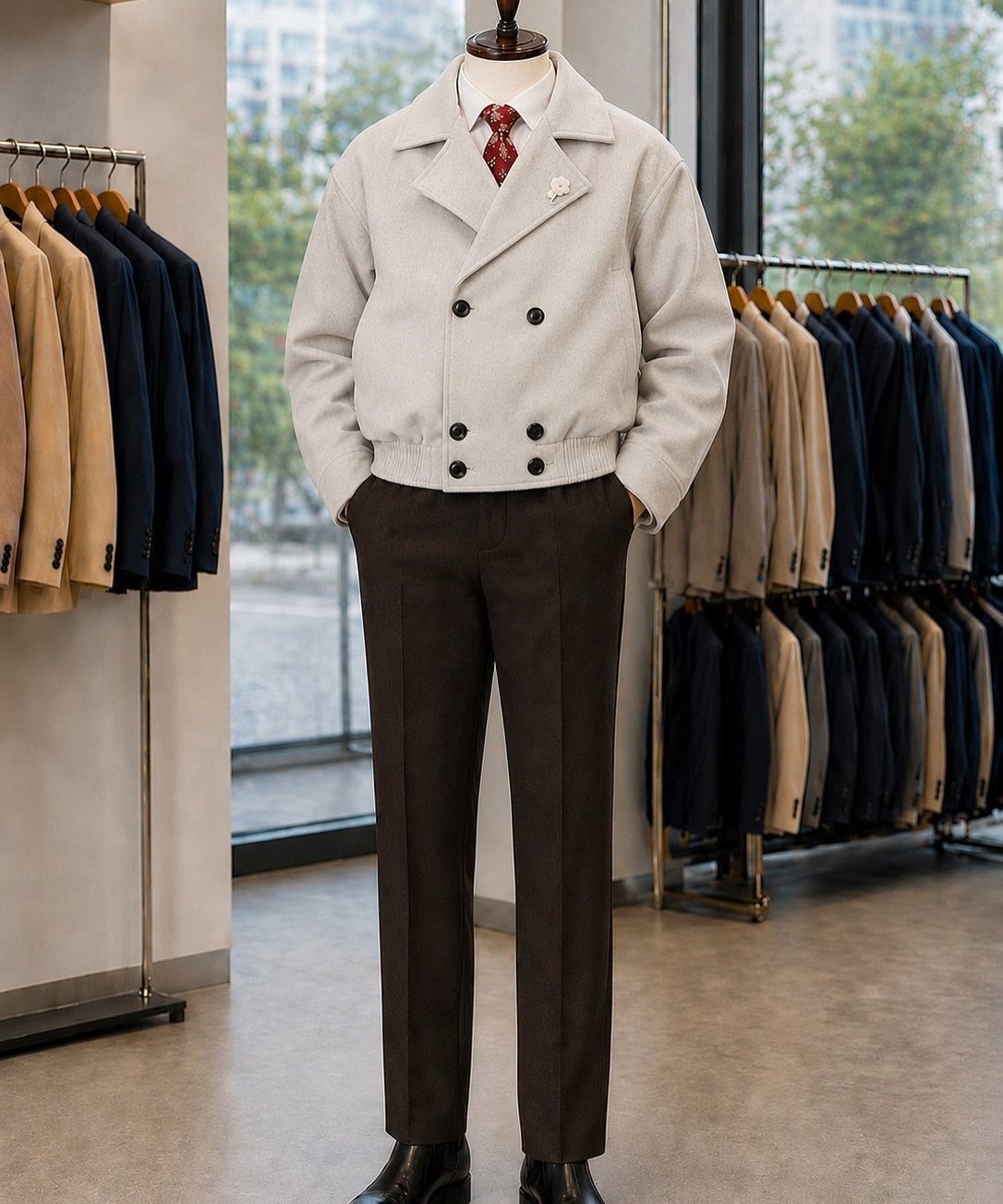
A light gray double-breasted jacket with dark brown trousers is a clear step toward dressy, and the white shirt and red tie push it further.
Brown against gray is an underused pairing, and it looks warmer than the usual navy and gray.
For semi-casual, I’d drop the tie and open the collar, or swap the trousers for chinos in that same brown. Button the jacket when you stand, and choose a plain shirt without pattern or loud color.
Understanding Dress Codes
Three codes get mixed up constantly, and each one punishes a different mistake.
Smart casual is the loosest. Business casual follows your workplace.
Whether a tie is expected varies from one semi-formal event to the next, so a quick look at the invitation or a text to the host settles it.
Weddings, corporate dinners, charity events, evening receptions and holiday parties all use this code.
Some nudge a smart casual outfit upward and end up slightly off.
For business casual, watch what leaders and respected colleagues wear, then build toward that room, or the one you want to be in.
A single detail of your own, such as a vintage watch or a pair of colorful socks, keeps the outfit from looking like a copy of a formula.
Color Coordination
Build the base of your wardrobe in neutrals: navy, gray, charcoal, brown, cream, white. They mix with each other without much thought, so a handful of pieces makes many outfits.
In professional settings, keep bright or flashy colors small. A tie, a pocket square or a pair of socks can carry the color while everything else stays quiet.
Limit yourself to one color that isn’t a neutral per outfit. 2 competing accents make the whole look louder than either would alone.
Hold your neutrals up against each other in daylight, since navy, black and charcoal can look alike indoors and very different outside. Black, navy and charcoal can look nearly identical indoors and clash outside.
Avoiding Common Mistakes
Jeans with a blazer don’t count as semi-formal, even dark, well-fitted ones. The outfit still reads as smart casual, and you spend the evening a notch underdressed.
Getting your trousers and jacket tailored to fit your body properly is the one change that fixes a semi-casual outfit.
Before any event, match the outfit to the code on the invitation, not to what you’d wear on an ordinary night out. If the code is vague, ask the host what most guests will wear.
Press your trousers and shirt the night before. Wrinkles undo a good outfit faster than a slightly wrong color.
Frequently Asked Questions
What is semi-formal attire for men?
Semi-formal calls for a jacket and dress trousers, a collared dress shirt and leather shoes; a full suit works, and so does a blazer with odd trousers.
It sits above smart casual and below black tie. Expect to see it at weddings, evening receptions, charity galas, company dinners and holiday parties.
Can you wear jeans to a semi-formal event?
No.
Dark, well-fitted jeans under a blazer still land in smart casual territory, which leaves you a step below the room. Pressed wool trousers or crisp chinos do the job better.
Is a tie required for semi-formal?
No, a tie is optional.
It reads more correctly at evening events and indoor formal receptions, and skipping it at a daytime or outdoor event is not a mistake. When the invitation is vague, a quick text to the host gives you a straight answer.





