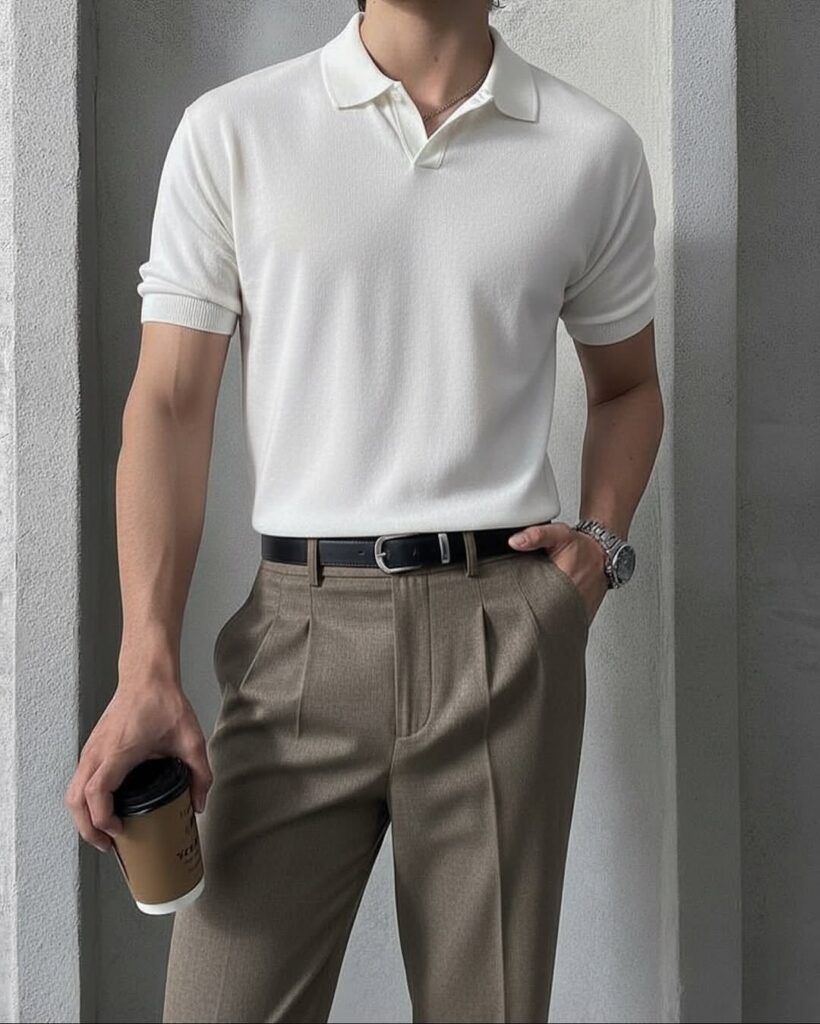
The ideas here run from suede slip-on loafers and a classic Oxford button-down to tailored full suits and equestrian country attire, so the effort ranges from one easy swap to a whole outfit built around tailoring.
1. Tailored Trousers and Blazers
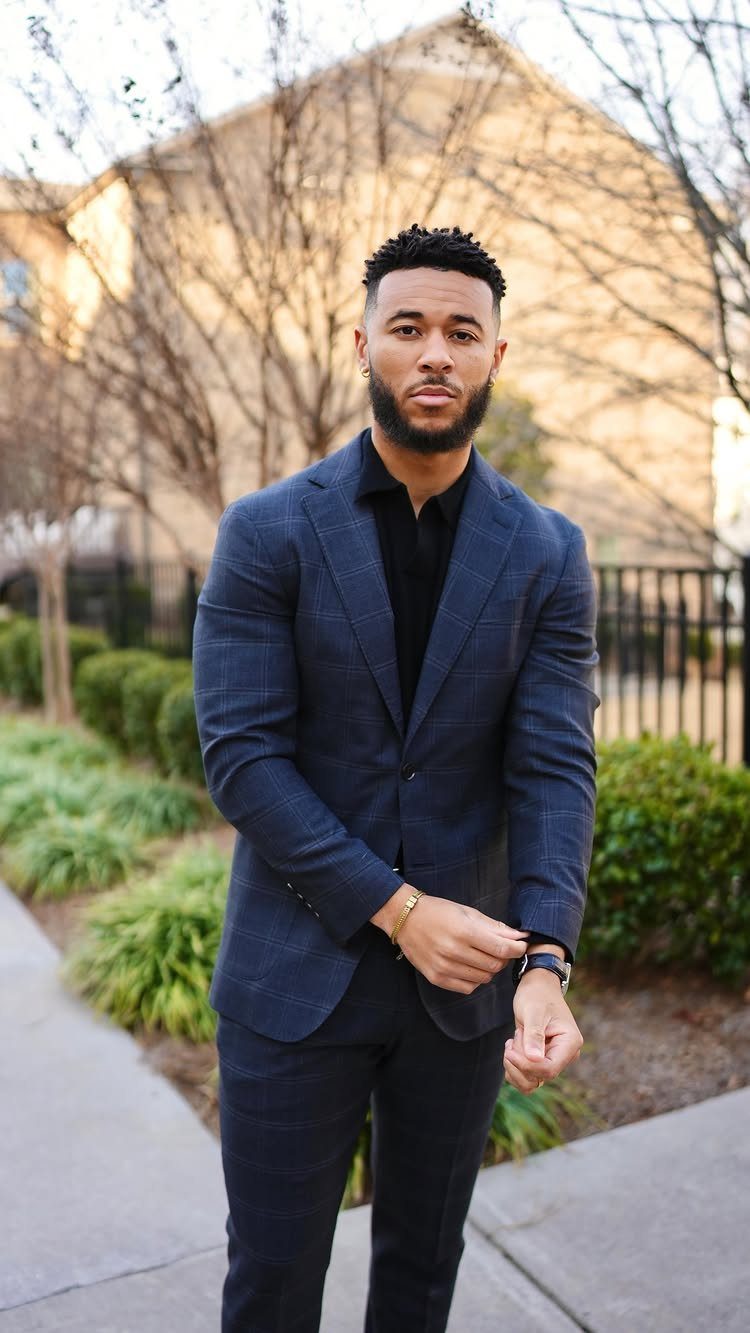
A navy windowpane blazer with matching trousers is a suit that doesn’t read as one. Wear the pieces together with a black polo and the pattern does the work a tie would.
Split them later and each half earns its place.
Pair the blazer with gray trousers and a plain knit underneath, so the tailoring does the work and nothing competes with it. Keep the windowpane subtle so it stays quiet from across a room.
A polo beats a dress shirt here, since it relaxes the look while the tailoring still gives it shape.
2. Sweaters, Blazers, and Outerwear
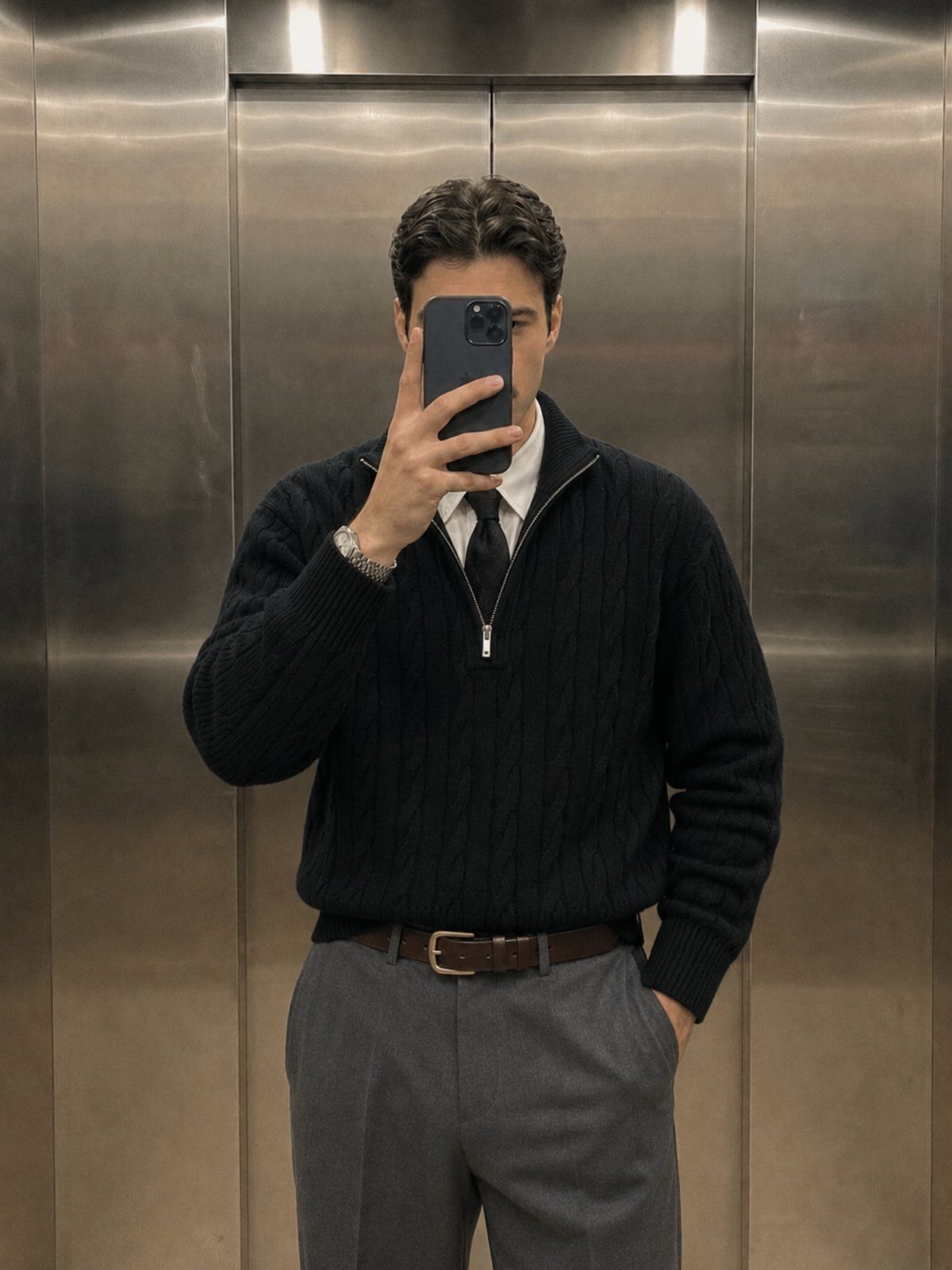
Over a white dress shirt and tie, a cable-knit quarter-zip makes a sharper layer than most men expect. Black or navy both work, and gray trousers with a leather belt keep the whole thing grounded.
I like it for office days when a jacket feels like too much. Zip it up to the collar and the tie shows just enough.
Add a blazer or a coat over the top when the weather turns. The knit sits easily under both, so one sweater covers several settings.
3. Outfits in Neutral Colors
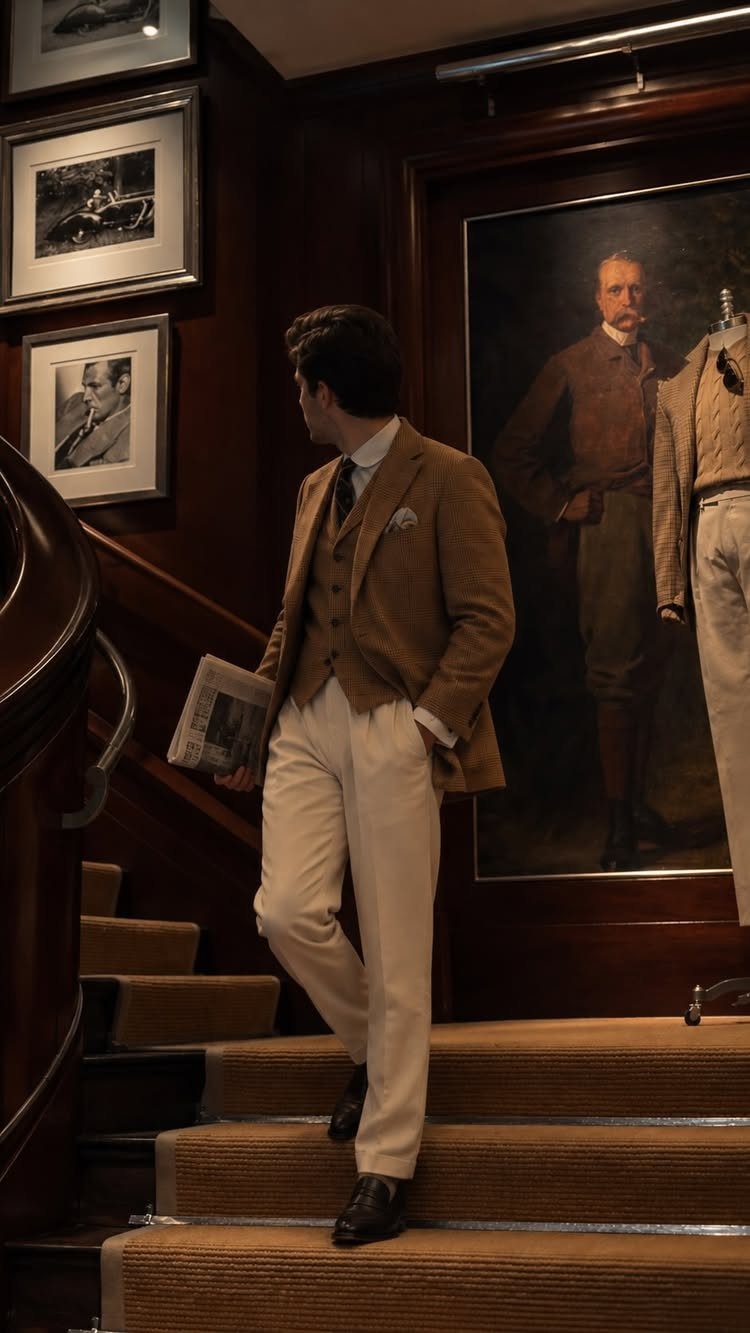
Tan, brown and cream sit close together on the color wheel, which is why a jacket, waistcoat and trousers in those shades look like one deliberate decision. A white shirt underneath gives the eye somewhere to rest.
Keep the shades within a single warm family and let texture supply the variety. A brown blazer over cream trousers is the simplest version, and it needs no accessories to look finished.
The cost is contrast. Neutrals will never be loud, and that is exactly the appeal.
4. Casual Old Money Outfits
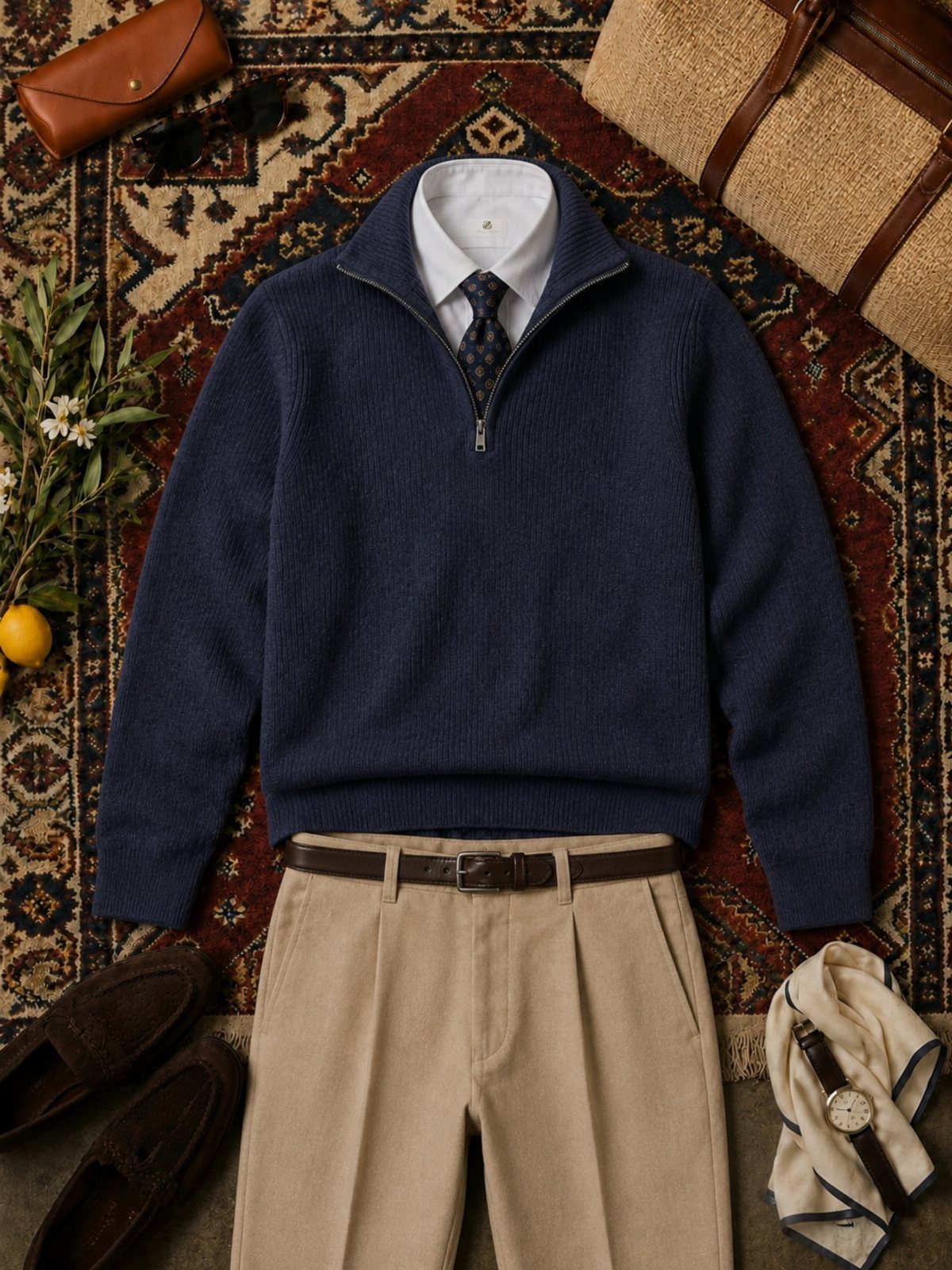
Relaxed doesn’t have to mean sloppy, and a navy quarter-zip over a collared shirt shows it. Pleated khakis and brown loafers complete a look that works without a jacket.
I’d keep the tie optional: the sweater and shirt already carry enough polish for a weekend lunch. Add a watch and little else.
Choose beige or khaki trousers with some fullness at the hip so the outfit stays comfortable. Brown loafers tie the colors together and keep everything soft rather than stiff.
5. Knit Polos
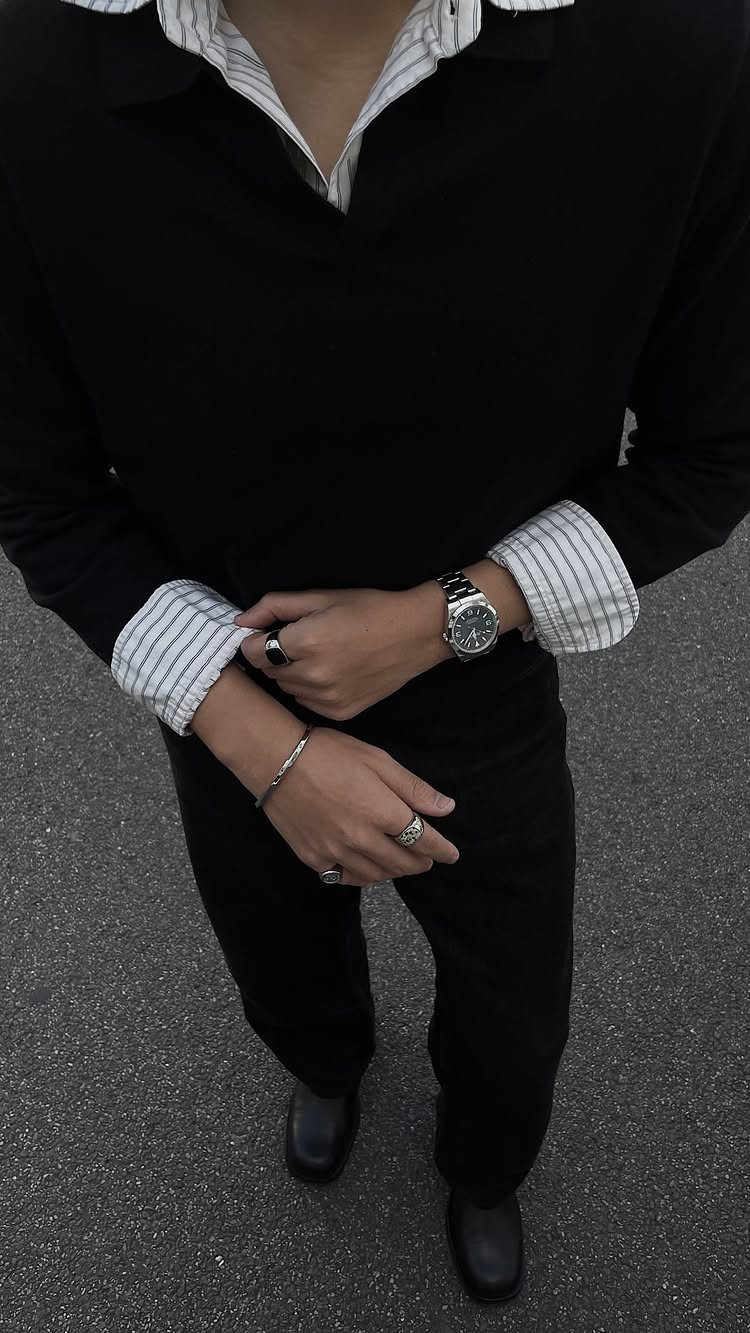
A long-sleeve knit polo in black, worn over a striped button-down, turns two simple shirts into one layered look. Let the striped cuffs and collar peek out; that small flash of pattern is the detail.
Black trousers and dark shoes keep it sleek.
I’d pick a fine-gauge knit so the shirt underneath doesn’t bunch. Crisp button-downs remain the base piece, and the polo simply sits on top of them.
6. Pleated Trousers
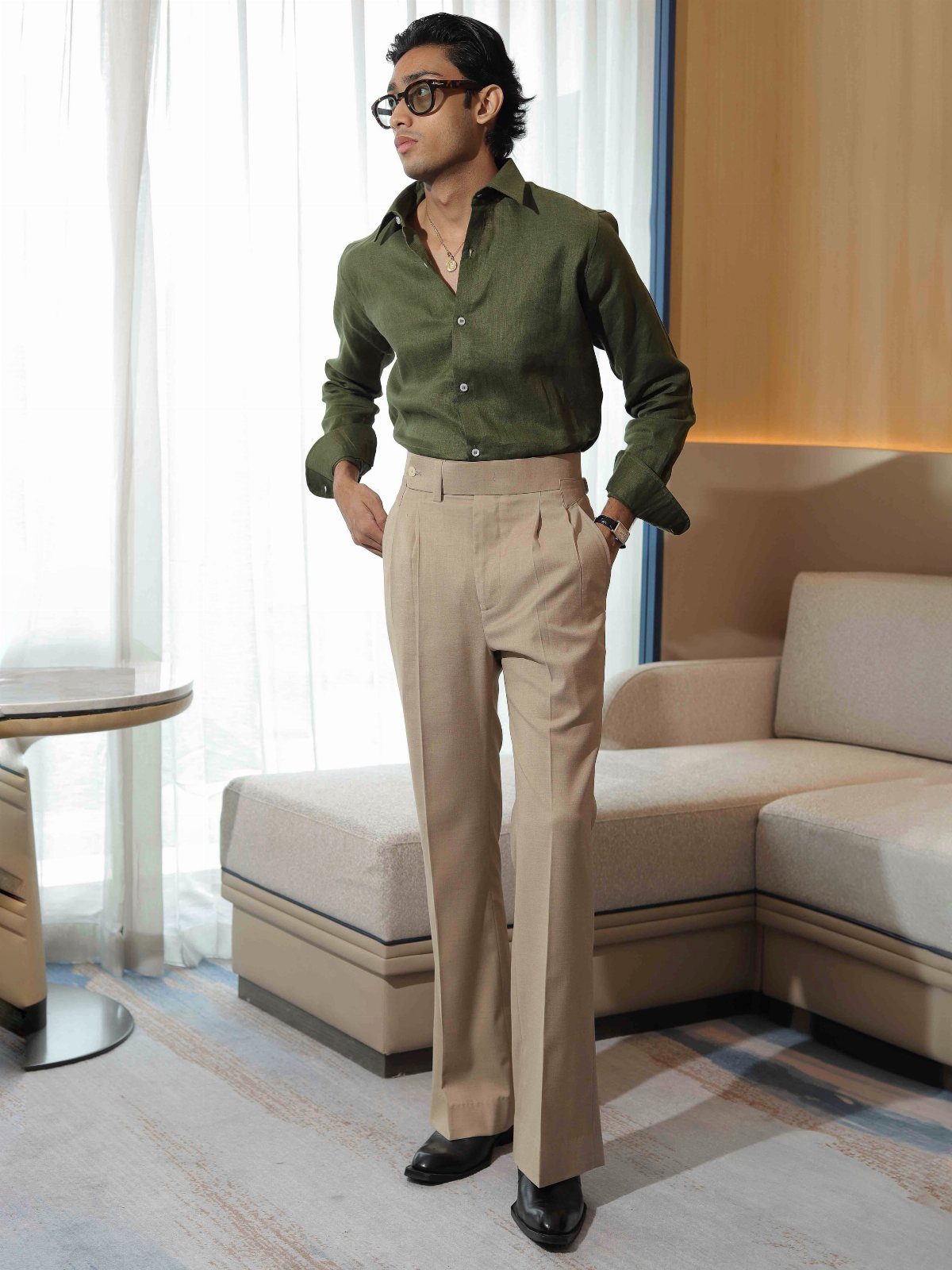
Pleats give trousers room through the hip and thigh, so beige pleated pants hang cleanly instead of pulling when you sit. That comfort is why I lean toward them over flat fronts.
Pair them with an olive button-up and dress shoes, and the muted palette does the rest. Neutral tones like beige and olive sit well together without any effort.
Fit decides everything: the waist should sit where no belt is needed to hold it up, and the hem should rest just above the shoe.
7. Tailored Full Suits
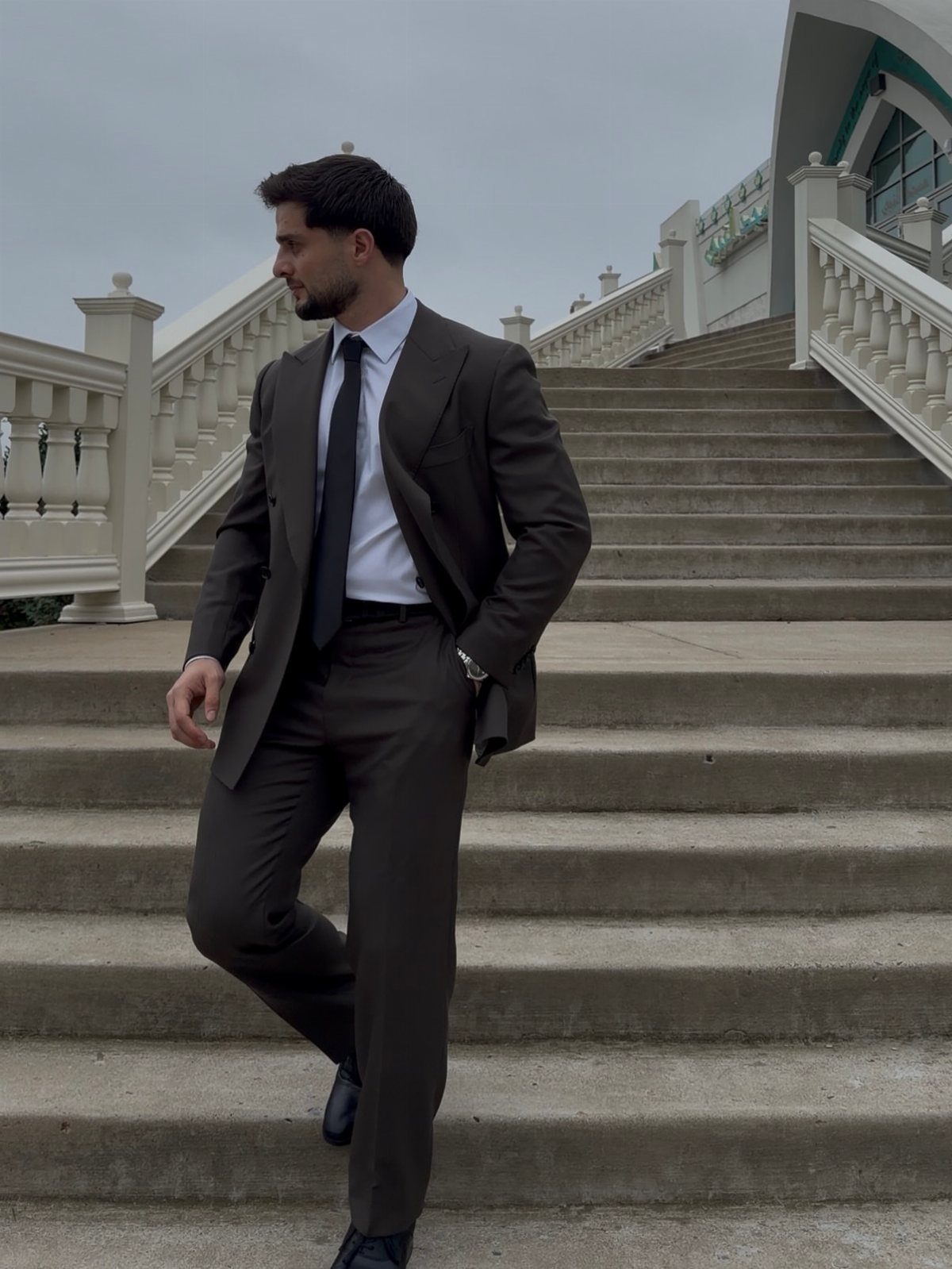
A full suit in a dark, earthy shade like brown or olive reads as more distinctive than navy or charcoal, and it stays quiet.
A white, crisp shirt and a tie a shade darker than the suit keep the whole look in one tonal family.
Fit carries it. Shoulders should end where yours do, and the jacket should close without pulling at the button.
I’d choose a suit that fits well off the rack and spend the savings on a tailor, which beats a pricier suit worn loose.
8. Dress Shirt and Textured Tie
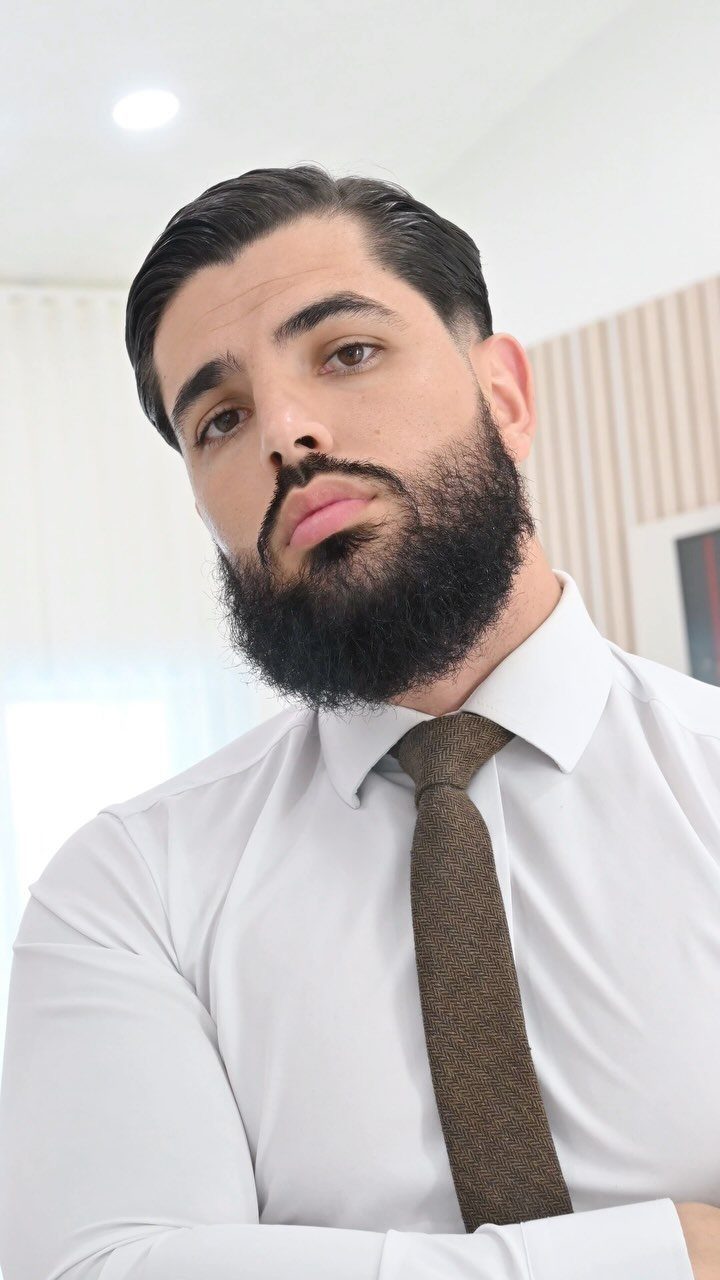
Herringbone gives a brown tie a woven texture that a flat silk never has. Against a white dress shirt it looks rich without adding a single extra color.
Slicked-back hair suits the look. The creator says this style can be done with damp or dry hair, so choose by finish: damp for a sleeker, wetter shine, dry for something softer.
I’d keep the shirt plain and the collar crisp, and let the tie be the only thing with texture.
9. Henley and Wide-Leg Trousers
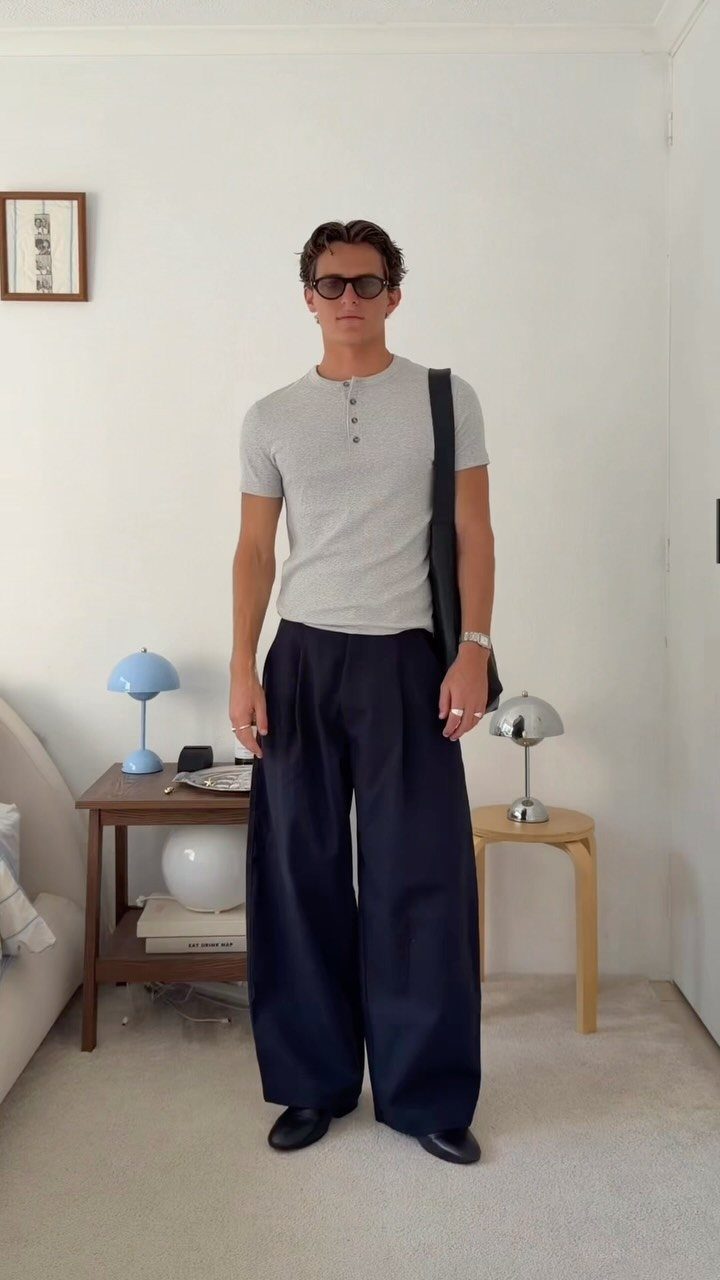
Wide-leg navy trousers and a gray short-sleeve henley make an outfit built almost entirely from shape. Black shoes and classic sunglasses finish it with nothing extra.
Balance is the cost. Very wide trousers need a fitted top, so keep the henley close through the chest and tucked or cropped at the waist, or the whole thing turns shapeless.
I like it for warm days when a collared shirt feels like effort.
10. Striped Shirt and White Trousers
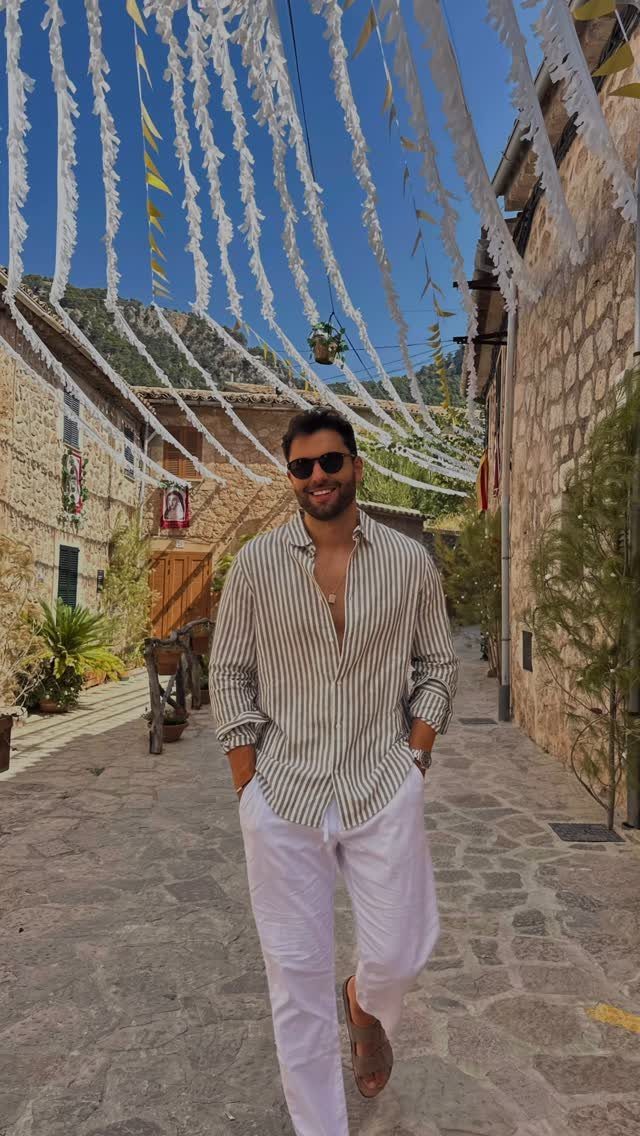
Vertical-striped linen looks best against white trousers, whether you button it or leave it open over a tee, because the stripes stay the only pattern in the outfit. A loose shirt over relaxed trousers is the proportion I’d aim for.
White shows everything, so I’d pick a thicker weave that doesn’t go see-through, and keep the shoes light and simple.
Upkeep costs you: white trousers and linen both need frequent washing and a good press. Linen wrinkles and white marks easily, but that lived-in look is half the appeal for a vacation or a summer lunch.
11. Suede Slip-on Loafers
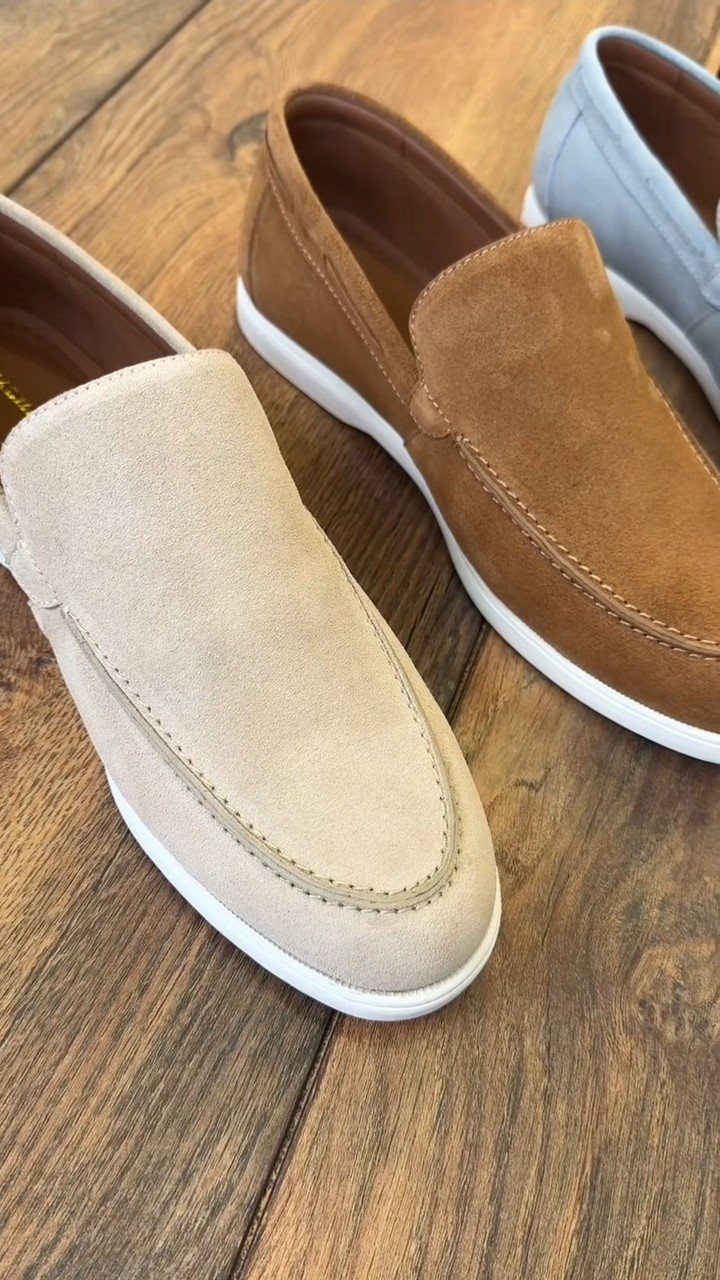
Suede loafers in cream, tan or light blue soften an outfit in a way polished leather doesn’t. They suit chinos, linen trousers and a plain shirt without trying hard.
Tan is where I’d begin, since it pairs with nearly everything in the closet. Cream and light blue are better as a second pair once the first has earned its place.
Suede marks and stains more easily than smooth leather, so a suede brush and protective spray are worth owning.
12. Classic Oxford Button-down Shirts
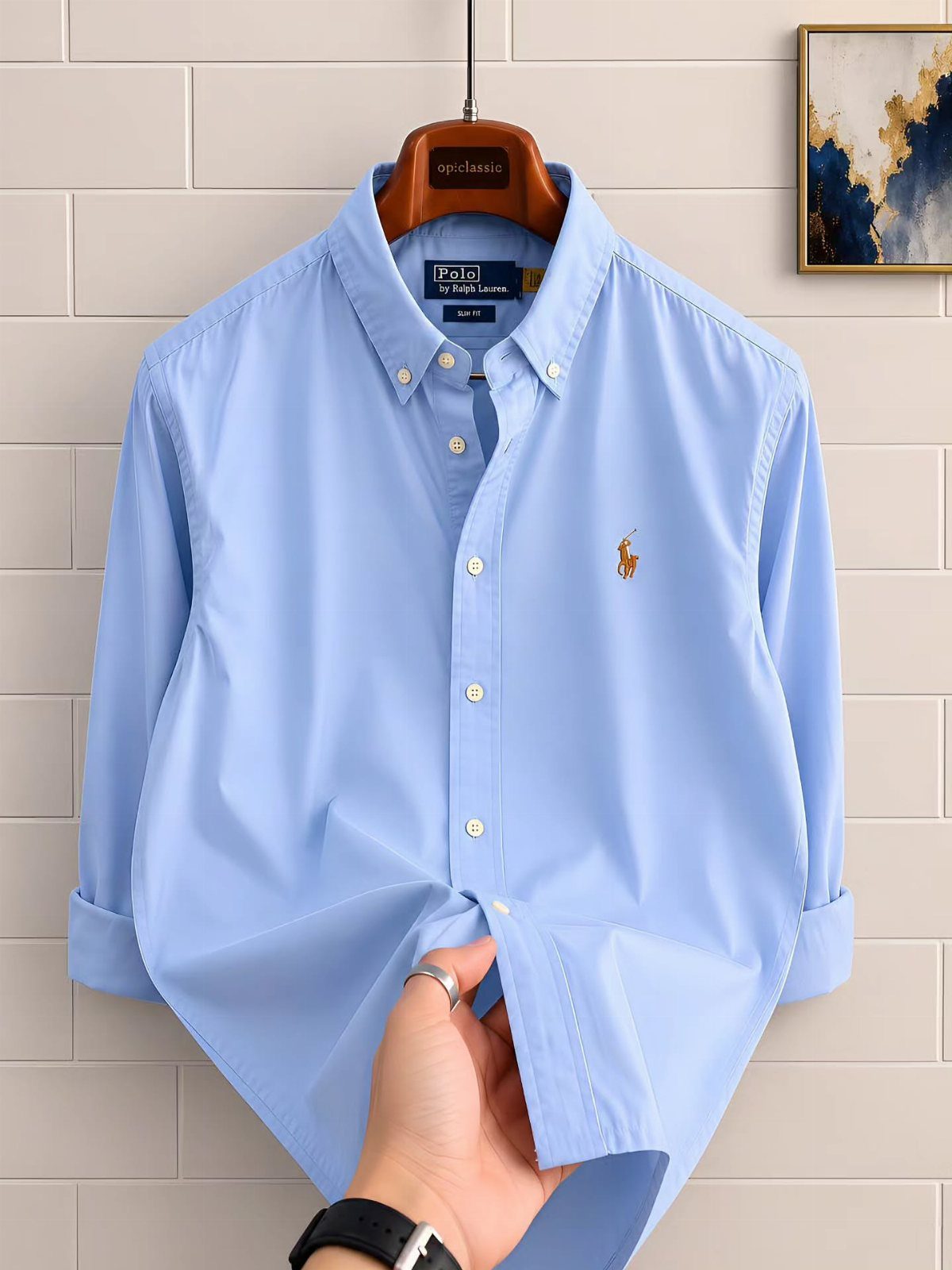
A light blue Oxford cloth button-down with a small embroidered logo is the one shirt I’d buy before any other. The textured weave looks better than flat poplin when worn untucked or under a sweater.
Wear it with khakis, jeans or a navy blazer; it adjusts to all three. Keep the logo small, because the quiet detail is the point.
Hang it on a wooden hanger to hold the shoulders, and let the collar roll a little.
13. Equestrian Country Attire
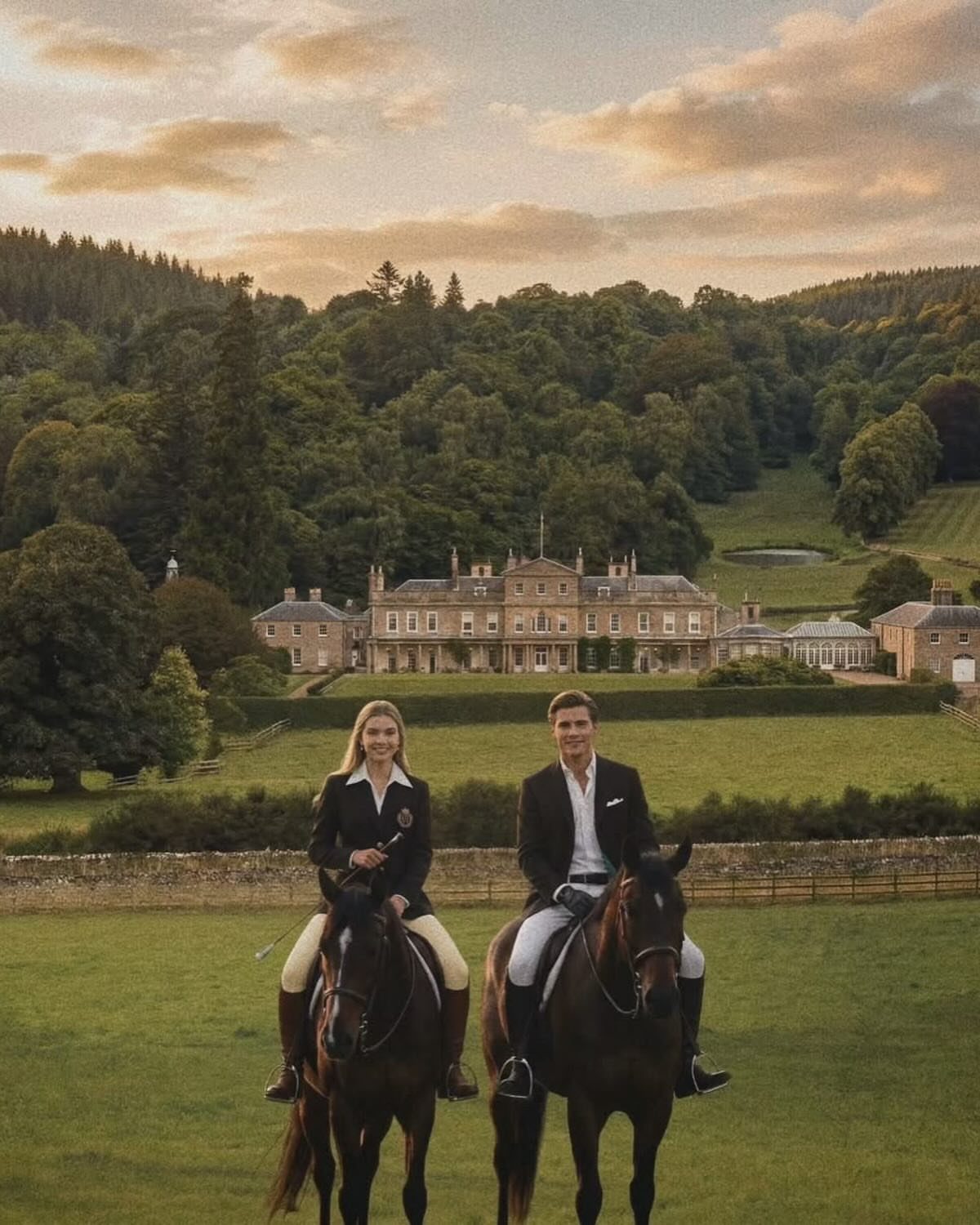
Riding clothes were built for work, which is why a fitted jacket and breeches look so settled on a country estate.
Nothing in the outfit is decoration; every piece has a job, and that is the old money logic in its purest form.
Borrow the proportions rather than the full kit. A structured tweed or wool jacket with a clean shoulder and slim trousers in a muted shade gets you most of the way, and tall leather boots finish it.
I’d keep it to the countryside or a weekend away. Worn on a city street, full riding dress looks like a costume.
Avoiding Common Mistakes
Tight clothing is the fastest way to lose the look. Old money is relaxed, so a jacket that pulls at the button or trousers that grip the thigh undo the effort before anyone sees the fabric.
Leave off anything with a big logo or a designer name stitched across the chest; old money dressing relies on quality that doesn’t announce itself.
A big monogram on the chest tells people you bought the look, and that is the opposite of the idea. A plain piece with nothing printed on it reads as richer.
Trends are the other trap. Synthetic fabrics and loud prints age worst, so choose natural fibers and quiet patterns.
Wear beige from collar to loafers and the outfit goes flat, so break it up with a navy knit, a darker shoe, or a white shirt. Break it up with a darker shoe or a white shirt.
Then check the small things:
- Shoes should be clean and unscuffed.
- Linen can be pressed or left to wrinkle, and a little creasing is part of its appeal, but it should never look slumped or shapeless.
- Hair and grooming should look tended.
A wrinkled, scuffed outfit looks like you gave up, and no label fixes that.
Frequently Asked Questions
What are some good old money clothing brands for men?
Ralph Lauren, Brooks Brothers and Barbour are the names that come up most for this look.
For a waxed jacket, Barbour is the name I send people to first, and its Bedale and Beaufort models are the ones to look at.
Brand matters less than the pieces: a tweed blazer, a wax jacket and well-made loafers form a solid base, and plain clothing with no big logo reads as richer.
Why is Gen Z so obsessed with old money style?
The appeal is timeless elegance and quality that lasts, set against fast fashion.
The look is built on a few well-made pieces in quiet colors that mix easily, so you repeat outfits without a new wardrobe each season. It also asks for no logos, which makes it feel calmer than trend-driven dressing.
What are classic clothes?
Classic clothes are well-tailored suits, dress shirts, khaki pants and blazers in neutral colors like navy, gray, beige and earth tones. They stay in style because they follow fit and quality instead of trends.
What is the old money aesthetic for men?
Old money style comes down to muted colors, natural fabrics like wool, cotton and linen, a cut that is tailored but not tight, and accessories that stay plain.
Think loafers, knitwear, blazers, linen shirts and chinos. Nothing announces itself, so the quality of the fabric and the fit do the talking.





