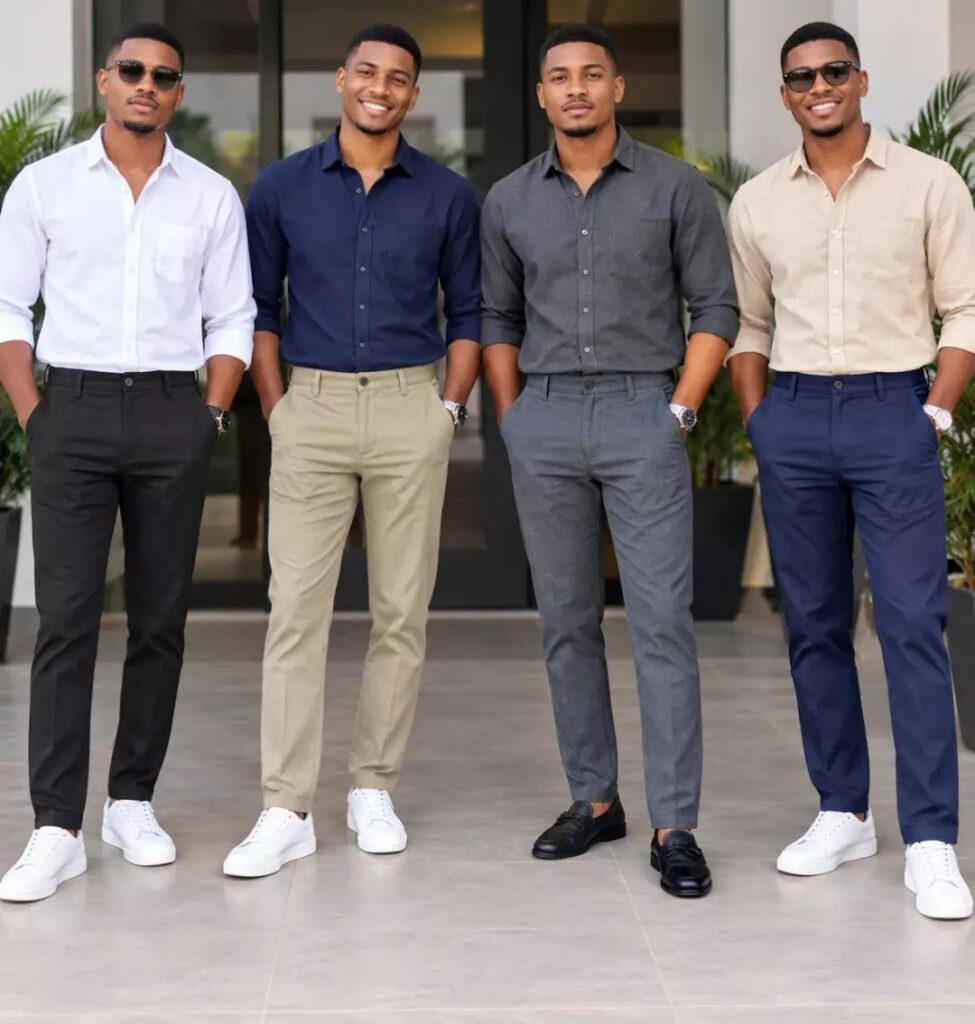
Read the room before you pick a look: what people wear on an ordinary Tuesday and what the senior staff put on for meetings mark the baseline, and I’d aim a half step above it.
A sharp cut on a modest garment beats a loose one with a good name on the tag, and that holds from the knitwear up to the suit.
1. Business Casual
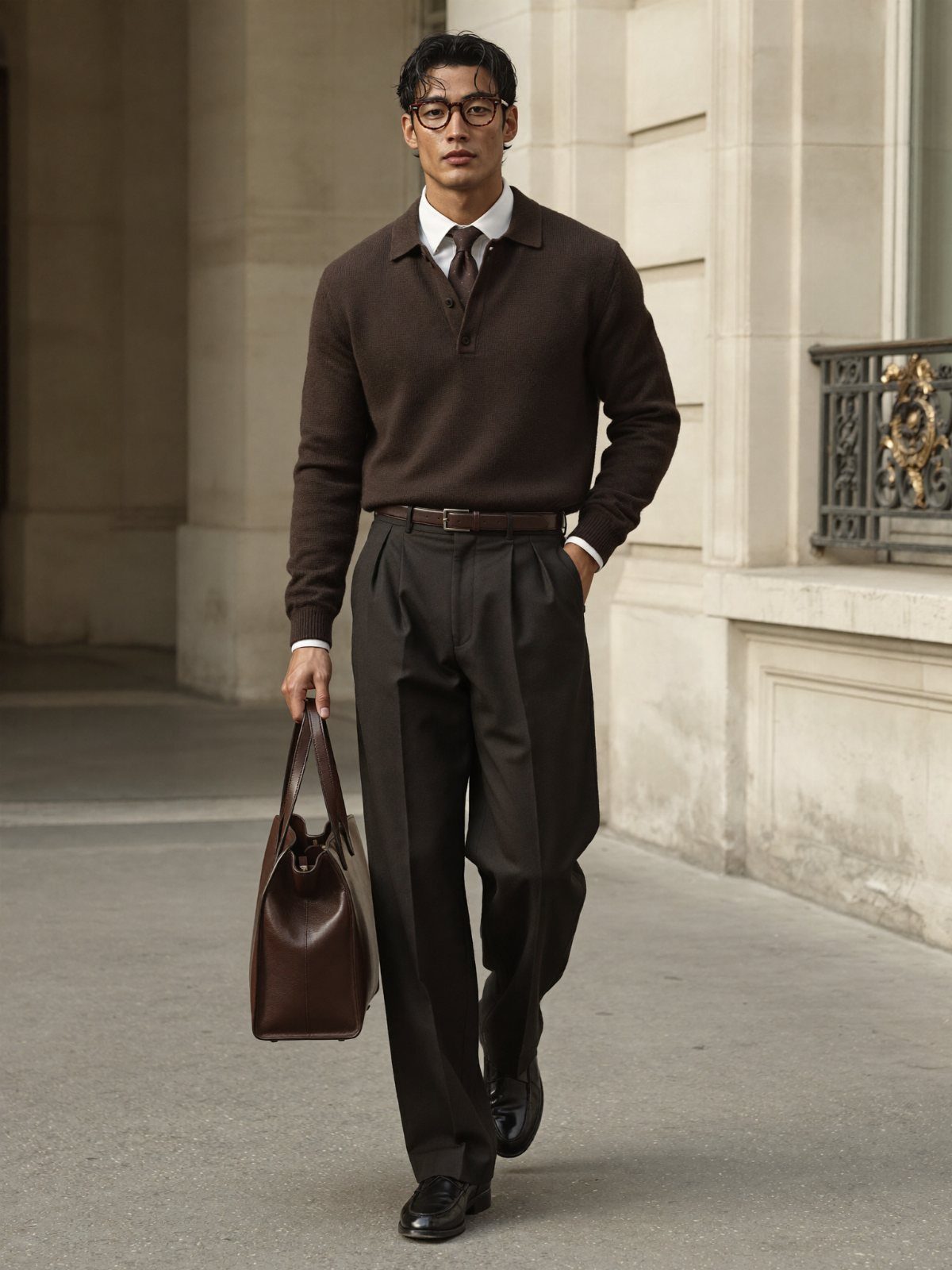
Brown knit over a collared shirt and tie is business casual with the dial turned toward formal. The tie keeps it honest in an office where the dress code is unclear.
I like that the knit replaces a jacket without losing the structure; it’s a good fix for a man who wants to skip the blazer.
If the office is relaxed, drop the tie first and leave the rest alone.
2. Dress Pants and Button-down Shirts
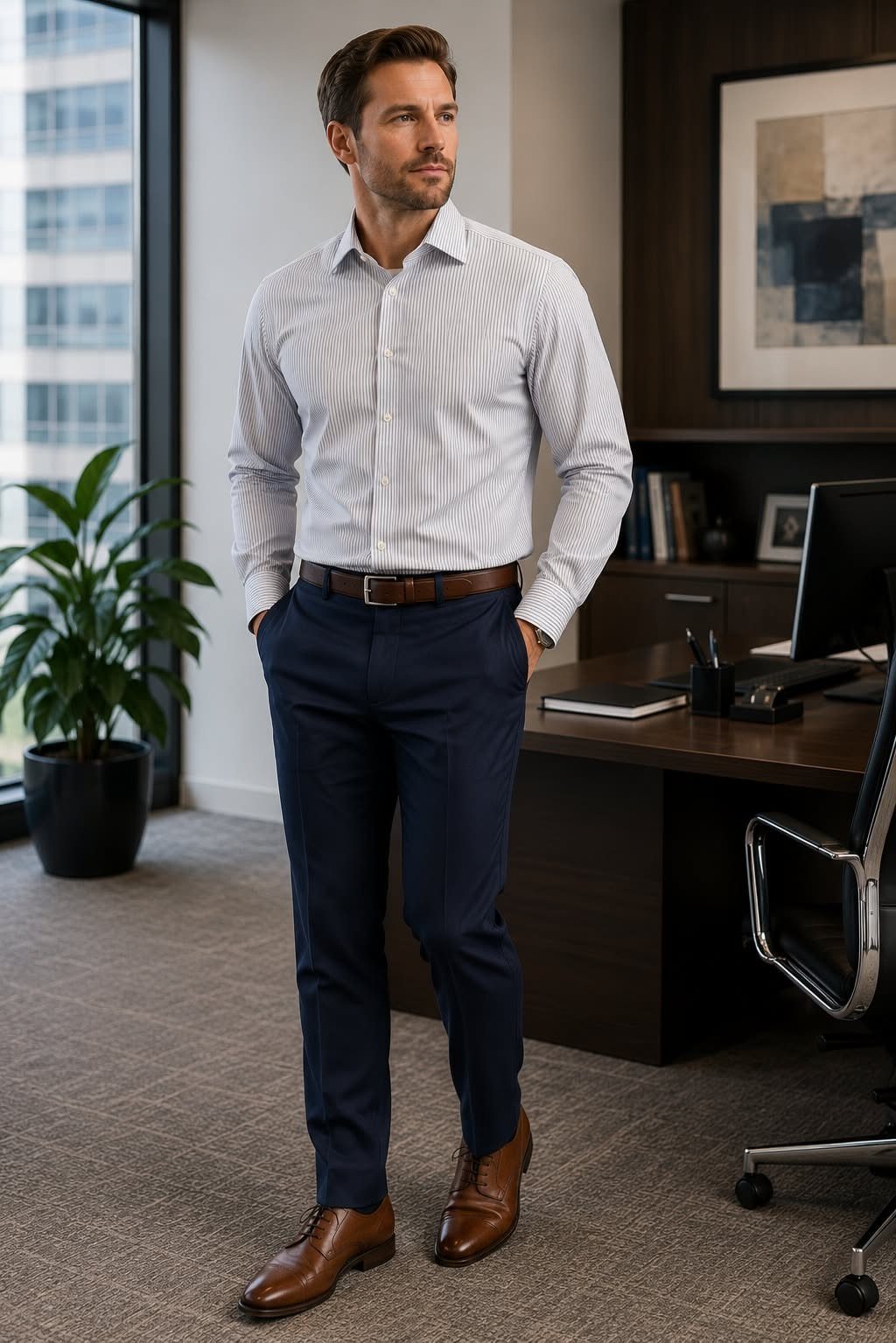
Navy dress pants and a striped shirt are about as dependable as an office outfit gets. 2 pieces, no jacket, and the stripe does the work a tie would.
Match the belt to the shoes: brown with brown, in the same shade, so the 2 read as a pair. That one detail separates a put-together outfit from a casual one.
Choose a stripe with some space between the lines; busy, tight stripes fight with navy. Keep the shirt tucked, since an untucked dress shirt looks like the day ran long.
3. Button-Down Shirt and Dress Pants
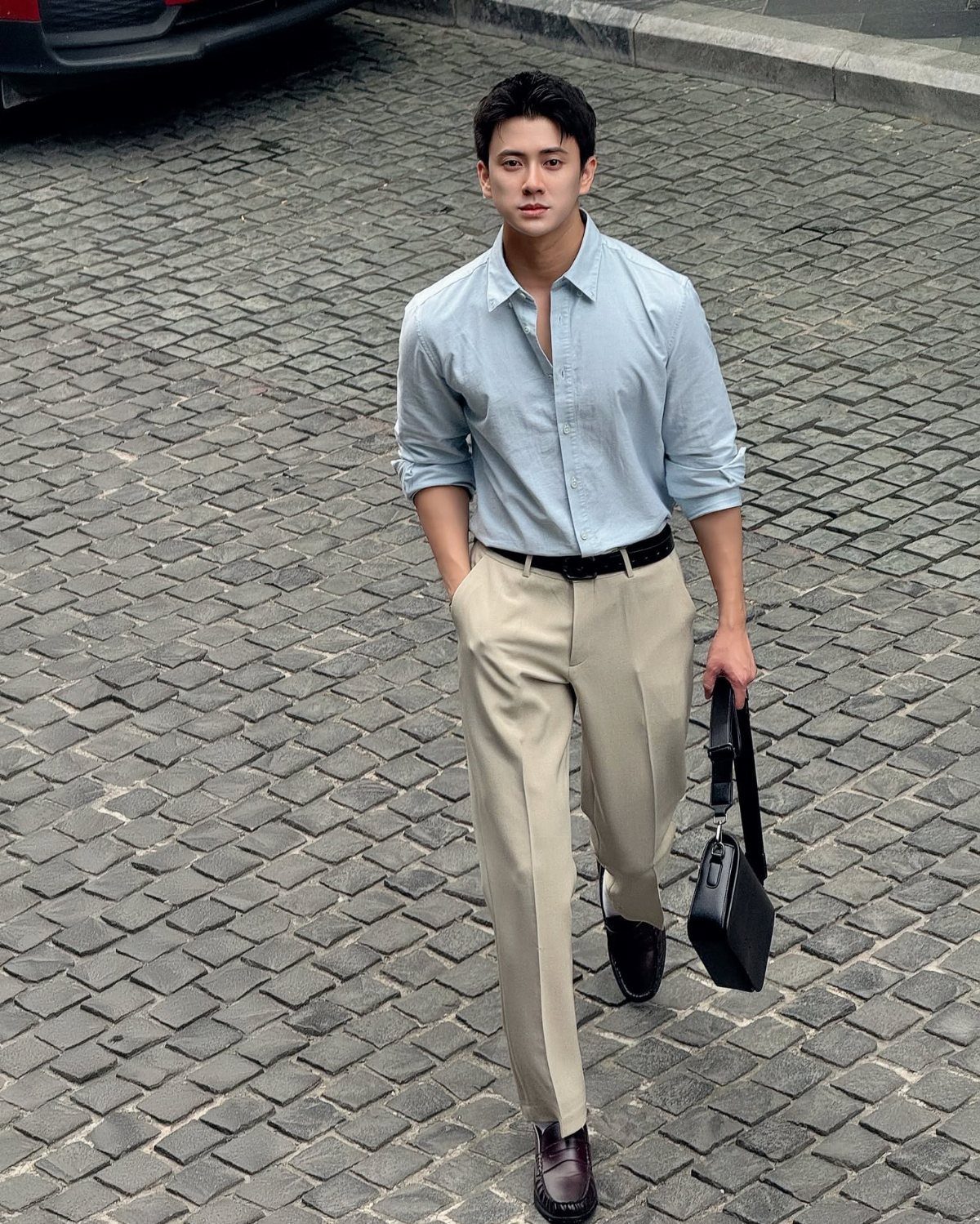
Light blue and beige is the quieter, warmer cousin of the navy-and-white office look. Beige trousers soften a crisp shirt, so the outfit suits men who find gray and navy a little severe.
Dark loafers are the right shoe here, and I’d pick them over anything lace-up and heavy. A black belt works with them, but brown would be my own preference if the loafers allow it.
Beige shows wrinkles and stains faster than navy, so keep it for days without a long commute.
4. Dark Grey Two-Piece Suit
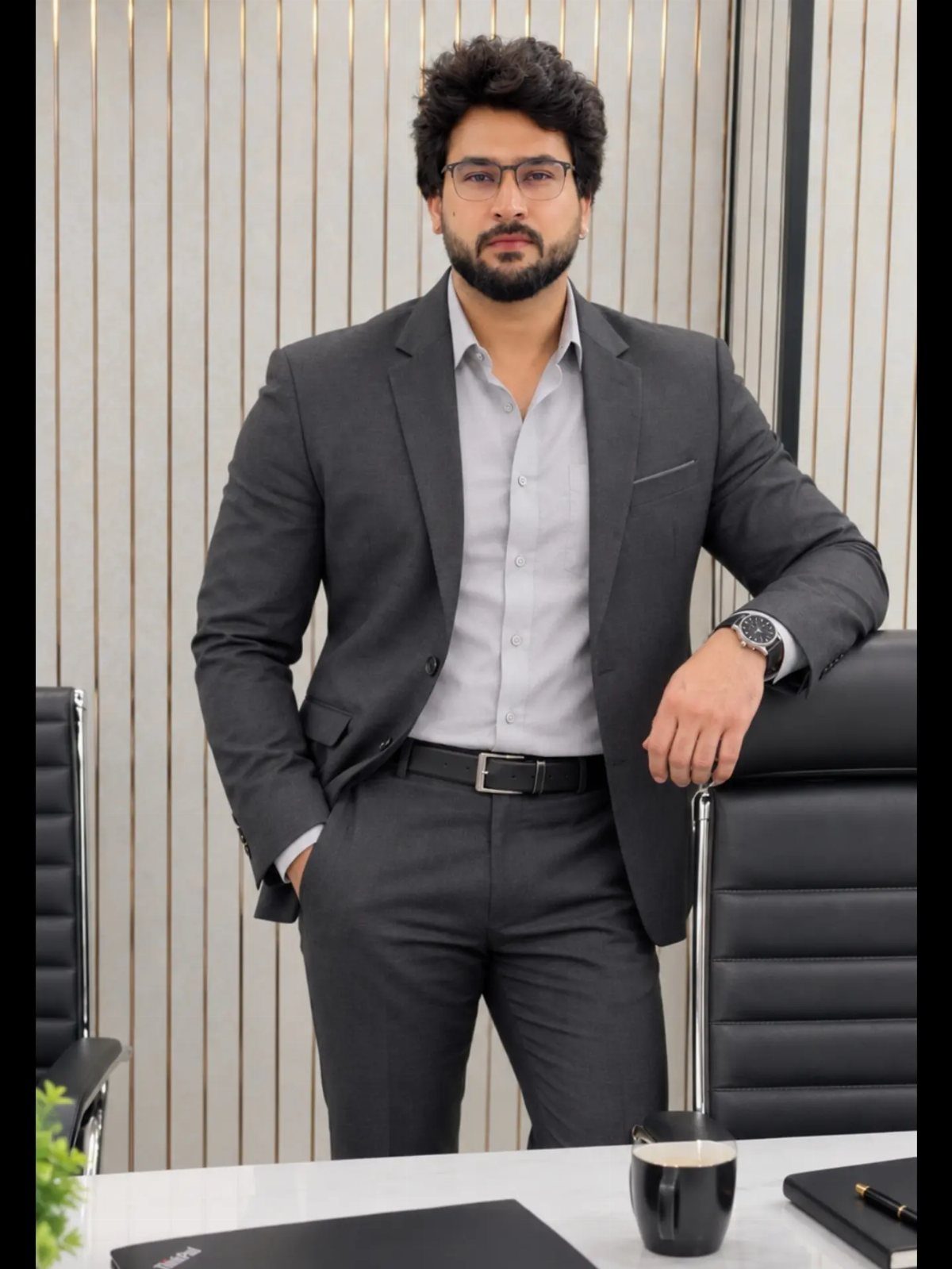
A dark grey suit worn with a light grey shirt keeps the whole outfit in one color family, which makes a man look taller and calmer than contrast does.
A dark grey two-piece is the most formal choice in an office wardrobe, and it works for interviews, client days and anything where you want to look settled.
Tailoring decides everything. Check that the shoulder seam ends where your shoulder does, and that the sleeve shows a bit of shirt cuff.
If a tie feels like too much, wear the shirt open at the collar and the suit still holds up.
5. Blazer with Chinos or Slacks
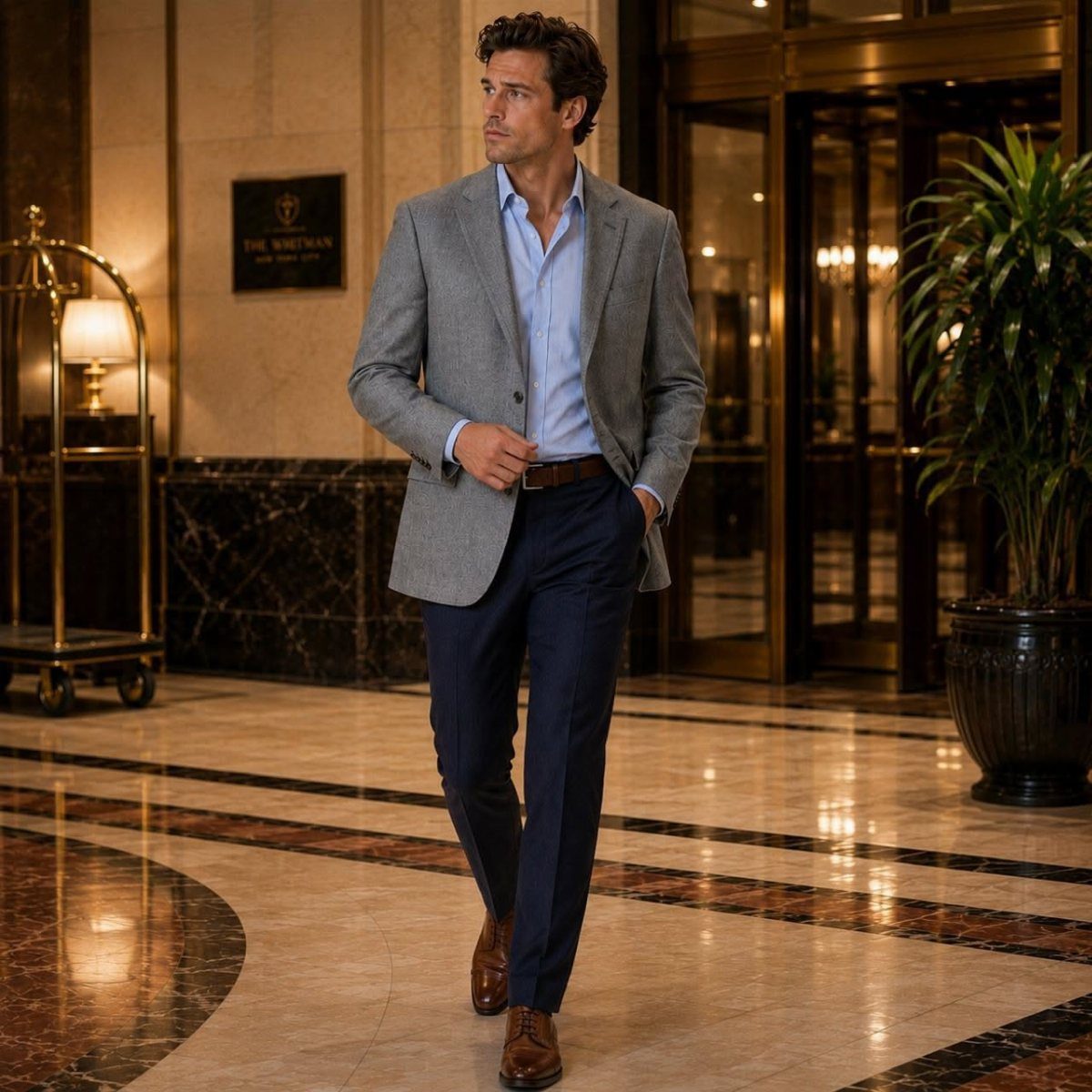
Grey blazer, navy trousers: 2 separate pieces that look planned rather than matched. The light blue shirt sits between them in tone and ties the outfit together.
Slacks or chinos both work below the jacket. I’d go with slacks for meetings and chinos for ordinary days, and I’d pick a brown belt and brown shoes in the same shade.
A blazer is the easiest way to dress up pants you already own. Buy one in a color that pairs with your darkest trousers.
Accessorizing
Accessories are where a plain outfit picks up a personality, and they cost less than changing the clothes underneath.
A patterned tie or a good watch is enough, even in an office that has dropped the dress code to chinos or dark jeans.
Keep the base simple so one item gets noticed. If the tie has a pattern, let the shirt stay solid or close to it, and don’t add a second loud piece.
Casual offices still reward a polished look, so the clothes underneath matter. Chinos or dark jeans should fit well and be in good condition: no fraying hems, no faded knees.
A smart-casual shirt in a pattern or color you like gives you room to experiment. I’d change one thing at a time, then see what you like in the mirror.
Confidence in Dressing
Dressing well pays off at work, and the pay can be literal. Studies have linked sharper dress to higher earnings, though few people say so out loud.
Don’t copy your coworkers.
Their style is probably average, and matching it only gets you average results. Look at what the best-dressed person in the building does, then do your own cleaner version of it.
Every office has a baseline dress code, and the specifics vary by company.
Learn the basics first: how formal people are on a normal day, and what the senior people wear to meetings. Then dress a half step above that.
Avoid the business casual clichés that make a man look like part of the furniture: shapeless khakis, boxy shirts, and clothes that fit nobody in particular. Fit does more for confidence than any label.
There’s a tricky balance to strike when dressing for the office: You’re aiming for both respectability and a sense of unique personal style.
Frequently Asked Questions
What is appropriate office attire for men?
It depends on how formal the workplace is, and the range runs from a dark grey two-piece suit to chinos with a knit or blazer.
Watch what people wear on an ordinary Tuesday and what the most senior person wears into a meeting, then aim for half a step sharper than both.
A suit suits interviews and client days; navy dress pants with a striped shirt cover most ordinary ones.
What is business casual for men?
Business casual sits between a suit and weekend clothes: dress pants or chinos, a collared shirt, and a layer such as a blazer or a knit in place of a jacket.
Fit matters more than labels, so avoid shapeless khakis and boxy shirts.
What is the 3-3-3 rule for men?
No fixed formula by that name exists that I’d vouch for, and a rule of 3s tends to matter less than how the pieces fit.
The nearest guidance I’d stand behind is to build outfits from a few pieces that mix well: a base of one shirt, one pair of trousers and a matching belt and shoes, with a single accessory such as a patterned tie or a good watch to draw the eye.





