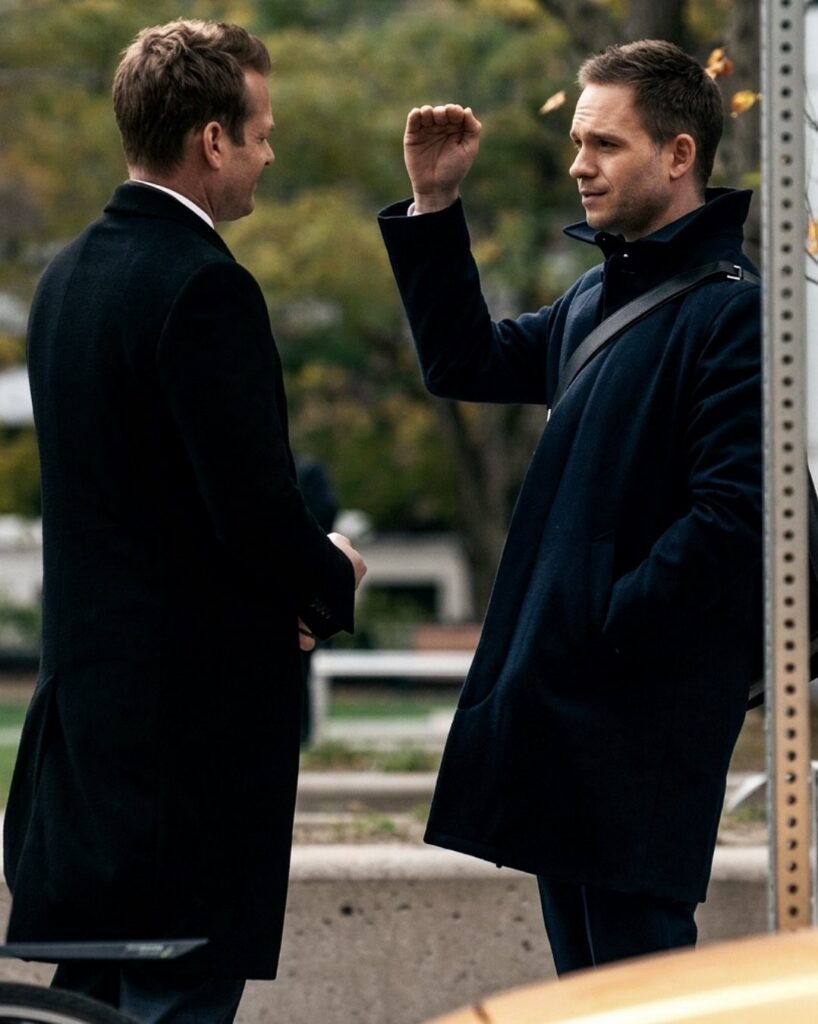
The looks in this list run from a structured blazer and a knit polo with white trousers to linen resort wear, a monochromatic cardigan, and suede over a turtleneck, with a streetwear basic or two kept quiet by everything around it.
Occasion picks the look: the structured blazer for work, a button-down with beige trousers for dinner, linen for heat, and suede over a turtleneck for cool evenings.
Fabric matters more than any single color, since a navy polyester blazer still looks cheap while the weave of a tweed or the nap of suede does the talking with no logo in sight.
1. The Structured Blazer
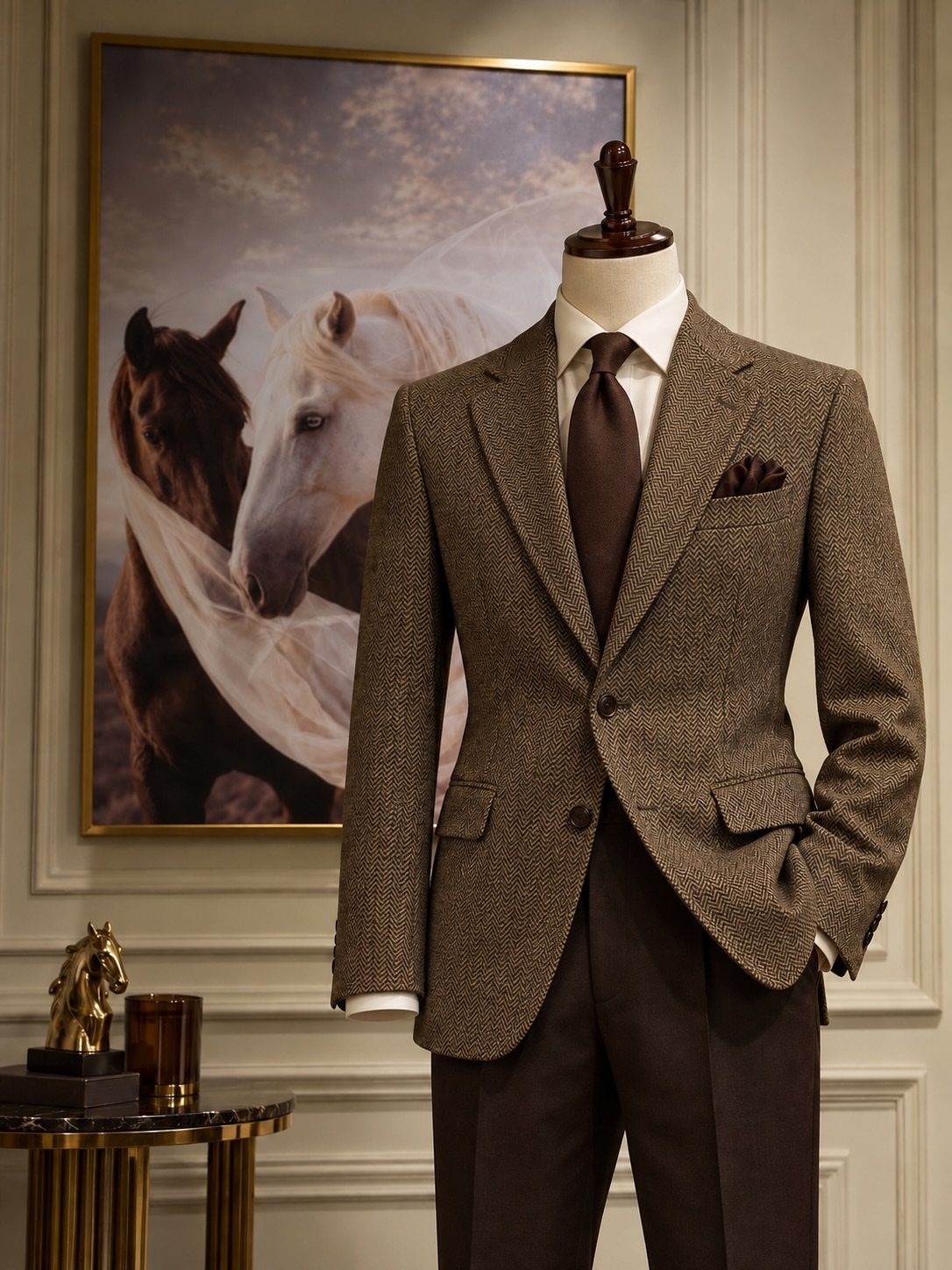
Texture does the work here. A brown herringbone or tweed blazer with a white shirt and dark trousers needs no logo, because the weave is the detail people notice up close.
I would build the rest of the outfit around it and leave the other pieces plain: a white shirt, one tie in a deeper brown, trousers darker than the jacket.
A blazer with this much pattern leaves little room for a second loud piece.
Wear it with a tie for work or an event. For a looser day, drop the tie and leave the collar open.
2. Navy, Grey, and Beige
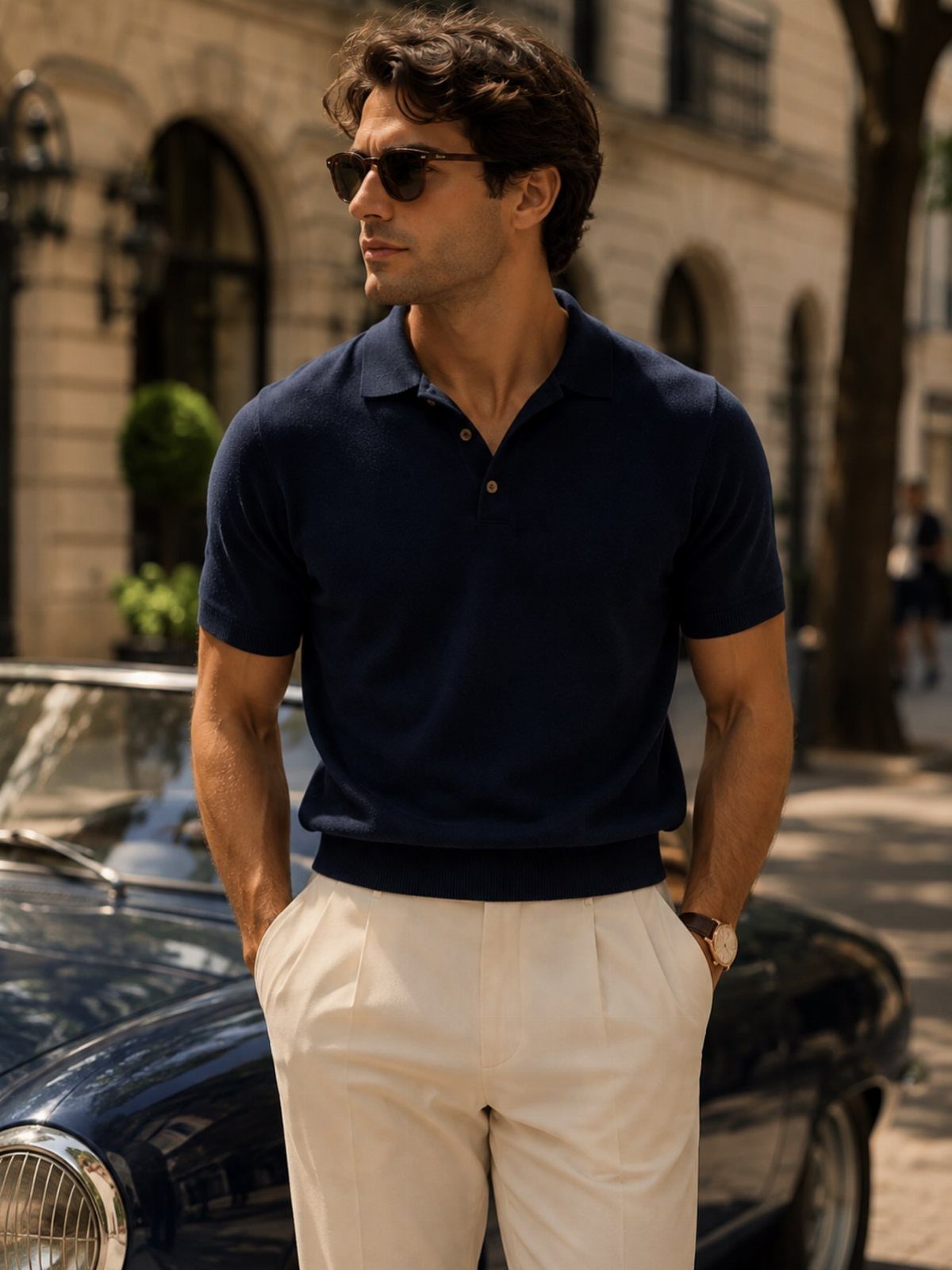
3 colors, and almost nothing else, cover most of a quiet luxury wardrobe: navy, grey and beige. A navy knit polo over pleated beige trousers is the easiest proof.
Colors that sit this close together never fight, so every piece can be swapped for another and still match. That suits a man who wants fewer clothes that all work together.
Pleats add a bit of shape without adding a pattern. Grey slots in as the third neutral, in trousers or a sweater, whenever beige feels too light.
3. Quiet Luxury Basics with Streetwear
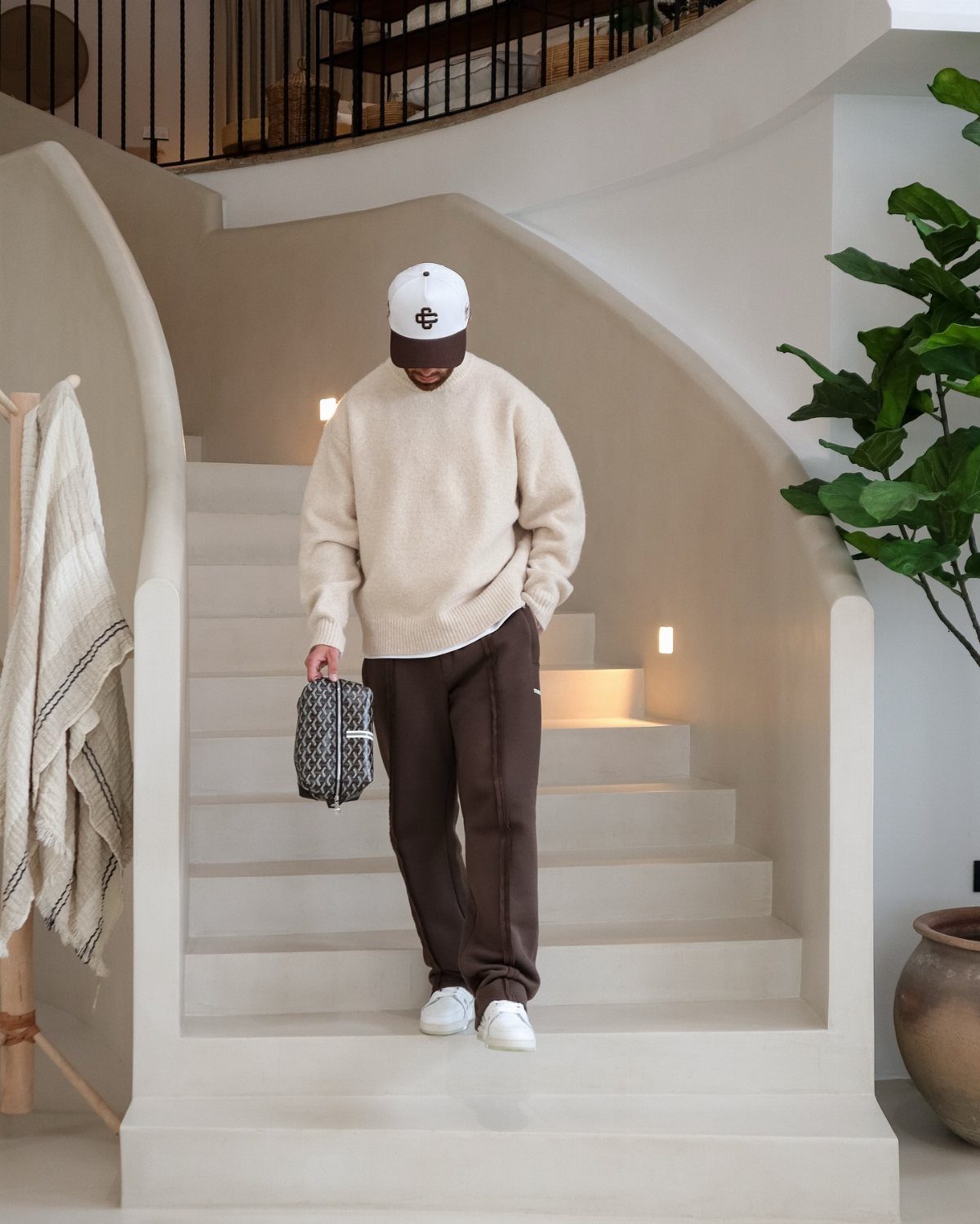
Sweatpants only read as luxury when everything above them is quiet.
Then pick one louder piece and stop there.
This is my pick for travel days and errands. It looks deliberate, not lazy, as long as the sweater is clean and the sweats are a real, solid color.
4. Knit Polo and White Trousers
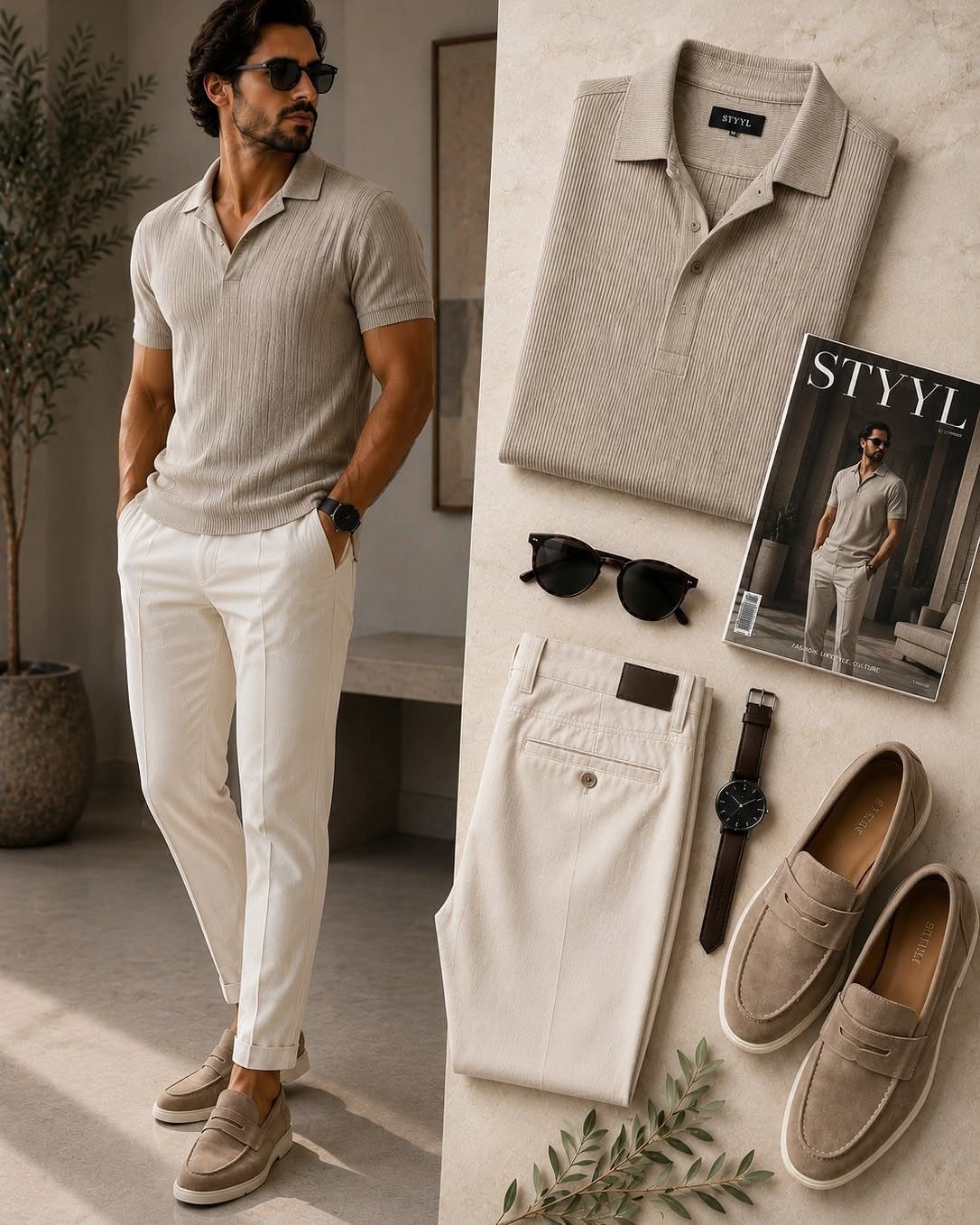
Polo plus white trousers is a warm-weather pairing that looks more expensive than it sounds.
A ribbed beige knit polo, white tailored trousers and suede loafers all sit in the same pale family, so the whole look moves as one calm line.
Ribbed knit gives the polo some texture, which keeps all that pale color from looking flat. Grey works the same way if beige is not your shade.
Keep the shoes and any belt in a matching neutral tone. White trousers show everything, so I would choose a heavier fabric over a thin one.
5. Button-Down with Beige Trousers
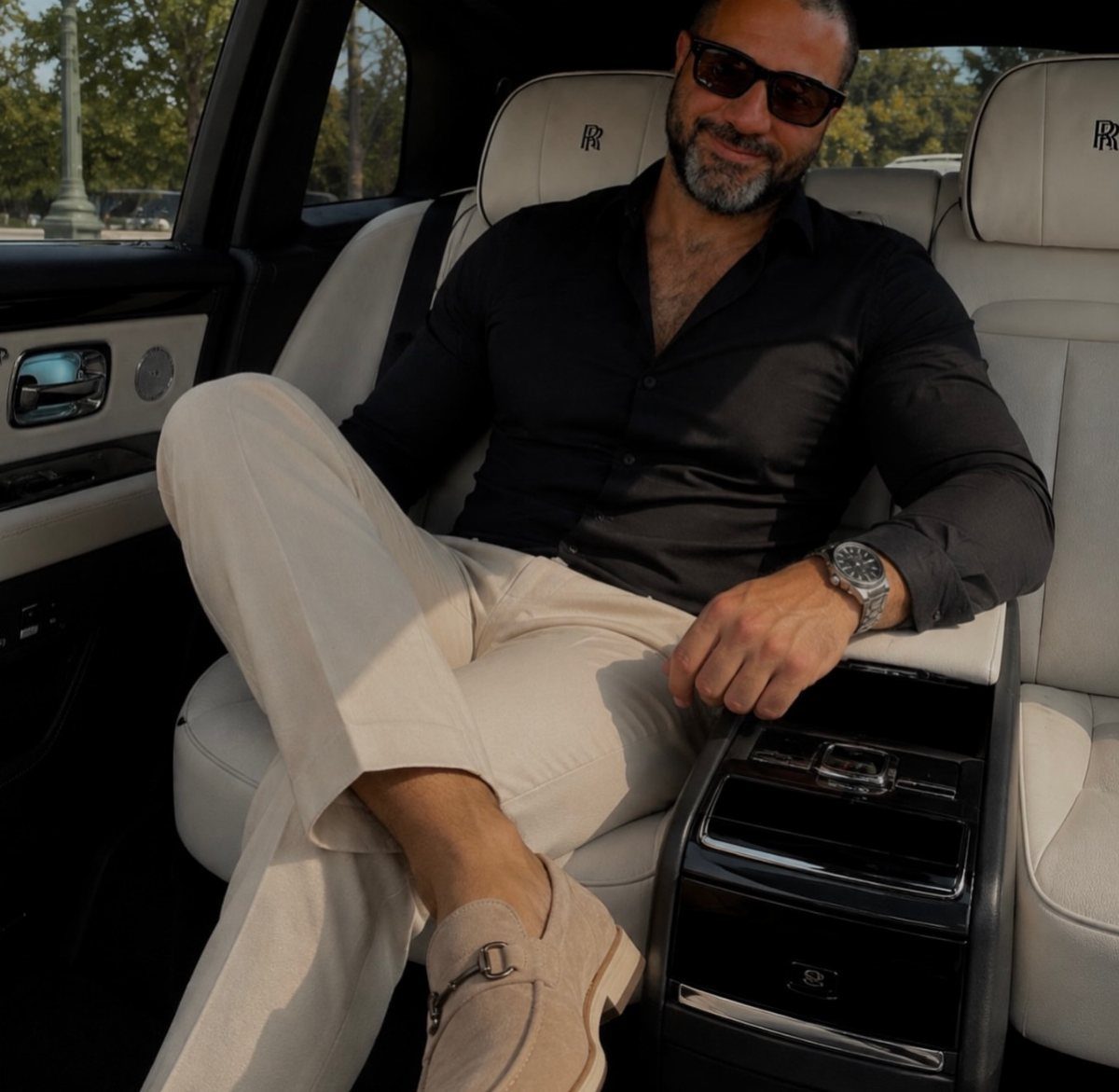
Black on top and beige below is a sharper pairing than most men try. A black button-down with tailored beige trousers and tan suede loafers gives you contrast without any pattern or logo.
I prefer it for dinners and evenings, where black looks natural and the lighter trousers stop it from feeling heavy. Keep the shirt plain, with no visible branding, and choose trousers cut to fit.
Suede loafers soften the contrast. Leather lace-ups would make the outfit stiffer, so I would skip them here.
6. Relaxed Linen Resort Wear
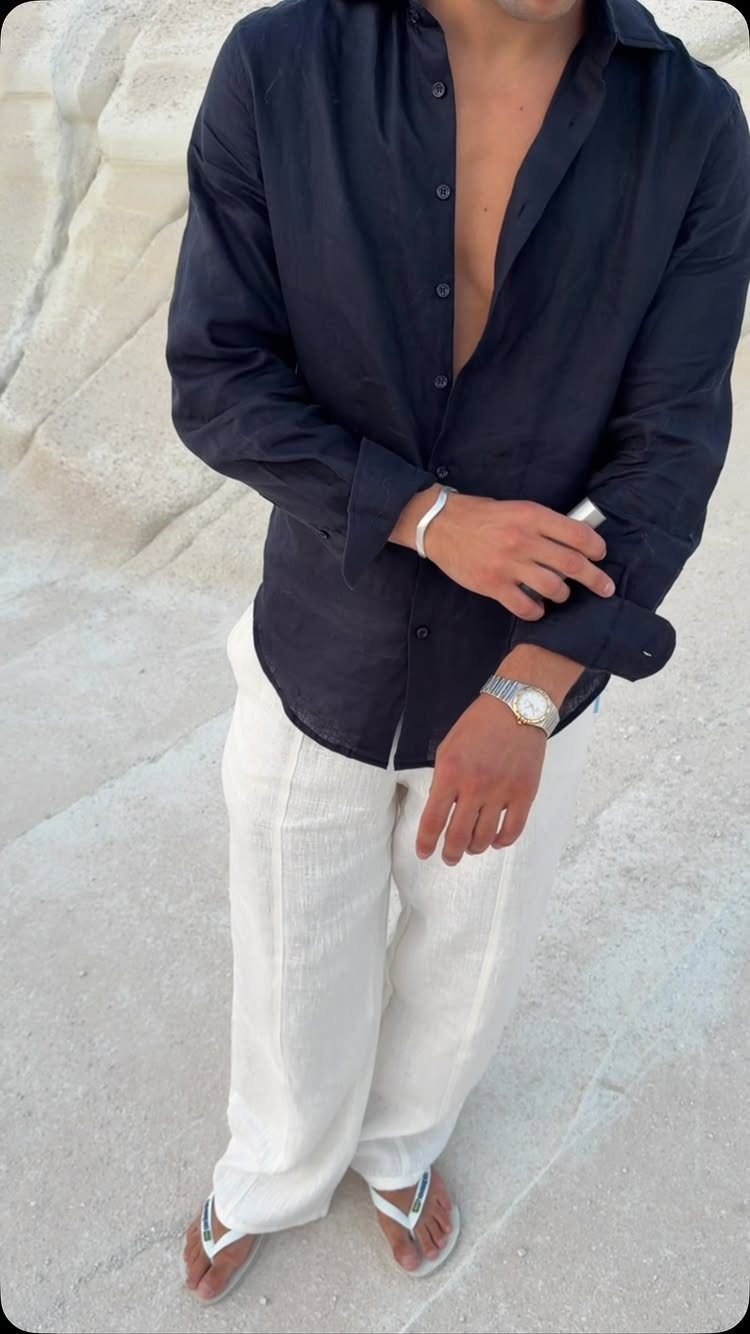
Linen is built for heat, and an open navy long-sleeve linen shirt over loose white linen trousers is the relaxed version of dressing well. The shirt left unbuttoned acts like a light jacket.
Wrinkles come with the fabric, so I would not fight them. Part of the appeal is that rumpled, easy look, and it only works if the colors stay clean.
Keep the extras small: a wristwatch and a silver cuff are enough. Flip-flops suit a beach or resort, though I would swap in loafers anywhere dressier.
7. Monochromatic Knit Cardigan
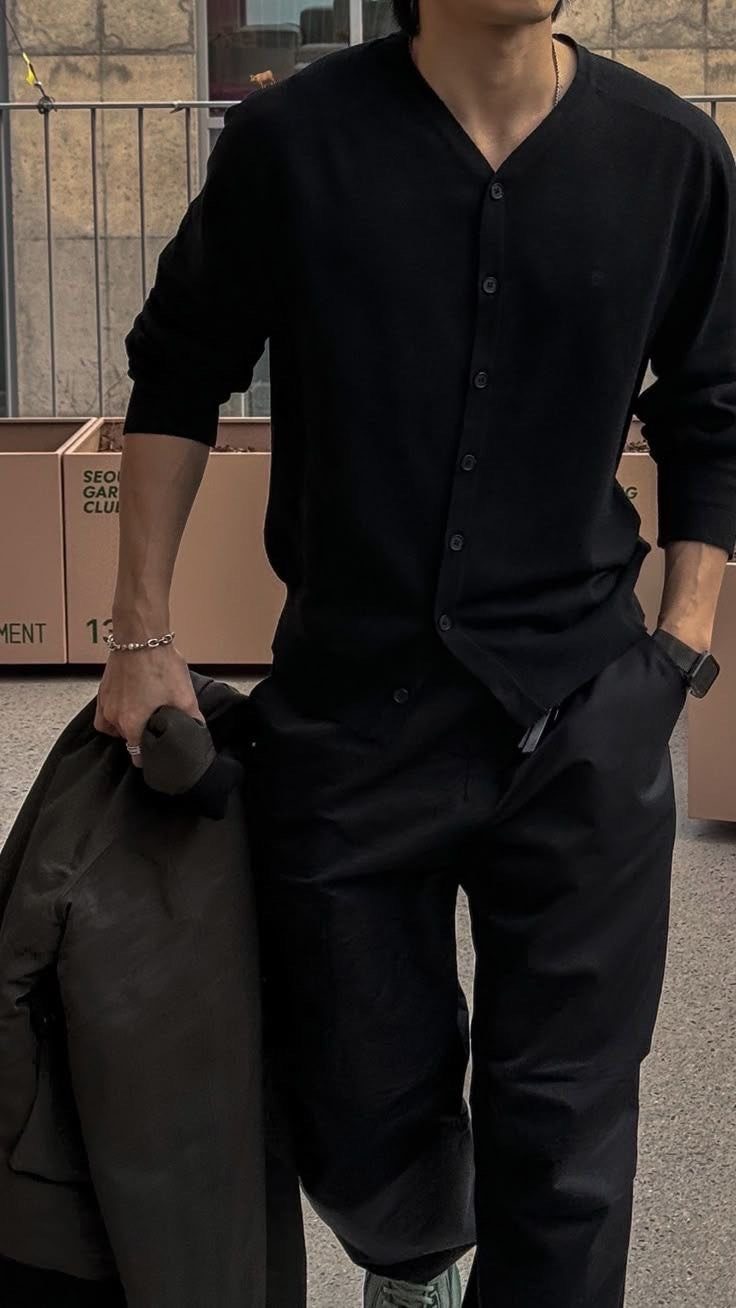
Black knit on black cloth makes one dark column, and a buttoned cardigan is the piece that keeps it from looking like a uniform. The buttons give a V of structure where a plain sweater would just hang.
I would match the blacks closely, since a faded cardigan next to darker trousers looks like a mistake.
An olive jacket slung over a monochrome knit gives the outfit a second color and some interest, and it does the job without a logo anywhere in sight.
This works best for evenings and cooler days.
8. Long-Sleeve Tee and Leather Tote
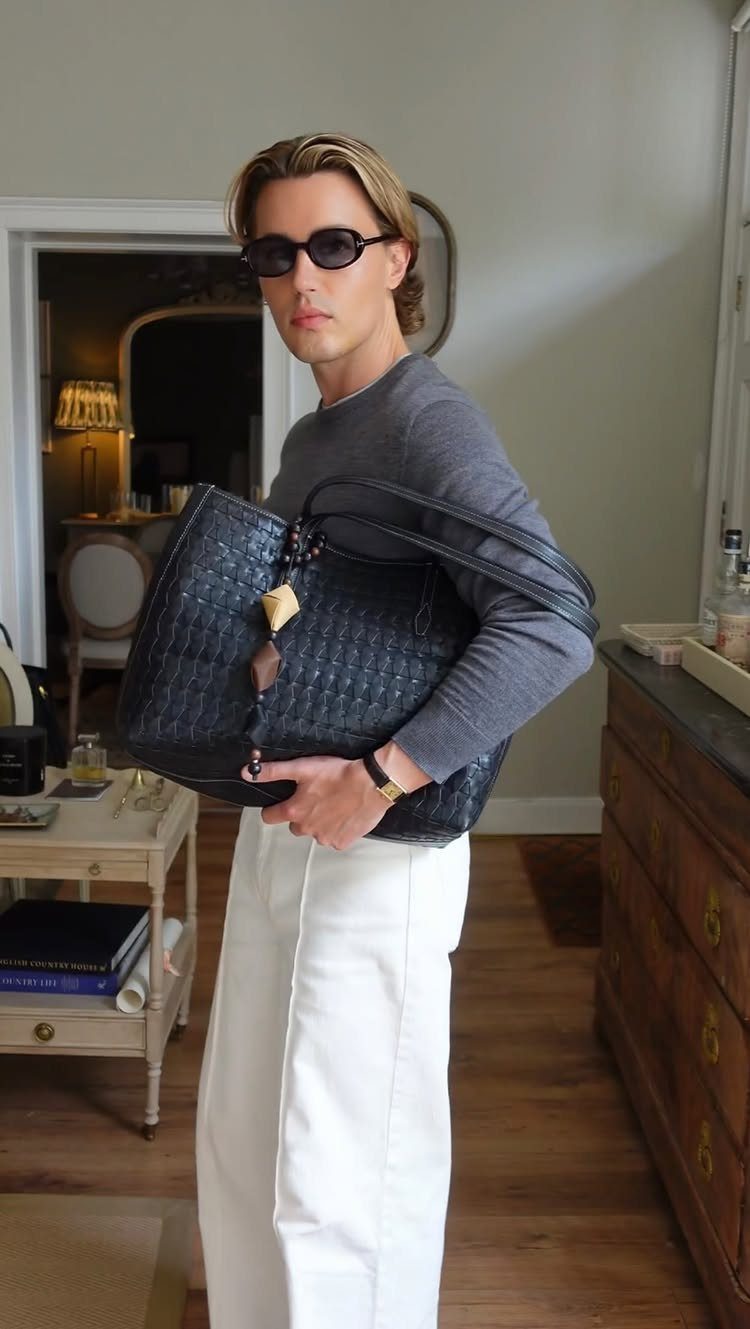
A grey long-sleeve top with white trousers is plain on purpose, and a large leather tote is what finishes it. Choose one with no logo and a textured or woven surface, so the material does the talking.
The maker of this look said she believes the best pieces are the ones made with care, and a tote is where that shows most. I would spend there before spending on the top.
Keep the top close-fitting but not tight. White trousers show everything, so choose a heavier cloth.
9. Suede Jacket and Turtleneck
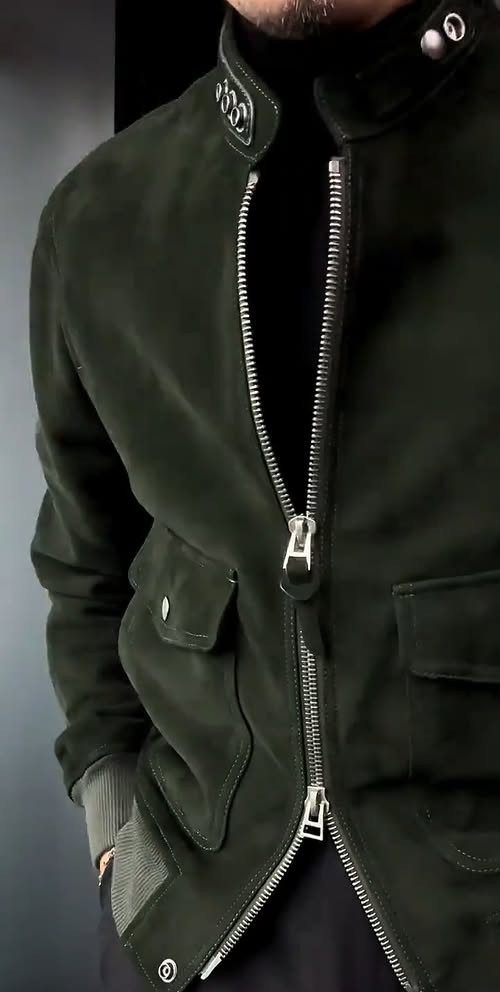
Olive suede over black turtleneck is a two-piece answer for cool evenings. The dark green keeps the jacket soft against the black, and plain silver zippers are the only hardware you need.
I would pick a jacket in a dark olive over a bright one, since it pairs with black, grey and navy trousers alike. Keep the turtleneck fine-knit and fitted so it sits cleanly under the collar.
Suede marks easily, so I would skip it on rainy days.
Why Quiet Luxury Matters
Quiet luxury is a different way of buying, not a different set of colors. Premium fabric, clean stitching and good tailoring cost more up front, but they stay in the rotation for years.
I think that is the real appeal. A man who owns fewer pieces that all fit and all mix gets dressed faster and worries less about it.
Trends come and go, and a classic cut in a neutral tone sits outside that cycle. A wardrobe built this way rarely needs defending, because nothing in it is trying to make an argument.
Allegedly, less than 5 percent of sheep in the world can produce this uber expensive fabric. With all that being said, this regular-looking pair of joggers truly sits at the pinnacle of quiet luxury.
— Complex
Common Quiet Luxury Mistakes
Wearing the right colors in cheap fabric is the most common miss. A navy polyester blazer still looks cheap, so spend on fabric before you spend on anything else.
Fit comes next. Baggy neutrals look sloppy rather than refined, and most off-the-rack trousers and jackets need a shortened hem or a waist taken in before they sit right.
2 other errors are easy to fix:
- Flat, matte outfits look lifeless.
- Matching shades wash out. Cream looks better set against charcoal than against more cream, because the contrast gives the outfit some shape.
Check the shoes and belt last. Scuffed sneakers or a flashy buckle will undo a perfect neutral outfit, so keep the hardware minimal and the leather clean.
Skip the trend pieces, too. Buy fewer, better things.
How to Style Quiet Luxury
If every piece in your closet is a statement, nothing ever lets the eye rest, since each outfit fights for attention.
A closet made only of neutrals can go flat. My preference is one bold piece sitting on a base of quiet, well-fitted basics.
Keep the bold items you already own.
Start with a few well-chosen basics: a tailored blazer or a good overcoat, in earth tones, navy, cream or charcoal. Look for rich fabric or unusual stitching in place of branding, and buy where quality is the priority.
Frequently Asked Questions
What is the best quiet luxury brand?
No single label wins, and the notes only name a few: Loro Piana, Brunello Cucinelli and Zegna come up often as the ones that built this style.
I would judge any brand by fabric, stitching and fit rather than by name, since a logo-free piece in good wool or cashmere is the whole idea.
Spending on fabric before anything else matters more than which label sits inside the collar.
What is quiet luxury in men’s fashion?
Think of it as dressing without a billboard: good cloth, tidy stitching, a jacket that fits and colors that stay quiet, with no logo doing the announcing.
Fewer pieces that fit and combine easily also mean less time standing in front of the closet each morning.
What does understated luxury mean?
It means letting fabric, fit and finish do the talking instead of a brand name.
Think a brown herringbone blazer where the weave is the detail, or a woven leather tote with no logo. The look relies on texture and craftsmanship, so it holds up as trends change.
What colors define the old money aesthetic?
I build the palette from navy, charcoal, cream, tan, camel and olive. Colors close in tone rarely clash, so I can swap pieces around without thinking about it.
How do I start building a quiet luxury wardrobe?
Start with a tailored blazer or a good overcoat in navy, charcoal, cream or an earth tone, plus well-fitted trousers.
Then add a fine-knit sweater or textured polo. Get the hems and waist tailored, since baggy neutrals look sloppy, and keep to one bold piece on a quiet base.
What is the 3-3-3 rule for men?
No fixed formula with three of this and three of that exists for quiet luxury, as far as I know.
The closest idea is a three-color base of navy, grey and beige, which lets every piece mix with every other. Then allow yourself one bolder piece layered over that foundation, and leave it there.





