What decides your version is the week you actually live: a man in an office 5 days needs more trousers and shirts than a man who works from home.
1. Basic Tees & Tanks Outfits
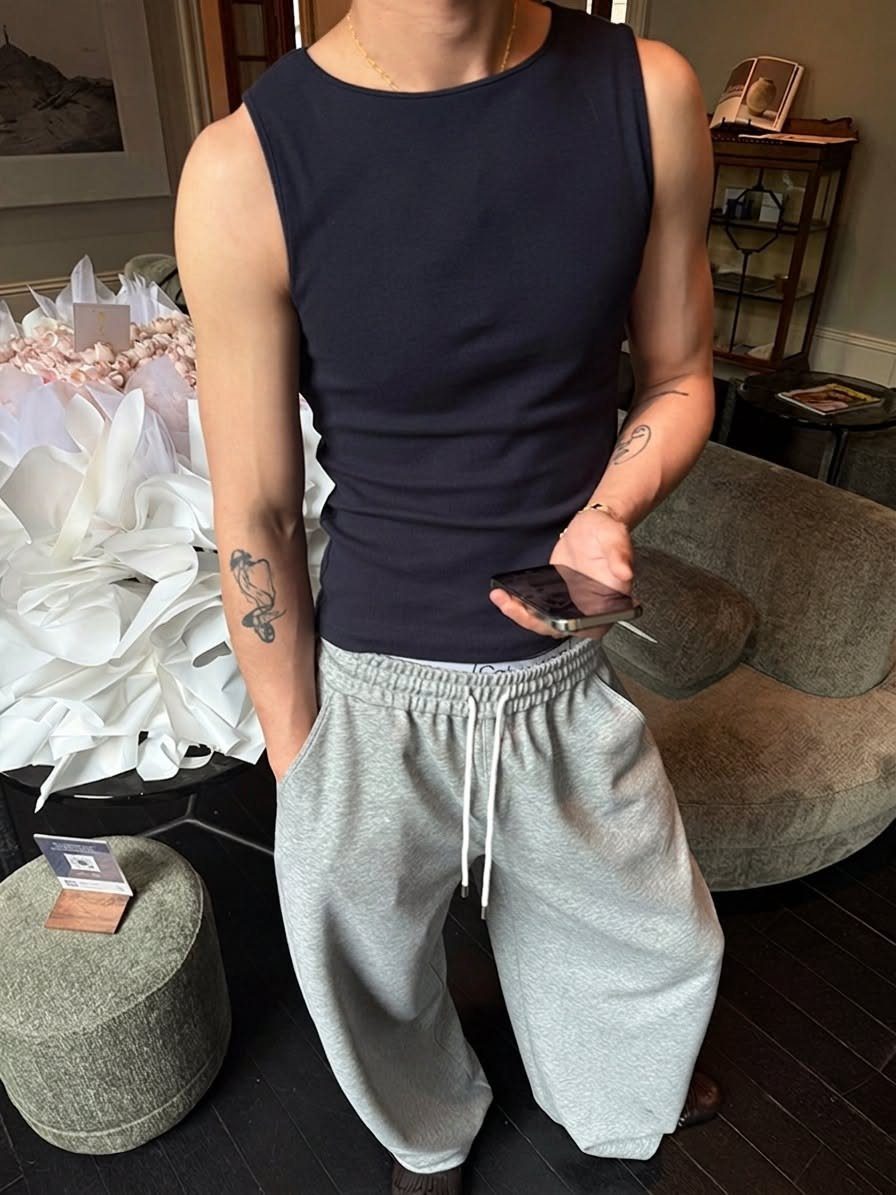
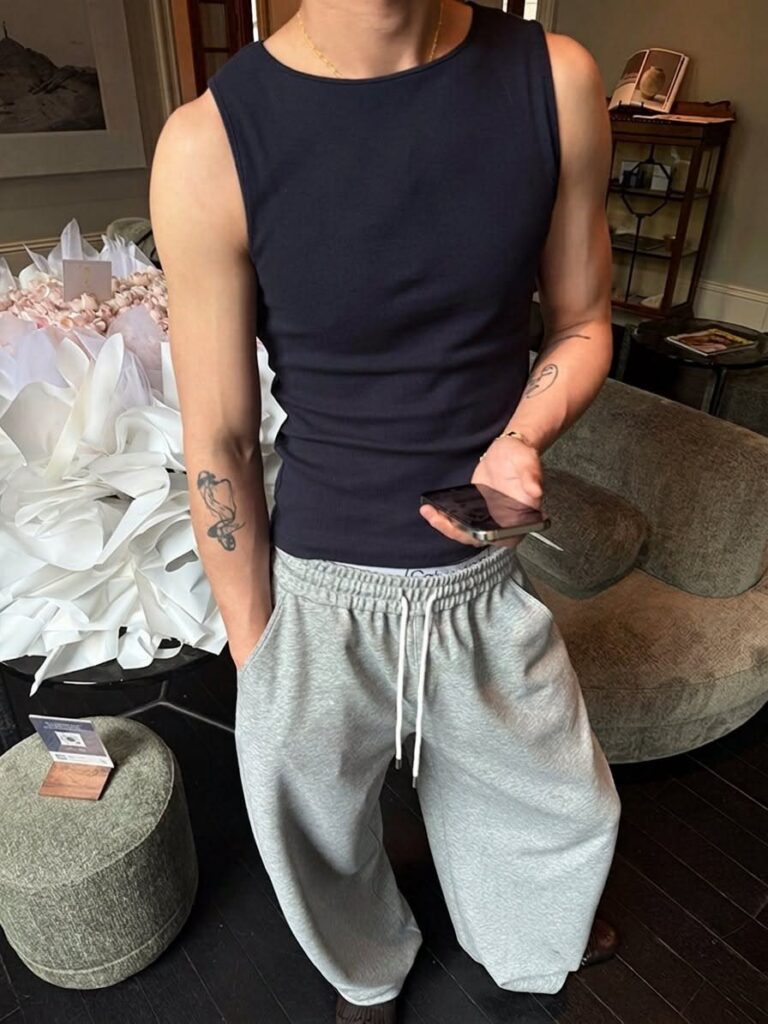
Dark tank, grey sweatpants: it’s a home uniform, and it works best when the pieces are plain and the colors stay quiet. Navy over heather grey is a pairing I’d keep, since neither color fights anything else in the closet.
Buy tees and tanks in 3 colors that match your trousers and shorts, and skip logos.
A plain tank also layers under an open overshirt, which is how it leaves the house. Sweatpants stay at home or the gym; that’s the limit of this look.
2. Classic White Button-Down Shirt
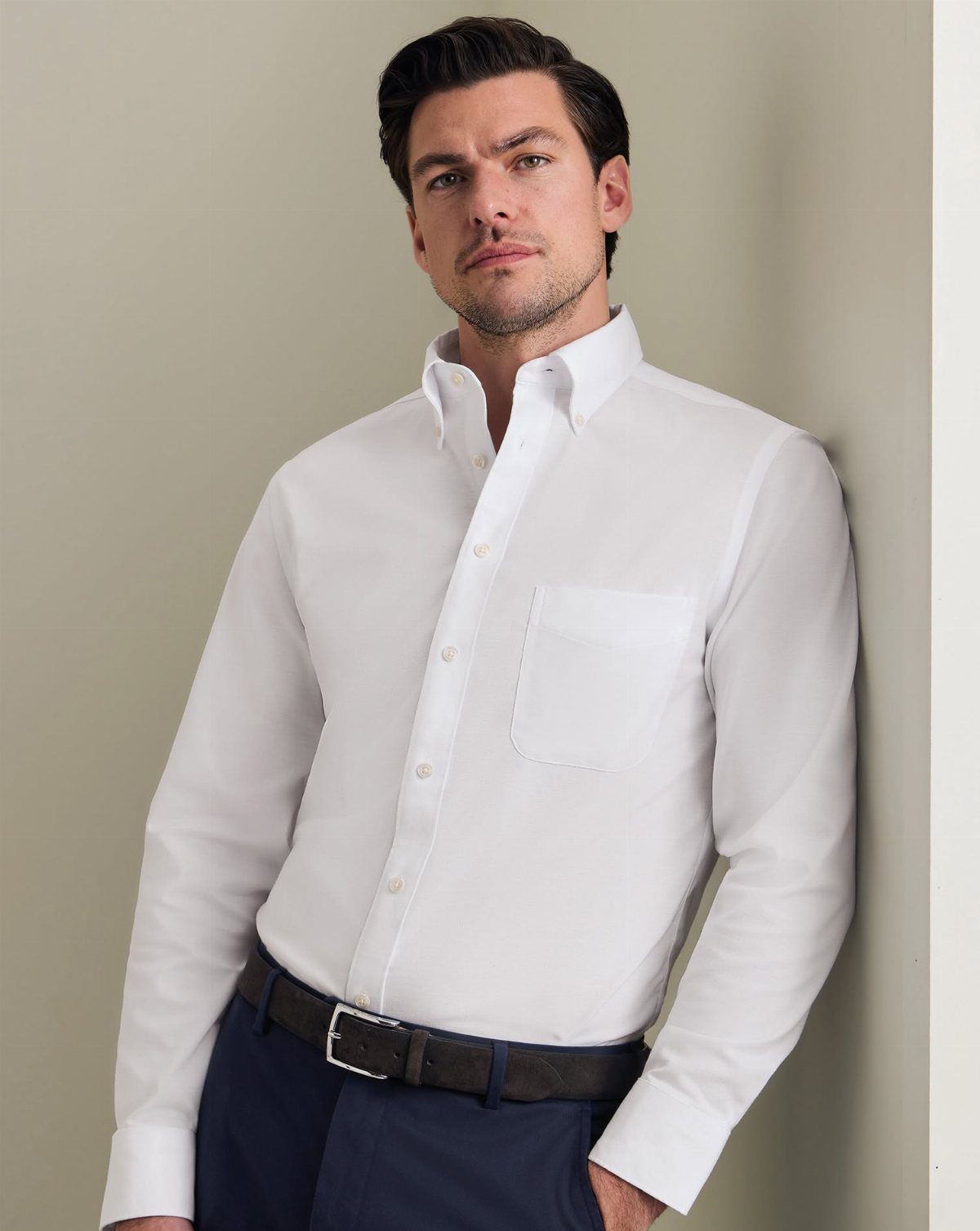
Tuck a white button-down into navy trousers, add a dark belt, and you have an outfit that needs nothing else. Keep the belt close to the shoe color.
For work, wear it buttoned with a tie or a blazer. For a weekend, untuck it and roll the sleeves, or leave the top button open under a knit.
I’d pick a shirt in a plain weave with a collar that stays crisp after washing, because a sharp collar is what separates a good shirt from a tired one.
Wearing it with jeans is the easy downshift.
3. Crewneck Sweater
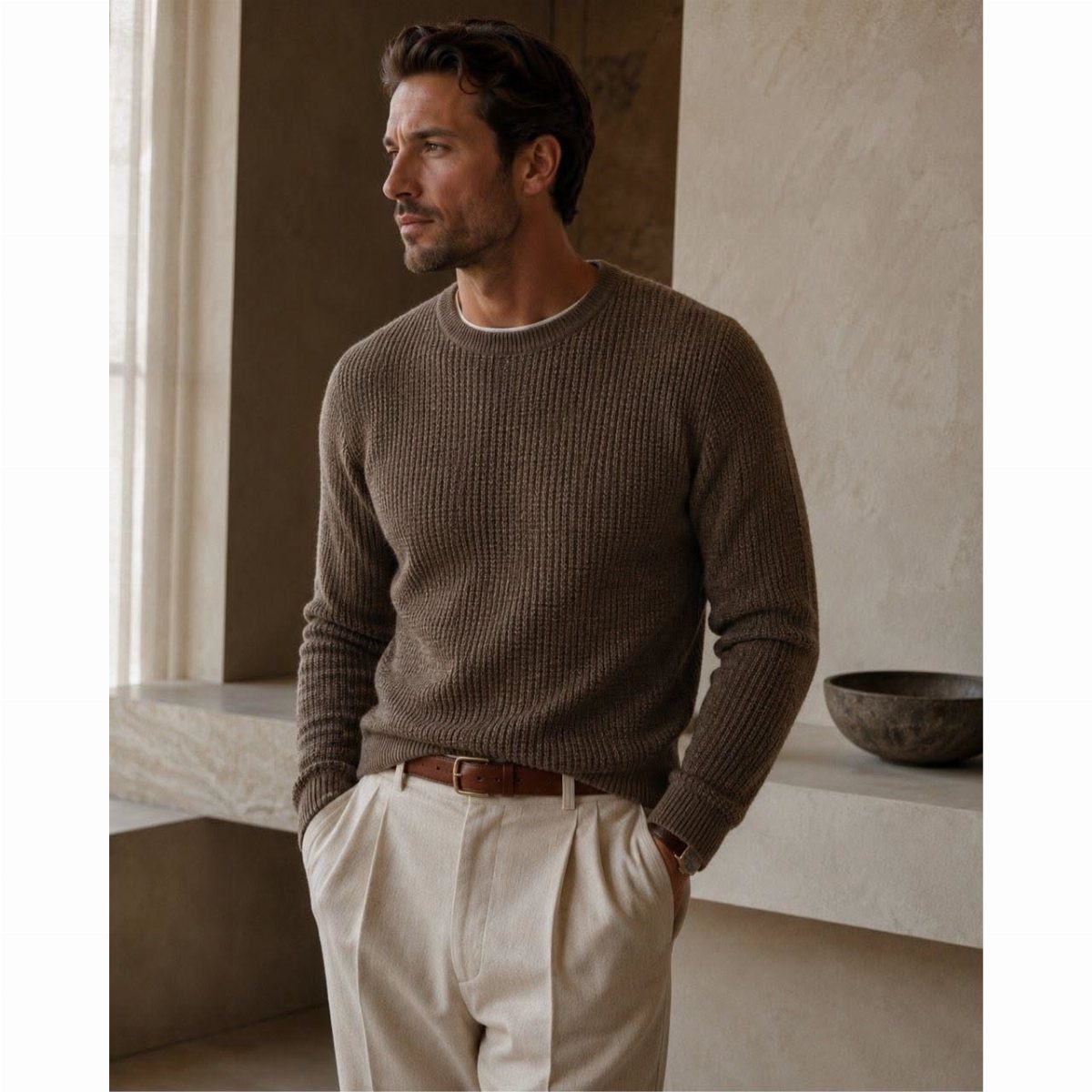
Brown ribbed knit over a white undershirt and cream trousers is a warm-weather-to-cold bridge, and it needs only 3 pieces. The white tee peeking at the neck keeps the sweater clean against your skin and adds a light edge.
Pick a mid-weight knit in a earth tone so it works with cream, navy, and grey. Keep the hem at the belt line, not below it.
I’d wear a crewneck over a collared shirt for the office, collar flat against the sweater. A brown leather belt finishes it.
4. Long Coat
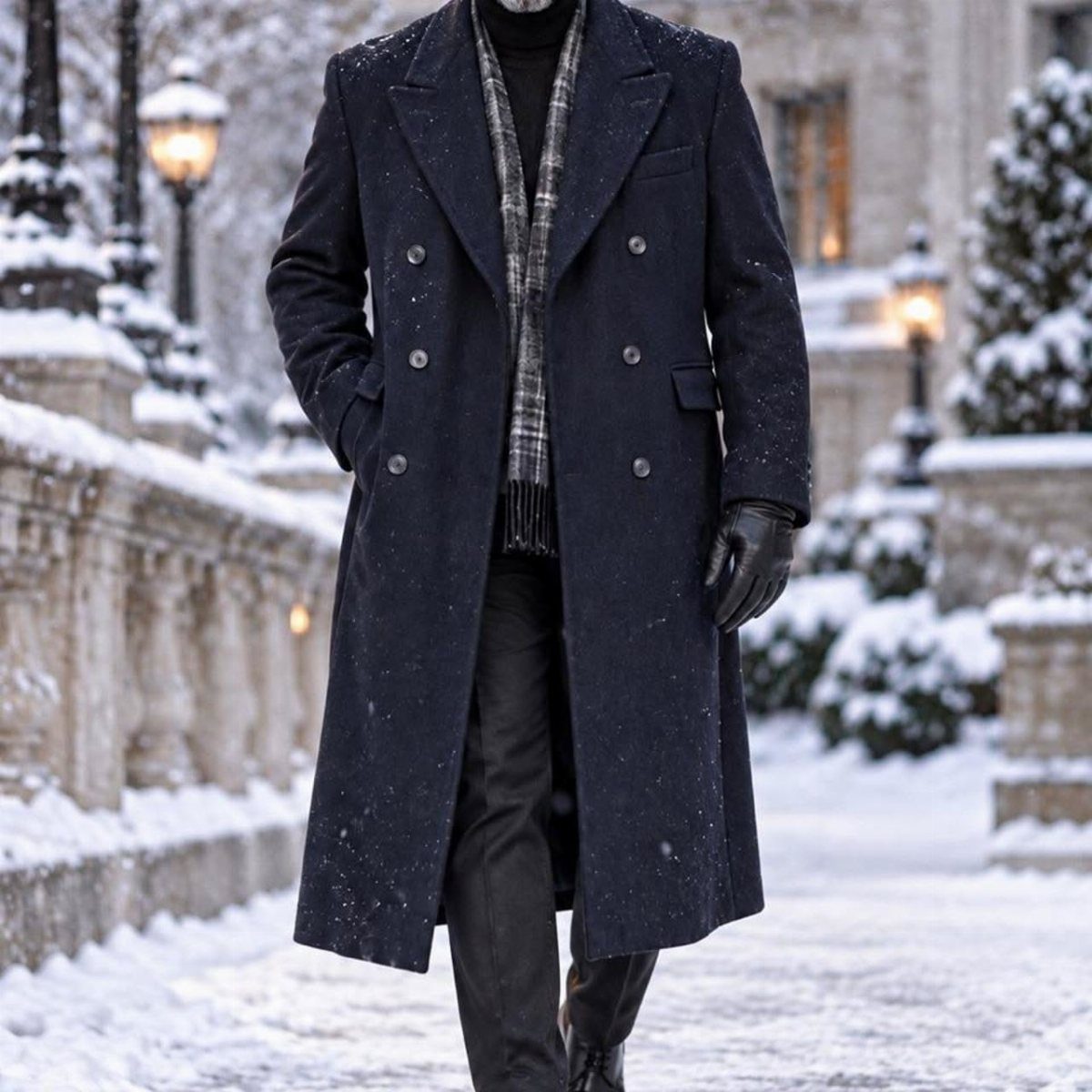
The coat does the dressing for you: under it, a turtleneck and dark trousers are enough.
Choose a hem that falls near the knee, and shoulders that sit exactly at your shoulder bone. Plaid on the scarf adds pattern without competing with a solid coat.
Wear it over a suit for work or over knitwear on weekends. It is the one piece where I’d spend more than usual.
5. Tailored Pants
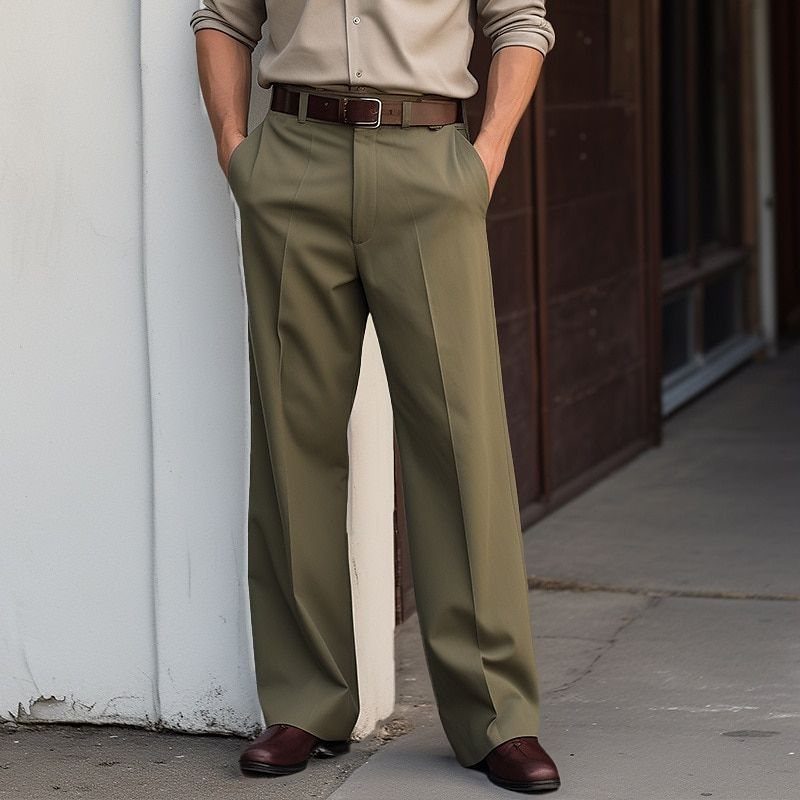
Olive tailored trousers with a sharp crease do what jeans can’t: they look finished on a Monday and still relax on a Saturday. High-waisted cuts also make the legs look longer, which helps shorter men in particular.
Olive pairs with cream, navy, and white too, so one pair stretches across several outfits.
Have the hem tailored so it lands with a slight break at the shoe. That alteration costs little and changes how the pants hang.
6. Satin Blouse
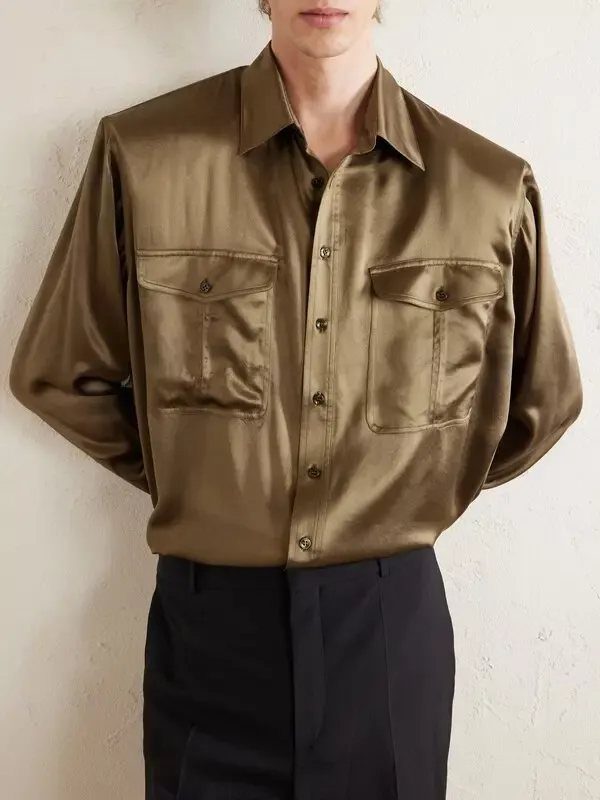
A satin shirt in olive-brown, worn with black trousers, is the quickest way to take a work outfit into the evening. The sheen catches light, so it needs no accessories.
Chest pockets keep a satin blouse casual, which I like; it reads as a shirt, not a costume.
Tuck it in for dinner, and leave the top button open. For the office, swap in a matte jacket over the top to calm the shine.
Satin wrinkles easily, so hang it right after wearing. That’s the cost of the look.
7. Grey Button-Down and Trousers
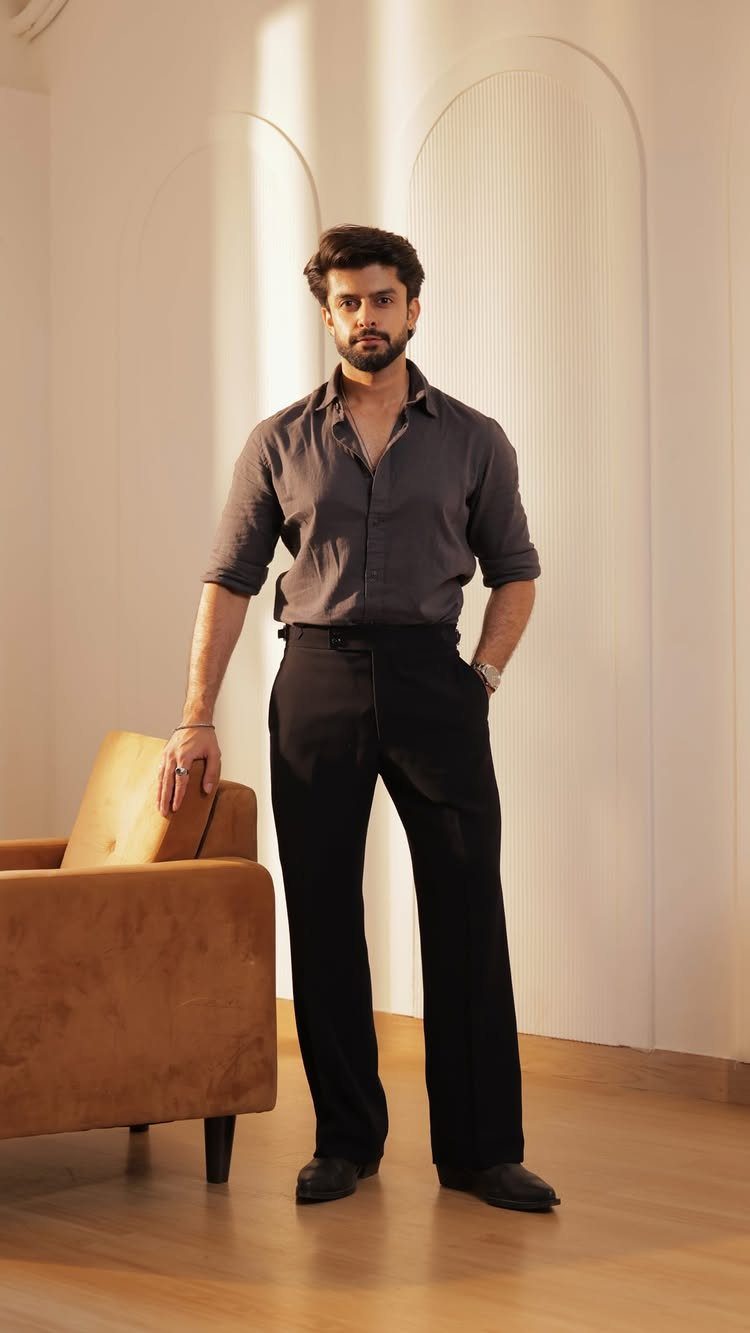
Dark grey over black is a quiet pairing, and it works because the shades sit close together. The shirt stays tucked, so the line from collar to belt runs clean.
High-waisted black trousers help here.
They make the legs look longer and give a tucked shirt a firm place to end. Black dress shoes finish the outfit, and a black belt keeps everything in one family.
Pick a grey shirt where the shoulder seam sits right at the edge of your shoulder bone and the buttons lie flat when you stand and reach forward. A tailored cut matters more than the exact shade.
For work, add a blazer.
Importance of Quality
Price per wear is the math that settles this. A good coat worn every cold day costs less per outing than a cheap one that loses its shape after a single winter.
Spend where fabric and construction show: outerwear, shoes, trousers, and anything that touches a tailor. Plain tees, socks and knit layers don’t need a big budget, because solid versions turn up in every price range.
Better pieces also take alterations well, and a fitted garment looks expensive no matter what the tag says. Buy fewer items, and have the sleeves and hems adjusted before the first wear.
Personal Style Reflection
Ignore the magic number. Some men do well with 20 pieces and others need 54; the right count is the one that lets you dress in 5 minutes and still like what you see.
Start by taking inventory. Pull out everything you own, then decide what to donate or throw out before you buy anything.
Once the closet is down to what you actually wear, the gaps become obvious.
If you want 4 pairs of shoes instead of 2, buy them. The wardrobe is there to serve you, so let your own taste decide the colors, the fit, and the extras.
Practicality in Wardrobe Building
Test every piece in your closet with 3 questions.
Would I wear this tomorrow? Does it work with at least 3 other pieces?
Does it make me feel pulled together? If any answer is no, it is not a capsule piece.
Then match what is left to your week. A man in an office 5 days needs more trousers and shirts than a man who works from home.
A useful ratio for balance is 50% basics, 25% elevated essentials, 15% statement pieces, and 10% trend pieces. Keep trends small, because they date fastest.
Having a reliable collection of basics makes getting dressed easier, whether you’re a staunch minimalist who sticks to simplicity or an experimental dresser building looks upon a foundation.
— Vogue
Frequently Asked Questions
What is the 3-3-3 rule capsule wardrobe?
It means keeping 3 tops, 3 bottoms, and 3 pairs of shoes, and building every outfit from those.
It’s a very small starting point, so treat it as a test of how well your pieces mix. Rules like 3-3-3 are scaffolding, so if your week calls for 4 pairs of shoes, own 4 and skip the guilt.
How many clothes should be in a capsule wardrobe?
A typical capsule runs around 25 pieces, but I wouldn’t chase a magic number. Some men do well with 20 and others need 54.
What makes a man look wealthy?
Fit and fabric do most of the work.
Fit does more for a man’s look than a label, so budget for a tailor: a sleeve taken up half an inch or a hem set to break cleanly will do more than a pricier jacket left as it came.
Spend on outerwear, shoes, and trousers, where fabric and construction show, and keep tees and socks cheap.





