Where you wear it decides which of these ideas is yours: the tailored blazer outfits suit dinner or a gallery opening, while the monochrome black flat lay, with its easy layers, belongs to the weekend.
Outerwear like the wool coat, the leather jacket and the shearling collar bomber is worth spending on, while staples like tees, henleys and knits can stay under $100.
Most pieces sit in neutrals (beige, cream, black, gray), so they mix without much planning.
1. Shoes
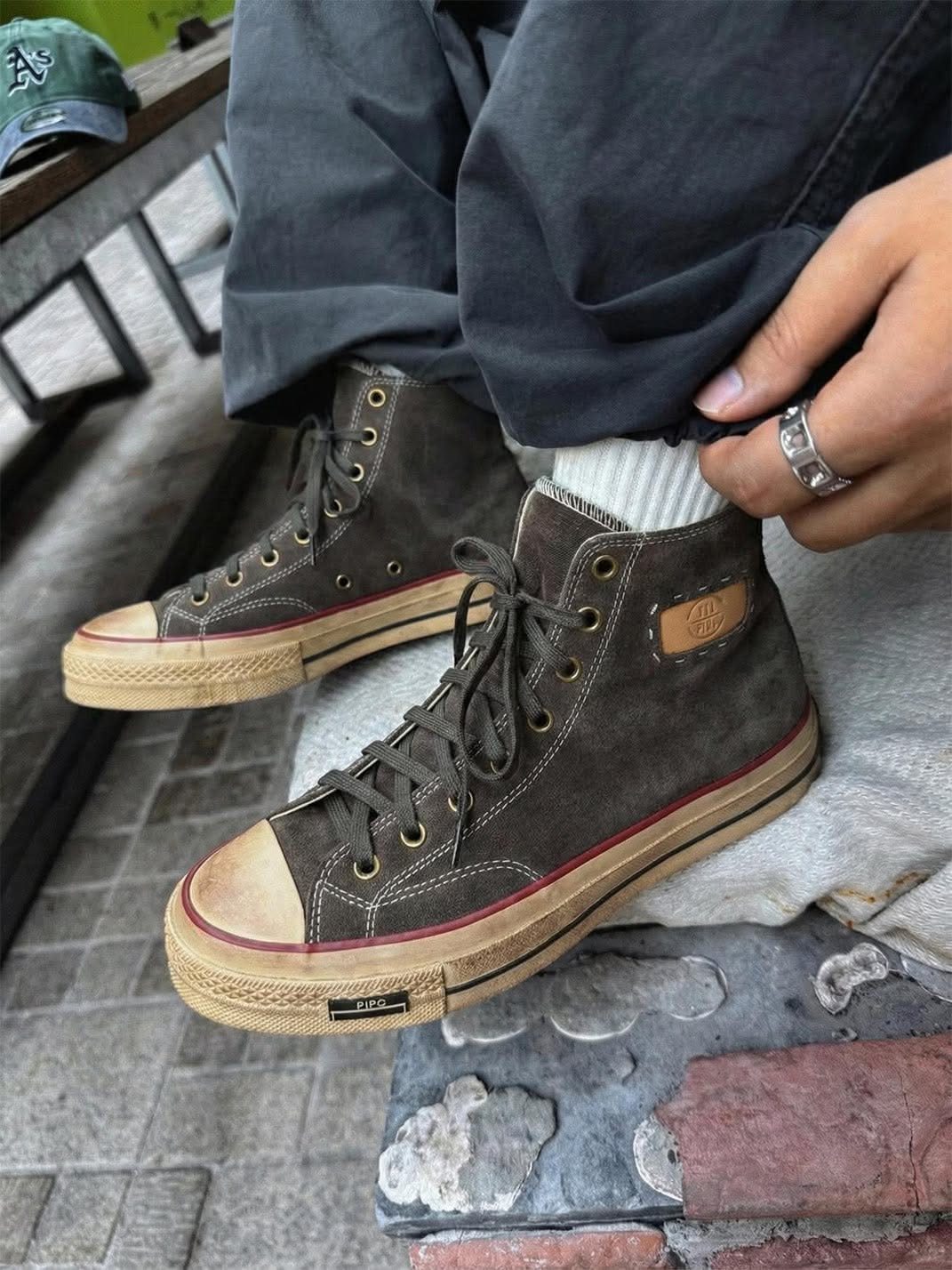
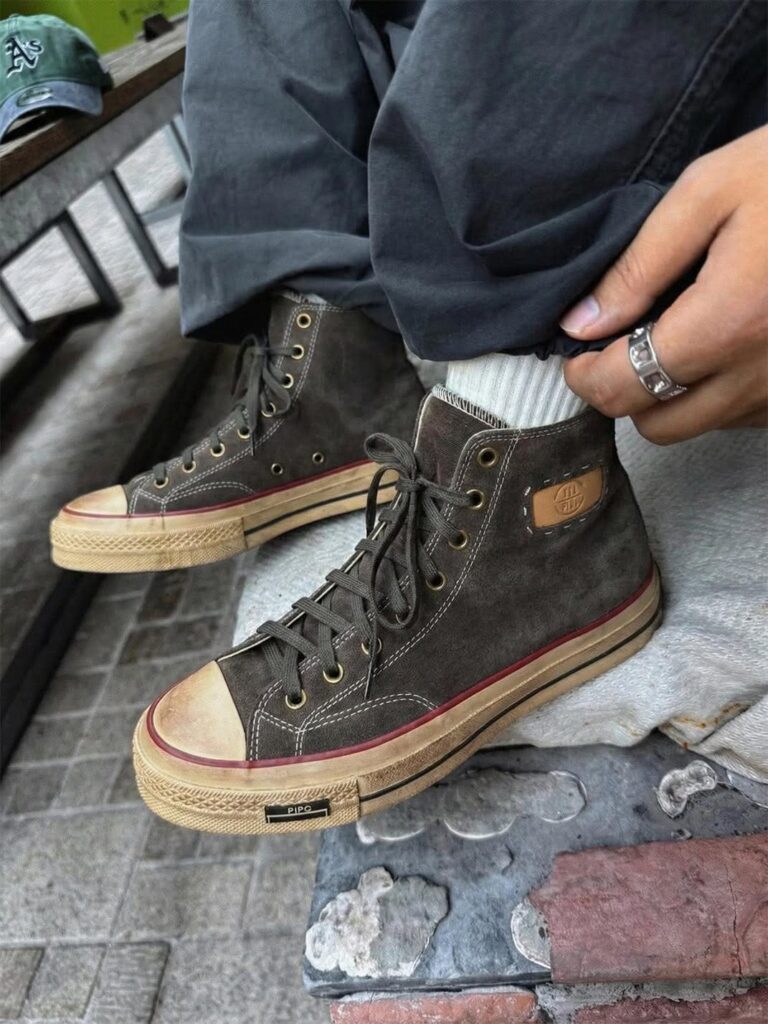
High-tops on a trouser are a bolder move than a low sneaker, and I like them for it. Dark brown suede with a tan sole works with dark trousers because it stays quiet while still reading as a deliberate choice.
Keep the socks plain white or ribbed and the outfit holds together.
Suede and canvas both give up some wet-weather ground, so pick them for dry fall days. 2 pairs in different materials cover most of a week.
2. Accessories
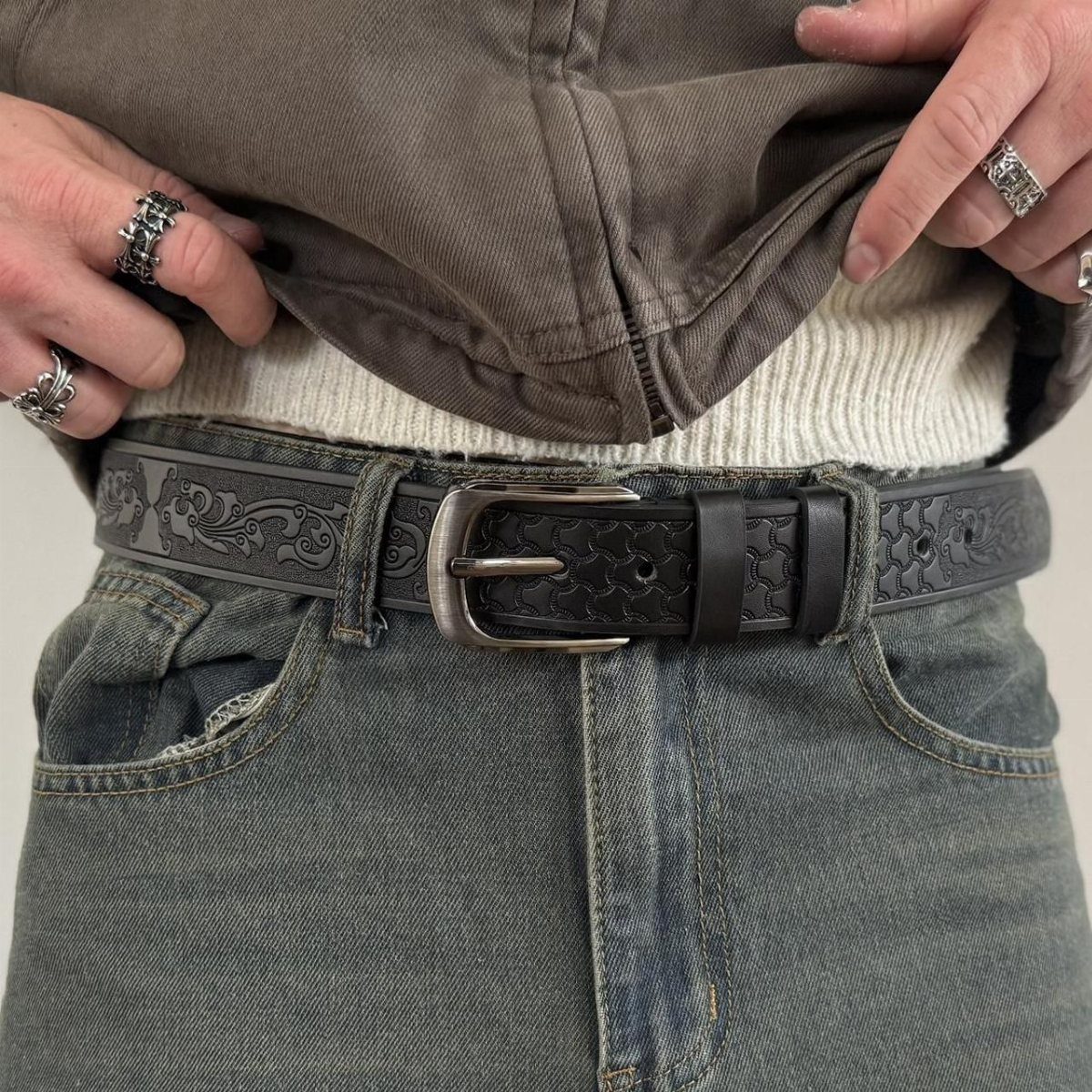
A belt and a few rings do more for a plain outfit than another layer would.
Silver rings pair well with it. Stick to one metal so the pieces read as a set, and go easy on the count for the hand you use most.
Choose a belt you would wear with every pair of jeans you own. That makes it a capsule piece rather than a one-outfit trick.
3. Sweaters and Cardigans
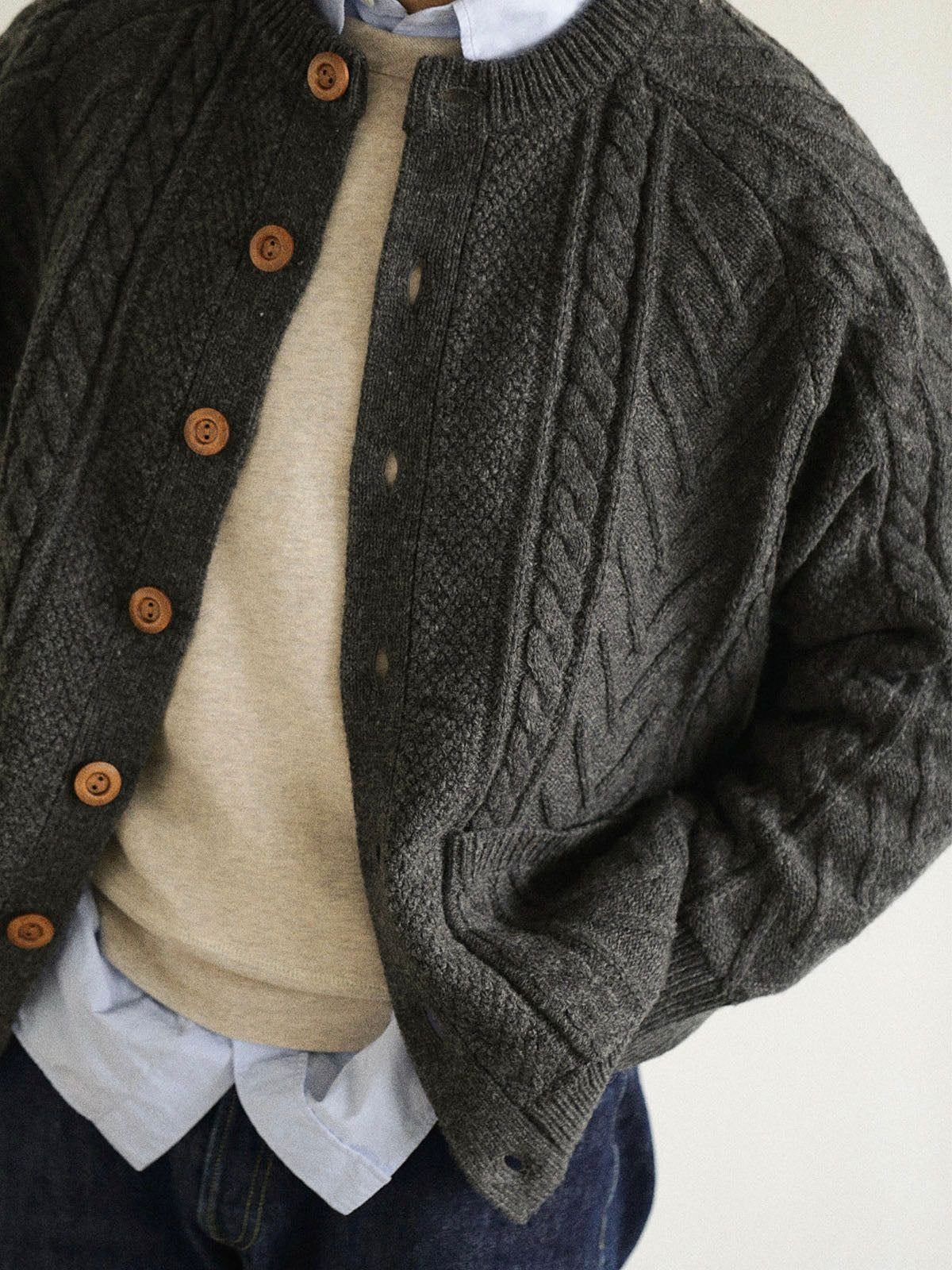
Cable-knit cardigans in charcoal or dark grey earn their spot because they sit over almost anything. A beige crewneck underneath, a light blue button-down below that, and dark jeans make a full outfit from 4 pieces.
I prefer a button cardigan to a zip-up for this. It opens and closes as the room warms up, and the cable texture keeps a plain palette from looking flat.
Buy the cardigan in a dark neutral first. The beige sweater is the one that takes the lighter role.
4. Wool Coat
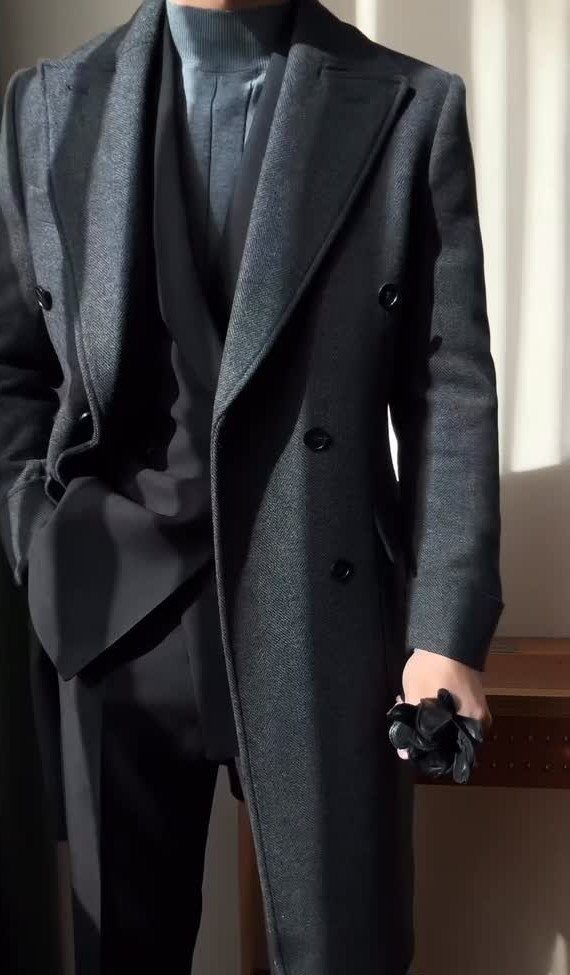
Charcoal wool is the safest overcoat color I know, and it settles most arguments about what goes underneath.
A dark blazer, trousers and a mock-neck sweater sit under it cleanly. A blue turtleneck with a black blazer works too.
Choose a long cut if you wear it over tailoring, so the blazer hem never peeks out below the coat.
Leather gloves finish the look. One coat, worn often, beats three that rotate.
5. Layering Techniques
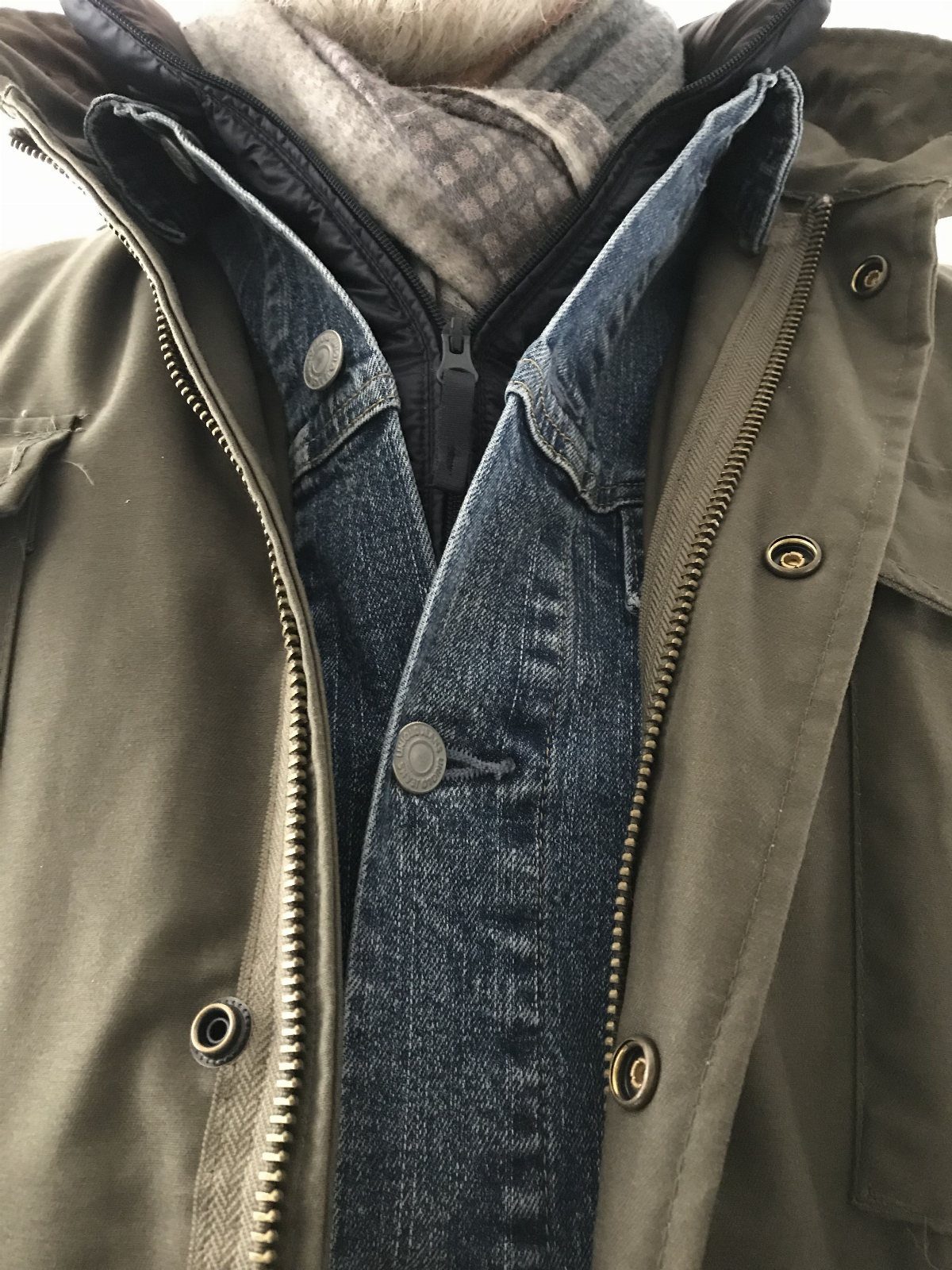
Cold-weather layering works best when each piece has one job. A denim jacket under an olive parka gives you a mid-layer that also looks good when the outer layer comes off.
A scarf in plaid or a grey pattern adds the texture, and it is the easiest layer to swap. A black quilted zip-up under denim is another version, thinner but still warm.
Keep the colors in the same family, olive, blue, grey, so the pile of layers reads as one outfit instead of several.
6. Skinny-Flare Jeans
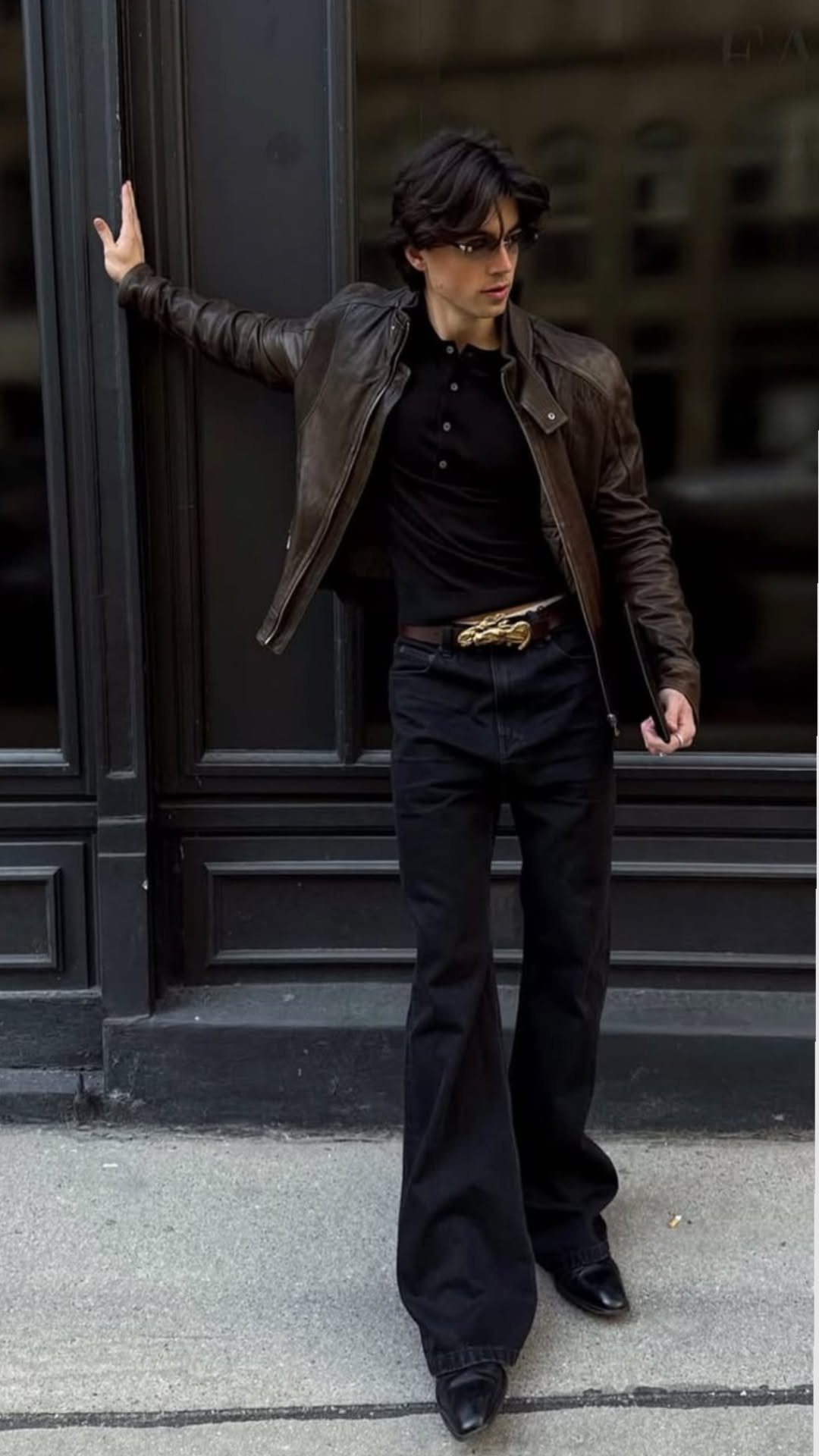
Skinny jeans never fully left, and a flare at the hem is how they come back. Fitted through the thigh and opening below the knee, they balance a pointed boot, which pokes out from under the hem.
Black flares with a brown leather jacket and a black polo is a simple formula, and the decorative belt buckle gives it a focal point.
I would wear this at night more than at the office. It is a statement cut, and the fit matters more than any other piece in the outfit.
7. Staple Tops
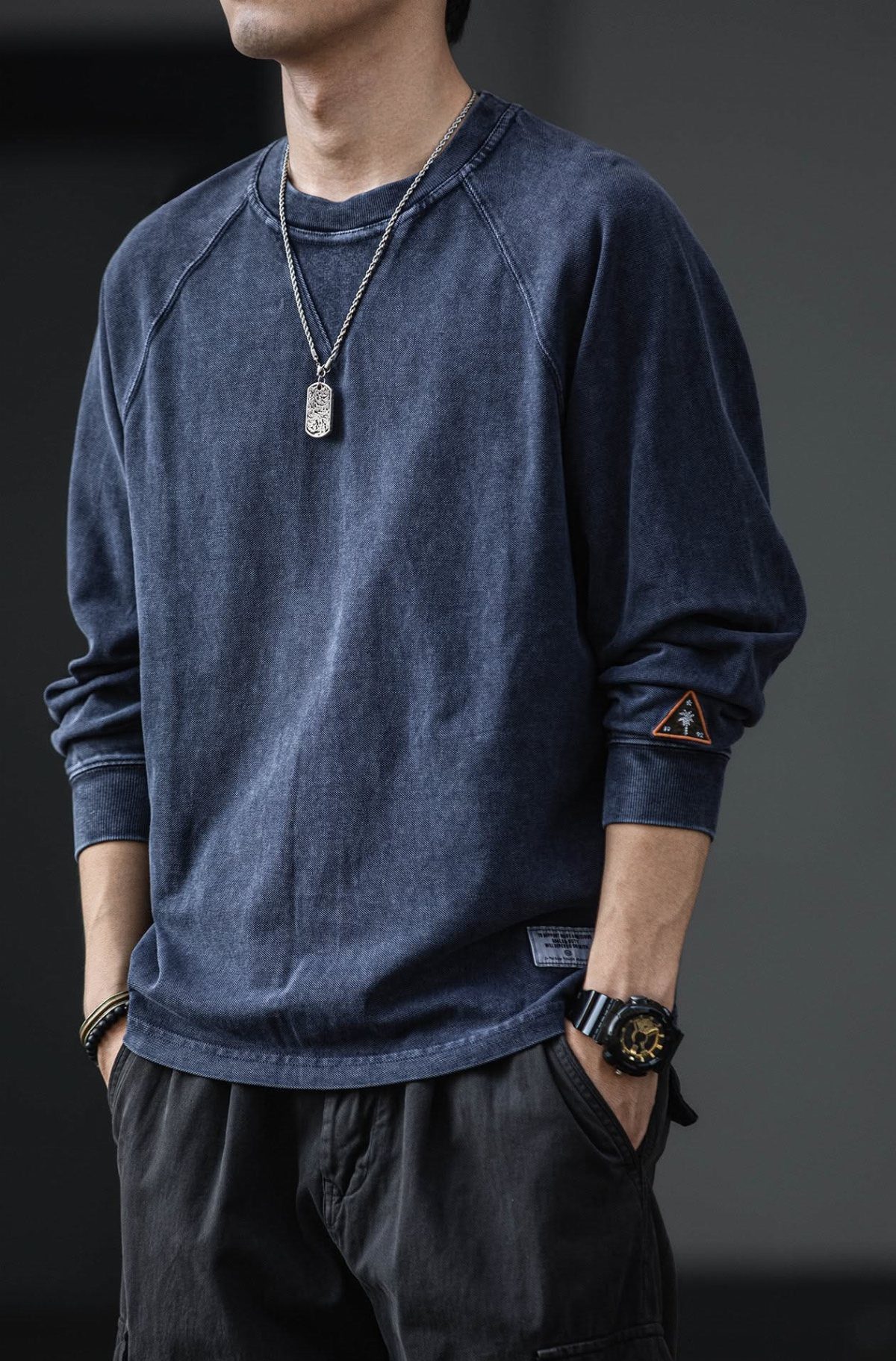
A faded navy sweatshirt with plain black trousers is the easiest top-and-bottom pairing in a fall wardrobe. The washed color softens the black, so the outfit looks relaxed without looking sloppy.
I like a long-sleeve top in a muted blue because it works under a coat, a cardigan or a blazer. A silver pendant and a black watch add detail without adding a layer.
Buy it in a color that sits between navy and grey. It mixes with more of your pieces than a bright shade would.
8. Monochrome Black Winter Flat Lay
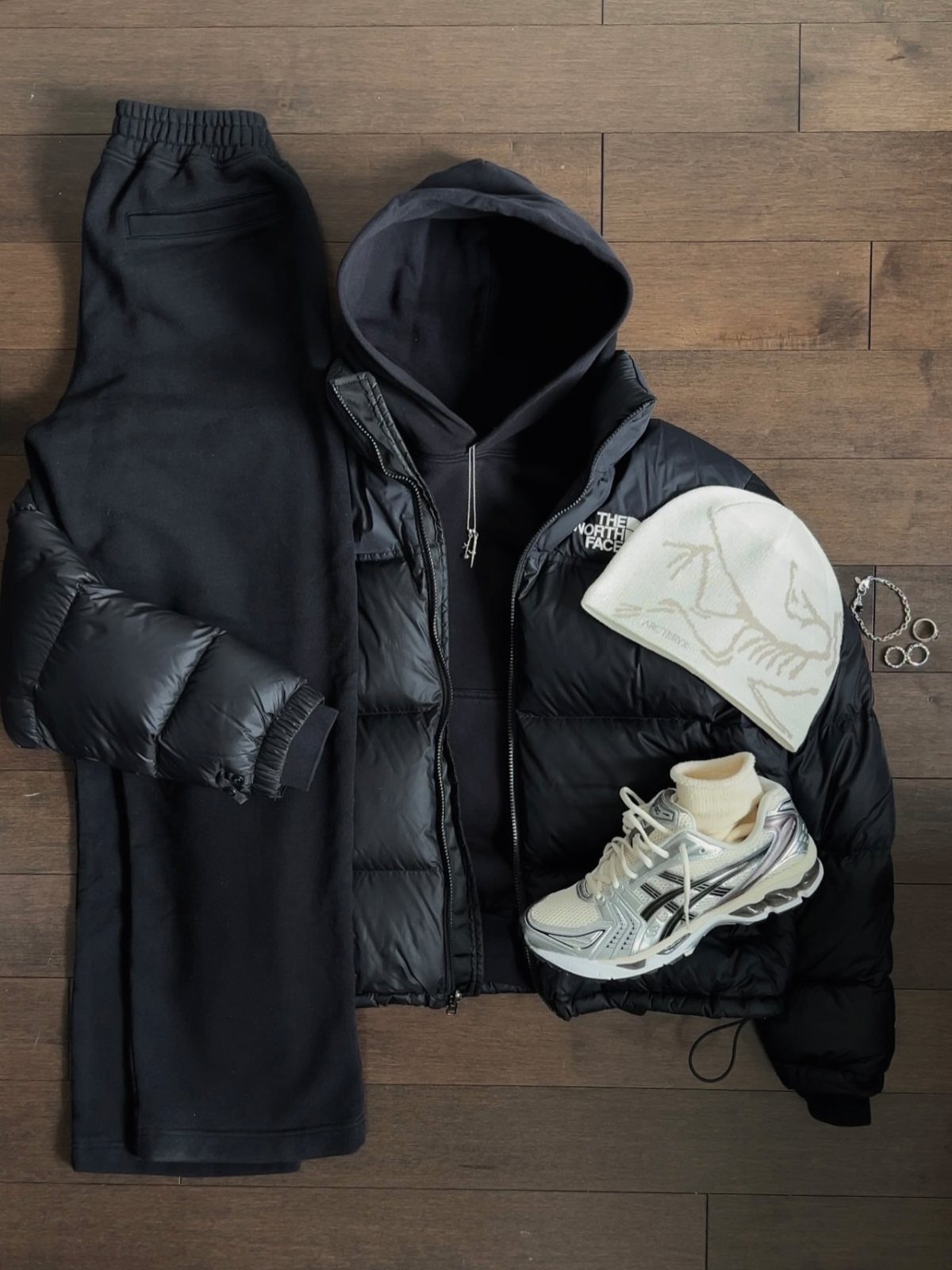
Black on black is the simplest way to pack a cold-weather wardrobe: a puffer jacket, a hoodie, sweatpants and a running sneaker that all match without any planning.
The white beanie is the one break, and I would copy it. A single light piece near the face keeps the outfit from reading as a uniform.
This is a weekend kit, not an office one. Lay the pieces out the night before, and getting dressed takes about a minute.
9. Striped Knit with Cargo Pants
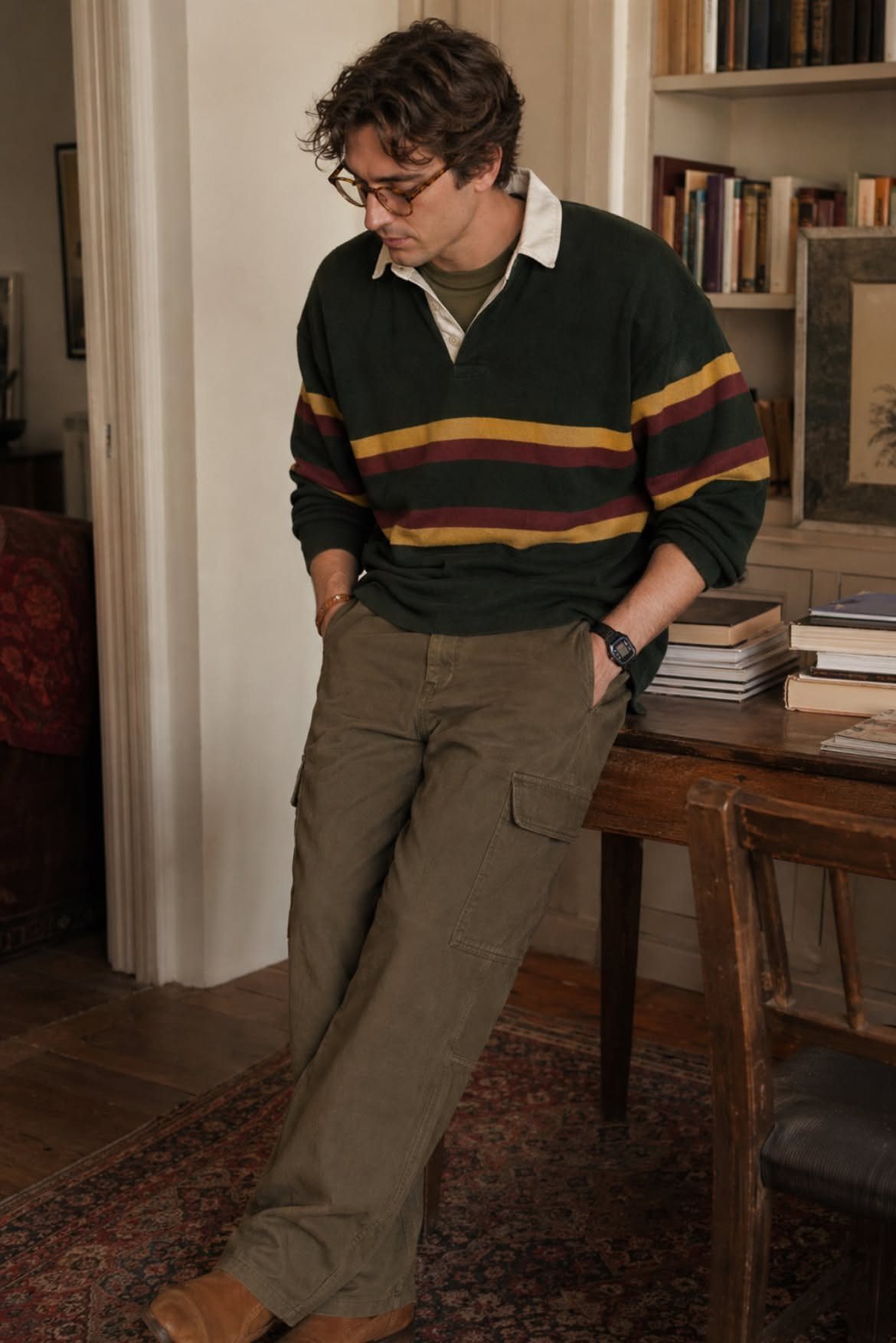
Rugby-style stripes in dark green turn a basic sweater into the focal point, so the pants can stay plain. Olive cargos are the right match because both pieces sit in the same color family and neither fights the other.
Brown shoes finish it. Keep the cargos slim enough that the pocket flaps lie flat, or the outfit gets bulky.
I would wear this to a casual workplace or a weekend lunch. Glasses and a bookshelf backdrop help, but the sweater does the work.
10. Tailored Blazer Outfits
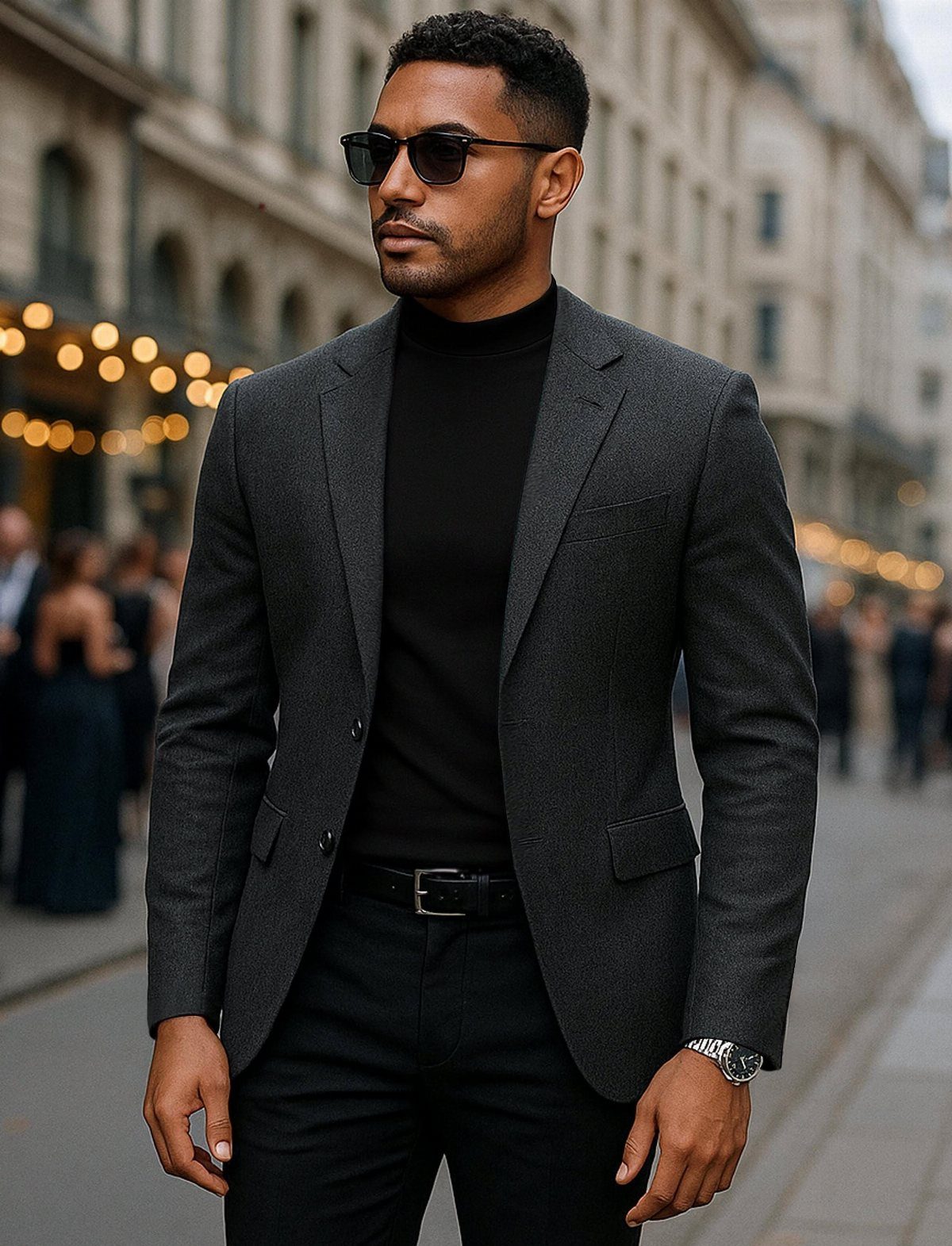
A charcoal blazer over a black turtleneck and black trousers is a three-piece uniform with no tie involved. The turtleneck replaces the shirt, and the dark palette keeps the grey jacket sharp.
Fit the shoulders first, because a tailor can adjust sleeves and length but not the shoulder line. Sunglasses are optional.
I prefer this to a shirt and tie for dinner or a gallery opening. It reads as dressed up, and it still feels easy to wear.
11. Classic Leather Jacket
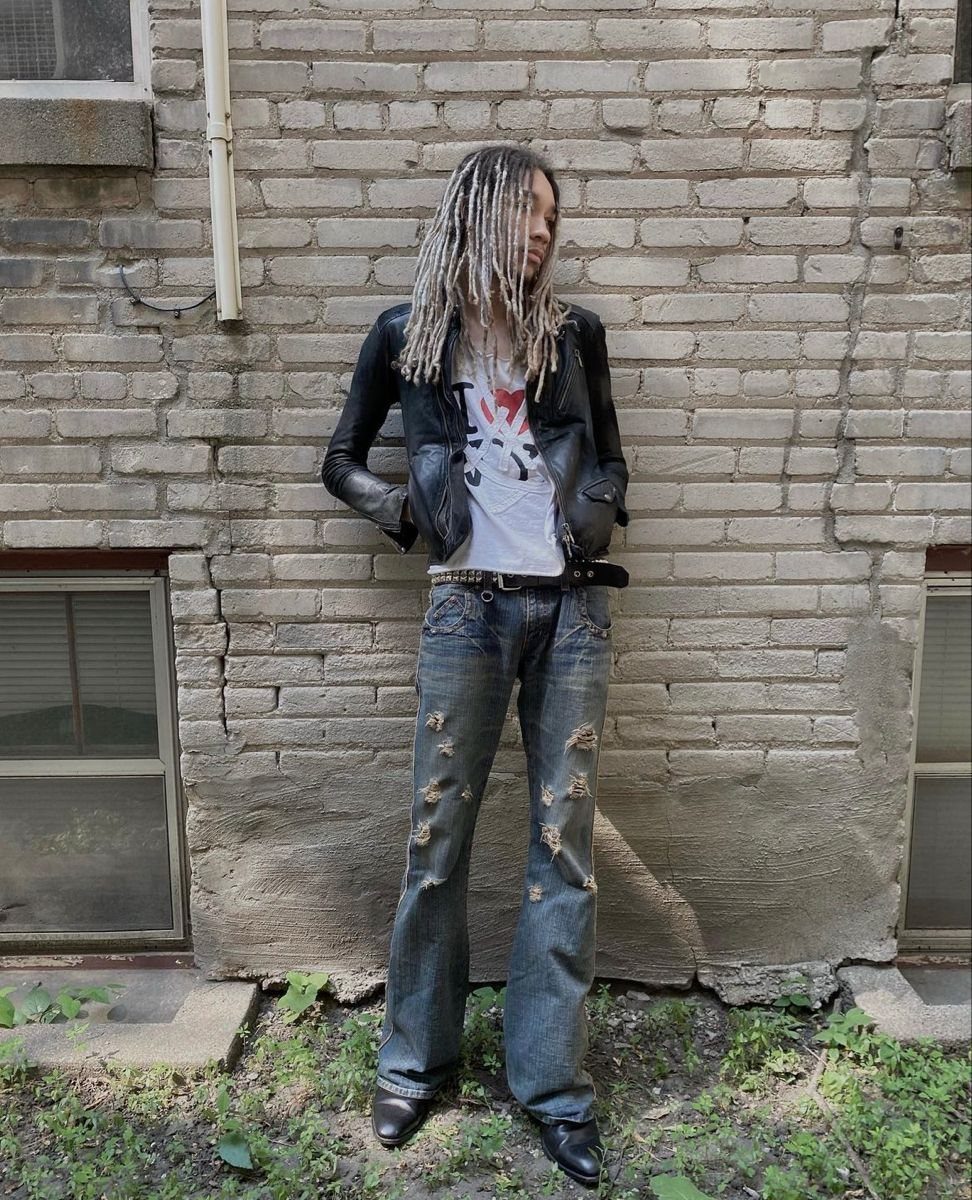
A black leather jacket does its best work over the plainest clothes you own. A graphic tee and distressed jeans are enough, with dark boots to ground the outfit.
Choose a clean, simple cut without extra hardware, so it goes with everything in the capsule. Let the tee carry the personality instead.
I would wear it before a heavy coat arrives, and layer a sweater under it once the weather turns colder. It also looks good as it ages.
12. Long-Sleeve Henley Shirt
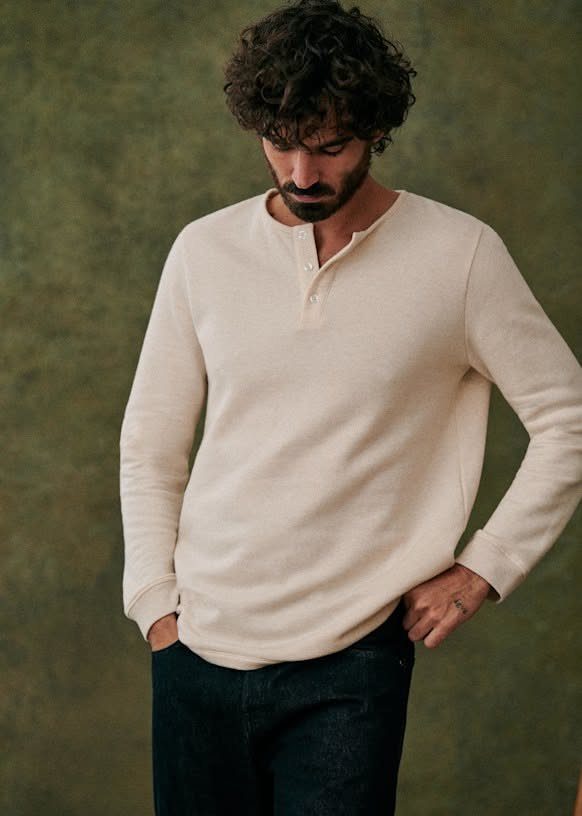
A fitted waffle-knit henley in cream is the shirt I would reach for under a jacket or alone. The texture gives a plain top some depth, and the placket keeps the neckline from looking like a basic tee.
Dark pants make it look clean. Leave one or two buttons open, and push the sleeves up if the room is warm.
Fit matters more here than color. If the waffle knit hangs loose, it turns into pajamas, so look for a close cut through the chest and arms.
13. Shearling Collar Bomber Jacket
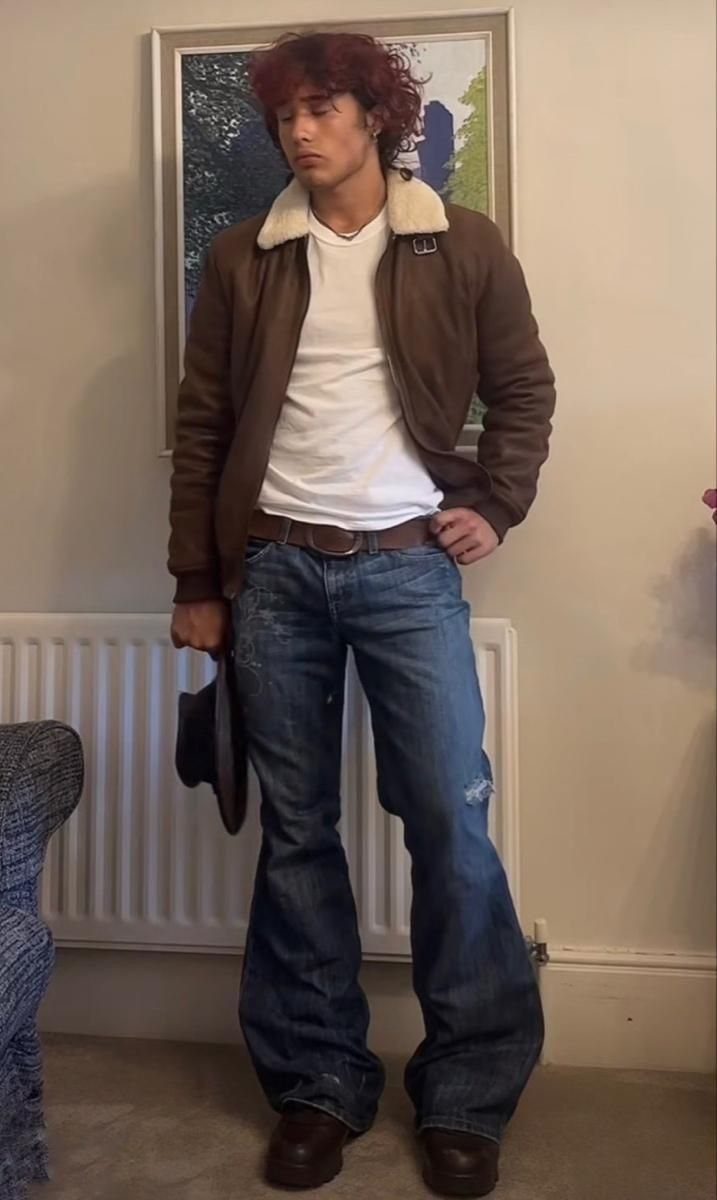
Shearling at the collar does the work of a scarf, so a brown bomber needs nothing around the neck.
Paired with a basic tee in crisp white and blue jeans, the jacket is the only piece in the outfit with any texture, which is how I like it.
Flared jeans and boots keep the bomber’s short cut in proportion, since the hem sits high and the leg below it needs some length. Pick a brown close to your boots, and the 2 read as a pair.
A hat in hand is optional. A dark one adds a layer for the walk and comes off indoors.
Benefits of a Capsule Wardrobe
A capsule wardrobe is an edit: you keep the pieces you actually wear, and every one of them mixes with the others. Mornings get easier because the closet is already set up, and getting dressed stops being a decision.
Shopping changes too. You buy less and work with what you own, which pushes you to find new combinations instead of new purchases.
For fall, the base is neutral: beige, cream, black and gray.
Limiting the closet doesn’t limit your style. It clears out the clutter so the pieces you like are the ones you can find.
The whole point of curating a capsule is to mitigate the cycle of clothing fatigue and overspending and instead lean into versatile, hardworking pieces that complement your lifestyle—so take these as suggestions, not mandates.
— Glamour
Shopping Tips
Spend where the piece works hardest and lasts longest.
Outerwear usually costs more, and it’s the right place to put money. Most staples, like tees, knits and basic layers, can stay under $100.
Most of what you buy should be neutral: navy, gray, tan, cream, brown.
Then leave room for one or two brighter shades that sound like you. Cotton, wool and leather look different next to each other, so a small set of pieces can read as a bigger one.
Each new season, add one affordable piece. It refreshes the wardrobe without starting over.
A plain white tee under a soft knit or a jacket costs the least and adds the most outfits from what you own.
Seasonal Trends
For Fall/Winter 2026, the colors to know are rich browns, burgundy, plum, olive, navy, cream and ecru. Red, electric blue, turquoise or chartreuse will wake up a muted outfit, and a single piece is plenty.
Pick one or two that already work with your closet. Men who wear mostly black and charcoal can swap in burgundy or plum for a darker shade that still has some warmth.
A wardrobe heavy on cream and brown takes tomato red well, since it sits close to those warm tones. If you favor classic neutrals, deep navy or olive fits easily.
Texture does the same job. Suede, corduroy, wool, brushed cloth and fuzzy knits carry the season on texture alone, even when the whole outfit is one color.
Add one color and one texture before buying anything else.
Frequently Asked Questions
What are the trendy looks for fall 2026?
Color and texture lead. Rich browns, burgundy, plum, olive, navy, cream and ecru form the base, and one brighter hit like red, electric blue, turquoise or chartreuse wakes up a muted outfit.
What are the key pieces to include in a capsule wardrobe for winter 2026?
Start with a charcoal wool overcoat, a dark cardigan, a couple of sweaters, a long-sleeve top or henley, dark jeans or trousers, and boots or sneakers.
Finish with leather gloves and one belt that works with every pair of jeans in the closet. Put the biggest share of the budget into the coat, and hold tees, knits and plain layers to under $100 each.
How many pieces should be in a capsule wardrobe?
There is no magic number. Pick enough versatile pieces to cover your real week, since an office job and a work-from-home routine call for different closets.
Some winter capsules land around 25 to 35 pieces, but a count matters less than whether every item mixes with the others.
What is a capsule wardrobe?
A capsule wardrobe is a short list of clothes you wear on repeat, picked so that any top works with any bottom.





