Start with the invitation: if it says black tie, wear a tuxedo, and if it says anything looser, the rest of this list is open to you, from chinos with a dress shirt to a light beige suit, a black three-piece or an embellished velvet blazer.
The range runs from chinos and a dress shirt at a relaxed daytime wedding to a designer sherwani at a ceremony, and fit matters at every step of it.
Even a light linen suit in grey wrinkles after sitting, so the dress code, the hour and the fabric should be settled before anything else.
1. Chinos with a Dress Shirt
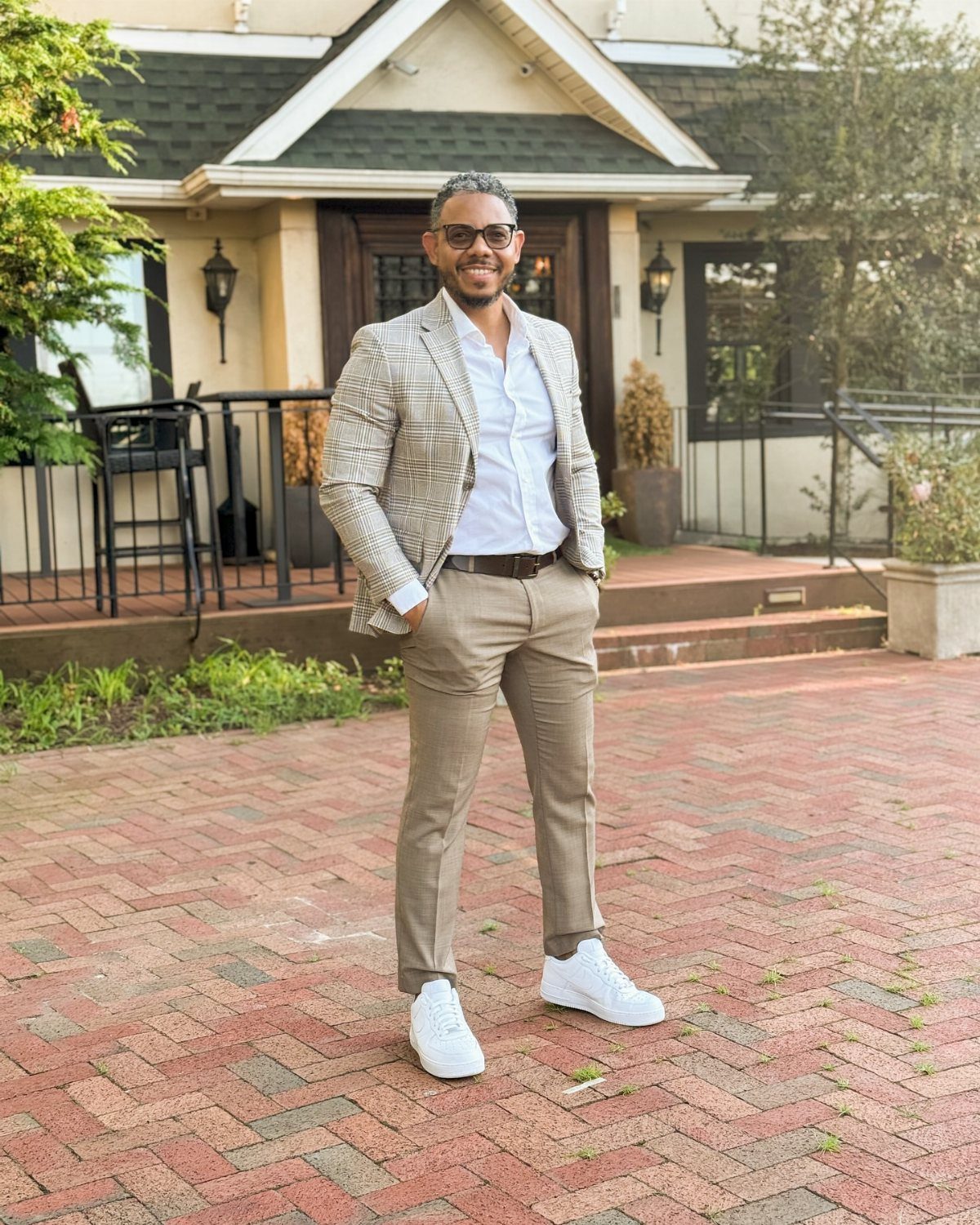
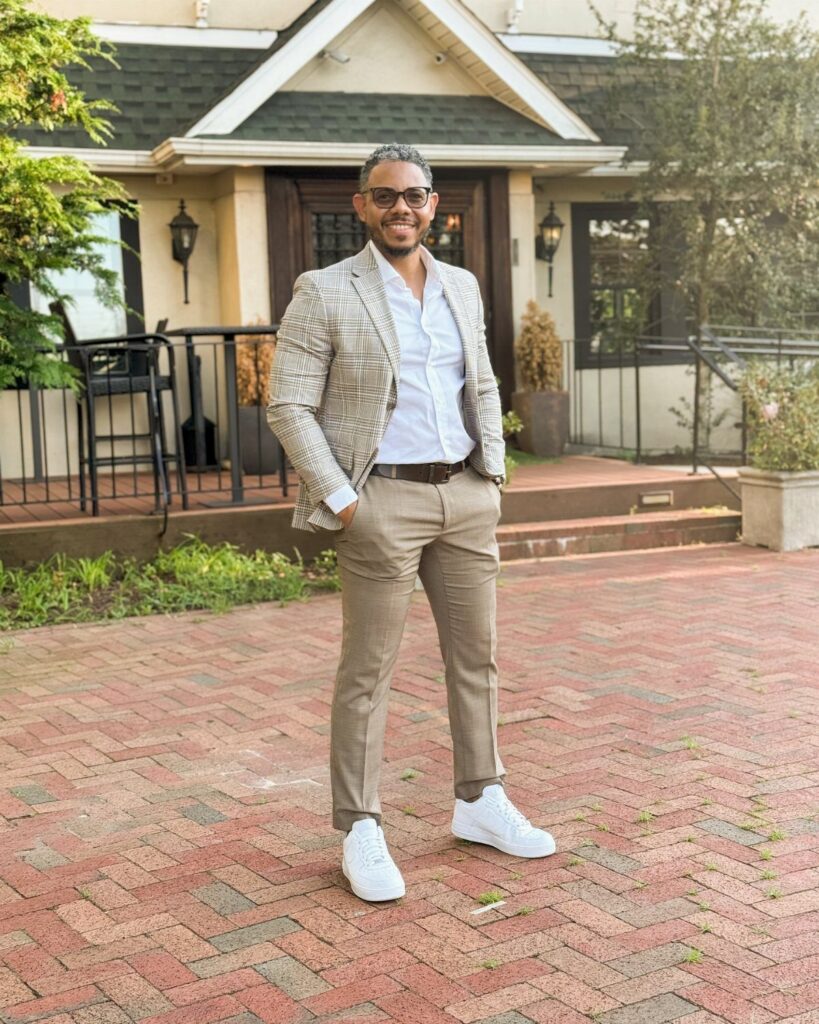
Tan chinos and a white dress shirt work best at a relaxed wedding with a loose dress code.
The blazer does the dressing up, and a patterned one, like the beige or plaid jackets here, adds interest without needing a tie.
Plain white on top and pressed trousers below is the way I’d go, since the outfit has few pieces and each one shows.
White sneakers suit the casual setting; leather shoes are the safer call if you’re unsure how loose the dress code really is.
2. Wedding Tuxedos
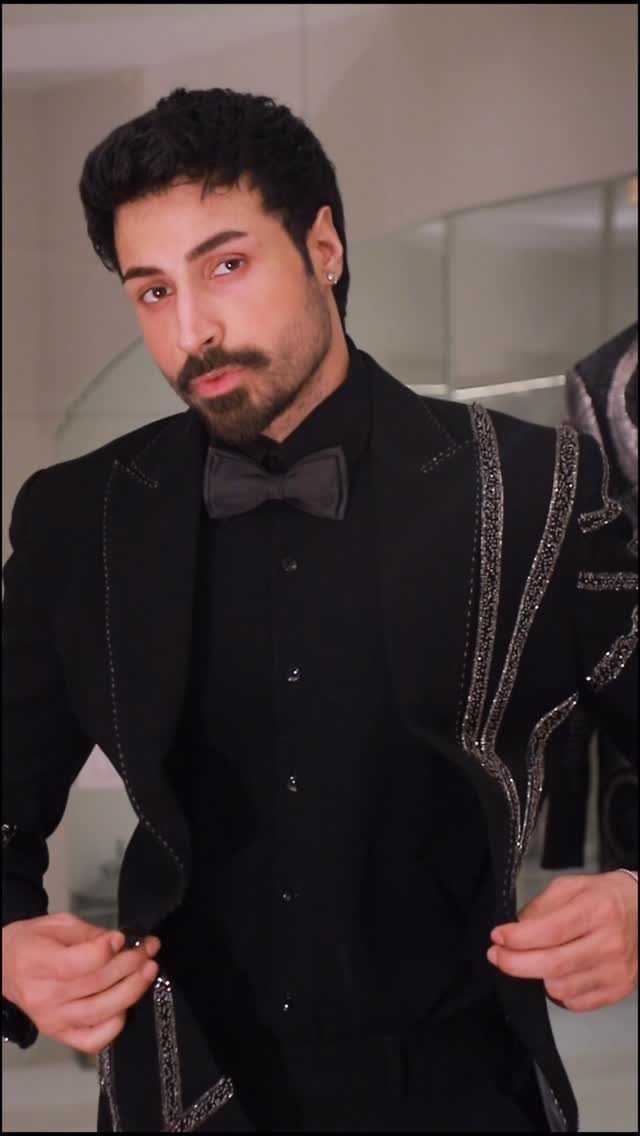
If the invitation says black tie, wear a tuxedo; no other choice is as safe. Formal weddings expect it, and renting or owning one settles the question of what to wear.
A tux can carry real personality through its details, such as silver trim or black sequins, as long as the cut stays classic. I’d pair either with a matching bow tie and keep everything else quiet.
One shiny element is plenty. If the invitation says black tie, a classic tux without sparkle is the safer choice.
3. Tailored Midnight Blue
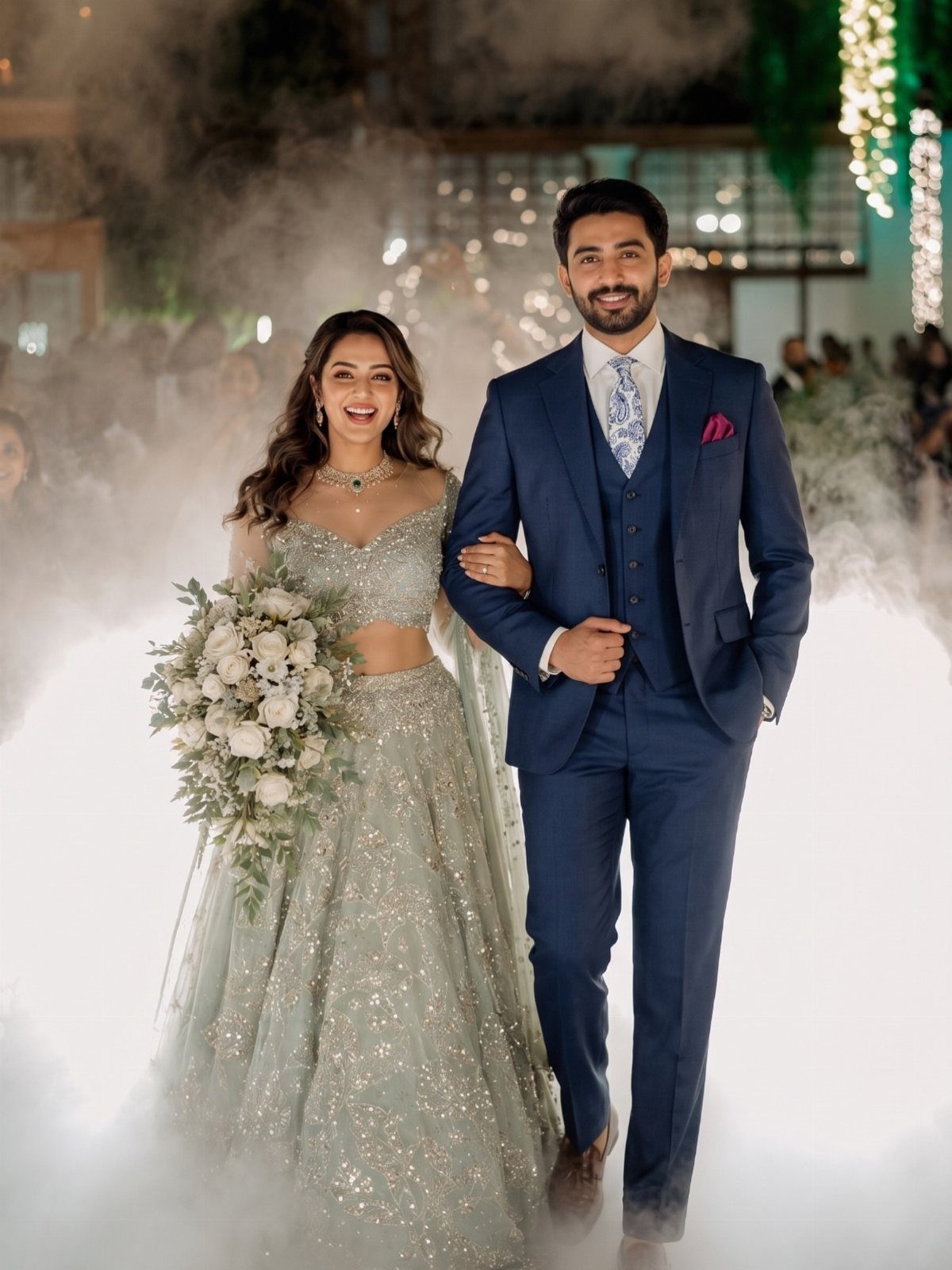
Midnight blue reads darker and richer than standard navy, and a three-piece cut gives it real presence at an evening reception. The vest adds structure, so the suit still looks finished if the jacket comes off.
Under warm reception lighting, this shade stays deep rather than flat.
Pair midnight blue with a white shirt and a tie in a quiet tone, so the suit carries the outfit even beside a colorful partner outfit like an embellished lehenga.
4. Custom Tailoring for Suits and Tuxedos
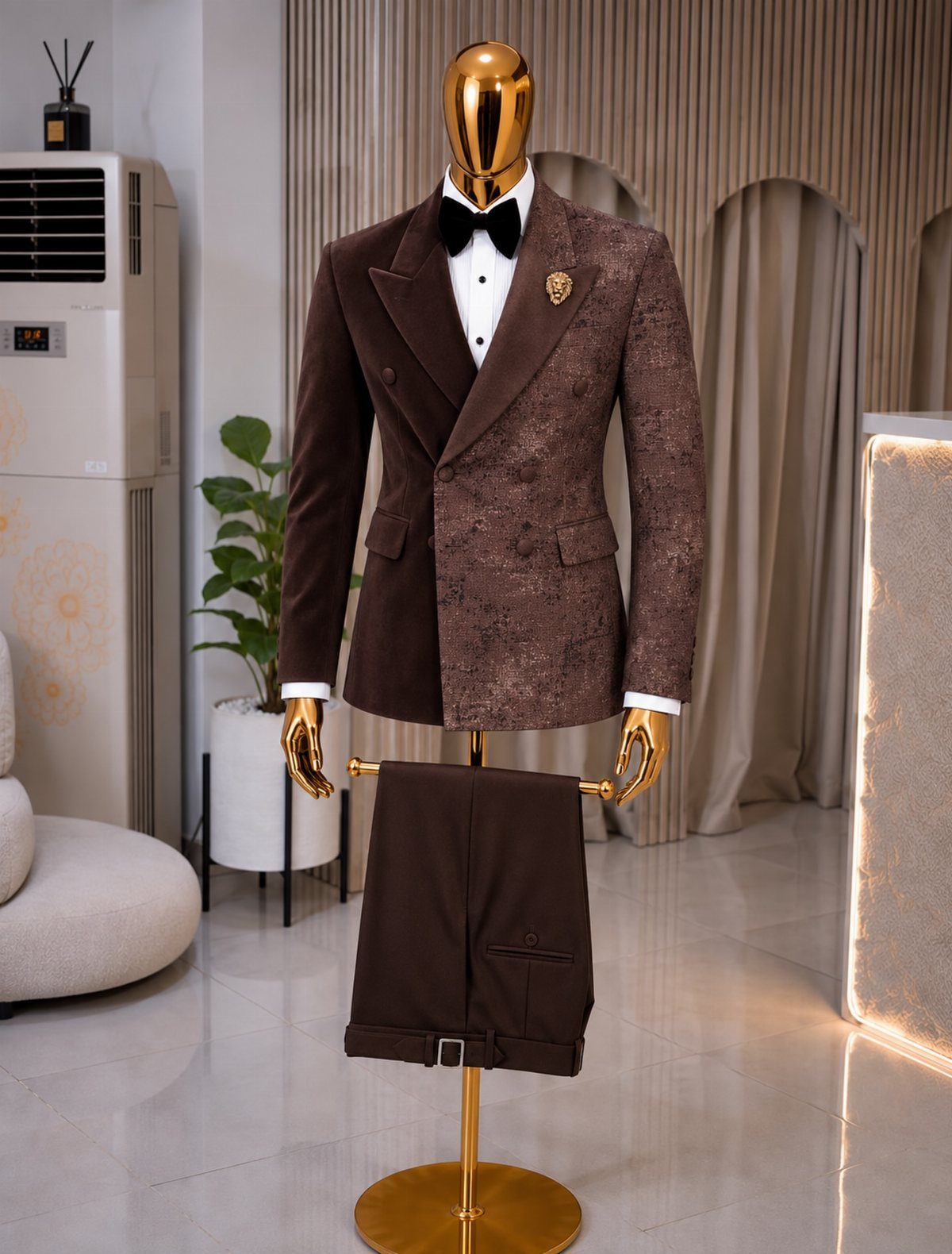
Custom tailoring means the suit or tuxedo is made to your measurements, not adjusted from a standard size. Custom tailoring is how you get a double-breasted jacket, even in a bold patterned cloth, in exactly the cut you want.
For men who struggle to find off-the-rack fits, it’s the strongest argument for going custom.
Expect it to cost more and take longer than buying ready-made, so order well ahead of the wedding date. Pick the fabric and pattern first, then match the shirt and bow tie to it.
5. Designer Sherwanis
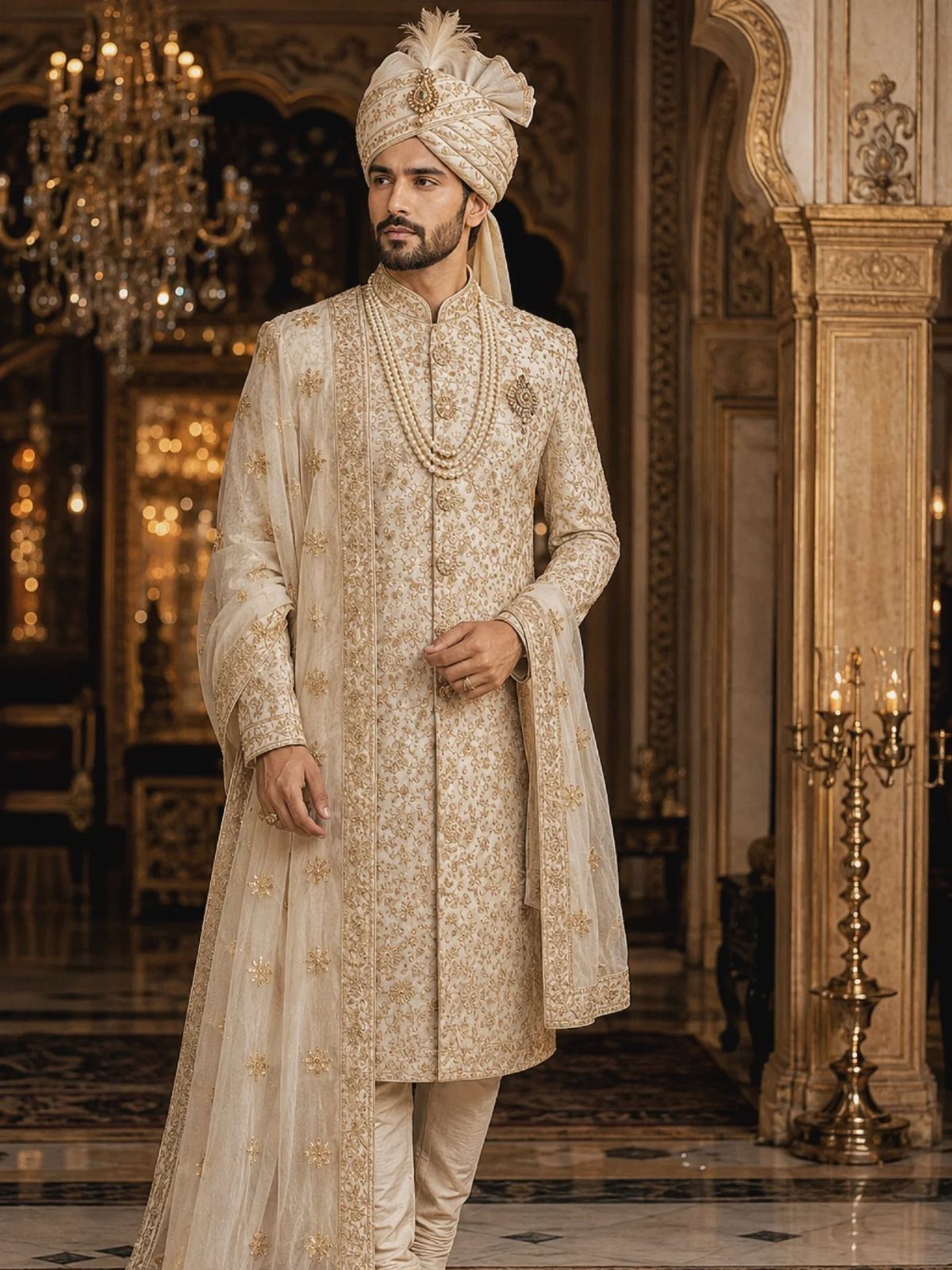
A sherwani is the traditional choice for Indian weddings, and a designer version puts the craft in the embroidery.
A full sherwani look can include a matching turban, a pearl necklace and a dupatta, which makes the outfit complete and ceremonial.
If you’re a guest, a more restrained sherwani is easier to wear than a fully accessorised one. I’d add accessories one at a time, starting with the dupatta, and stop before the outfit competes with the groom’s.
6. Light Beige Wedding Suit
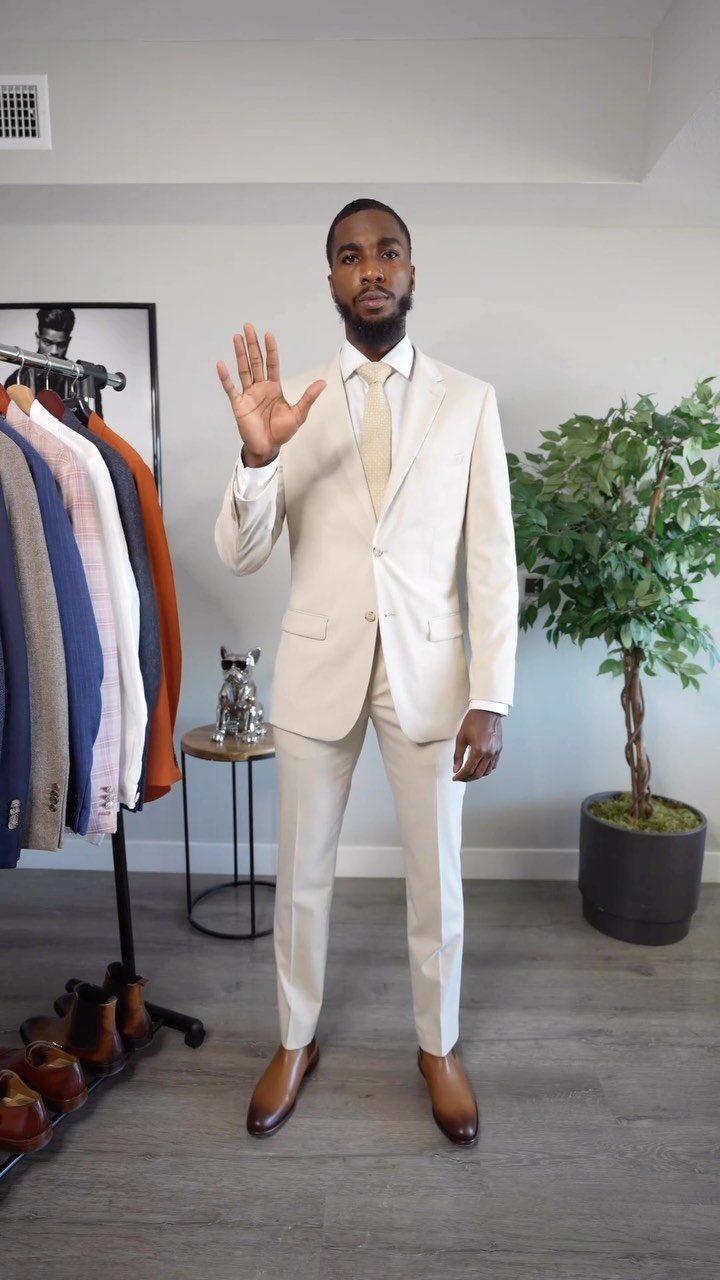
Light beige suits belong to daytime and warm-weather weddings, and they look best when everything around them stays clean. A white shirt and a light tie keep the whole outfit soft and cohesive.
Brown dress shoes are my pick, since they sit naturally against beige.
A gold tie, like the second look, adds warmth without shouting. Fit matters more in a light color than a dark one, so I’d have it tailored.
7. Classic Black Three-Piece Suit
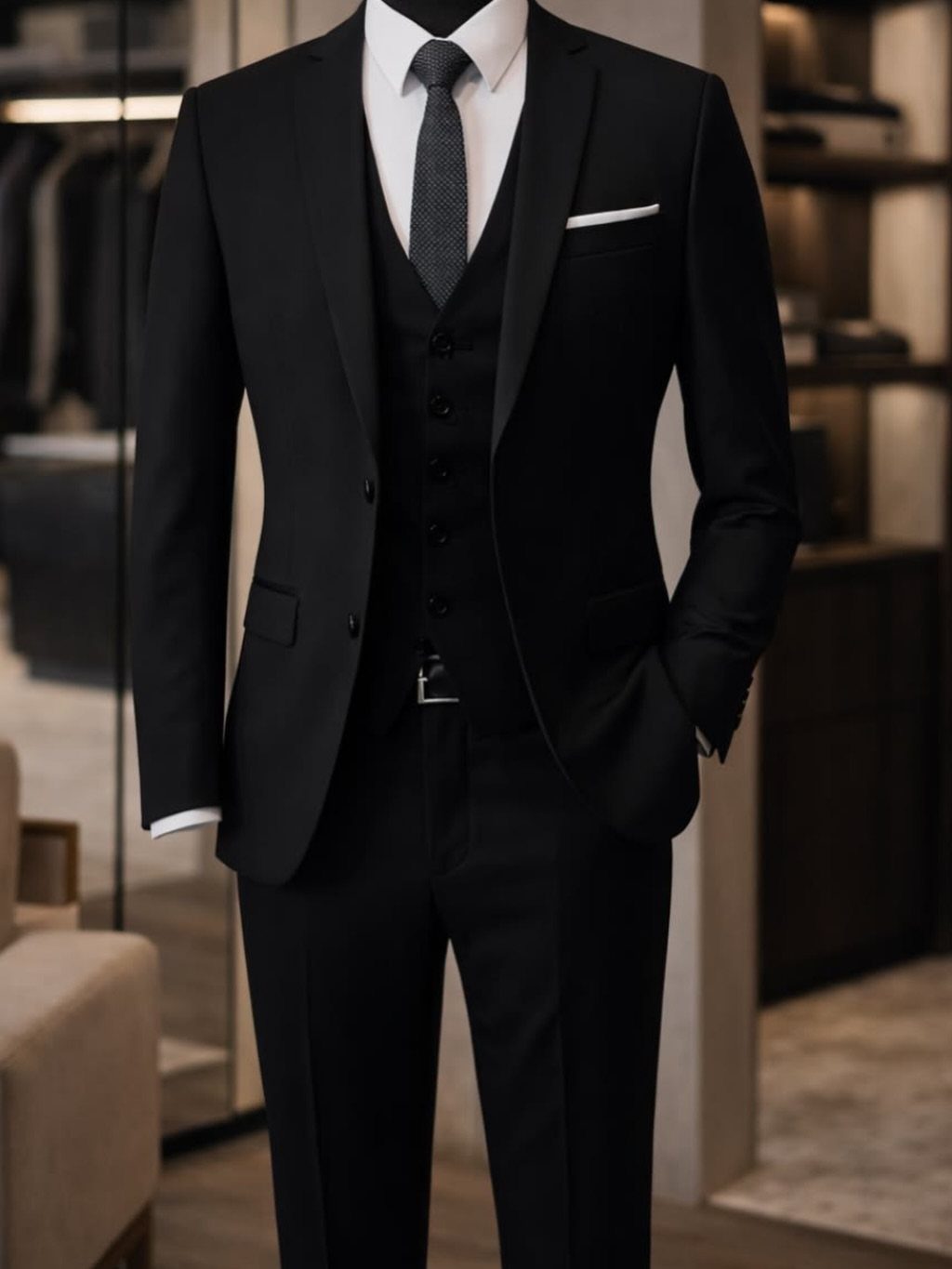
A black three-piece suit is the most formal thing you can wear to a wedding without a tuxedo, and the matching vest is what separates it from an ordinary black suit.
It adds a layer that stays neat even when the jacket comes off at the reception.
Grey is my pick for the tie, with a white shirt and a white pocket square, so the black stays the only strong note.
I’d skip anything shiny. A black-tie invitation changes things, and a tuxedo is what that line on the card asks for.
8. Light Grey Three-Piece Suit
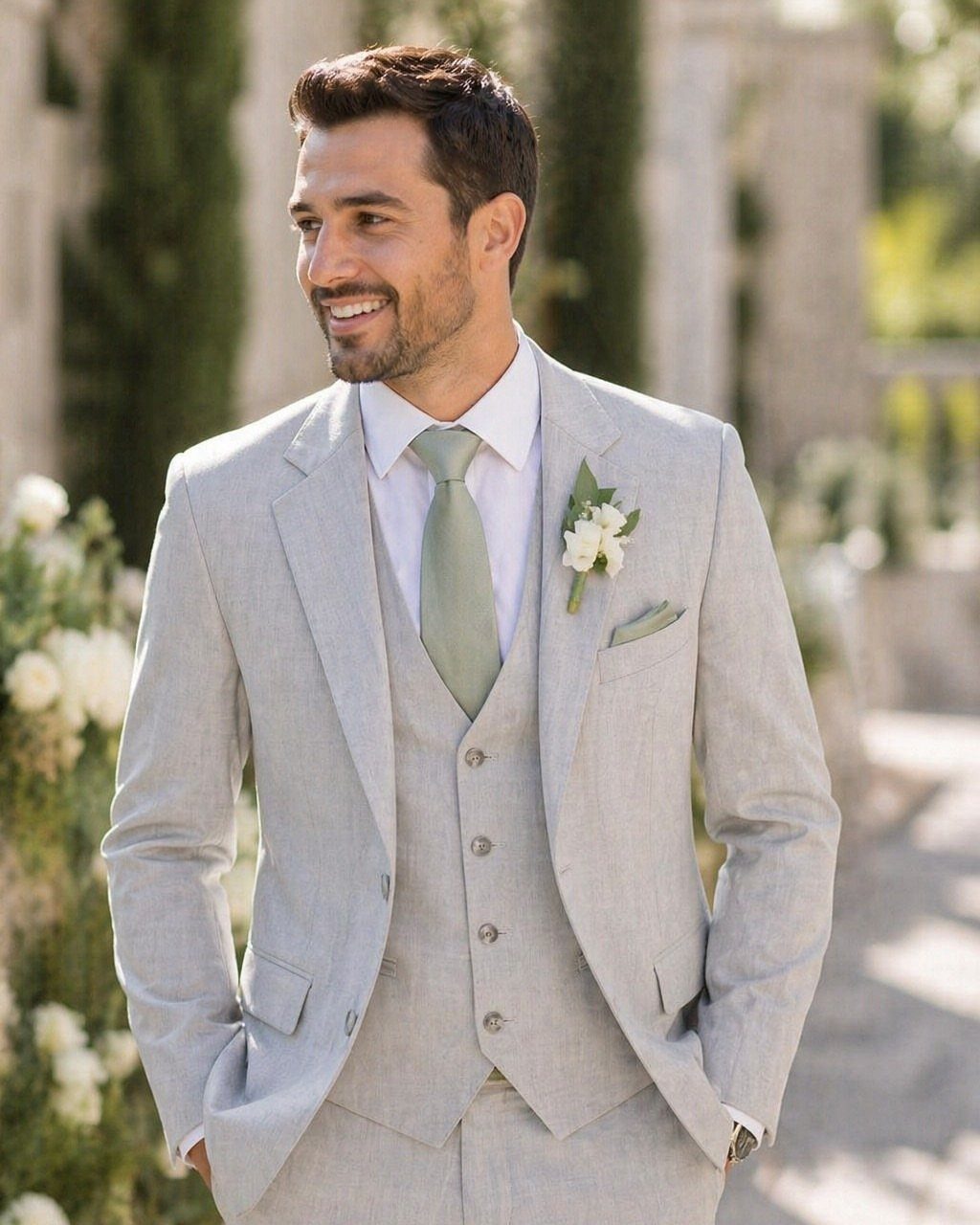
Linen in light grey suits a garden or daytime ceremony, and the three-piece cut keeps it looking dressed even though the fabric is relaxed.
A white shirt and a sage green tie are an easy pairing, since the green softens the grey without competing with it.
Linen creases, so expect some wrinkling after sitting and plan on that, not fighting it. A floral boutonniere finishes the look, and I’d keep the pocket square plain.
9. Embellished Black Velvet Blazer
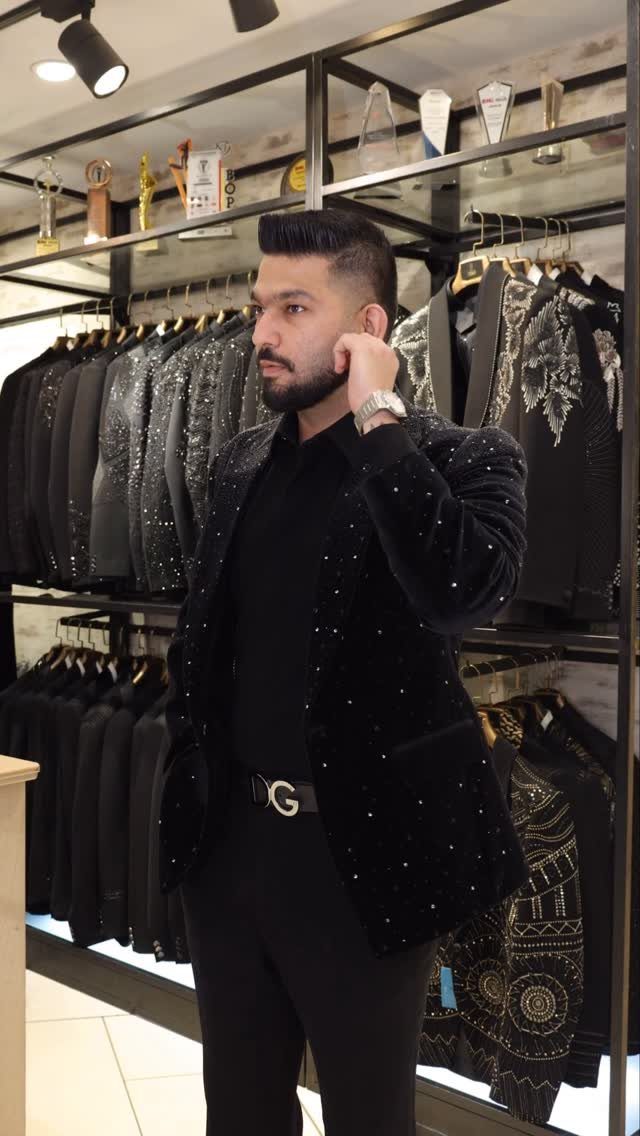
A black velvet blazer with subtle sparkle is for the guest who wants more than a plain suit but less than a full tuxedo.
Worn over an all-black shirt and trousers, the embellishment becomes the only detail, and that is exactly why it works.
Keep the sparkle small and leave off the tie and any other shiny pieces. Pick this for an evening wedding with a formal but flexible dress code.
Avoiding Fashion Faux Pas
Read the dress code on the invitation before anything else, and dress to it. Following it is a form of respect for the couple, and it settles most of the other choices for you.
Even at a casual wedding, skip denim, shorts and casual T-shirts.
Overdressing is a mistake too: a pinstriped three-piece with cap toes will look as out of place at a garden ceremony as a polo and flip-flops would. Aim for smart casual: a good jacket, a pressed shirt, clean shoes.
Mismatched pieces give a casual wedding away. If the jacket and trousers come from different suits, make sure the colors and fabrics look deliberate and not like an accident.
Fit and grooming count too. Anything too loose or too tight undercuts the outfit, and a fresh haircut or beard trim finishes it.
Accessories and Personal Grooming
Accessories should support the suit and never outshine it. Three do most of the work: a watch, cufflinks and a pocket square.
Cufflinks suit formal and semi-formal weddings, and they require a shirt with French cuffs. A simple leather-strap watch with a plain dial does 2 jobs: it finishes the outfit and spares you from pulling out your phone during the toasts.
A pocket square is where you can add a little color. Choose one that picks up a shade from your tie without matching it exactly.
Grooming belongs on the same list. Book the haircut 3–5 days ahead so it has time to settle, and get the shave or beard trim done the day before or that morning.
Importance of Fit
Fit decides whether a suit or tuxedo looks expensive or borrowed.
If you buy off the rack, budget for alterations. A tailor can adjust sleeves, trousers and the waist so the jacket sits cleanly on your shoulders.
Some online sellers will make the garment to your measurements and offer video appointments where you can talk through size, style and any alterations. That can work if you can’t get to a tailor in person.
Try the full outfit on well before the wedding, sitting and raising your arms, so there is time to fix whatever pulls.
Frequently Asked Questions
What should men wear to weddings?
The invitation usually names a dress code, and once you read it, the suit, shoes and tie mostly pick themselves.
A well-tailored suit works at most weddings, a tuxedo covers black tie, and tan chinos with a white shirt and blazer fit a relaxed one.
Venue and time of day matter too: lighter colors and linen suit daytime and warm weather, darker ones suit evening.
Should a male guest wear a suit to a wedding?
Yes, in most cases, unless the invitation points to something more casual. Choose the shade by time of day: darker suits like midnight blue or black for evening, light grey or beige for daytime and warm weather.





