Semi-formal covers a lot of ground, from a double-breasted suit over a turtleneck to a grey shirt and black trousers with no jacket, and the invitation’s wording, the time of day and the venue decide where you land.
Evening events call for darker, plainer outfits, while daylight allows lighter pieces like a light blue blazer and trousers.
1. Pocket Square, Tie
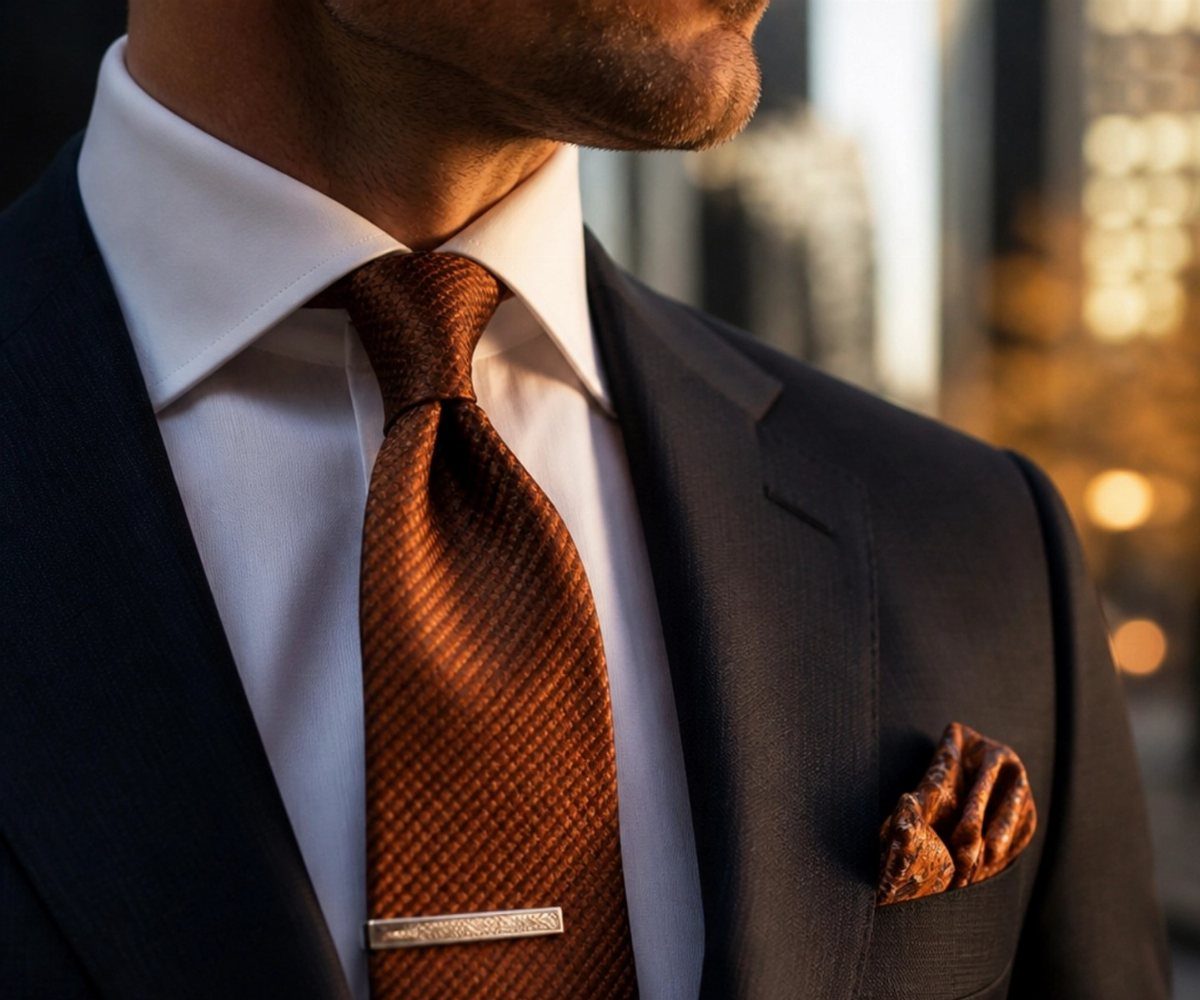
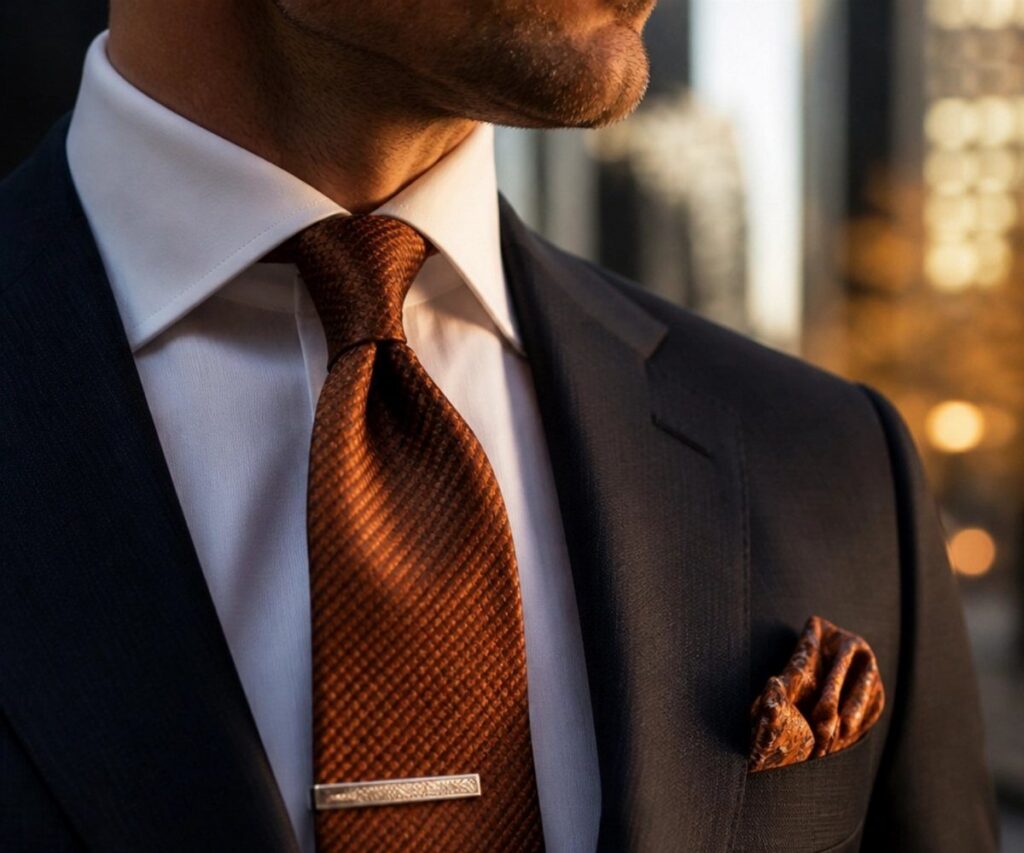
A copper tie against navy is a warm-on-cool pairing, and the silver tie bar keeps it from looking flat. A woven tie, say a grenadine or a knit with visible ribbing, gives a white shirt some texture to work against.
Pick a pocket square that picks up the tie’s color, whether it matches or only sits in the same family, and keep the pattern different so the two don’t read as a set.
A matching set looks like a gift box. Fold it simply, with one flat edge showing, and let the pattern carry the interest.
2. Tan Blazer and Patterned Trousers
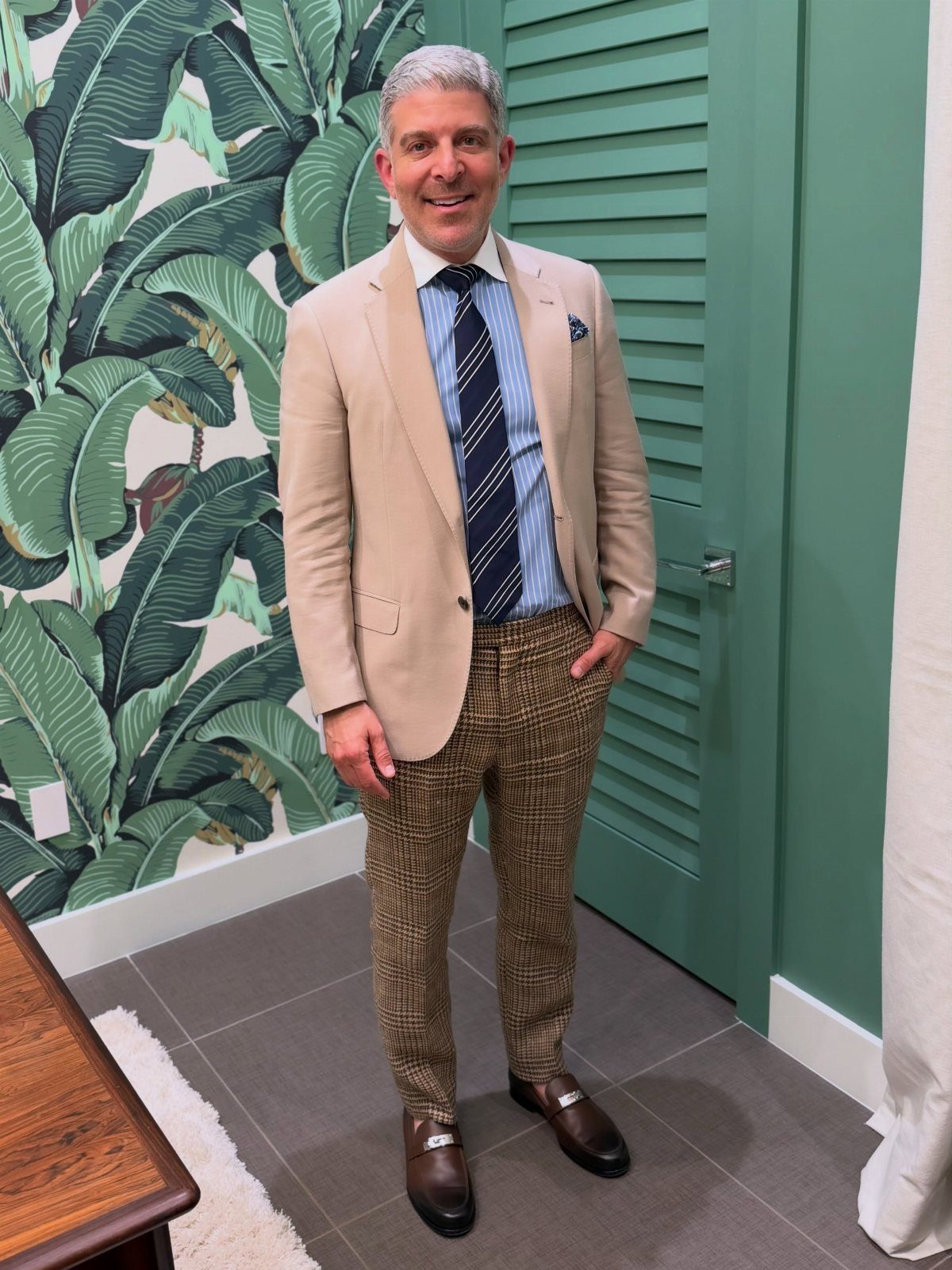
Three patterns can share one outfit if they differ in scale. The tan blazer is the quiet anchor, so the striped shirt, striped tie, and patterned brown trousers each get room to speak.
I would make the tie stripe wider or narrower than the shirt stripe, never equal.
Keep the trousers in the same warm brown family as the blazer, and finish with leather loafers. This look suits a man who likes color and does not mind a little risk.
3. Light Blue Blazer and Trousers
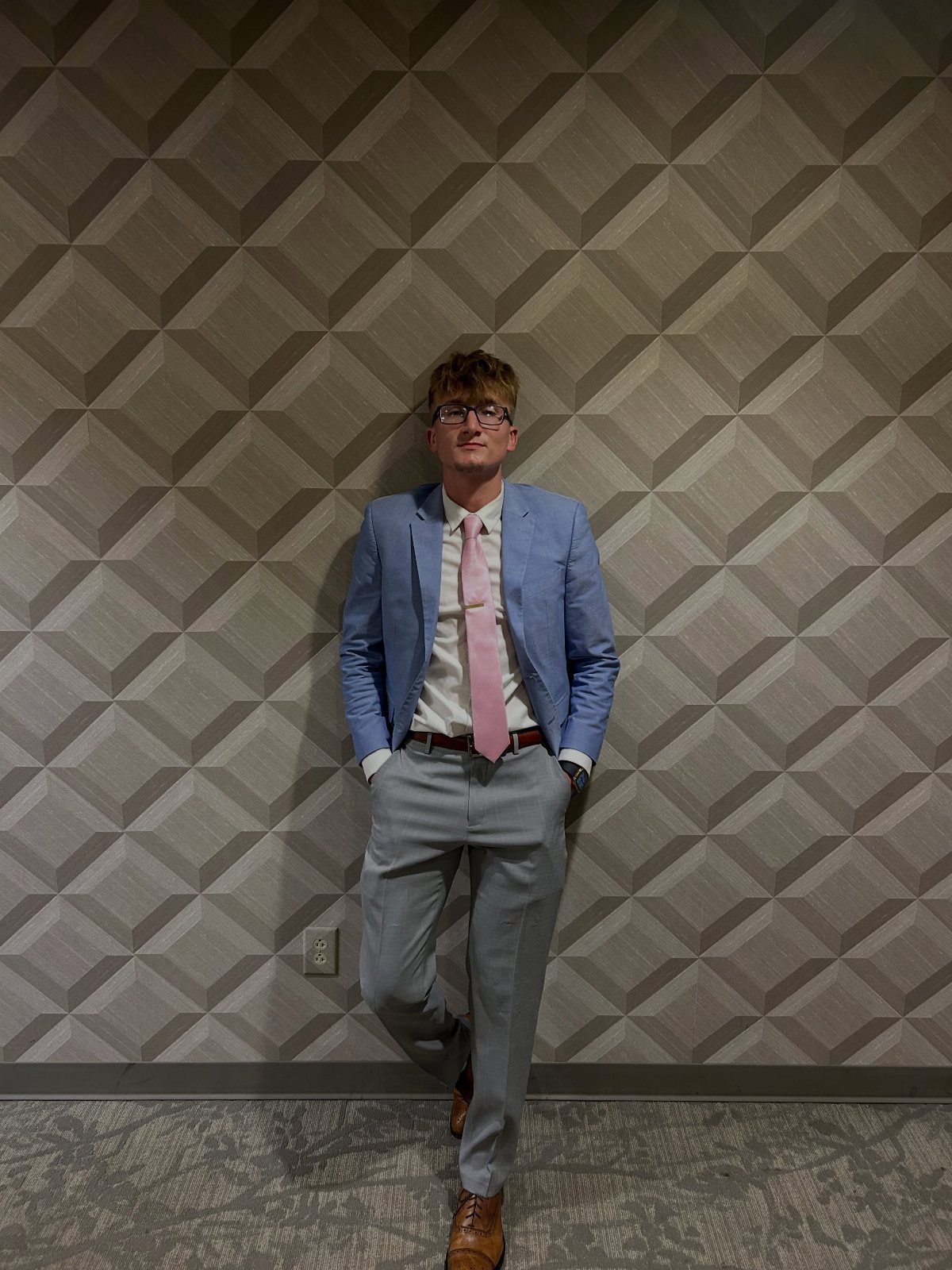
Light blue in a blazer reads as soft and easy, which is why a pink tie works instead of fighting it. White shirt, light grey trousers, and you have a palette with no hard edges.
Pale colors show wear and wrinkles fast, and that is the price of wearing them.
I would pick a blazer with a bit of texture so it looks deliberate. A tie in a color that contrasts with the shirt collar, like pink against white, stays visible and keeps the look from going flat.
4. Grey Shirt and Black Trousers
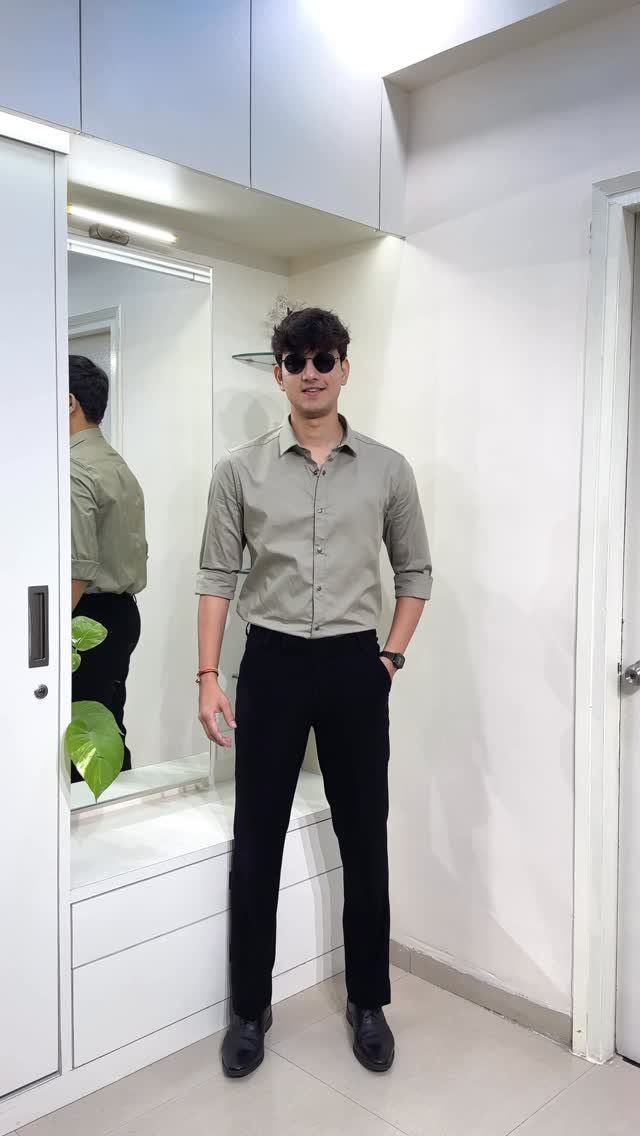
A light grey button-down tucked into slim black trousers is the easy answer when a jacket feels like too much. Rolled sleeves and black dress shoes keep it sharp rather than sloppy.
Tuck cleanly and wear a belt that matches the shoes.
The shirt should skim the body without pulling at the buttons. Add a black blazer and the same outfit moves up a notch for an evening event.
5. Double-Breasted Suit and Turtleneck
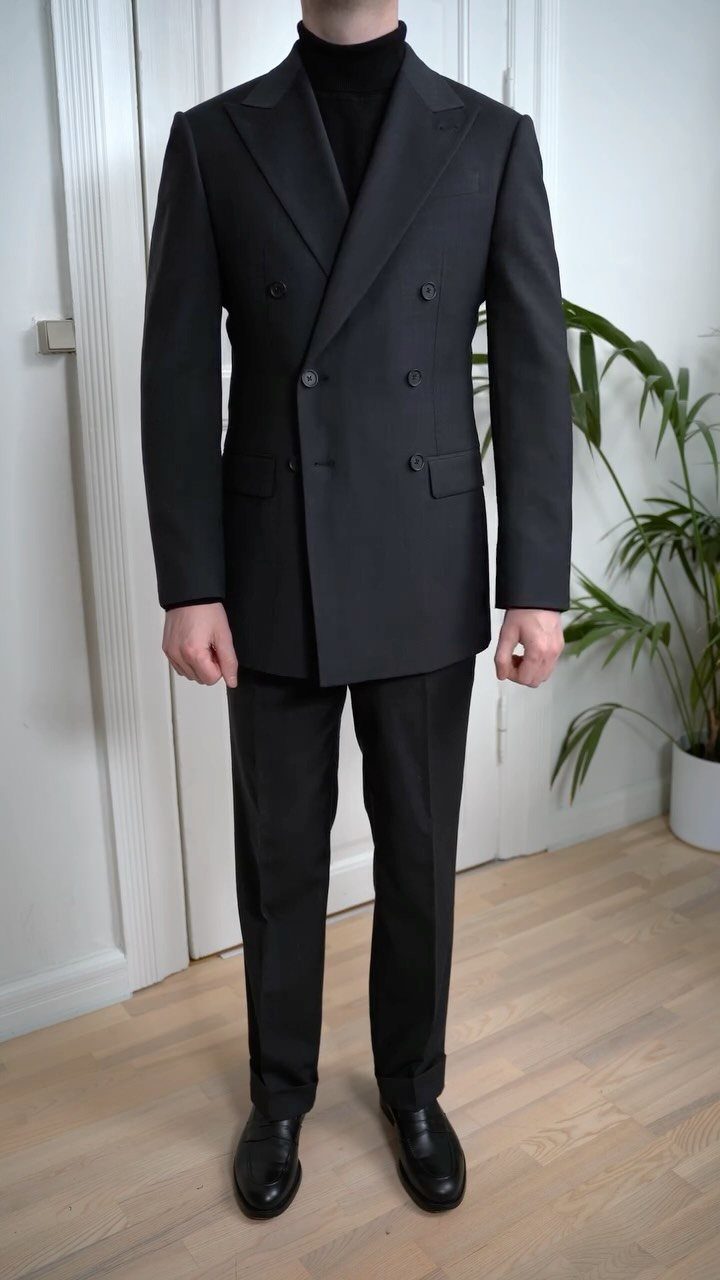
Swap the dress shirt and tie for a fitted black turtleneck, and a charcoal double-breasted suit turns sleek and a little severe. I like it because there is nothing to fuss over: one dark column, one set of black shoes.
Keep the jacket buttoned while standing.
The turtleneck should be thin enough to sit smoothly under the lapels. It suits evening events best, and it may feel too fashion-forward for a conservative office.
6. Brown Button-Down and Tan Trousers
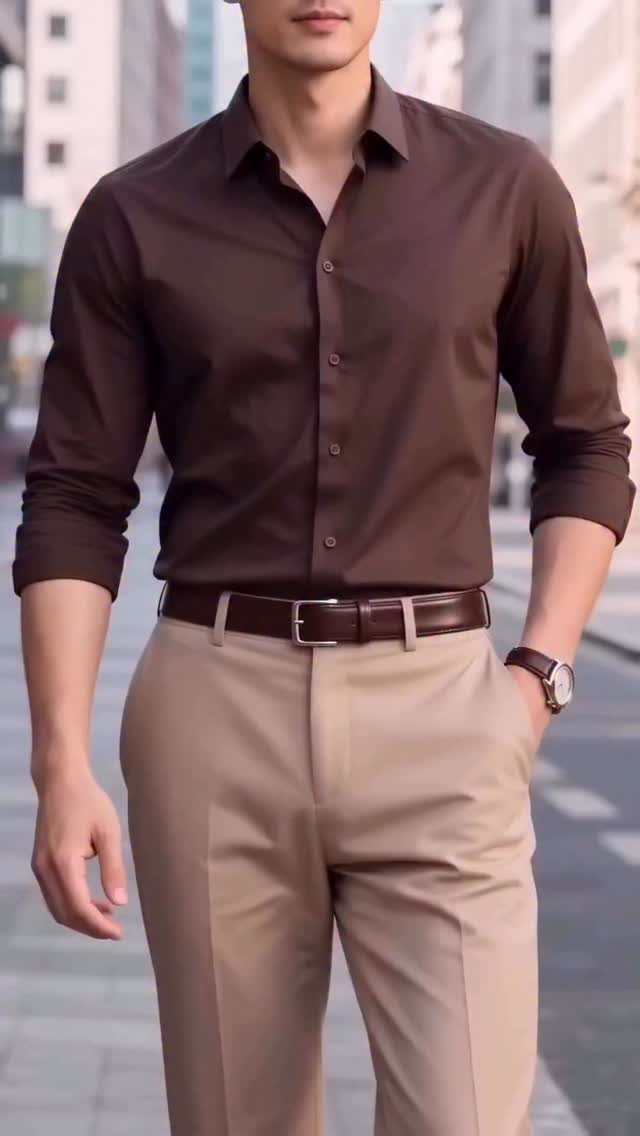
Dark brown on tan is a tonal pairing that looks richer than it sounds. The shirt gives depth, the trousers give lightness, and a brown leather belt ties the two together.
Tuck the shirt in and match the belt leather to your shoes, brown to brown, and the outfit looks finished.
Choose trousers with a clean, tailored taper rather than a baggy cut. On its own it looks good with the sleeves rolled once, and a tan or cream blazer would sit comfortably over it.
7. Maroon Suit with Tie
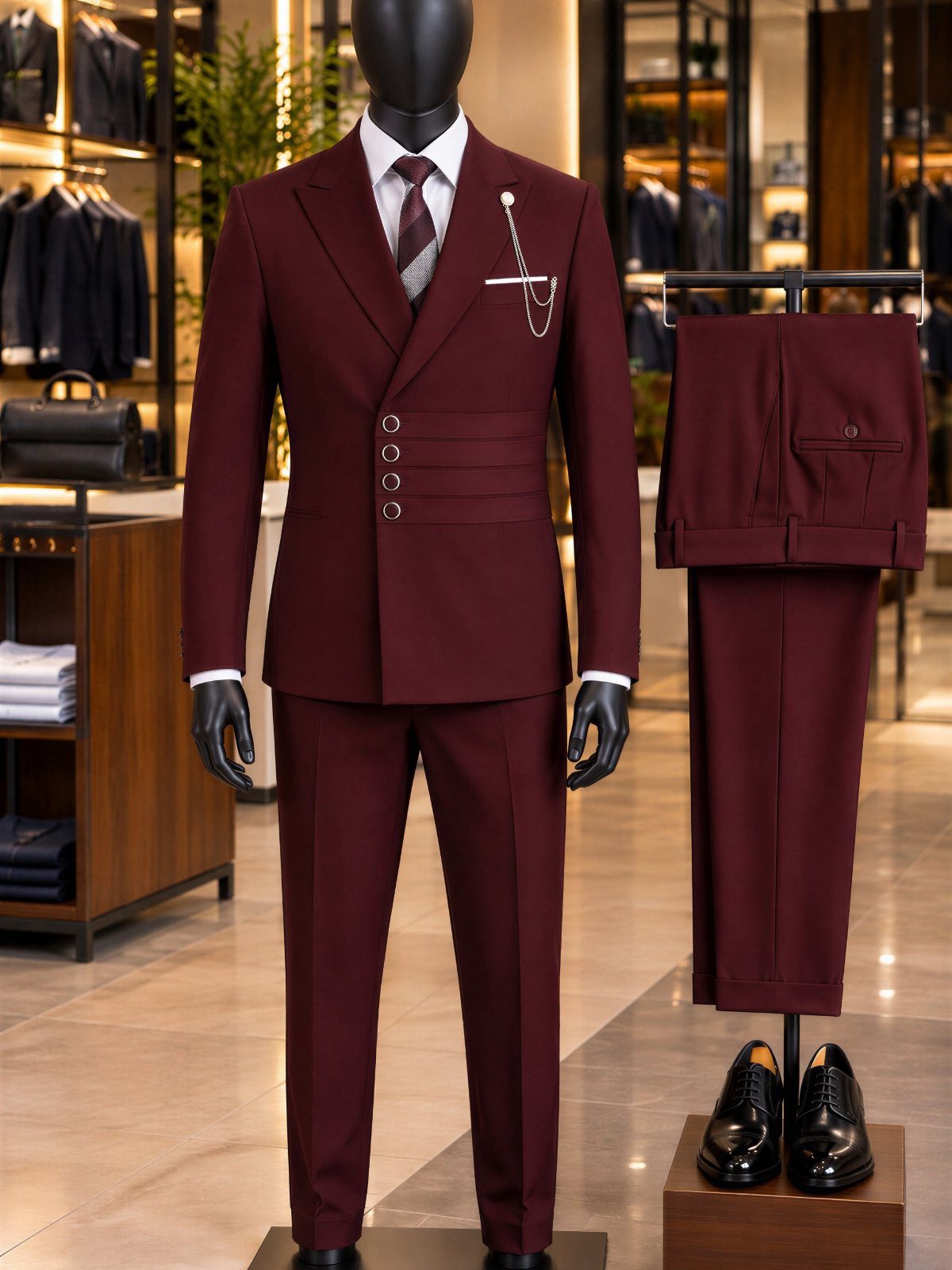
Maroon is a suit color that asks to be noticed, and the silver buttons on this one push it further.
Let a white dress shirt and black dress shoes do the quiet work, and pick a tie with a pattern small enough that it reads as texture from a few feet away.
I would pick a tie in a darker shade than the suit, or one that picks up the silver of the buttons. Another red competing with the maroon makes the whole thing look loud.
A maroon suit earns its place at an evening event or a wedding, where a navy one would blend in with every other man in the room.
It stands out more than charcoal, so it is a poor fit for a conservative office.
Understanding Semi-formal
Semi-formal sits between black-tie and casual.
A tuxedo is too much, and a T-shirt or shorts is far too little. Expect to wear it to weddings, cocktail parties, and nicer restaurant dinners, which is where an invitation tends to say "semi-formal" or nothing at all.
The basic formula is a suit, or dress slacks, with a dress shirt and dress shoes.
A tie is most often included. Semi-formal means sharp and put together, but a step short of a tuxedo and the ceremony that comes with one.
Personal flair has a place, and it belongs in the shirt, the pocket square, and the accessories. The suit itself should stay classic.
Semi-formal wear or half dress is a grouping of dress codes indicating the sort of clothes worn to events with a level of formality between informal wear and formal wear.
Event-specific Attire
Check 3 things before you pick an outfit: the time of day, the venue, and the type of event. Each one shifts what looks right.
For an evening event, go darker. My default is a dark navy suit, a white or light blue dress shirt, a silk tie, and a pocket square in a matching tone, not an exact match to the tie.
Keep the styling restrained at night, because flashy reads louder after dark.
In daylight, a lighter suit looks right, and I like heathered navy or a soft heathered blue for the texture it adds in sunlight. The tie becomes optional, though it is never wrong.
If the invitation says "dressy casual," relax the tailoring rather than drop it.
If a full suit feels like too much, a well-cut blazer over chinos or dark, clean jeans works, as long as the loafers are polished and the shirt is tucked in.
Common Mistakes
Nothing wrecks a semi-formal outfit faster than a T-shirt, beat-up jeans, or sneakers. The exception is a dressy casual invitation, where dark tailored jeans under a sharp blazer can work.
Fit causes more trouble than any single garment. Fit matters more than fabric: a suit that pulls across the chest or hangs loose at the waist looks careless, even if it cost a lot.
Other slips to avoid:
- Loud or casual prints
- Scuffed, dusty shoes give the whole outfit away, so wipe down and polish your oxfords or loafers before you leave.
- Piling on accessories, when one or two subtle ones (a watch, cufflinks, a pocket square) are enough
- Grooming counts too: get a fresh haircut, keep your nails trimmed, and tidy up any facial hair.
Whatever your own taste, the event’s stated dress code wins.
Frequently Asked Questions
What is semi-formal attire for a man?
A suit works, and so does a jacket with separate dress trousers; add a dress shirt and leather lace-ups or loafers, and you’re dressed correctly.
A tie is most often included, though it can be optional in daylight. Think of it as the middle rung: well above casual, but still short of black tie, so no tuxedo.
What to avoid in semi-formal?
Skip T-shirts, beat-up jeans, sneakers, loud or casual prints, and heaps of accessories. Scuffed shoes and a poorly fitting suit give you away fastest, so polish your shoes and get the suit tailored.
Grooming finishes the look, so get a haircut a few days ahead, clip your nails and shape any beard or stubble.
Can men wear jeans as semi-formal?
Generally no, because jeans read as too casual for a semi-formal event.
Only an invitation that says "dressy casual" changes this; in that case, dark jeans with no fading or rips, a clean fit and a sharp blazer can pass. Even then, wear polished loafers and tuck in the shirt.
Do you have to wear a tie to a semi-formal event?
No, a tie is most often worn but not required, especially in daylight.
If you add a pocket square, pick a color from the same family as the tie rather than the identical fabric, because a perfect match looks like a boxed set from a department store.





