Your office decides which of these looks works: a strict one calls for tailored trousers, while a relaxed one can handle a knit polo with trousers or a casual blazer outfit.
The ideas run from a white button-down worn untucked, with no tie and the hem loose, to an all-black outfit where a matte shirt and shoes supply the only shine.
Most of them rest on neutrals, with color added in one place only, and the cream-and-tan pairings are the ones that forgive the least, since cream shows wrinkles fast.
1. White Button-down Shirt
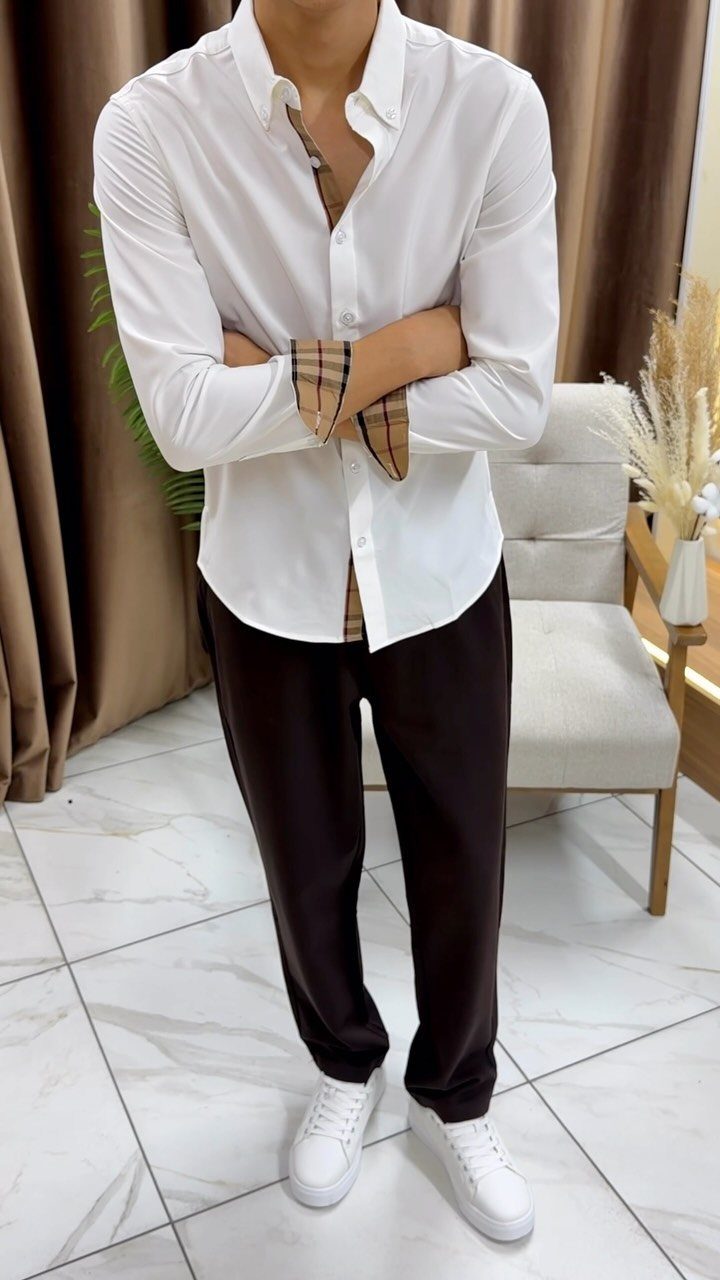
Worn untucked, a white button-down gets you looking put together without a tie, and nothing else in the closet does it with less effort.
Leave the hem straight rather than curved if you plan to wear it out, since a shirttail that hangs too long looks sloppy.
Dark trousers and white sneakers keep the whole thing clean, and the plaid lining inside the cuffs is a small detail that shows when you roll them. I would pick a crisp cotton over anything shiny.
2. Wide-leg Trousers
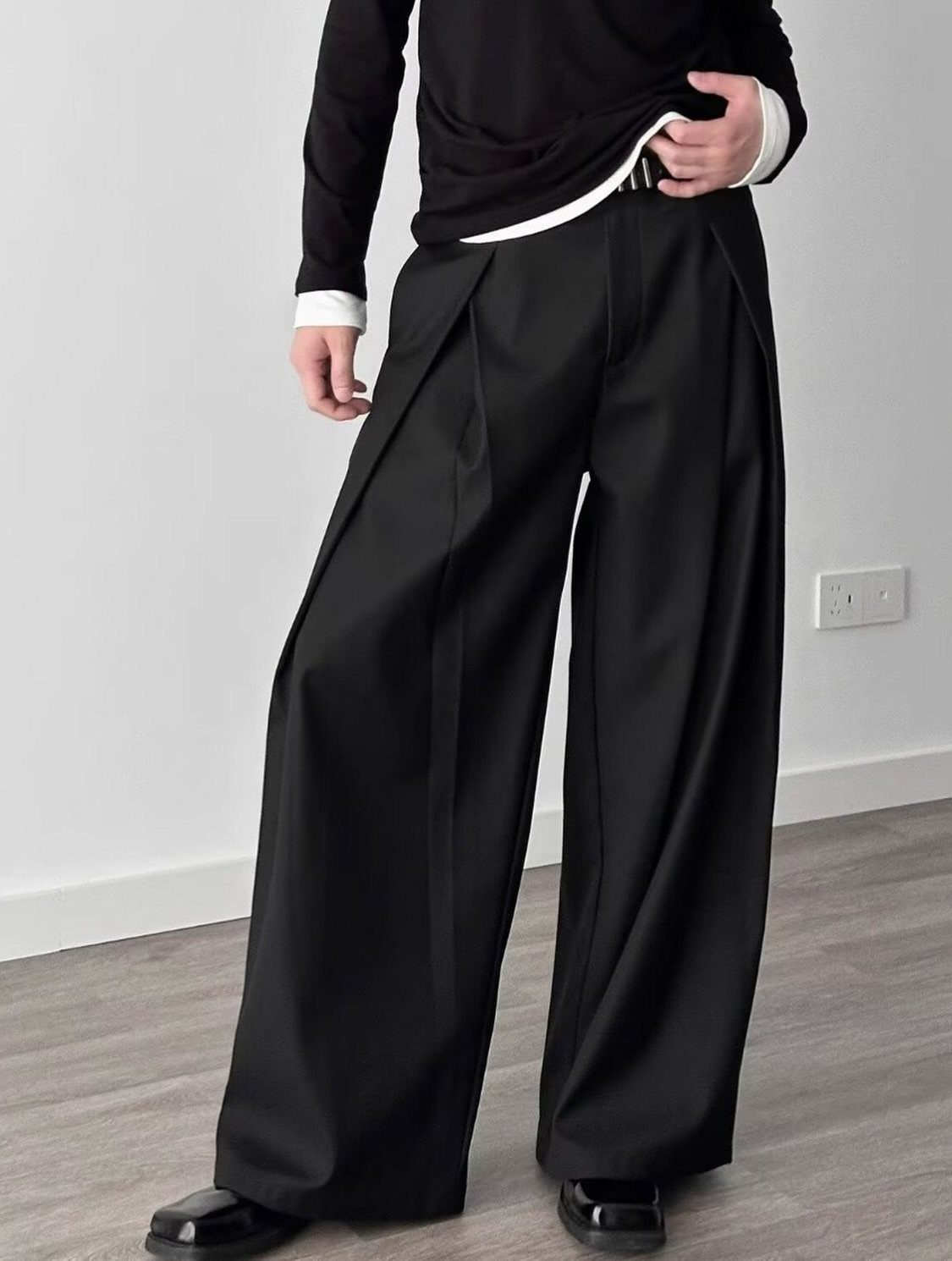
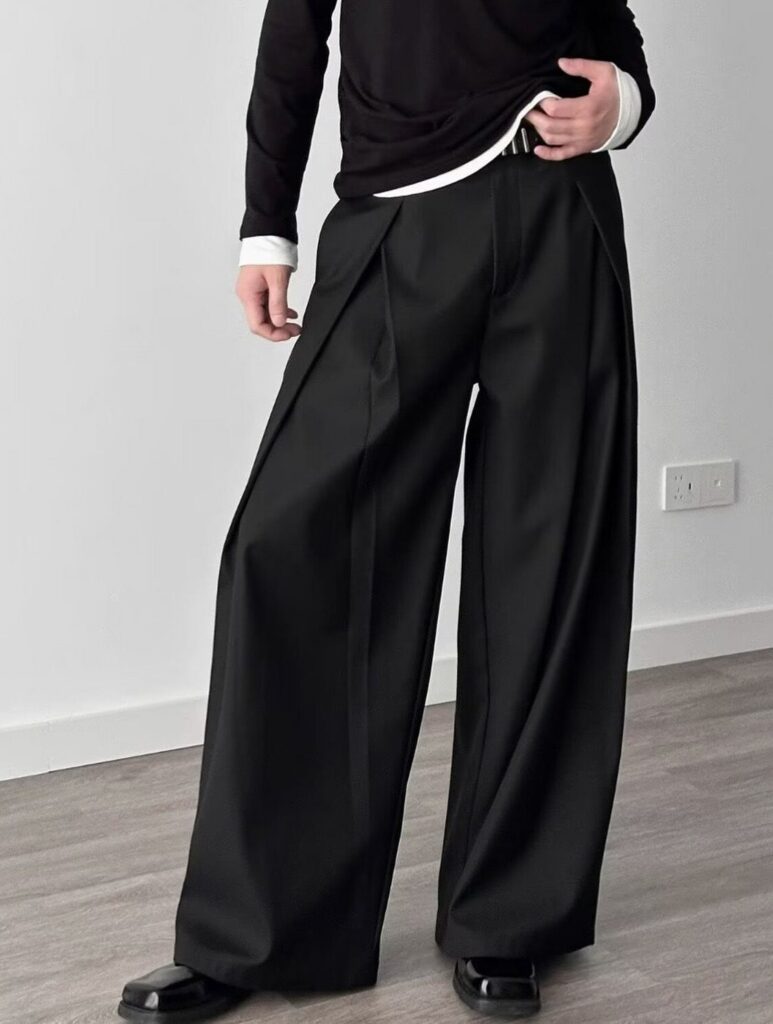
Wide-leg trousers with a pleated front change the proportions of an outfit, and black is the safest way to try them. Keep the top oversized and the shoes sleek, so the leg is the only dramatic shape.
Black dress shoes work because the hem can break over them and hide most of the shoe.
Hem the trousers so the fabric skims the ground without pooling. A white shirt layered underneath adds one sharp line at the collar.
3. Blazer
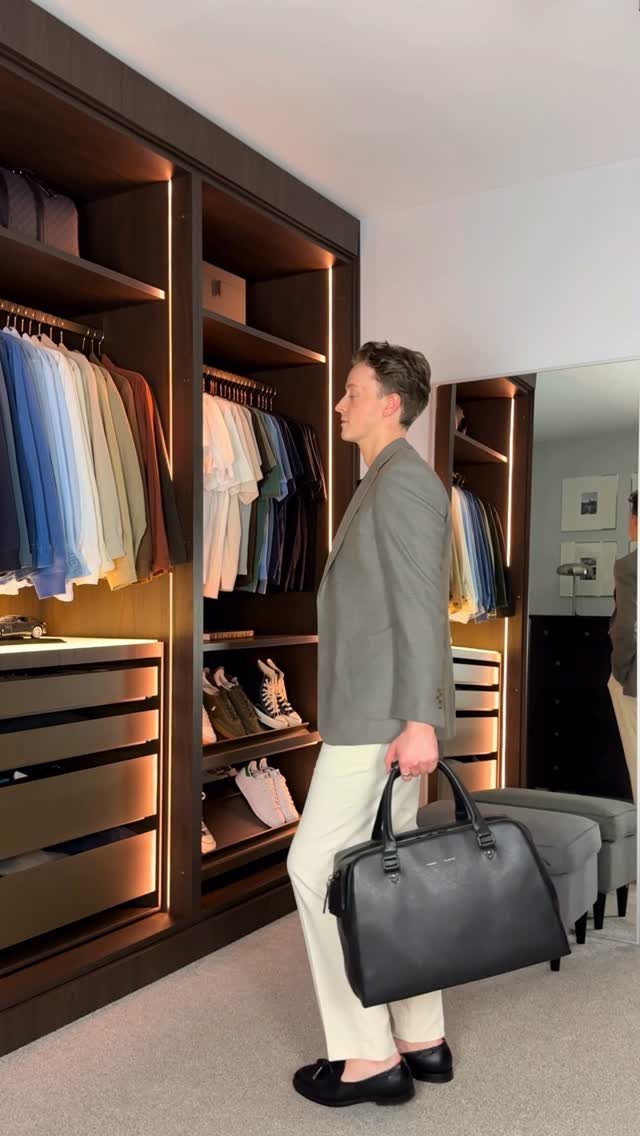
A grey blazer is the piece I would buy first, because it turns plain trousers into an outfit the moment you put it on. Against cream trousers it reads soft and light, and black loafers ground the pairing.
Choose a shoulder that sits flat without any divot, since that is the one thing a tailor cannot easily fix. Swap the trousers for jeans on a weekend and the jacket still works.
4. Tailored Trousers
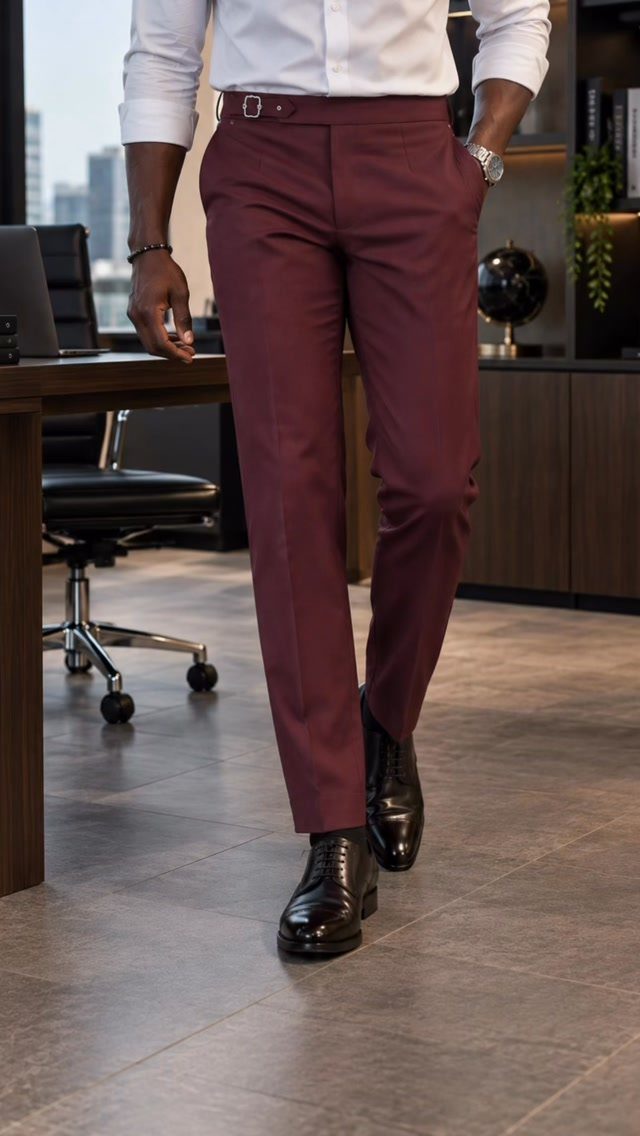
Tailored trousers do the quiet work in an office: a clean line from waist to shoe. Maroon or burgundy is a bold choice, but with a crisp white shirt and black leather shoes it stays sensible.
Side buckles take the place of a belt and leave the waist clean, so tuck the shirt in and let them show.
Polish the shoes before anything else; on a trouser this strong, scuffed leather is the first thing people see.
5. Smart Casual Men
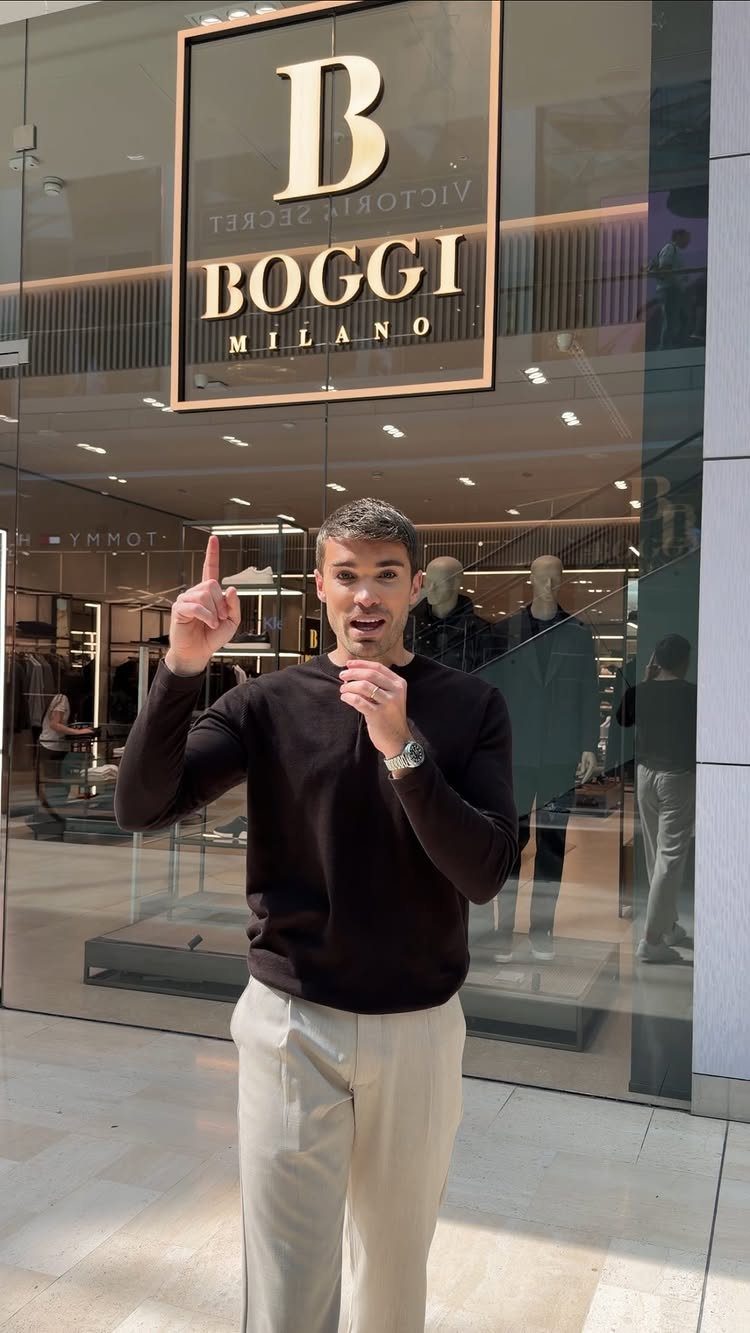
Dark brown knitwear over cream trousers is smart casual at its simplest: two colors, one soft texture, one sharp crease. The sweater supplies the comfort, and the trousers supply the discipline.
Pick a fine-gauge knit that lies flat, not a chunky one, so it looks neat when you are walking through a mall or an office lobby.
Keep the trousers pressed. Cream shows wrinkles fast, which is the cost of the lighter color.
6. Casual Blazer Outfit
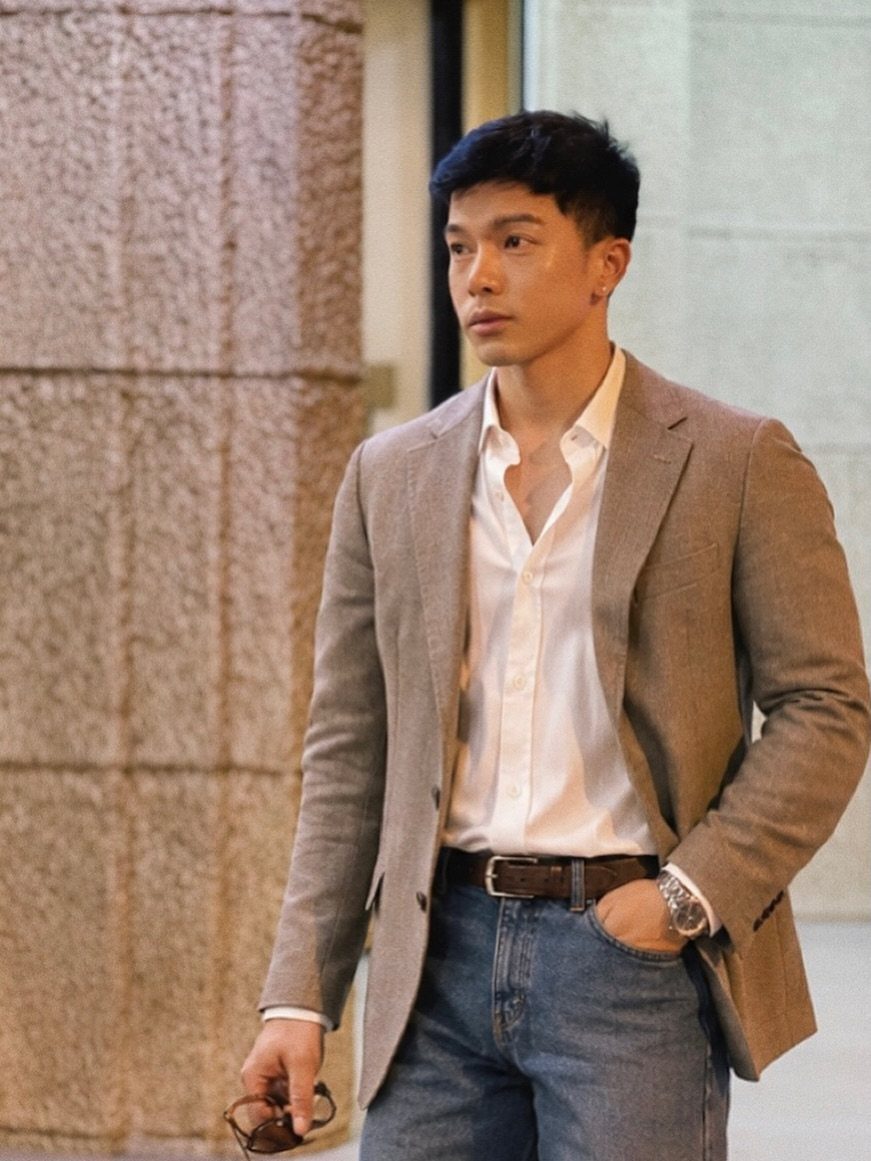
Pair jeans with a white shirt and a tan blazer, and you have a business casual outfit that takes almost no thought.
Wear the shirt open at the collar with no tie, and match the brown leather belt to your shoes.
Choose jeans in a dark or mid blue without rips or heavy fading, so they sit comfortably beside the jacket. A light brown blazer looks best in a matte fabric, and I would skip anything with a sheen.
7. All-black Formal Casual Outfit
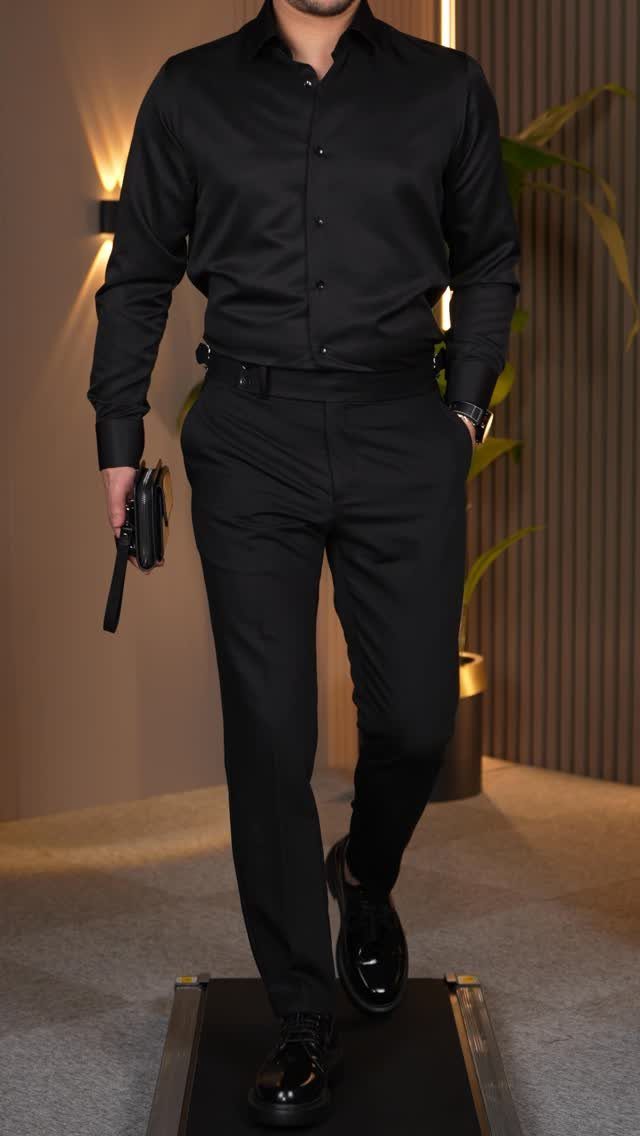
All black works in a formal casual outfit because one color removes every decision about matching. A black button-down, black trousers and polished black dress shoes read sharp from across a room.
Texture does the work that contrast would do elsewhere, so keep the shirt matte and let the shoes carry the only shine.
Leave the top button open and skip the tie. A small clutch is optional, and I would pick leather over anything flashy.
8. Knit Polo and Trousers
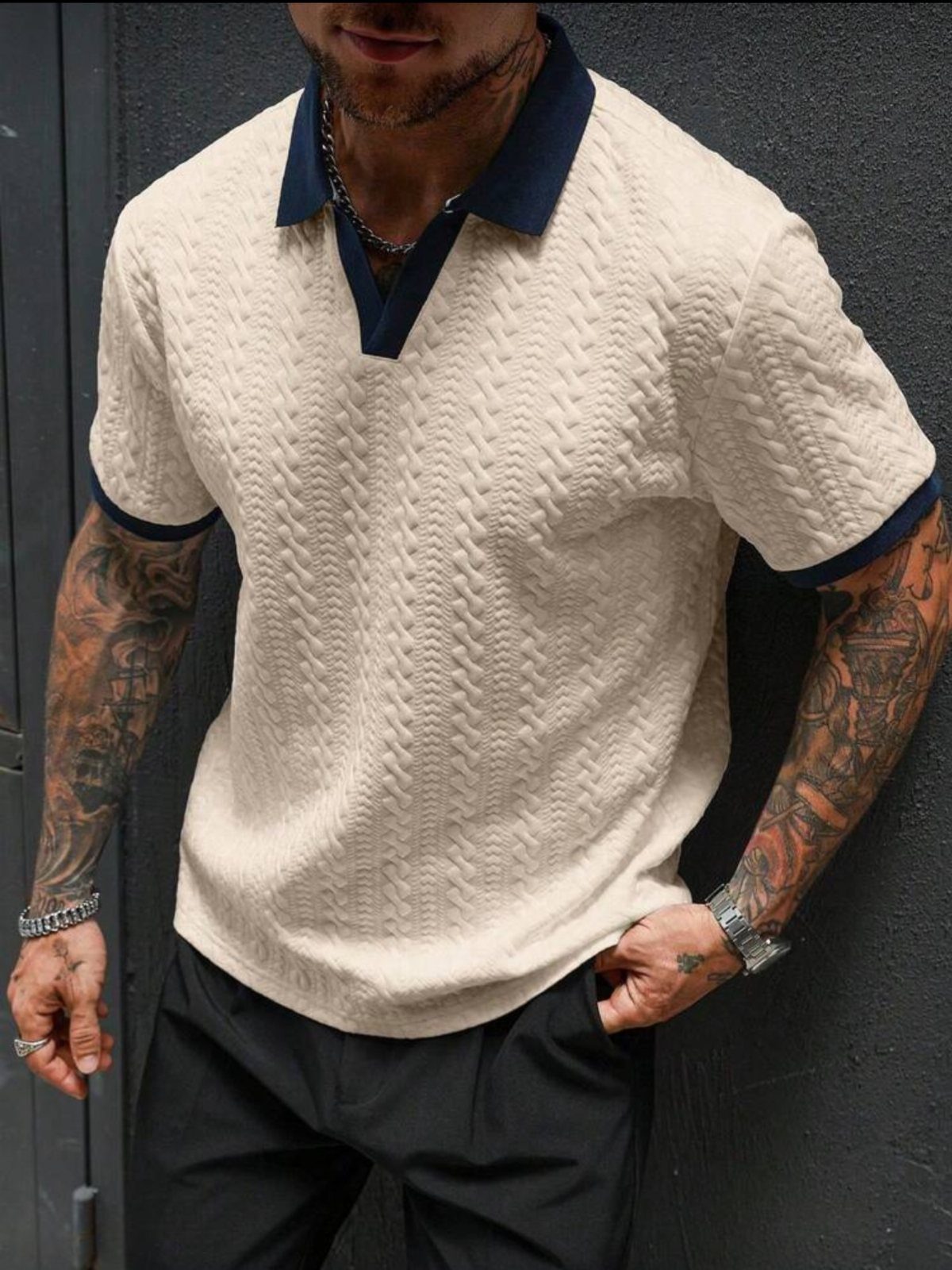
A textured knit polo is the shirt I reach for when a dress shirt feels stiff and a T-shirt feels too loose.
Cream with navy at the collar and cuffs gives a soft top a bit of structure, and black trousers keep it from looking like weekend wear.
Choose a knit that holds its shape through the chest and collar. Wear it untucked only if the hem sits at the belt line; otherwise tuck it in and let the trousers’ crease show.
9. Patterned Shirt with Trousers
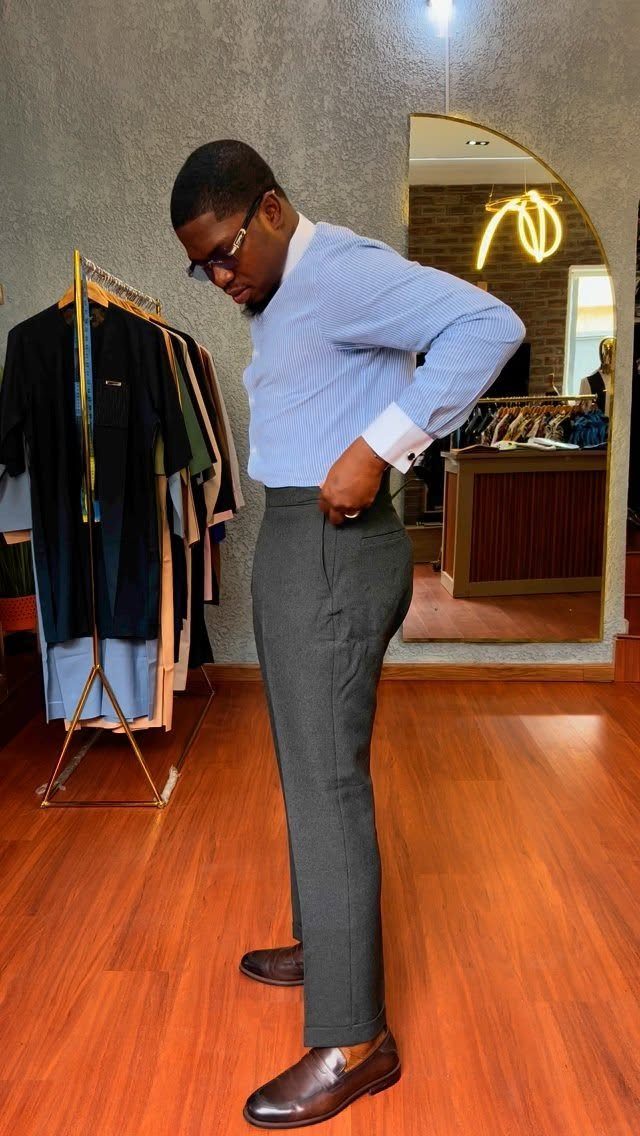
A striped shirt in blue with white cuffs makes a dark trouser interesting without adding a jacket. Charcoal trousers keep the pattern in charge, and brown leather loafers soften the whole look.
Keep the stripe fine and even, since wide, loud stripes fight with everything below them.
Tuck the shirt in and fasten the cuffs. Loafers are the easy choice here, but the shirt also works with a plain derby if your office leans stricter.
Mixing Formal and Casual
Pair one structured piece with one relaxed piece, and let the rest stay quiet. A tan blazer over a cream silk button-down with dark brown wide-leg trousers works because the tailoring sits on top and the fabric below it moves.
Another formula that holds up: tan blazer, white tee, tan trousers. The tee does the casual work, and the matching tan keeps it from looking like 2 outfits.
Stay within one family of tones. Camel, ivory and chocolate brown share a warmth, so the mix reads as deliberate rather than thrown together.
Color Coordination
Build the base from neutrals: black, white, cream, beige, taupe and tan. They mix in almost any combination, which is why a small wardrobe of them goes a long way.
Add color in one place only. A single piece in a stronger shade gives the outfit personality, and everything around it should stay calm enough to let it speak.
Check the undertones before you commit. Cream and tan sit comfortably together; a stark white next to a yellow-leaning beige can make the beige look dingy.
Accessorizing Outfits
Accessories should finish an outfit, not argue with it. A structured handbag in a clean shape adds polish, and it holds its form even when it is half empty.
Keep jewelry minimal: one thin chain or one simple ring is enough. If a piece catches the light from across the room, it is probably competing with the clothes.
Match the metals you wear, and let the bag pick up a color already in the outfit.
Frequently Asked Questions
What kind of clothes is formal attire?
Formal attire means tailored suits, dress shirts and polished shoes.
The tailoring and the shine on the leather are what separate it from everyday clothes. A formal casual outfit borrows some of that, such as a blazer or pressed trousers, and relaxes the rest.
Are jeans too casual for business casual?
Not if they are the right pair.
Dark or mid blue denim with no rips and little fading works best, paired with a white shirt and a tan blazer. Leave the collar open, drop the tie, and make sure your belt matches your brown leather shoes.
What are some examples of smart casual and elegant attire for men?
A dark brown sweater over pressed cream trousers is about the simplest smart casual outfit I know.
Pick a fine-gauge knit, since it lies flat and keeps the lines clean. For something dressier, wear a gray blazer over cream trousers with black loafers.





