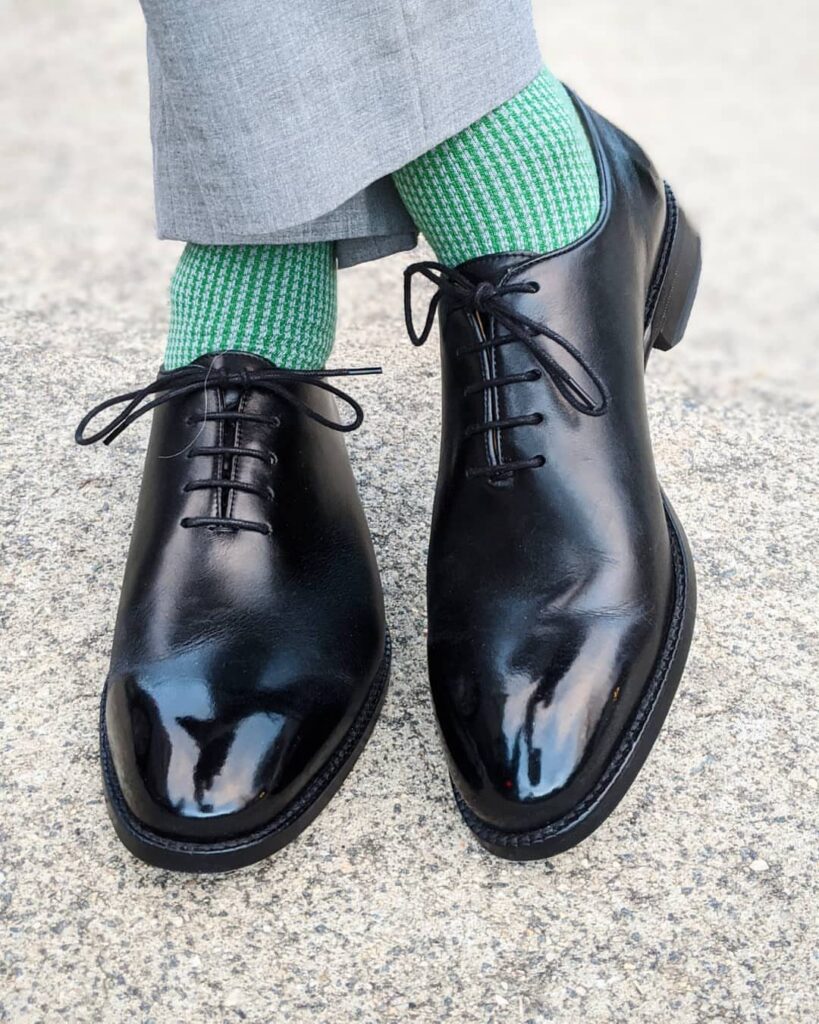
Across the sections below, the range runs from dress shirts, polos and blazers to loafers, oxfords and clean sneakers, with a merino zip-up sweater for the cooler days.
1. Dress Shirts, Polos, and Blazers
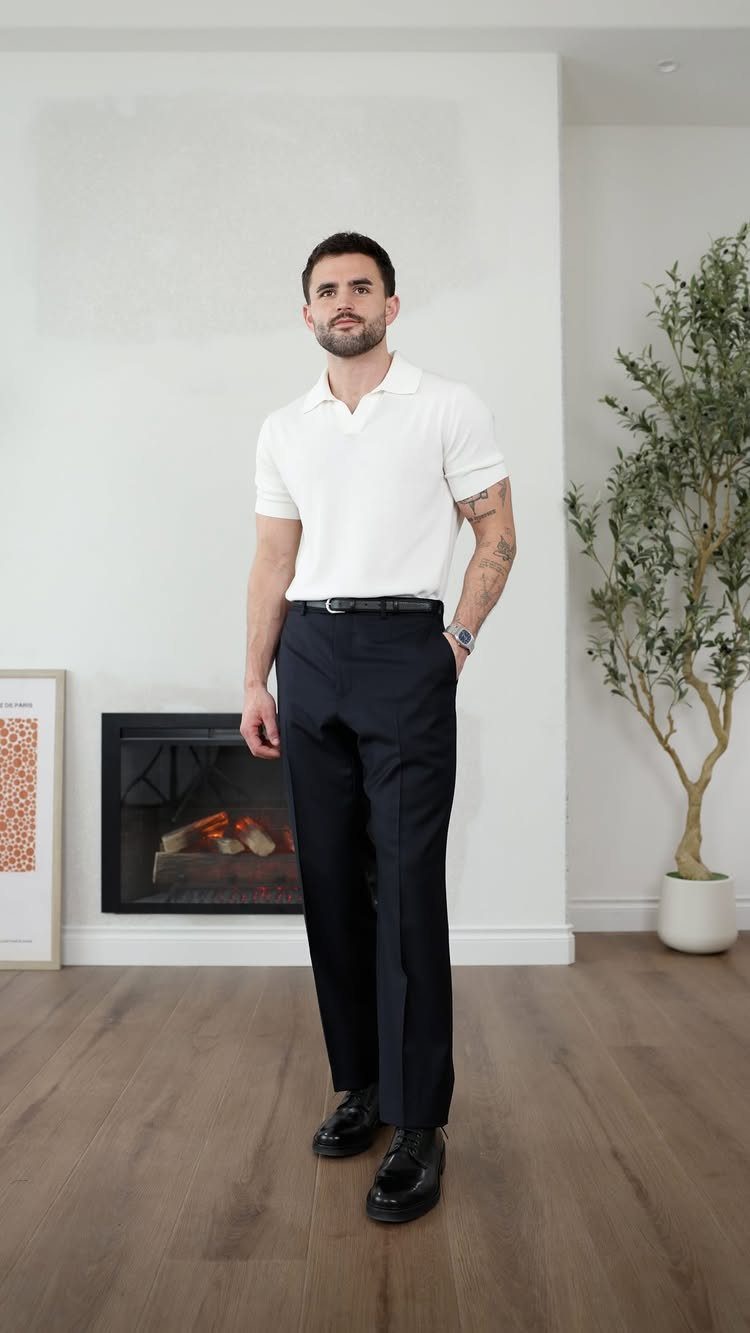
A white polo, dark trousers and black dress shoes is about as little as business casual asks of you, and it still works in most offices.
Tuck the polo, add a leather belt that matches the shoes, and the outfit reads as dressed rather than relaxed.
A dress shirt does the same job with more formality, and a blazer over either one raises the look further.
Dark trousers and a plain shirt are what I’d start with, because every other piece you own will mix with them.
Polos suit the lighter days; a blazer is what you add when the day calls for more.
2. Loafers, Oxfords, and Clean Sneakers
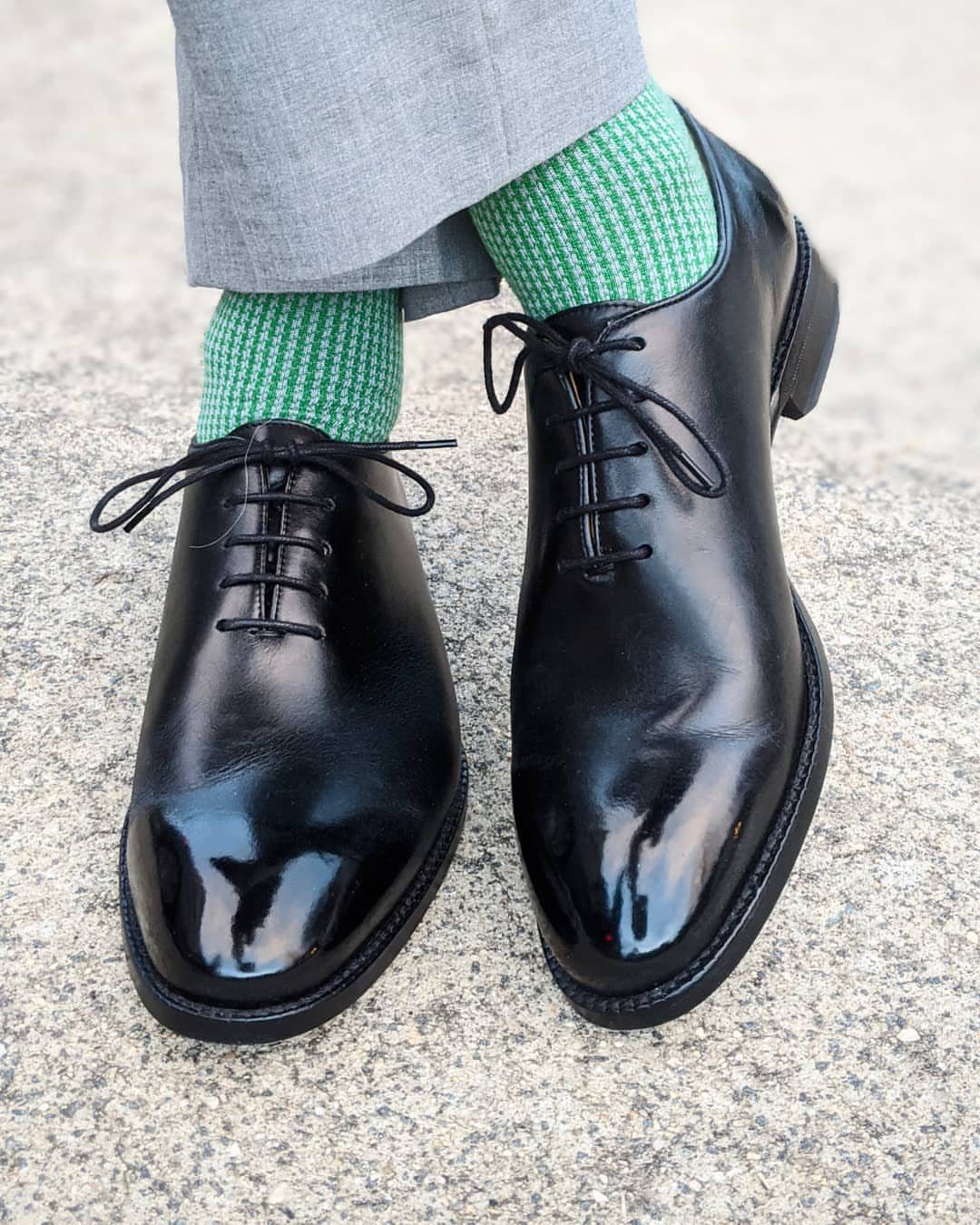
Shiny black leather oxfords are the dressiest choice of the 3 shoes, and they hold up next to grey trousers without any fuss.
A pair of colored socks, like the green patterned ones here, is an easy way to add personality where nobody expects it.
Loafers sit a step below oxfords in formality.
Clean sneakers go lowest, and I would save them for offices that are clearly relaxed. Whichever pair you wear, keep the leather polished and the sneaker soles white.
3. Robust Merino Wool Zip-Up Sweater
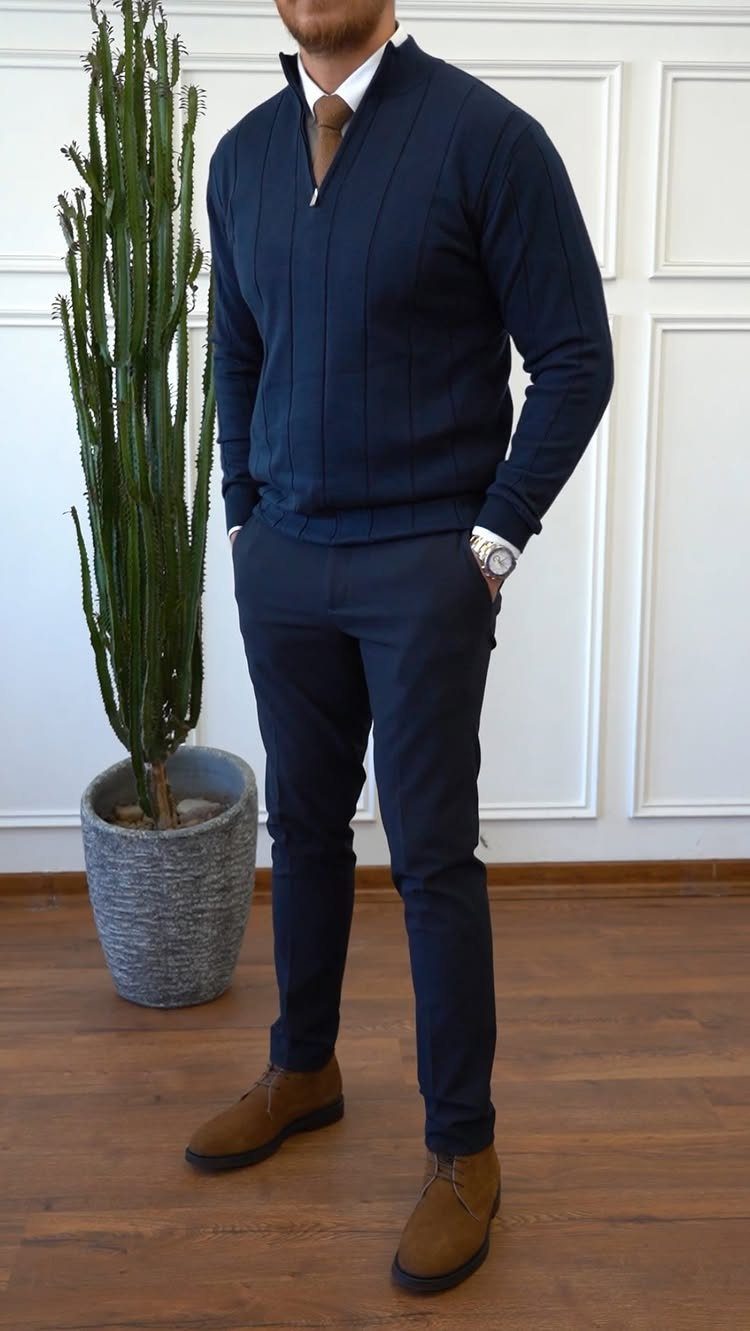
Layering a navy quarter-zip ribbed sweater over a collared shirt and tie gives you a jacket’s polish with a sweater’s ease.
Merino wool is my pick for the sweater. It’s fine enough to sit under a collar without bulk.
Zip it partway so the collar and tie show. Skip the tie on casual days, and the sweater still looks deliberate.
Understanding Business Casual
Business casual has no single definition, and that vagueness is built in.
Business casual lands somewhere between Saturday clothes and the suit a 1960s executive wore to the office, and where exactly depends on your industry and how formal your company runs.
Most corporate offices now use it as their standard.
Some favorites have to stay home, though: gym shorts, graphic tees and beat-up sneakers rarely pass. Hoodies, sweats, and beat-up sneakers don’t fit the code, however comfortable they are.
Tech offices usually allow far more freedom.
Academia and finance often stop just short of a matching suit and tie. Know where your job falls before you buy anything.
Because business casual doesn’t have to be boring. You should still look like you: Your job is just to find which pieces land on the bullseye in the Venn diagram featuring your job and your sartorial vibe.
— GQ
Common Mistakes
Check the outfit from your shoes up to your collar before you leave the house.
A single sloppy piece, like scuffed shoes or a wrinkled shirt, can make the rest of the outfit look careless, however good the other parts are.
Polos are where most men go wrong.
The ones that read as golf-course gear are the problem: pique cotton with a large logo. A better choice is a polo with a smoother, softer feel closer to a good t-shirt, made from Supima cotton.
One option is the Superfine Polo from Bonobos, which costs $68 and fits that description. It sits between a t-shirt and a button-up, and it works under a sport coat or a denim jacket.
Advice for Choosing Outfits
Start by looking around. Take an average of what people wear rather than copying one person, because owners sometimes dress down while expecting staff to dress up, or the reverse.
If most men wear sport coats and button-up shirts, your office leans toward business. If you see jeans, boots, and sweaters, it leans casual.
Then ask.
If you’re unsure what’s acceptable, a short email to HR will usually get you a clear answer. Managers are worth asking too; tell them you’re updating your wardrobe to represent the company well, and they’ll likely appreciate it.
Ask what is absolutely off limits. That answer is often the most useful one.
Frequently Asked Questions
What is business casual fashion?
Think of business casual as the middle ground: sharper than what you wear on a Saturday, looser than a full suit and tie.
Where that middle sits shifts by field, so a tech office tolerates more relaxed pieces, while banks and universities tend to stay a step shy of a matched suit.
What is not acceptable for business casual?
Gym shorts, graphic tees, hoodies, sweatpants and worn-out sneakers almost never pass, no matter how comfortable they feel.
Distressed clothing with frayed knees or open holes stays home as well. A scuffed pair of shoes or a creased shirt can undo a good outfit, so I run a quick check from collar to toe before walking out.
What is the 3-3-3 rule for business casual fashion?
I don’t know of any single agreed rule by that name, and business casual has no fixed definition at all. Then look at what people in your office wear and ask HR or your manager what is off limits.





