The looks run from polos and structured jackets to a quarter-zip, a vest, a zip jacket over a tie, and a button-down with navy trousers, and what separates them is how strict your office is about ties and collars.
If your office is relaxed, the quarter-zip collar sweatshirt is the easy pick; if you wear a tie daily, the zip jacket over a tie keeps it; if the dress code is unclear, the button-down with navy trousers is the safe choice.
Fit and fabric matter more than any single piece, and the shoulder seam should land at the edge of your shoulder bone.
1. Polo Shirts
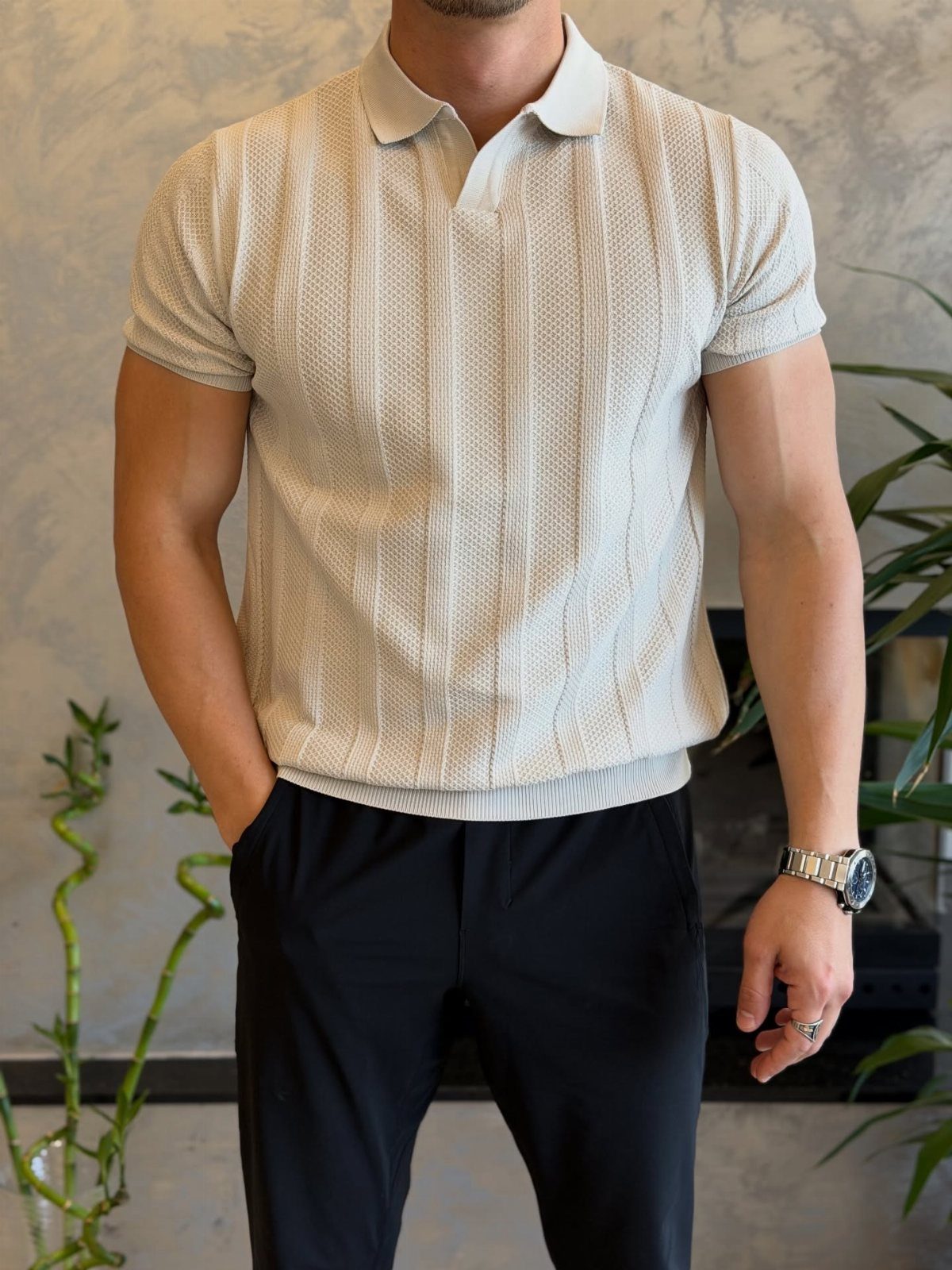
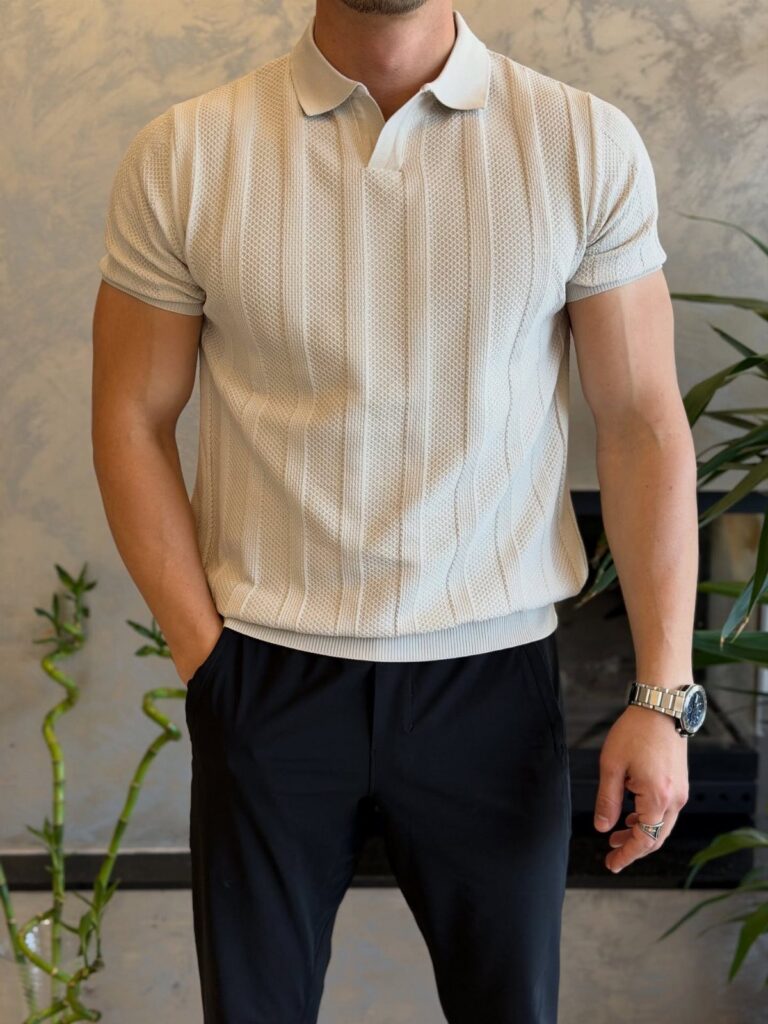
A knit polo in off-white or cream with some texture to it looks richer than a flat piqué, and it needs nothing more than black trousers to look finished. The texture does the work a jacket would otherwise do.
Keep the collar relaxed and the hem long enough to sit at the belt line, since a shirt that rides up undoes the polished look.
A watch is enough jewelry. I would pick this over a plain tee on any office day with a casual dress code.
2. Structured Jackets
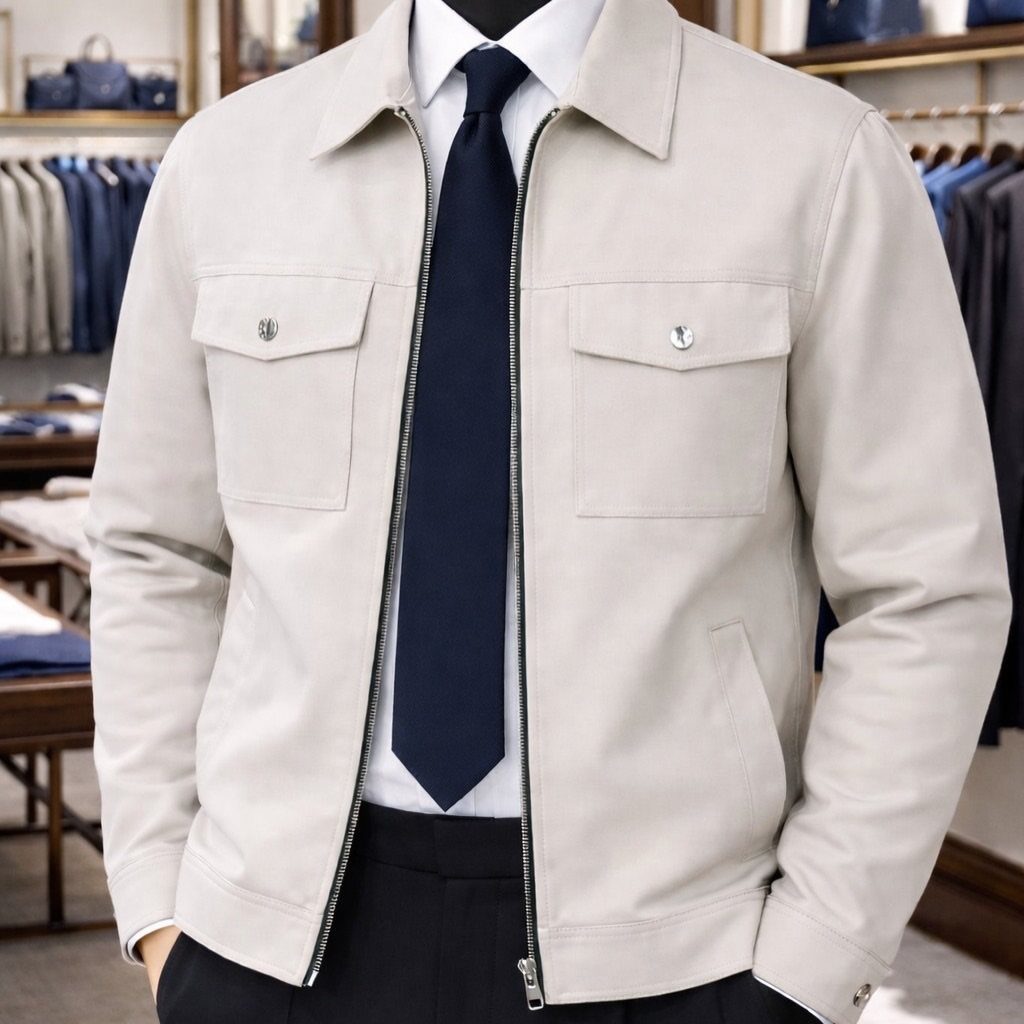
Choose a firm fabric that holds its shape through the shoulders, and stick with dark pants so the pale jacket stays the one bright note. Zip it only partway if you want the tie to show.
3. Quarter Zip Collar Sweatshirt
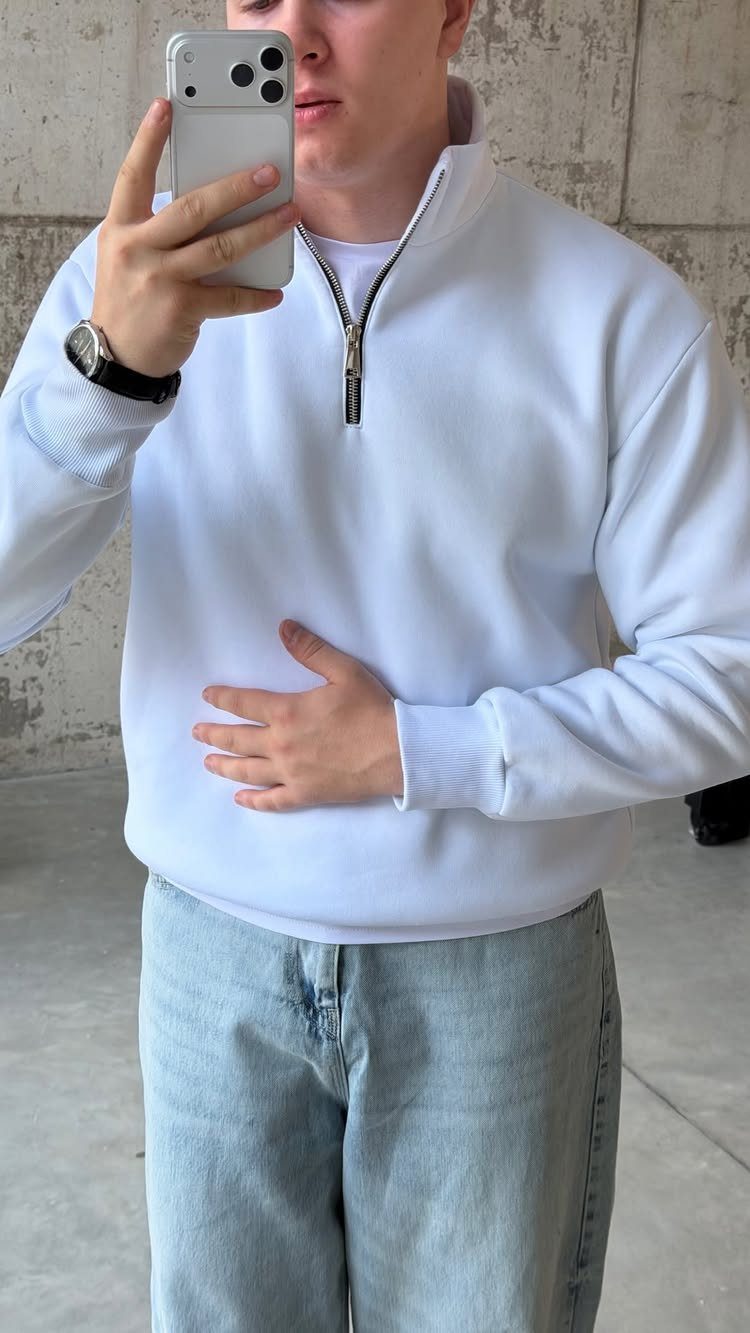
Plain white quarter-zips are the lazy man’s answer to a sweater, and I mean that kindly. The small collar gives the neckline a frame, which a crewneck sweatshirt never manages.
Wear it with light-wash denim and a simple watch, and pick a clean, smooth cotton without a logo.
The pairing is weekend-easy, so it suits offices where jeans are fine. Where they are not, swap in dark trousers and it still holds up.
4. Ultra-Smart Vest

Between a heavy coat and no layer at all sits the quilted vest, and a navy one is my pick because it works over almost anything.
Over a simple white tee it keeps your core warm and leaves your arms free for typing.
Keep the vest fitted rather than puffy, or it will add bulk through the chest.
Over a collared shirt it moves closer to business casual. The tee version is better for relaxed offices only.
5. Zip Jacket Over Tie
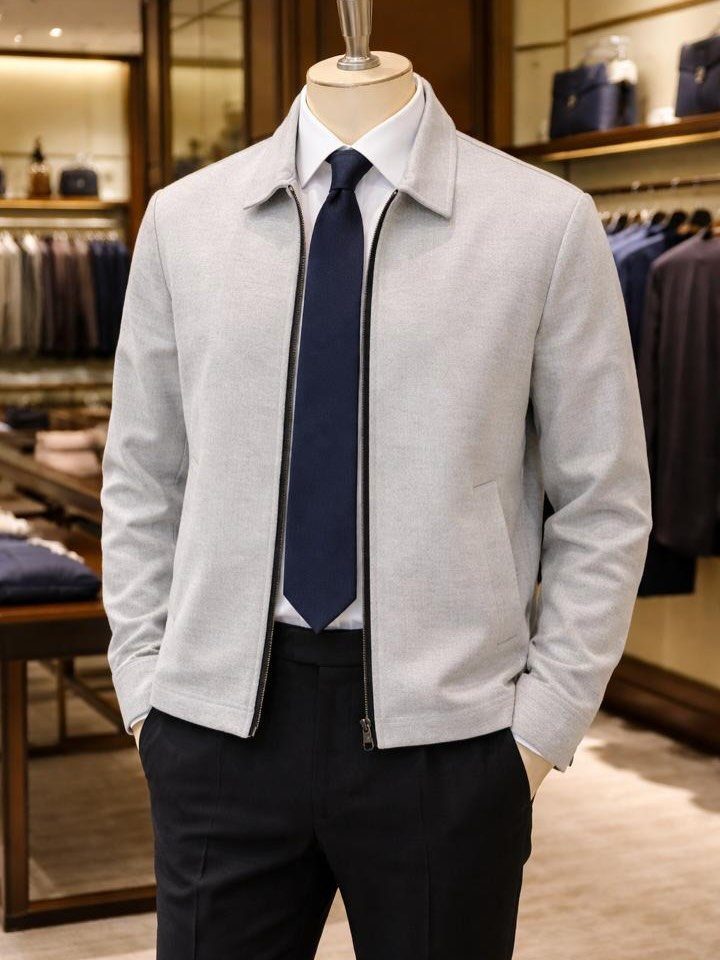
Putting a light grey zip jacket over a white shirt and navy tie is a quiet way to dress down a tie without dropping it. The jacket replaces the blazer, and the tie keeps the whole look sharp.
Black trousers keep it clean.
Zip the jacket high enough to frame the knot but not so high that it crushes the collar. Pick a smooth, lightweight fabric so the layers don’t bunch at the neck.
6. Button-Down Shirt with Navy Trousers
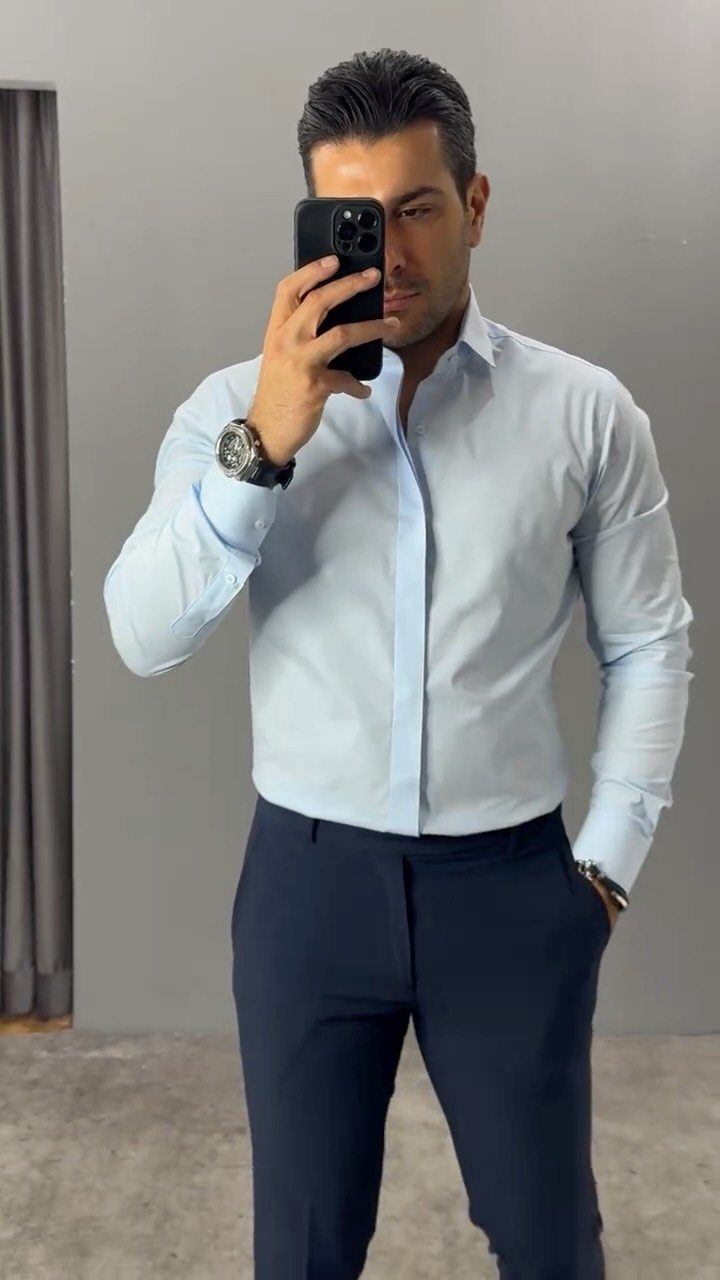
A light blue button-down tucked into navy trousers is the plainest formula here, and still the one I trust most. Blue on blue in 2 shades looks planned without any effort.
Tuck the shirt in and add a belt, since the tuck is what separates this from a weekend look.
Make sure the trousers are tailored, with a clean break at the shoe. Rolling the sleeves once or twice relaxes it when the office is quiet.
Balancing Casual and Professional
Casual work clothes go wrong in 2 directions: sloppy or overdressed.
Fit and fabric are what keep you between them. A chore coat or overshirt in wool is dressier than the same piece in cotton, so the texture can carry the polish.
Accessories help too. Shoes, a watch and a belt can lift a relaxed outfit without adding a single layer.
Tailoring is worth considering. A sport coat or suit can be worn casually and still read as professional, and a made-to-measure piece gives you a better fit and a wider choice of cloth.
Your own workplace sets the limit.
If shorts or hoodies are truly fine, you will know. If you are unsure, treat it as a no.
"Make relaxed footwear work in the office and go for fresh, pure leather in a simple design to hit that business-casual balance."
Importance of Fit
Fit starts at the shoulders. The seam should land at the edge of your shoulder bone; if it hangs past it, the garment will look borrowed, and no tailor can fix that cheaply.
Check the sleeve and the length next. A sleeve should end near the wrist bone, and a shirt worn untucked should stop around mid-fly.
Trousers should skim your legs without clinging or pooling. Slim and tapered suits most men; if your thighs are heavy, choose a straighter cut instead of squeezing into a narrow one.
Budget for a tailor. A tailor who hems the legs and takes in the waist can make an affordable pair of pants look better than an expensive pair worn straight off the rack.
Layering Techniques
Build layers from thin to thick, and keep each one lighter than the one above it. A fine knit under a heavier jacket sits flat; the reverse bunches.
Vary texture rather than adding color. A smooth shirt, a ribbed knit and a brushed wool jacket in related shades look richer than 3 flat pieces.
Let each layer show a little. An inch of shirt cuff or a visible collar gives the outfit depth.
Stop at 3 layers in an office. Past that, you add bulk and heat, and the outfit starts to look like a pile of clothes instead of a plan.
Frequently Asked Questions
What is a casual dress code?
Casual dress codes loosen the rules, so jeans and a T-shirt can share a rack with trousers and other office staples; how far it goes depends on the workplace.
Suits and ties are not expected, and weekend-friendly pieces get mixed with classic work clothes. You see it most at tech companies, creative studios and other offices that never adopted a traditional dress code.
What should men wear for business casual?
Think of the space between a suit and weekend clothes: sharp and put together, without the jacket-and-tie formality.
Can I wear jeans to a casual office?
Yes, where the office allows it.
Light-wash denim looks right with a white quarter-zip in smooth cotton, with no logo on the chest. Add a simple watch and it looks relaxed but tidy.
How do I keep casual work clothes from looking sloppy?
Pay attention to fit and fabric, since those keep you between sloppy and overdressed.





