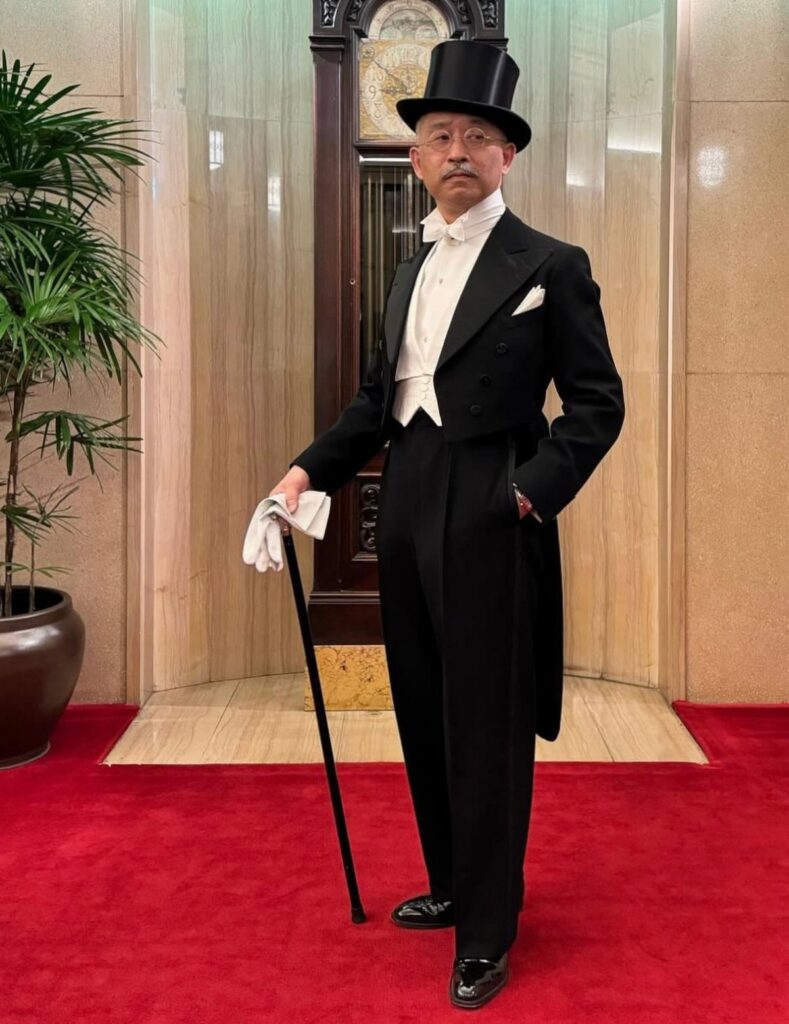
The invitation decides which of these looks you wear, and the range runs from white tie, with its tailcoat and white bow tie, down to a tan blazer over black trousers that suits a business function or a smart daytime event.
When the code is a single word on the card, read it literally: a black bow tie means black tie, and wearing one to a white tie night is wrong. If the card leaves you guessing, ask the host directly.
1. White Tie Attire
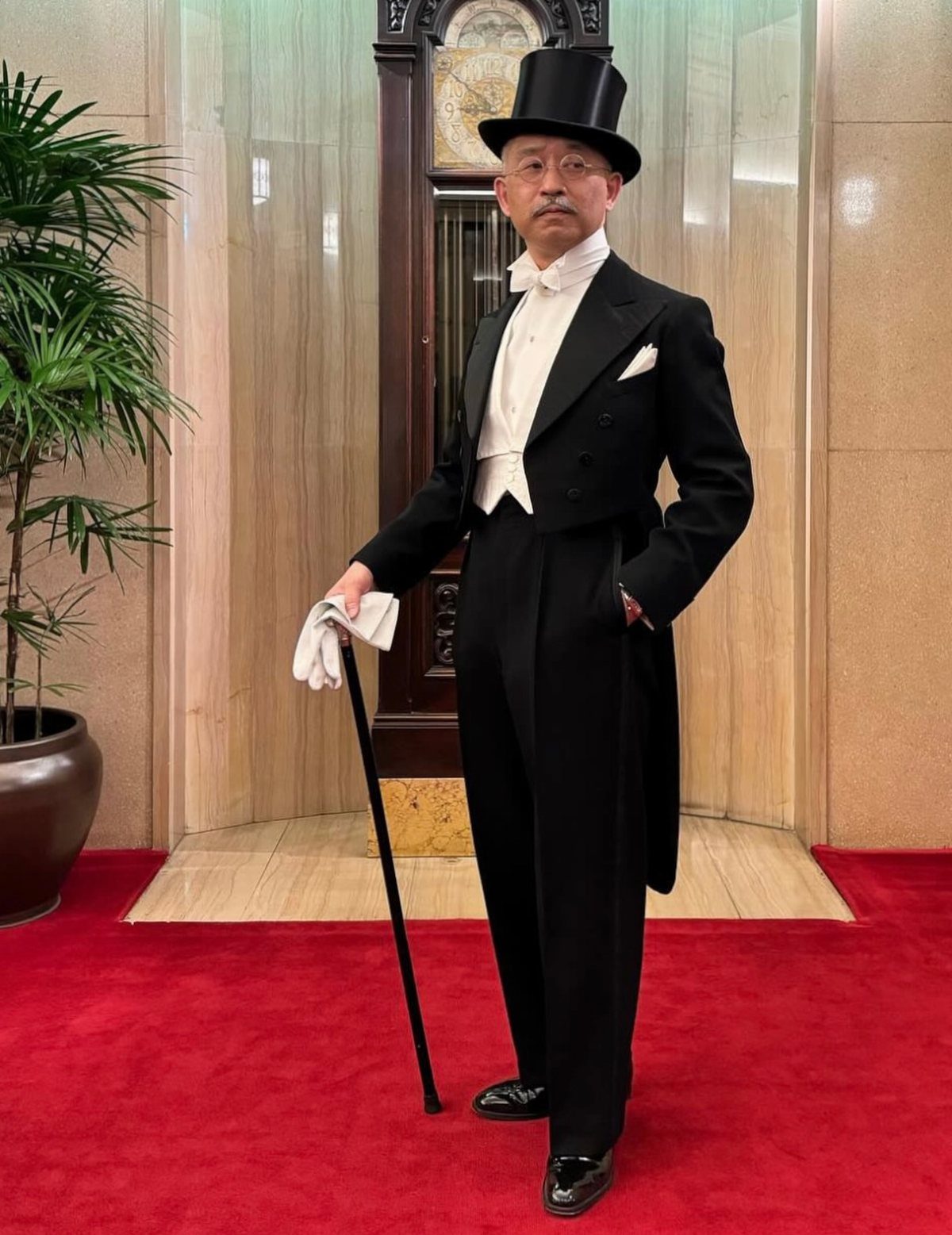
Top hat, black tailcoat, white waistcoat, white bow tie: white tie is the most formal dress code a man will meet, and the cane is optional polish rather than a requirement.
Rent it unless invitations like this show up yearly.
The pieces are specific, and a tailcoat that fits across the shoulders matters more than any accessory. Keep the waistcoat white and the bow tie white, since a black one reads as black tie, which is a different code.
2. Black Tie Attire
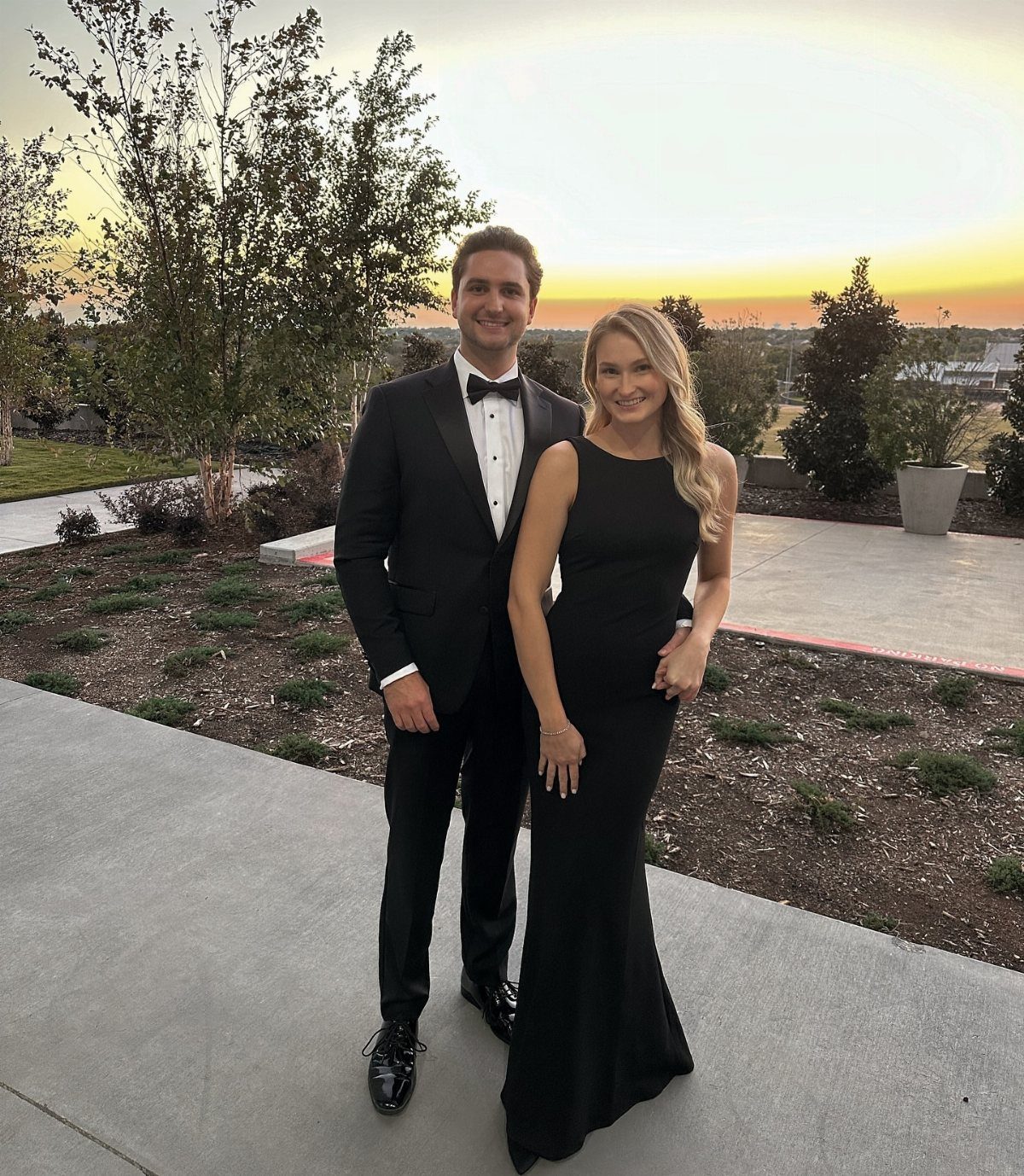
Black tie is a formal dress code, and a black tuxedo with a matching bow tie covers it without fuss.
I would spend the money on fit before anything else.
Sleeves should show a sliver of shirt cuff, and trousers should skim the shoe. A black tuxedo also pairs easily with a partner’s dark evening dress, so the two of you look intentional side by side.
Skip the long necktie. The bow tie is what makes the outfit read as a tuxedo.
3. Deep Greens and Browns Suits
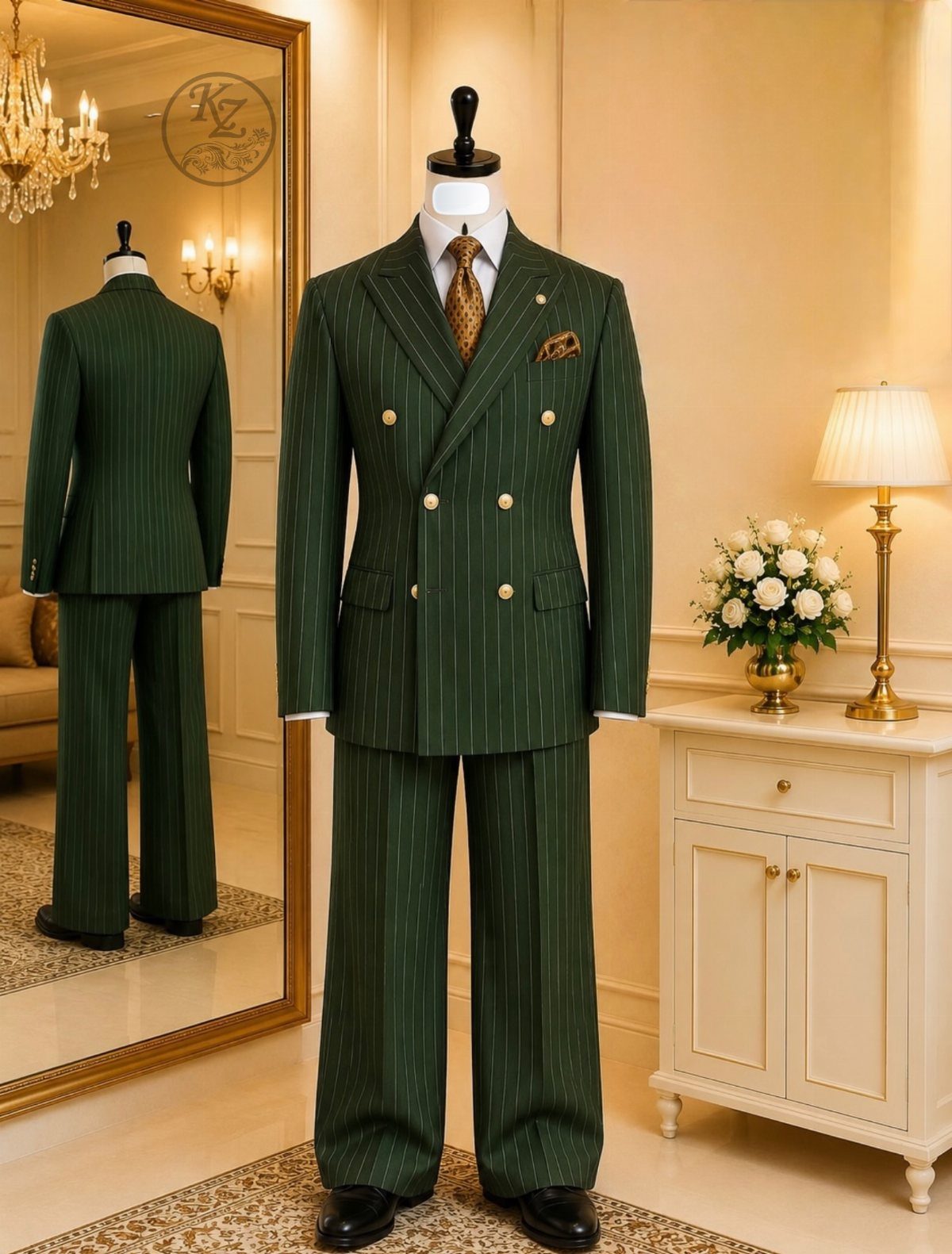
Olive and dark green suits with a pinstripe, paired with a gold or brown patterned tie, are a good way to leave navy and charcoal behind without looking costume-ish.
Keep everything else quiet. A white or pale shirt lets the suit carry the color, and the tie should sit in the same warm family: gold or brown, as here.
A double-breasted cut adds formality, so this works for events where a plain dark suit feels too expected.
Brown shoes suit green; black can look harsh against it.
4. Classic Dark Formal Suit
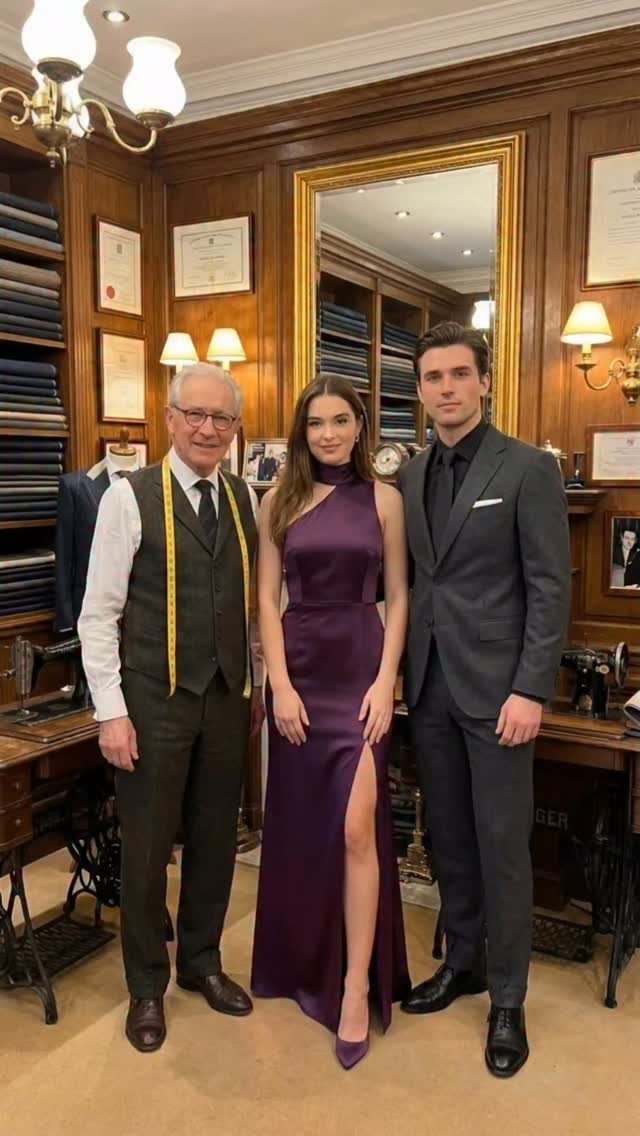
A dark suit and tie is the safest formal choice I know, and a tailor is what makes it look expensive.
Buy off the rack if you must, but have the sleeves, hem and waist adjusted.
That small cost changes how a basic suit sits more than any upgrade in fabric. Keep the tie simple, in a solid or a modest pattern.
It suits weddings, business functions and any invitation that says only "formal," where standing out is not the aim.
5. White Dinner Jacket Tuxedo
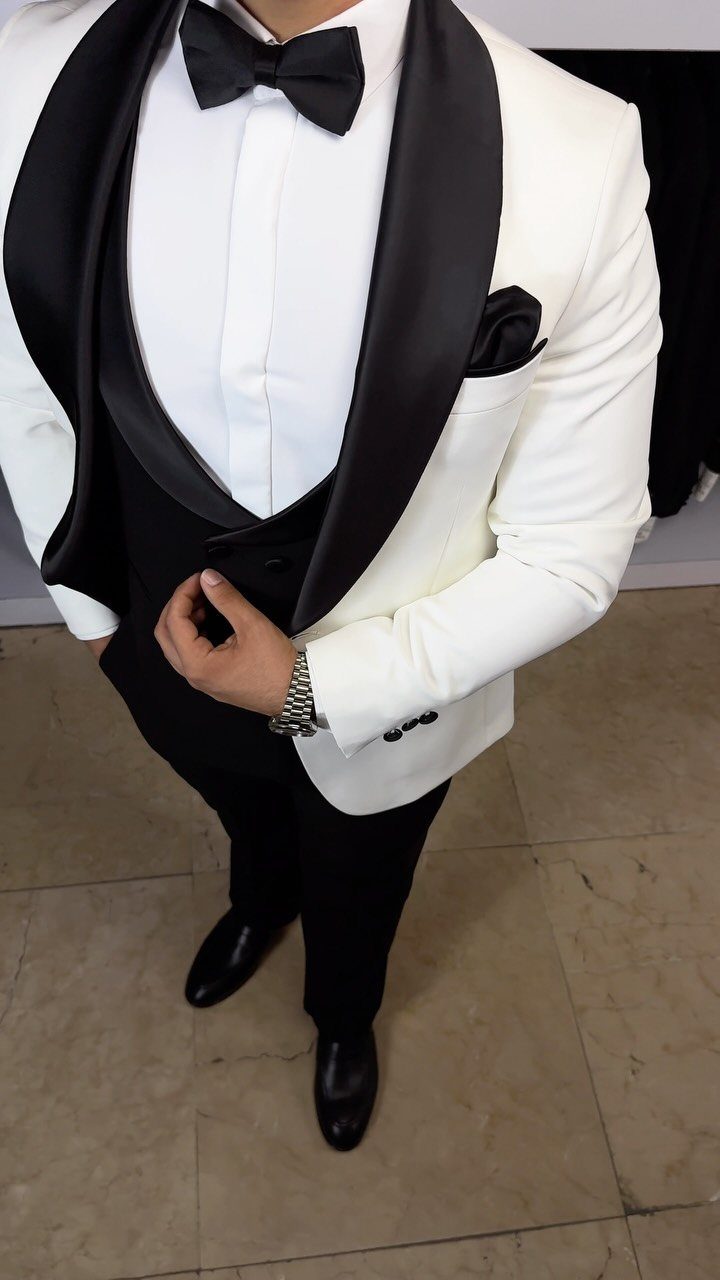
White dinner jacket, black shawl lapels, black bow tie, black trousers: the contrast is the whole appeal, and it reads as warm-weather formal.
Polished black dress shoes and a black bow tie keep a white dinner jacket grounded, since the dark pieces frame the cream-white cloth and stop the outfit from reading like a costume.
Keep trousers dark and plain so the jacket stays the single bright piece. I would choose it for summer or evening events where black tie is expected and a black jacket would feel heavy.
White shows every smudge, so dry clean before and after, and keep drinks at arm’s length.
6. Grey Double-Breasted Suit
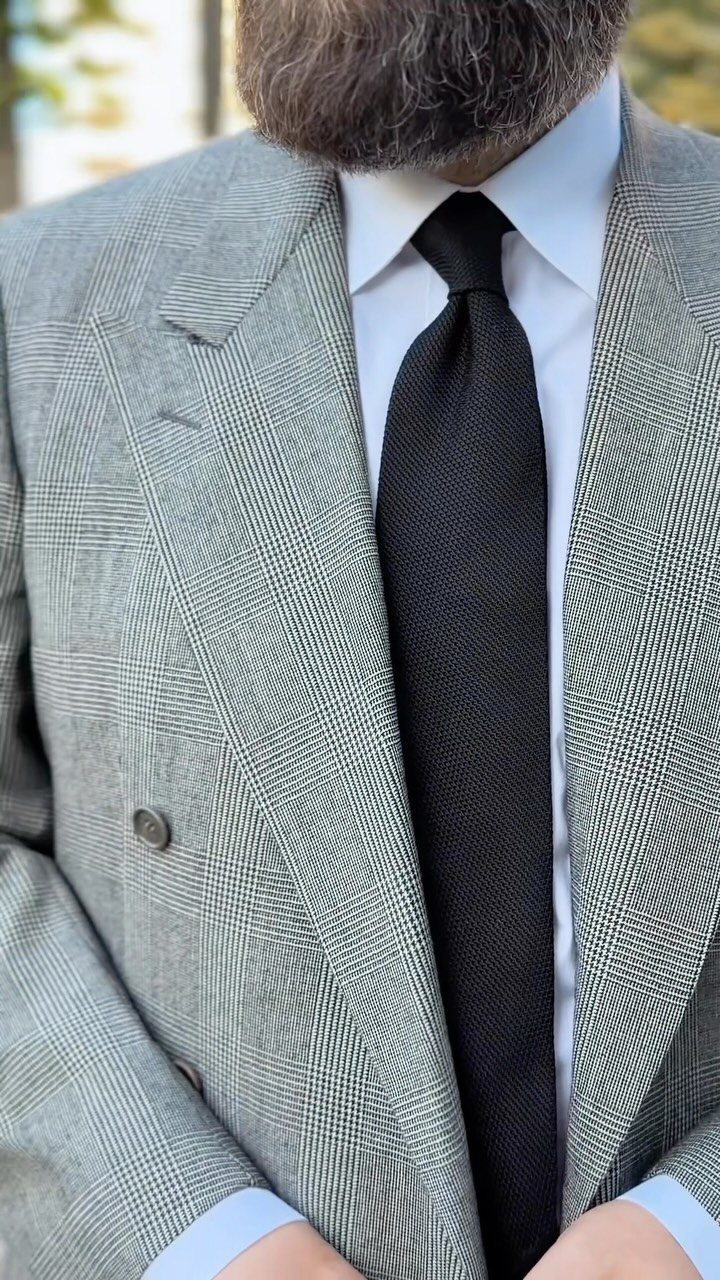
A grey Glen plaid double-breasted suit does what a plain charcoal suit cannot: it has presence before you say a word.
Keep the rest of the outfit disciplined.
A crisp white shirt and a textured black tie, both solid, let the pattern lead. Button the jacket when standing and keep it fitted through the chest, since double-breasted cuts punish looseness.
It is a bolder pick than a solid dark suit, so I would save it for events where some personality is welcome.
7. Tan Blazer with Black Trousers
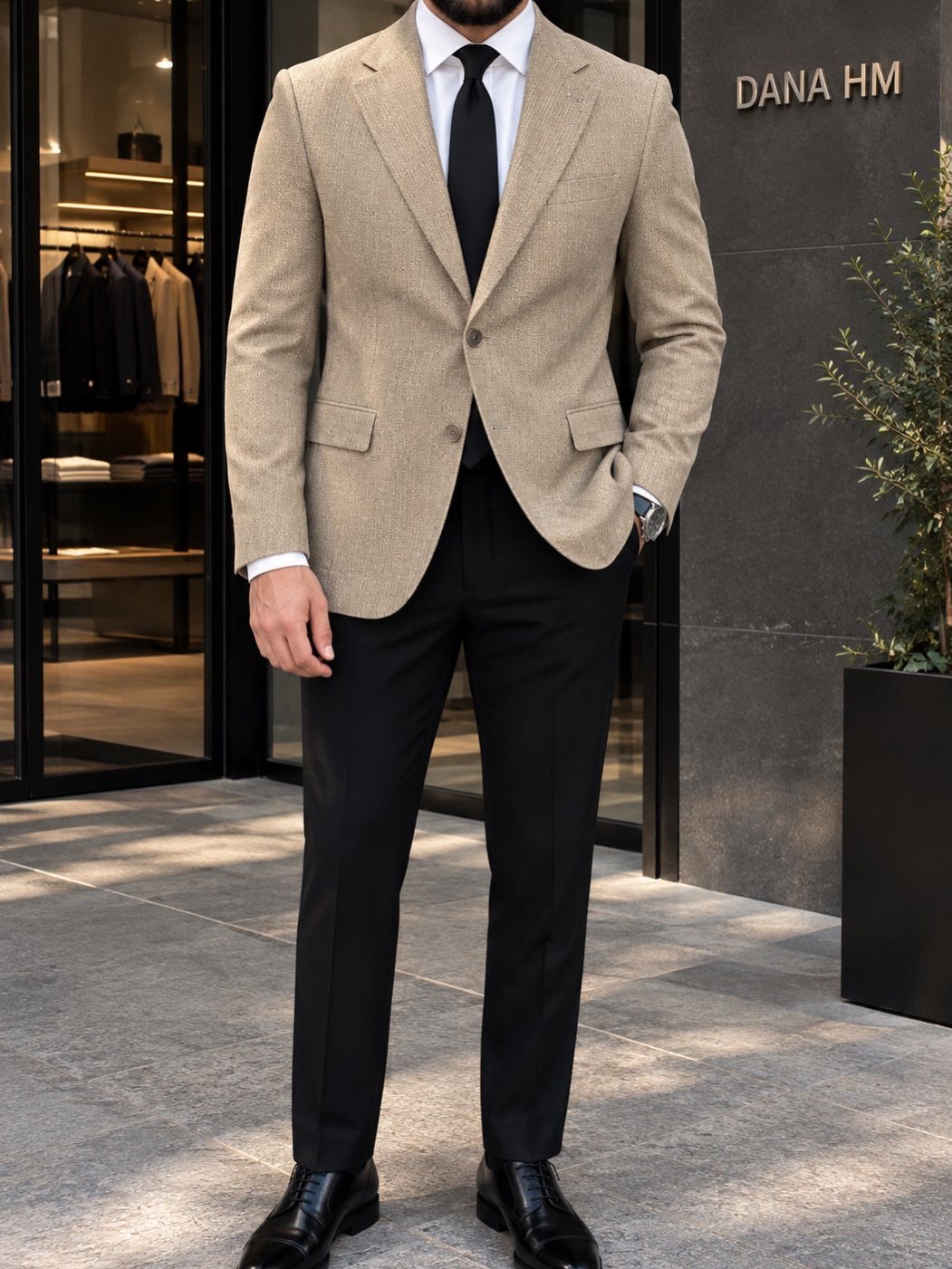
A tan textured blazer over black trousers is the easiest way I know to break up a dark-heavy formal wardrobe without losing sharpness.
Anchor it with a crisp white shirt and a black tie, as here, so the blazer is the only light color in the outfit.
The black shoes should be polished, since they tie the trousers and tie together. Texture lets the tan read as dressed rather than casual.
This is a step below a full suit, so I would choose it for business functions or a smart daytime event, and a dark suit for anything stricter.
Have the sleeves and shoulders fitted; a tan jacket shows poor fit more than a dark one does.
Understanding Dress Codes
Written dress codes at work are common, but social ones are rare and usually run one or two words on an invitation. Guests are expected to read them correctly, and plenty of men don’t.
You can skip the tie at this level, and the shoes can lean dressy or casual, as long as they’re clean and polished.
When the invitation doesn’t spell out the dress code, a quick text to the host settles it. A one-line question beats guessing wrong in either direction.
Rental Process for Formal Wear
Start early. Fittings for a rented tuxedo or suit can stretch over weeks, so book as soon as the date is set rather than the week before.
Go in person for the first fitting, with the shoes and shirt you plan to wear. Rental sleeves and trouser hems are usually adjustable, so ask what the shop can change and what it can’t.
Check the details when you pick it up: jacket, trousers, studs, bow tie. Try everything on before you leave the store, since a missing piece is far easier to fix there than on the morning of the event.
Modern Trends in Formal Wear
Formal dressing has loosened up. The old formula of suit, shirt, tie, pocket square and smart shoes is no longer the only one, and designers have been pushing tailoring toward something less stiff.
For you, that means a suit no longer has to behave like office uniform. At some events you can drop the shirt or the tie and still look dressed.
I would still treat weddings and any invitation that names a code as the place to follow the code. Relaxed works best when the host has signaled that it’s welcome.
Frequently Asked Questions
Does formal attire require a suit?
Yes, in most cases. When the invitation just says formal, I’d reach for a dark suit and tie; if it says black tie, that means a tuxedo and a matching bow tie.
Loosening up by skipping the tie is fine only after the host has made it clear the evening is relaxed.
What is the dress code for formal business attire?
Formal business attire means a matched suit, ideally dark and either solid or pinstriped. For a daytime social event there’s some room to move, and a lighter gray or a dark brown suit can work.
What is the difference between white tie and black tie?
White tie is the most formal code: a black tailcoat, white waistcoat and white bow tie, with a top hat if you want it.
A black bow tie on a tailcoat outfit reads as black tie, so keep the white one for white tie.
What can I wear to a formal event instead of a black suit?
An olive or deep green suit with a pinstripe looks good with a white or pale shirt and a patterned tie in gold or brown.
A gray Glen plaid double-breasted suit is another option when some personality is welcome. Brown shoes sit better with green; black ones can look stark against it.
Can I wear a white dinner jacket to a formal event?
Yes, for summer or evening events where black tie is expected and a black jacket would feel heavy. Pair it with black trousers, a black bow tie and polished black dress shoes so the jacket is the only bright piece.
Should I rent or buy formal wear?
Unless white tie invitations arrive every year, I’d rent, because the pieces are so specific and a tailcoat has to fit cleanly across the shoulders.
Reserve the rental the day the date is set, since fittings can drag on for weeks. Try everything on at pickup, including the jacket, trousers, studs and bow tie.
How do I know what dress code an invitation means?
Read the one or two words on the invitation closely, since guests are expected to interpret them correctly.





