Prices in this list run low to high: vintage accessories and a plain knit polo cost little, while a cashmere sweater, a tweed blazer and a double-breasted wool coat cost more.
Start from what you already own: if gray trousers or a navy blazer are in the closet, add one piece like a cashmere sweater or a trench coat in cream, beige or brown and the rest follows.
1. Navy Blazer
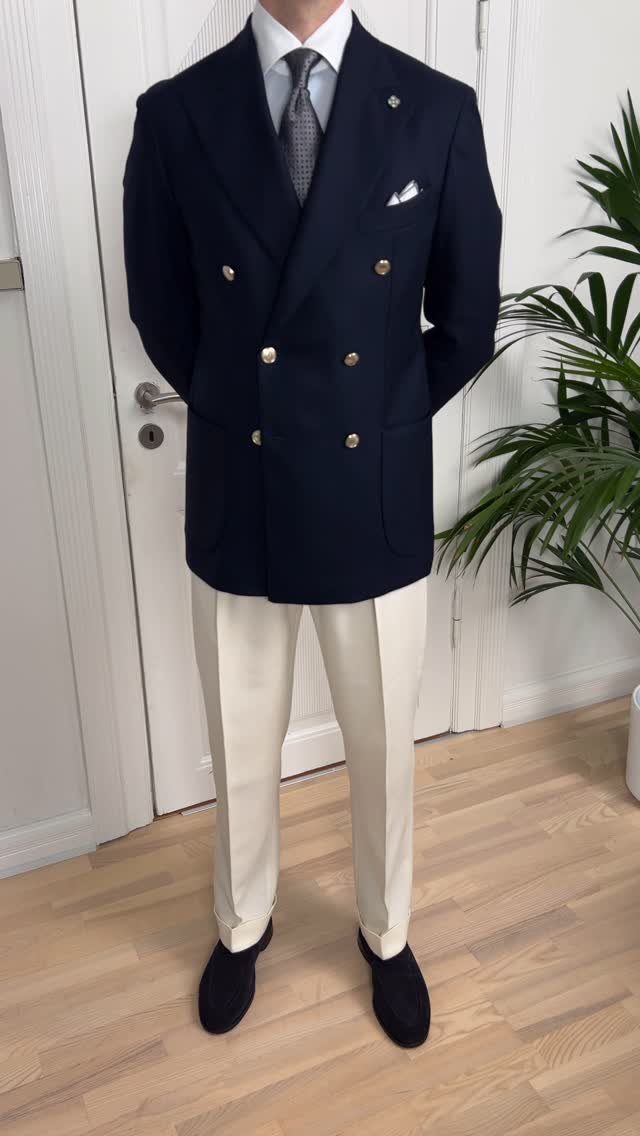
Double-breasted navy with gold buttons is the version I’d pick: it reads dressed up without a full suit. Cream trousers with cuffs keep it light, and dark suede loafers ground the pale bottom half.
The maker of this look paired it with a white-and-blue contrast collar shirt and a grey tie with a subtle blue pattern. Wool pleated trousers in off-white are a good alternative to cream if you want a softer, warmer tone.
Wear grey socks to link the tie and the shoes.
2. Trench Coats
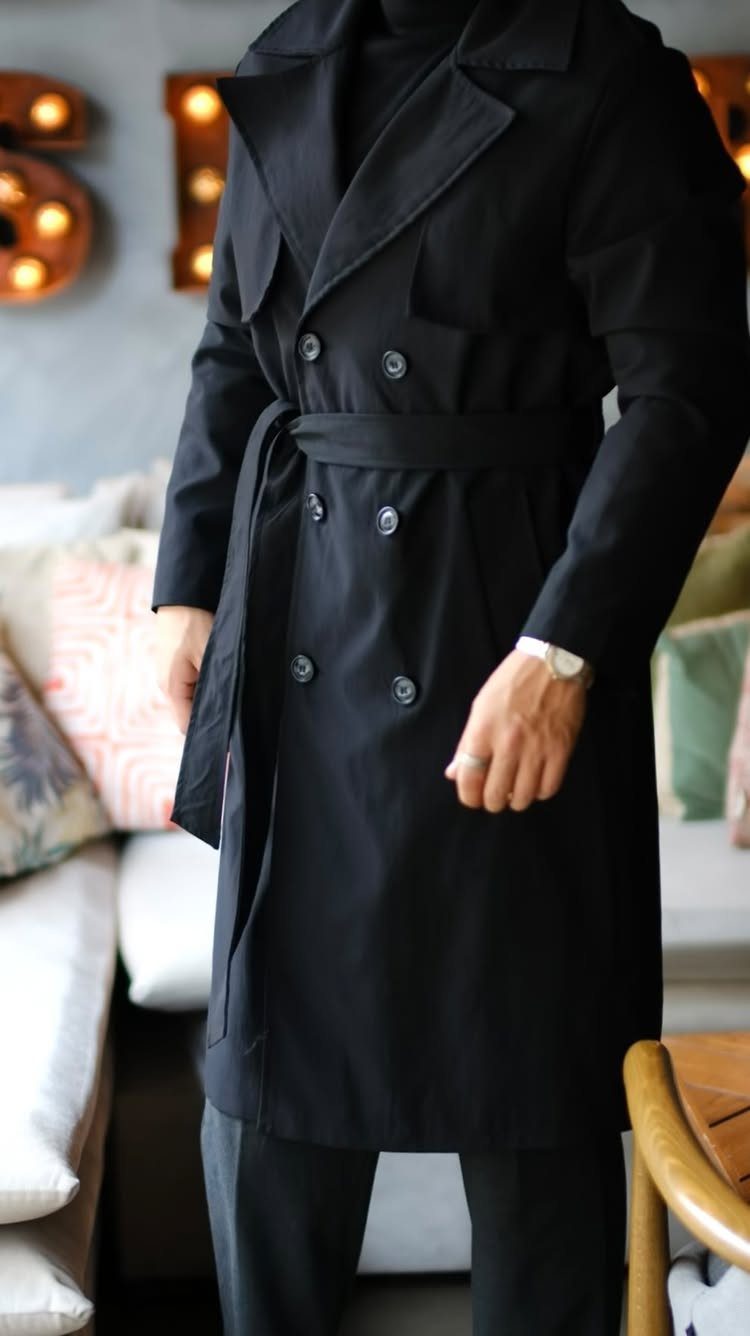
A belted black trench in a double-breasted cut works as the outer layer over almost anything underneath. Dark trousers keep the line long and clean, and a wristwatch is all the extra detail it needs.
Cinch the belt at the waist for shape, or leave it loose and tied behind if you want a relaxed drop.
Black is stricter than the classic tan, so I’d keep everything under it quiet: a plain knit, a simple shirt.
Budget tip: buy the coat first and build the outfit under it.
3. Tweed Blazer
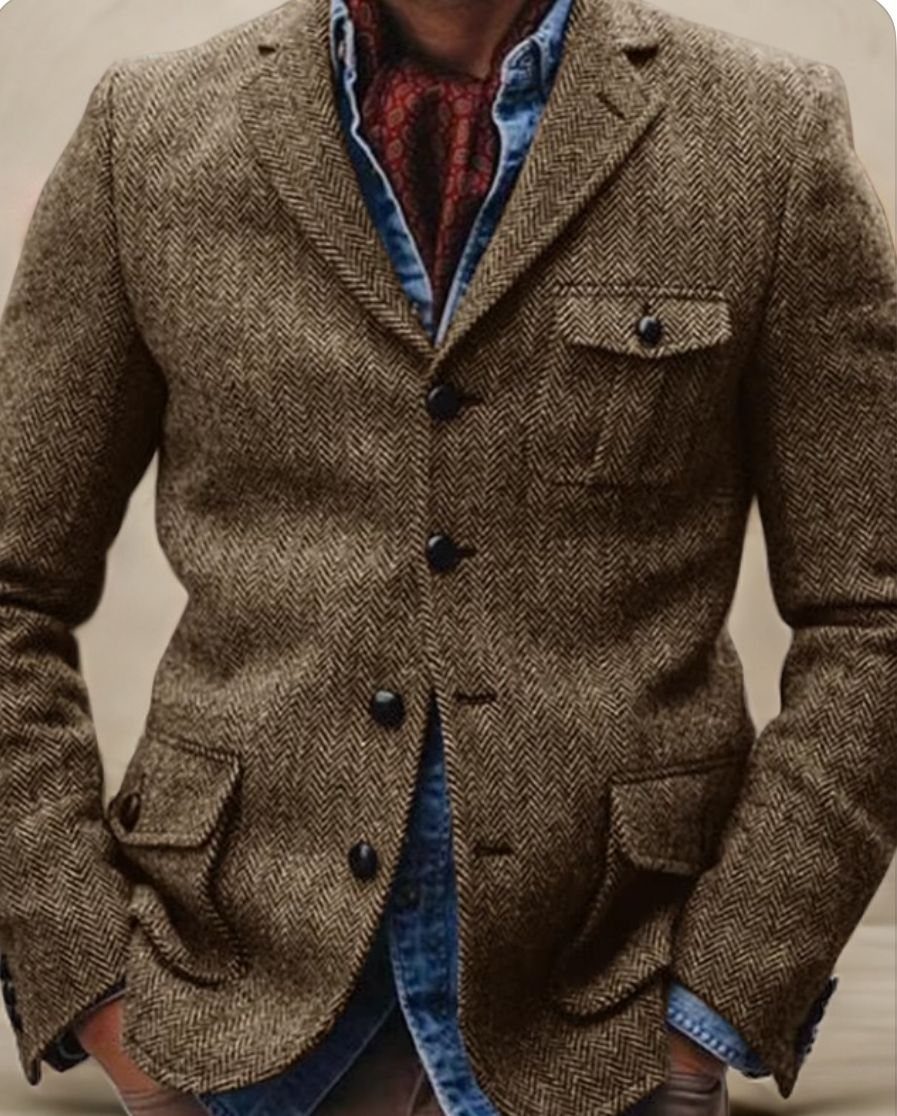
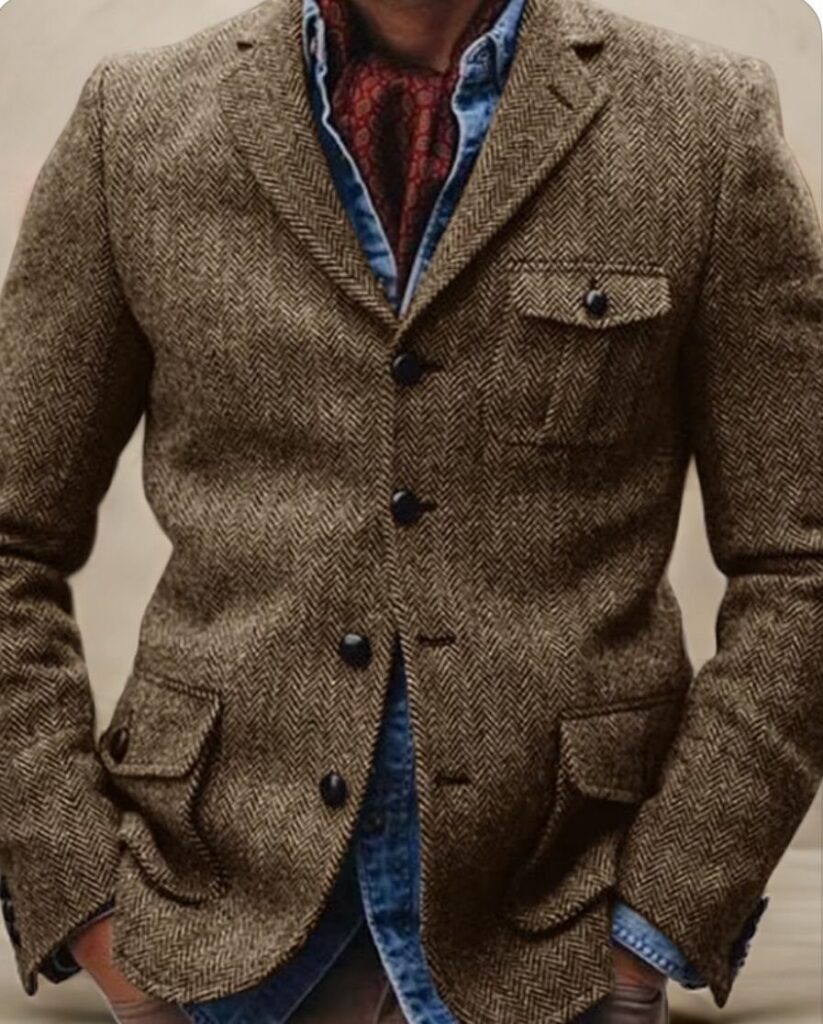
Brown herringbone tweed has texture that does the work, so the rest of the outfit can stay plain. A denim button-down underneath relaxes it, which makes the jacket easier to wear on an ordinary weekday.
The red patterned ascot at the neck is the bolder move. It adds old-school color, but a simple knit scarf or an open collar gets you most of the way for far less effort.
I like this pairing because it uses one loud texture and keeps the shirt humble.
4. Tailored Trousers
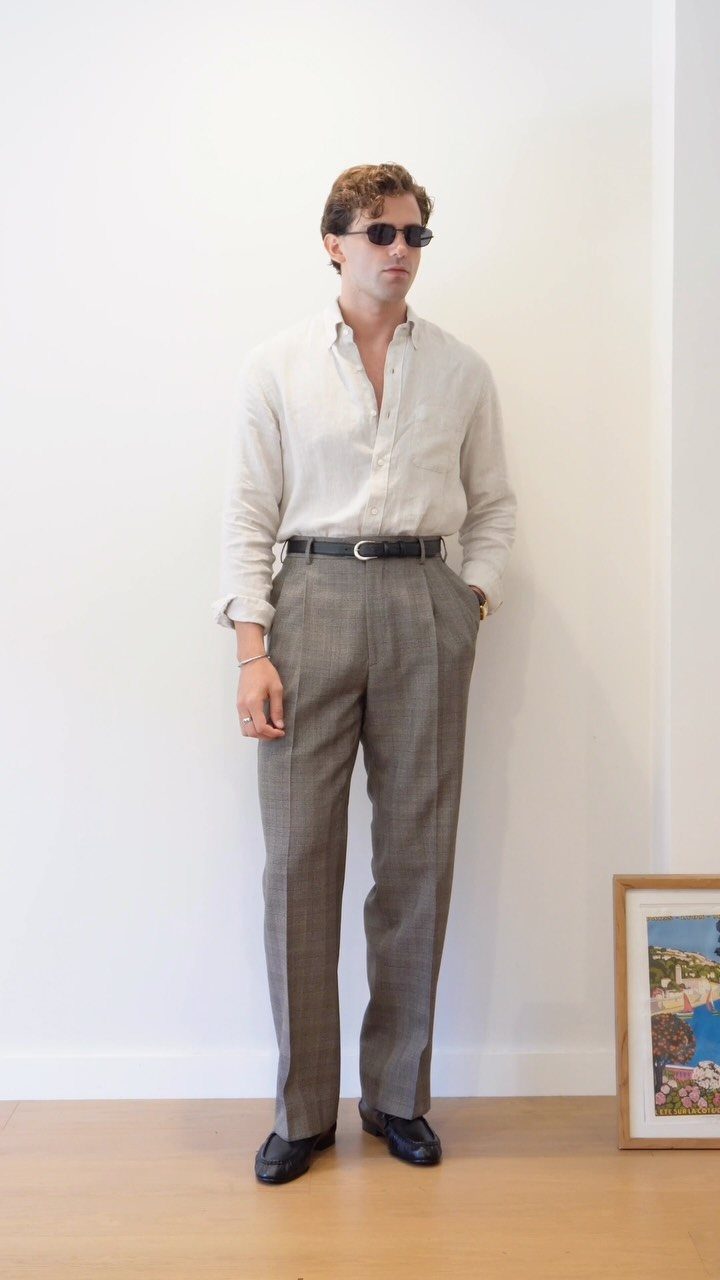
High-waisted pleated trousers in gray, held up with a belt, change how everything above them sits. The extra rise lengthens the leg and gives a loose shirt a clean place to end.
Here an unbuttoned linen shirt keeps things easy, and black loafers finish the line. Tuck the shirt for work, leave it open over a tee on a weekend.
A pair of gray trousers is one of the cheaper ways into this style, and plaid or plain, they mix with nearly everything already in your closet.
5. Cashmere Sweater
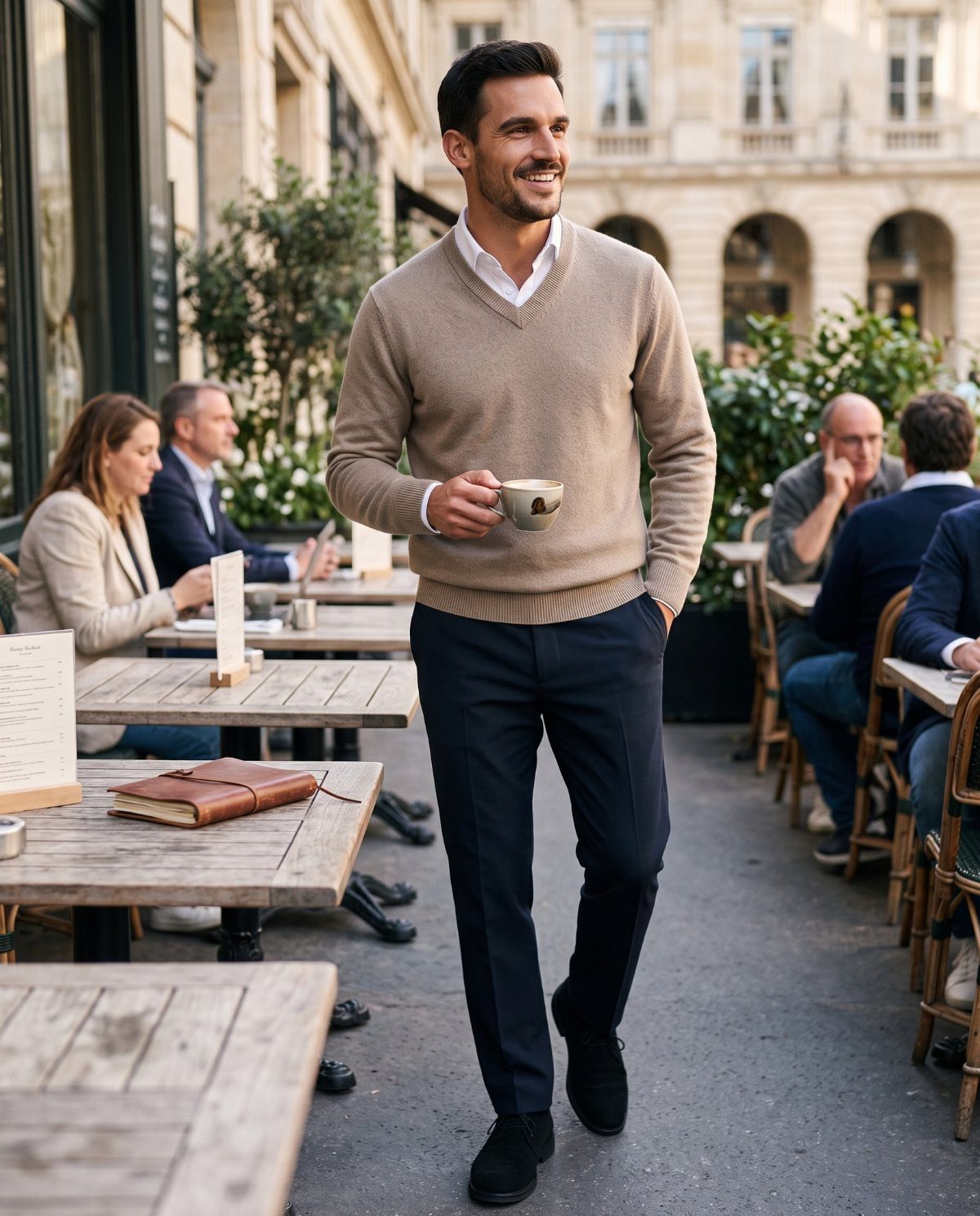
Beige cashmere in a V-neck over a white collared shirt is about as quiet as luxury gets. Navy or dark trousers below keep the palette calm, so the sweater’s soft texture is the only thing that stands out.
Let the shirt collar sit neatly at the V. It gives you the look of a layered outfit without adding bulk, and it works from office to café.
Cashmere costs more than wool, so one good neutral sweater beats three cheap ones.
6. Vintage Accessories
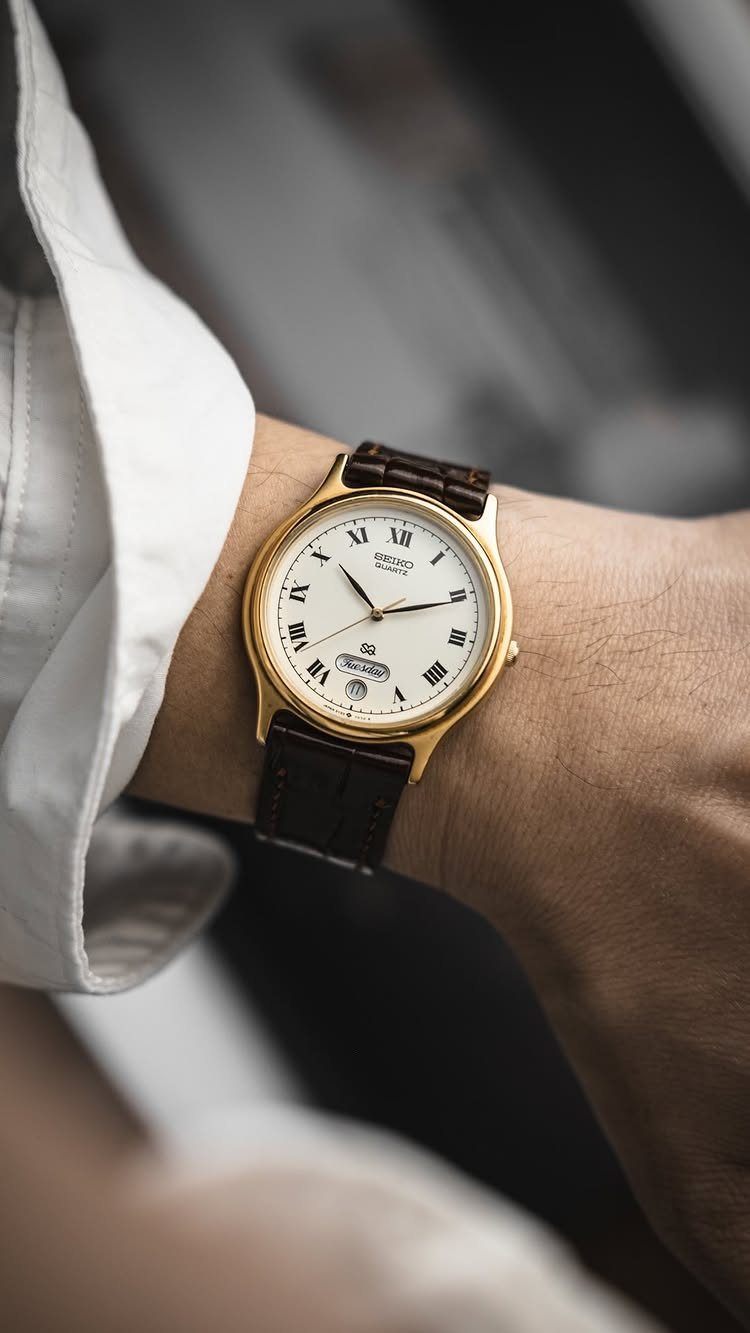
A thin gold-tone watch with a white dial, Roman numerals and a brown leather strap says more about taste than any logo, and it works because nothing on it is trying to be noticed.
A quartz movement, like the Seiko seen here, keeps the price down and the look intact.
Let the cuff of a white button-up sit just past the watch case, so it peeks out as you move. Match the strap to your belt and shoes for a cohesive finish.
Secondhand and vintage-style pieces cost less, and small scratches only add character.
7. Ribbed Knit Polo
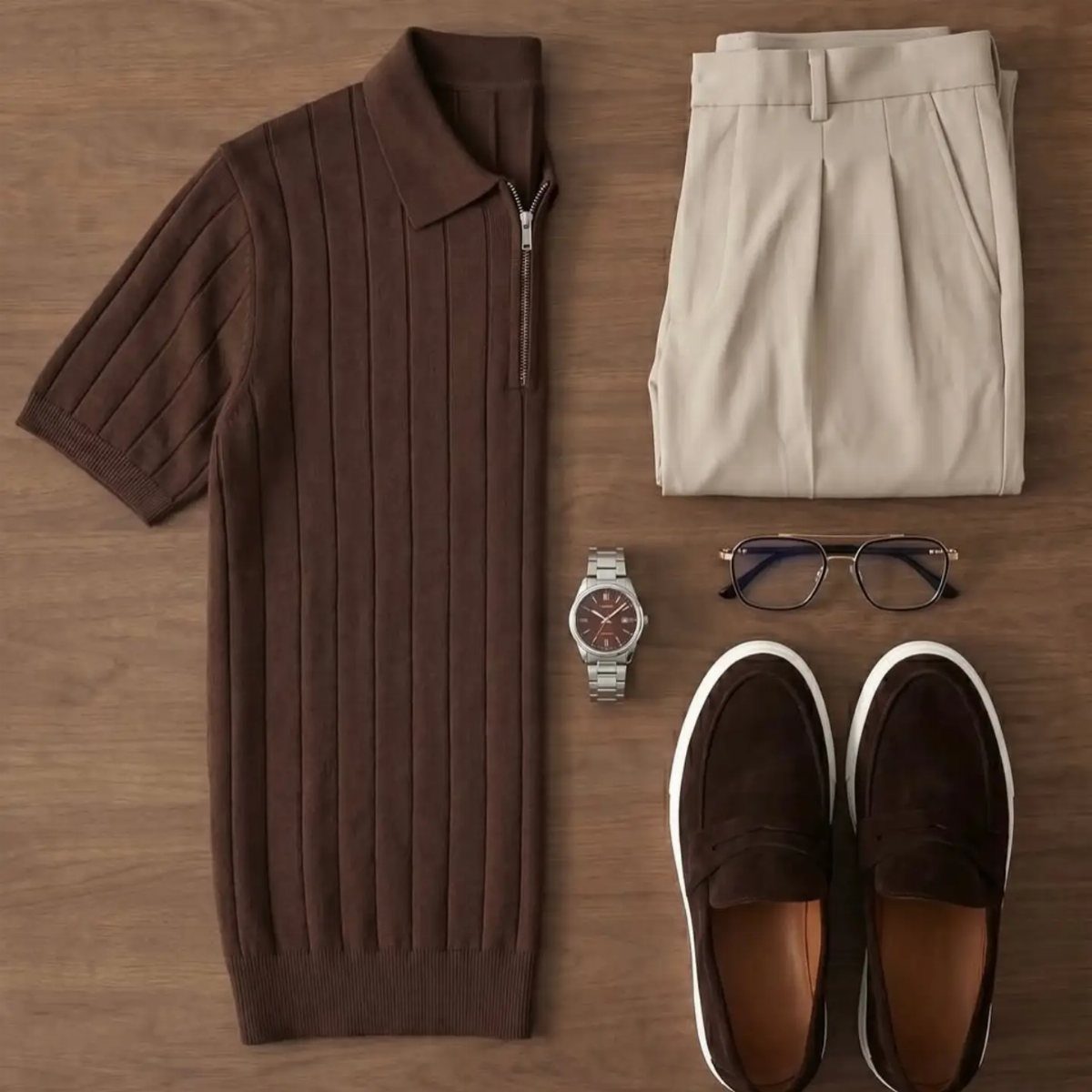
A short-sleeved ribbed polo with a zip placket sits between a tee and a dress shirt, and brown is the color I’d pick. Beige pleated trousers and brown suede loafers stay in the same warm family, so nothing fights.
Ribbing gives the knit some texture without a pattern.
Keep the trousers a shade lighter than the polo, and the look reads as one calm line from collar to shoe.
8. Draped Sweater Over Striped Shirt
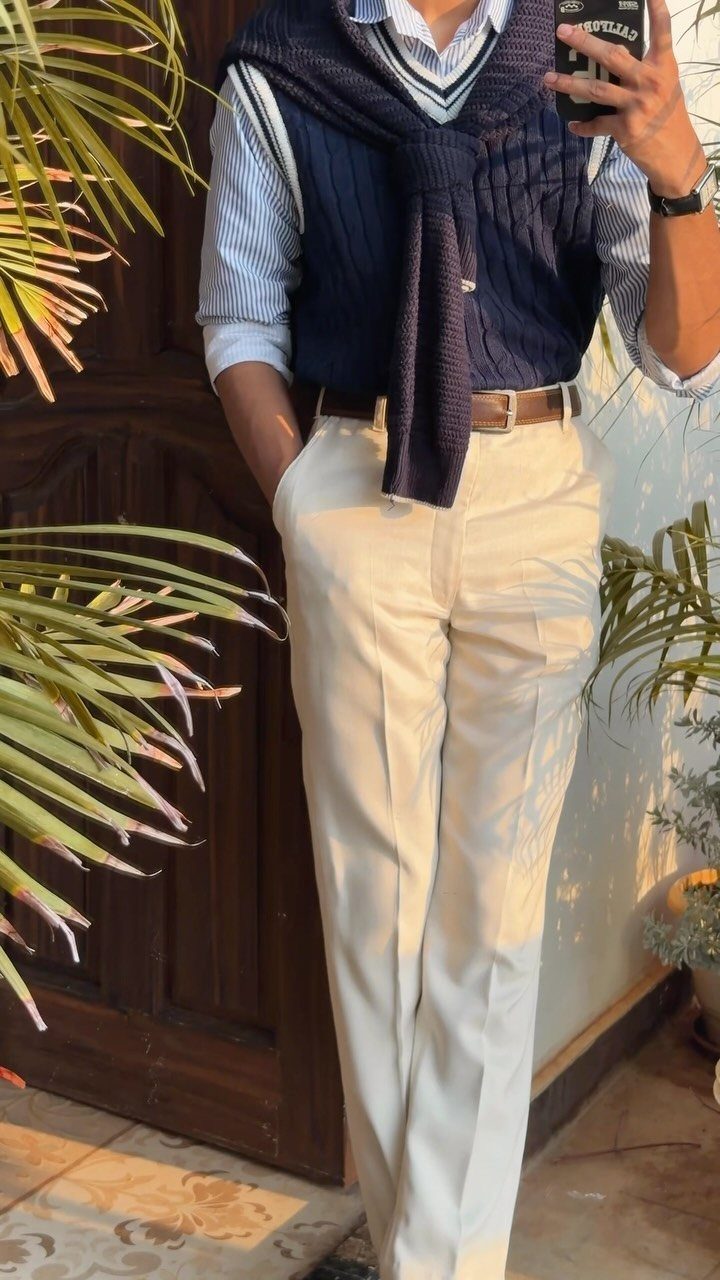
Tie the sleeves of a navy sweater loosely across the chest, and a plain striped shirt starts to look planned. Tuck the shirt into tailored cream trousers and add a brown belt so the waist stays clean.
A sweater vest under the drape, as seen here, is a layer I’d skip unless it’s cool out. 2 knits on top can crowd the shirt.
Drape it, don’t knot it tight. The sweater should look like it was set there, not strapped on.
9. Double-Breasted Wool Coat
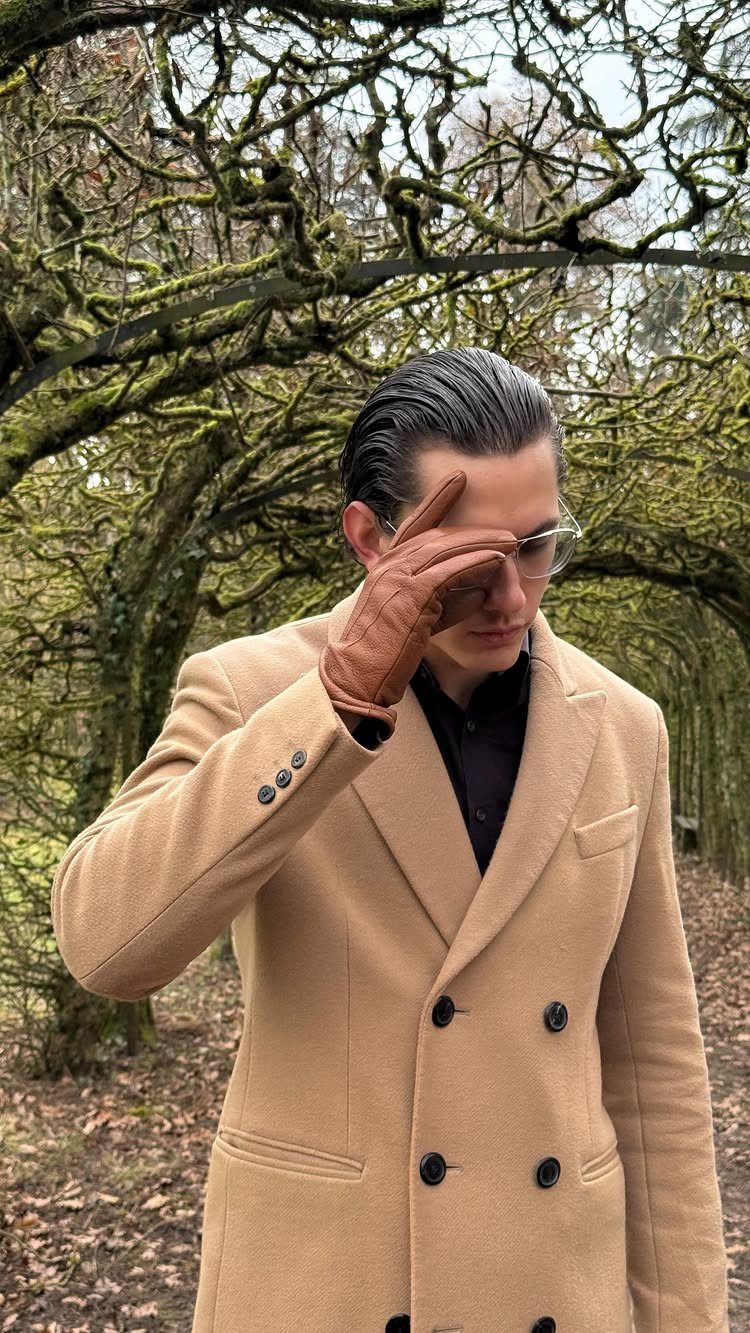
A tan double-breasted wool overcoat is the piece I’d spend on first for cold months. The wide overlap of the front looks formal on its own, so the rest can stay simple.
Brown leather gloves match the coat’s warm tone, and they’re a cheap way to finish it. Glasses are optional, but they suit the look.
Under it, wear dark trousers and a plain knit. Button the coat when you stand still, and leave it open when you walk.
10. Linen Seaside Outfit
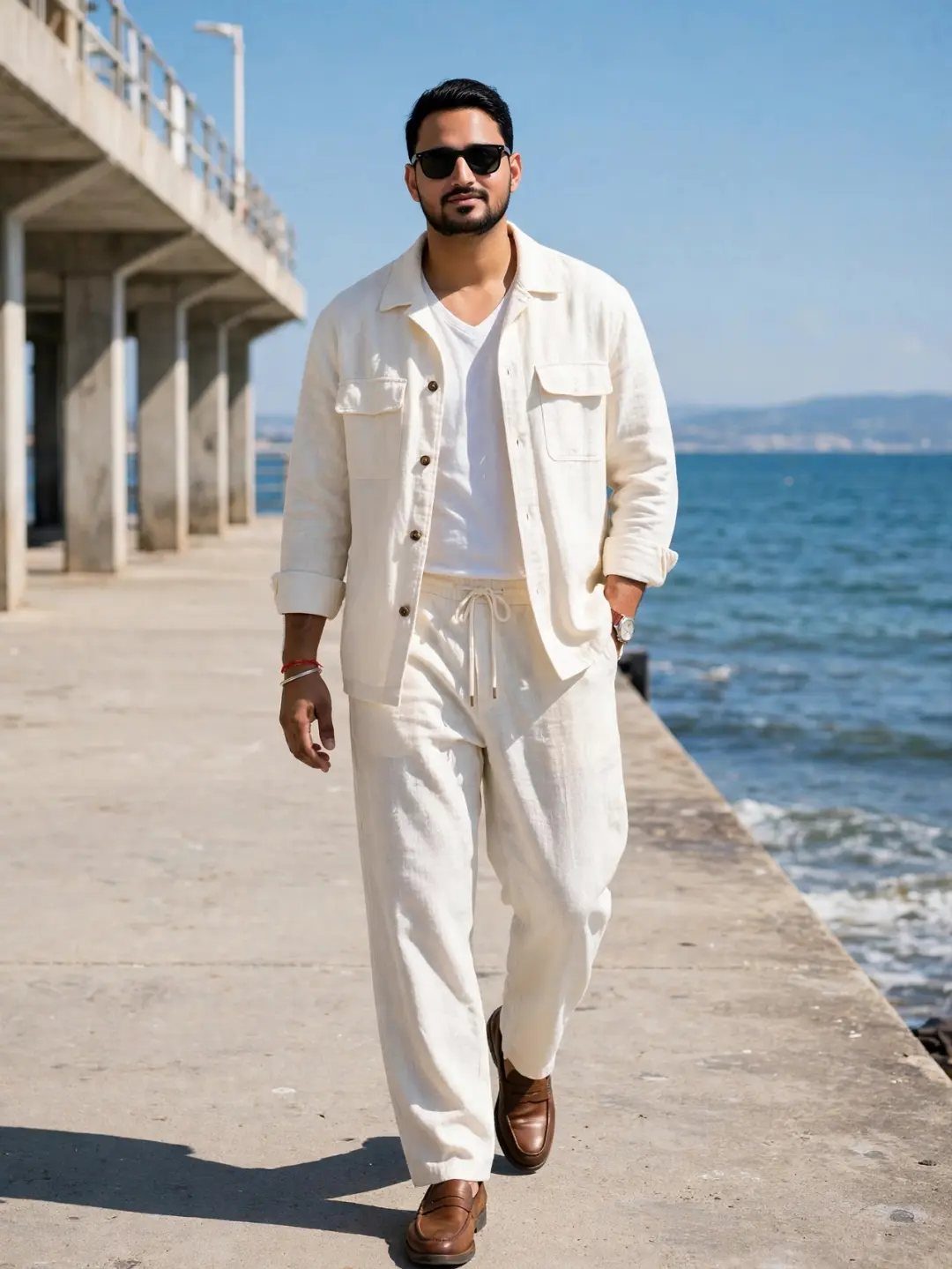
Matching cream linen in a loose overshirt and drawstring trousers looks deliberate because the color is the same top to bottom. A white tee underneath keeps the open shirt from looking like a beach cover-up.
Brown loafers make it dressier than sandals, and sunglasses finish it. Linen wrinkles, and I’d accept that rather than fight it; the creases are part of the look.
Wear it somewhere warm, and choose a shade of cream over bright white if you want it to feel softer.
11. All-White Shirt and Trousers with Fedora
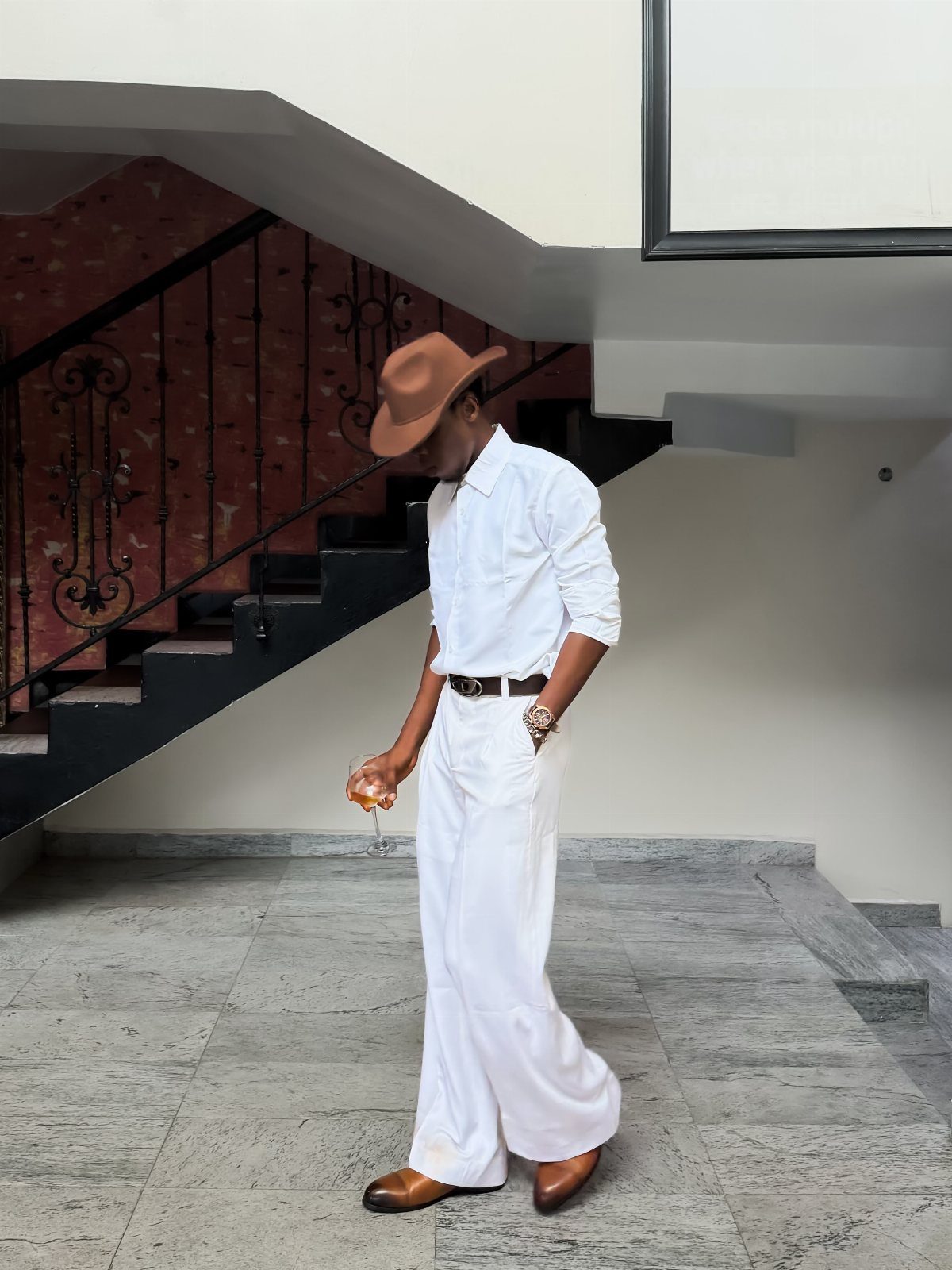
White on white only works when the pieces have different shapes: a crisp collared shirt over wide-leg trousers gives the outfit its depth. A brown belt and brown dress shoes break up the white without adding noise.
The wide-brim brown hat is the loudest piece here. Keep it the same shade as the leather, so the three browns read as one choice.
Tuck the shirt in and press both pieces first; wrinkles show more on white than on any other color.
Building an Old Money Wardrobe
Buy fewer pieces and make sure each one works with the rest. A wardrobe of 10 items that all mix beats 30 that each need a special partner.
Fit comes before price. A modest jacket that sits right on the shoulders looks better than an expensive one that doesn’t, and a tailor can fix most of the rest.
Keep the palette to cream, beige, brown and navy, then fill it with plain shirts, a handful of good knits, tailored trousers, one blazer and leather shoes. Skip logos, since they date a piece and tie it to one outfit.
Start small and buy on purpose. Impulse purchases are what clutter a closet, and a piece you’ll wear for years is worth the extra spend.
Old Money Vs. New Money
The easiest test is whether anyone can tell the brand from across the room.
Old money style leans on neutral, muted colors, little or no visible logo, classic tailoring and good materials. New money leans on bright, trendy colors, large logos and statement pieces that put the brand first.
Neither approach is wrong; they’re different priorities. Clothes that look as good years from now as they do today are where old money style beats almost everything else.
You also don’t need old money to wear it. Quality fabric, clean tailoring and restraint do the job, and they cost less than a wardrobe of loud labels.
Accessorizing Old Money Outfits
Choose one or two pieces and stop. Too many accessories crowd an outfit, and the look depends on restraint.
Gold generally beats silver here.
Belts should be thin, leather and matched to your shoes. A structured leather bag in tan, brown, black or burgundy works if you carry one, with no logos, charms or loud hardware.
A silk scarf knotted at the neck costs little and does more for an outfit than any other accessory. For sunglasses, pick tortoiseshell or plain black in a classic shape like wayfarer or round, and never mirrored lenses.
Frequently Asked Questions
What is the old money fashion trend?
Old money style is built on quality you can see in the cloth and the cut, with no logos doing the talking.
New money does the opposite, with bright trendy colors and large logos. A trust fund isn’t required; good fabric, a sharp fit and a willingness to skip the loud pieces get you most of the way there.
What is a classic fashion style?
Classic style is built from simple, well-cut pieces that look as good years from now as they do today.
Think blazers, tailored trousers, knits and leather shoes in muted colors, with no trend-driven details or loud logos. Restraint is what keeps these clothes from dating.





