Minimalist style for men runs from a pair of white sneakers and plain denim to a charcoal suit that covers an interview, a wedding and a funeral, and the piece that suits you is the one that fits what you already own.
Neutral colors like navy, white, black and beige mix with nearly everything, so I’d begin with the neutral you already wear most and build the outfit around it.
1. Basic White Sneakers
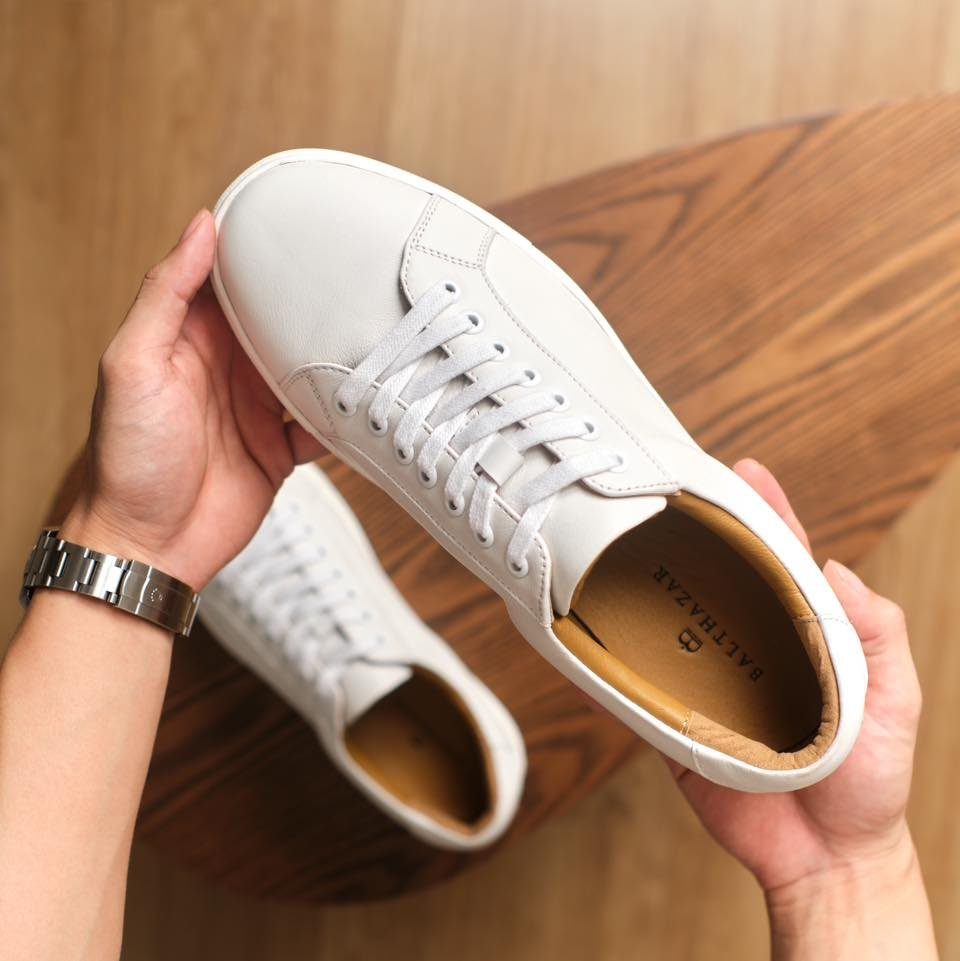
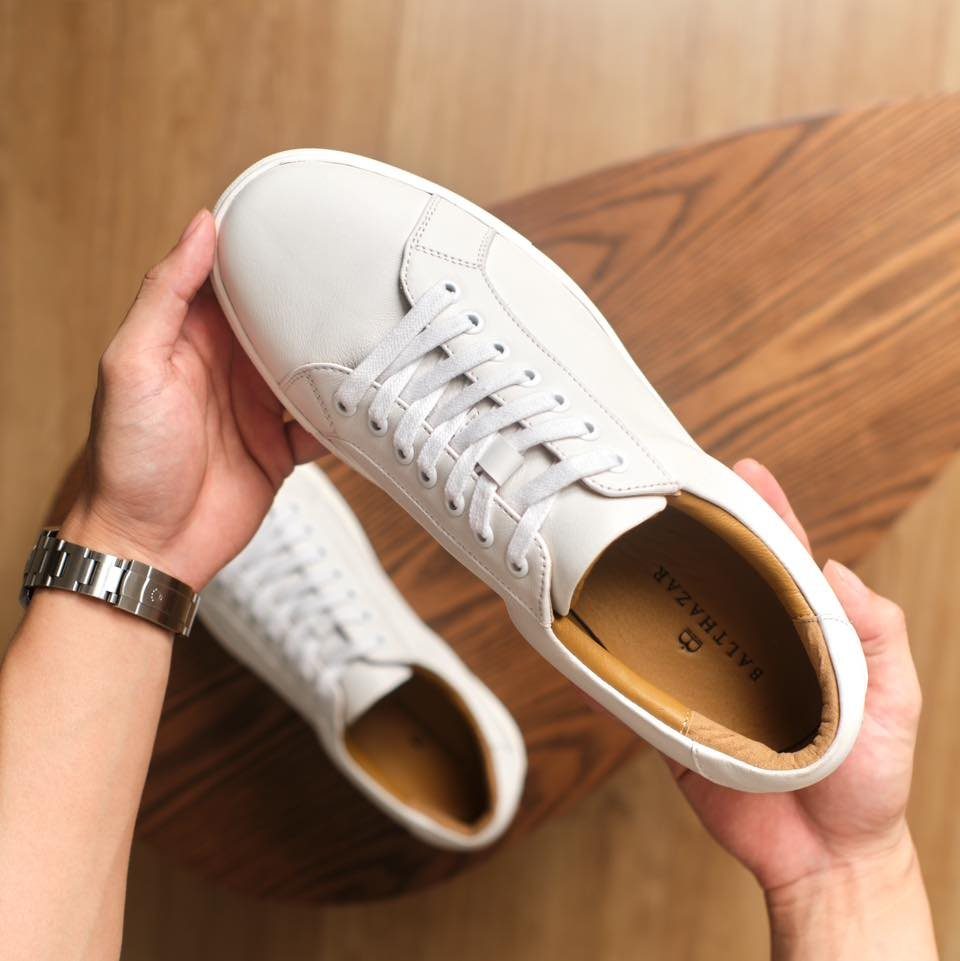
A plain white leather sneaker with no logo on the outside is the one pair that works with nearly everything: chinos, gray trousers, dark denim, even an unstructured blazer.
Smooth leather wipes clean in seconds, which matters because white shows every scuff.
Keep the upper plain and the sole slim.
Loud branding or chunky midsoles pull the eye down and away from everything else you have on, and a minimalist wardrobe has no room for that. I would buy one good pair before three cheap ones.
2. Denim
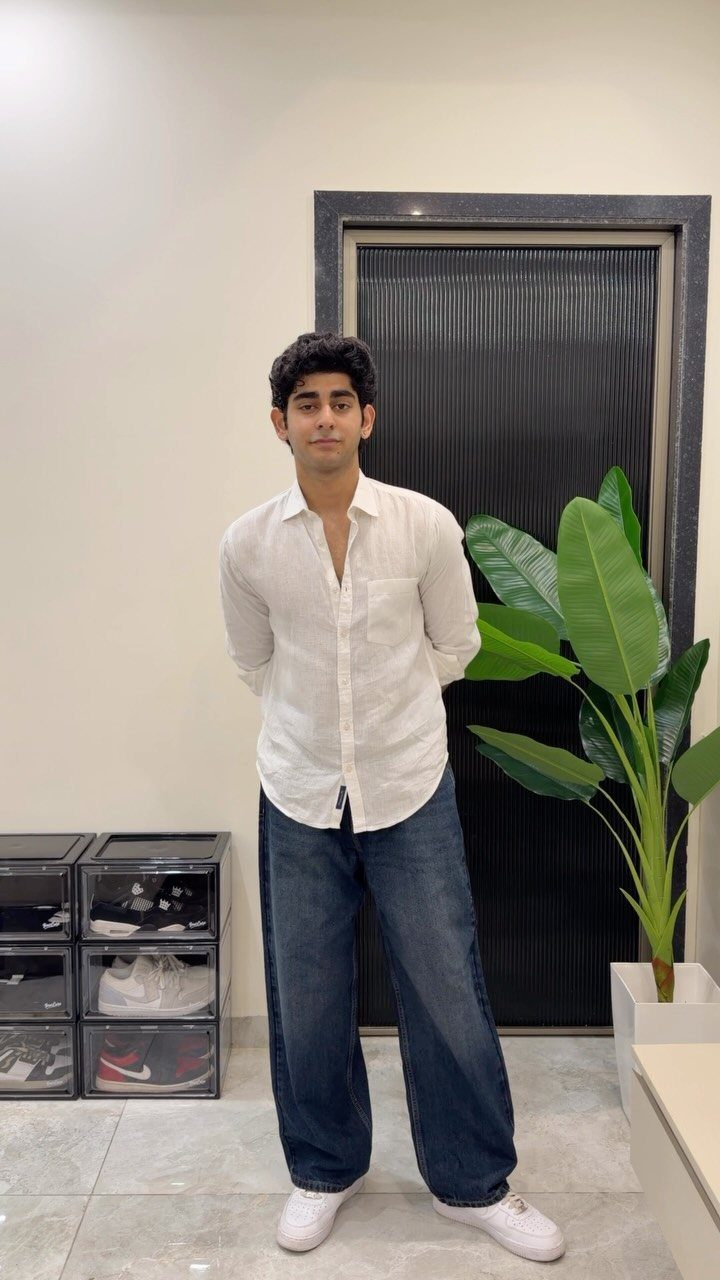
Wide-leg jeans in a mid blue are a smart place to start a pared-back wardrobe, since one pair works with almost any top you already own. A looser leg also reads more current than a skinny cut without trying hard.
Pair them with an untucked linen shirt and white sneakers, and the outfit is done.
Keep the wash plain: no rips, no heavy fading, no contrast stitching. Plain denim stays wearable for years, which is the budget argument for buying fewer, better pairs.
3. Sweaters
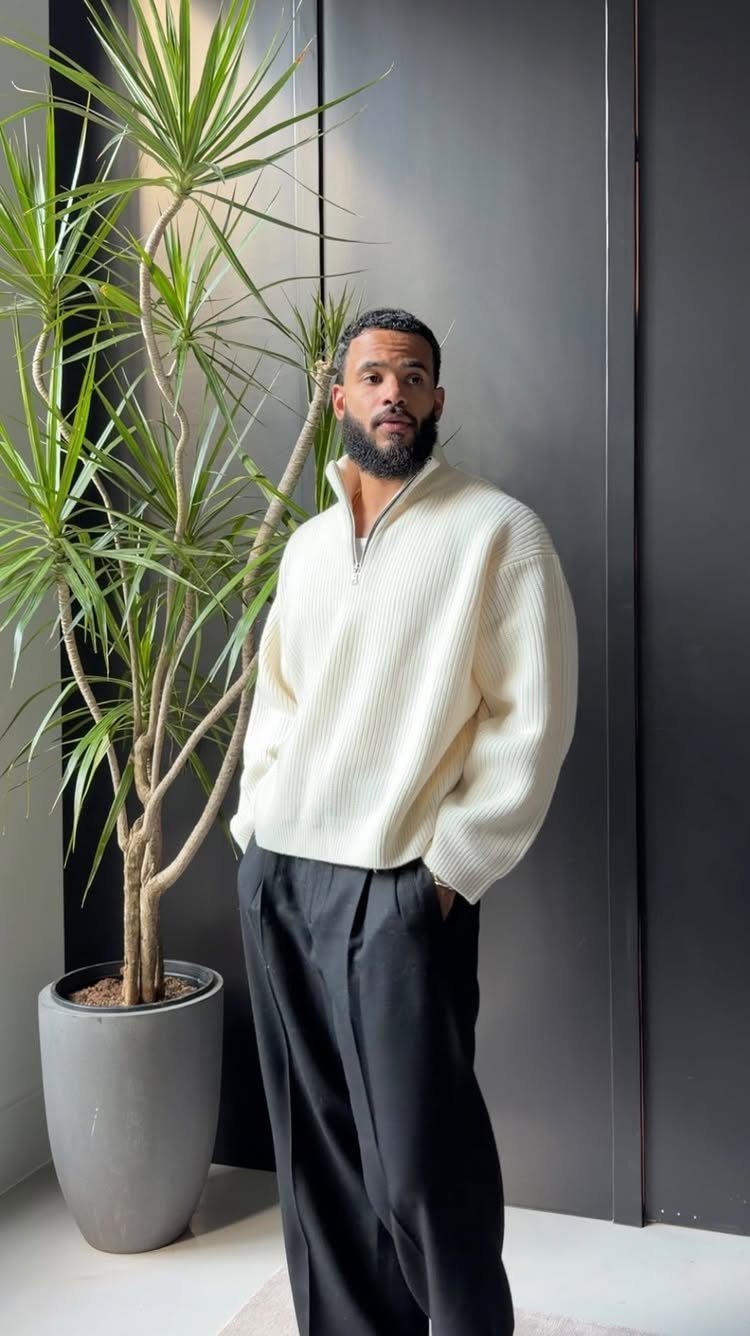
Texture does the work a pattern would otherwise do, and a ribbed quarter-zip is a good example. Cream knit against black pleated trousers gives you contrast without adding a single extra piece.
I like a slightly oversized fit here, because it drapes instead of clinging.
Choose a plain knit in one solid color so it mixes with trousers, jeans and chinos alike. The quarter-zip also dresses up or down by itself: zipped higher for a cleaner look, open a little for a relaxed one.
4. Neutral Colors Outfit
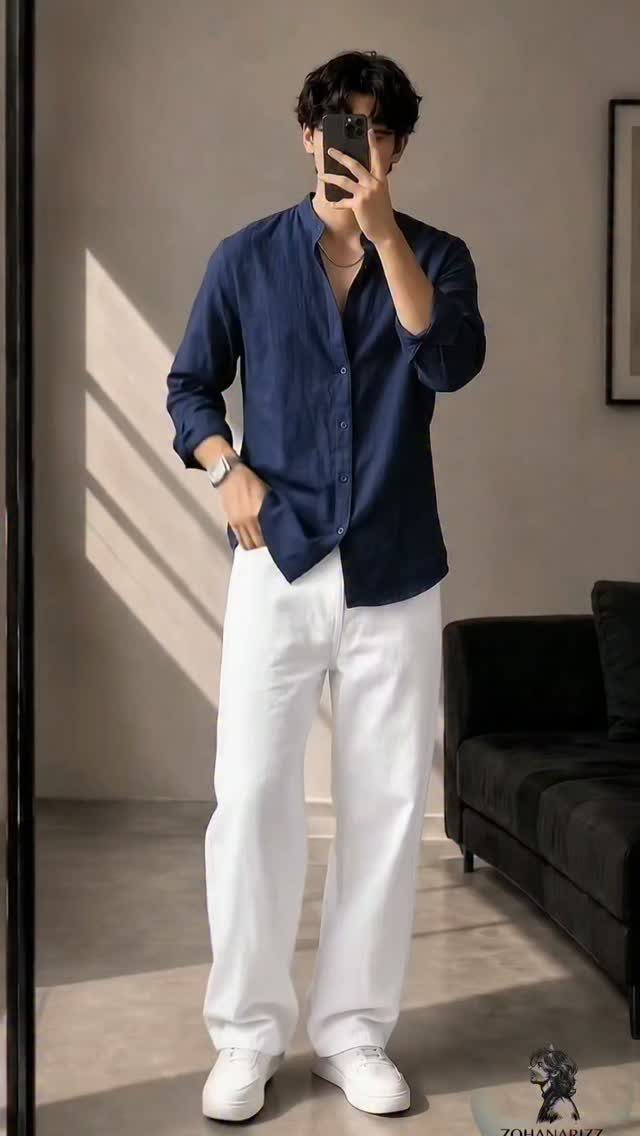
Navy over white is proof that muted colors need no help from anything louder. 3 shades, here navy, white and a white sneaker, are enough for an outfit that looks planned.
Build around two or three neutrals and repeat them: navy, white, black, beige, grey. Any top then works with any bottom, so getting dressed takes a minute.
Wear the shirt open over a plain tee if you want the look less buttoned up. Light trousers show dirt, so expect more laundry.
5. Chinos
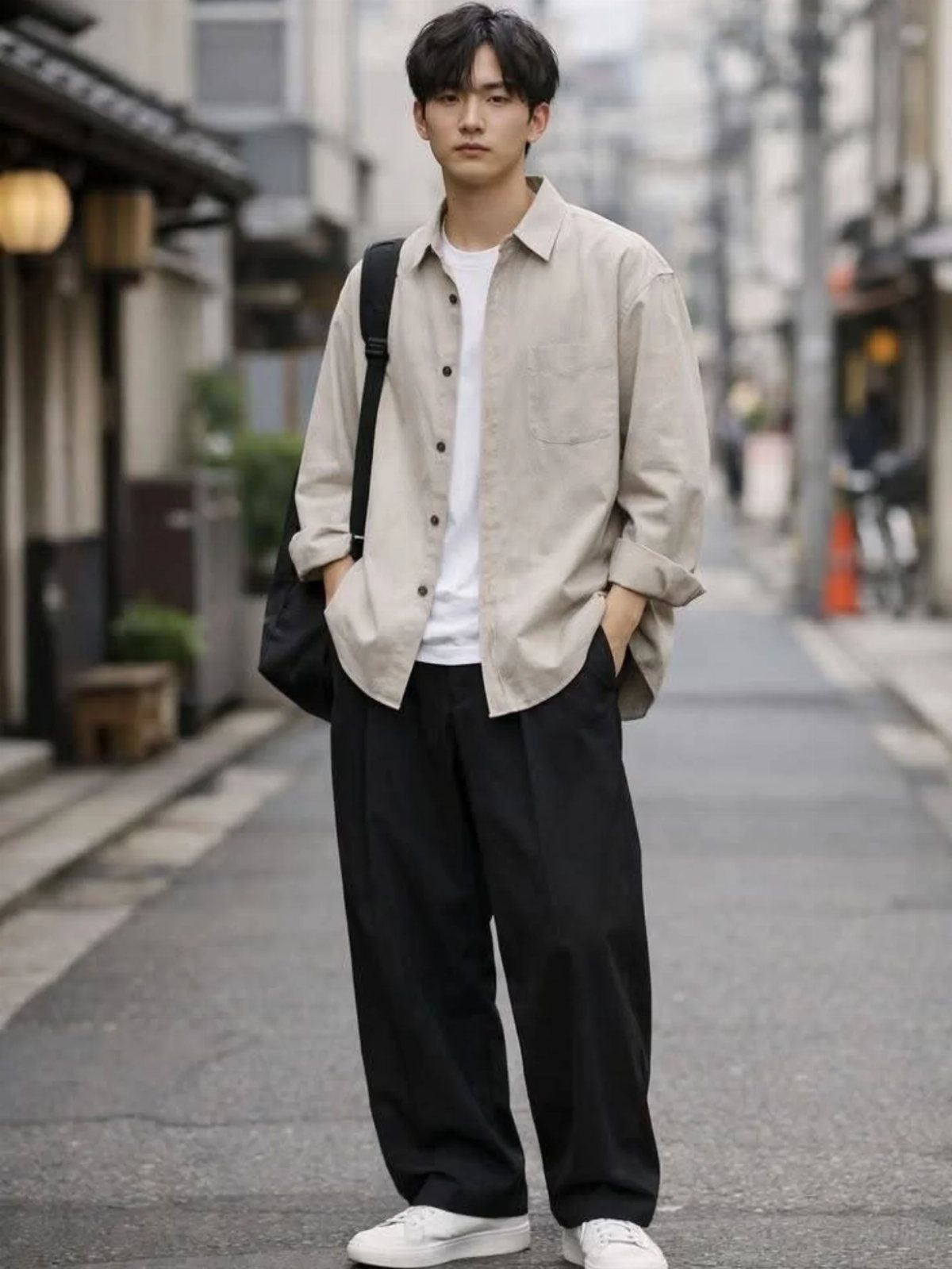
Pressed chinos move a casual outfit up a notch with no more effort than jeans take. A wide-leg cut in black, as here, looks sharper than the usual khaki and hides wear better.
I would choose a dark, plain pair first, then add stone or beige later.
Layer an open beige shirt over a white tee and finish with white sneakers, and the outfit holds together on a city street or in an office.
Hem them so the fabric just grazes the shoe, with no stacking at the ankle.
6. Polos
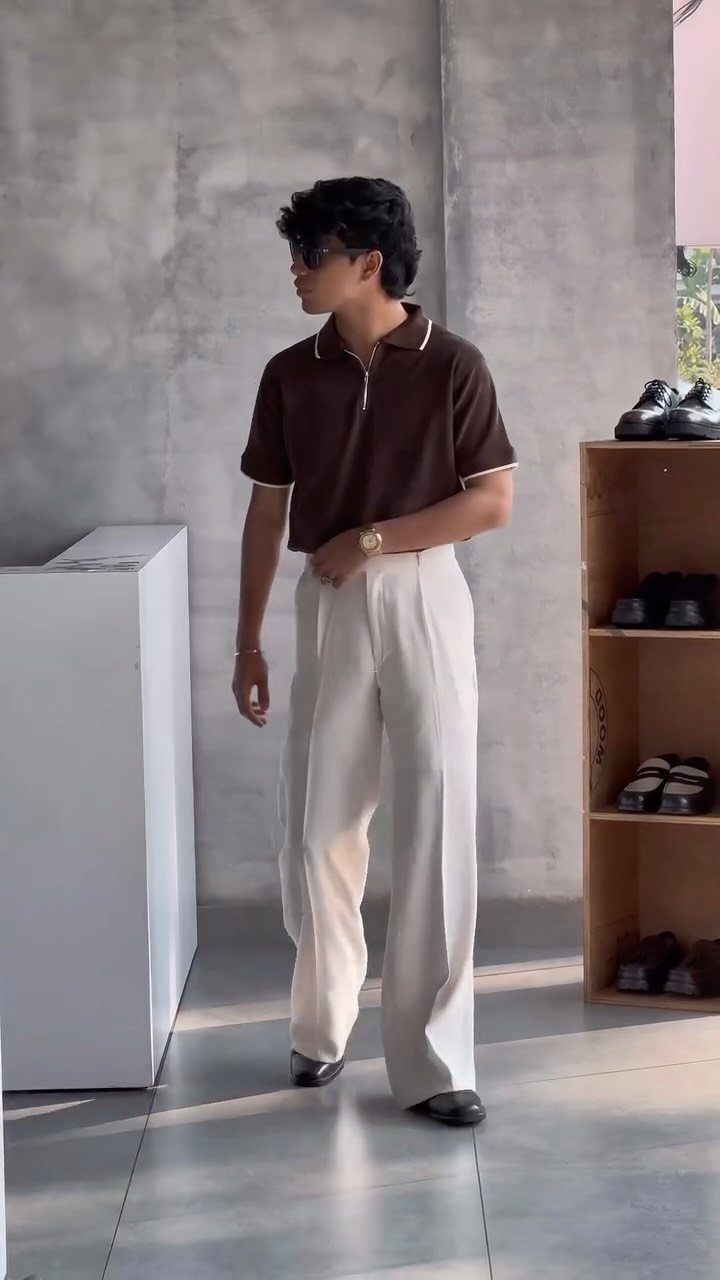
A zippered polo in a rich brown sits between a tee and a button-up, and it asks very little of you. The zip also gives a cleaner neckline than a standard placket.
Tuck it into high-waisted cream trousers, as here, and the proportions look deliberate. Choose a knit that holds its shape and a collar that lies flat, since a limp collar ruins the look.
Dark shoes ground the lighter trousers. I would pick brown or navy before white, because both go with more of what you own.
7. Charcoal Grey Suit
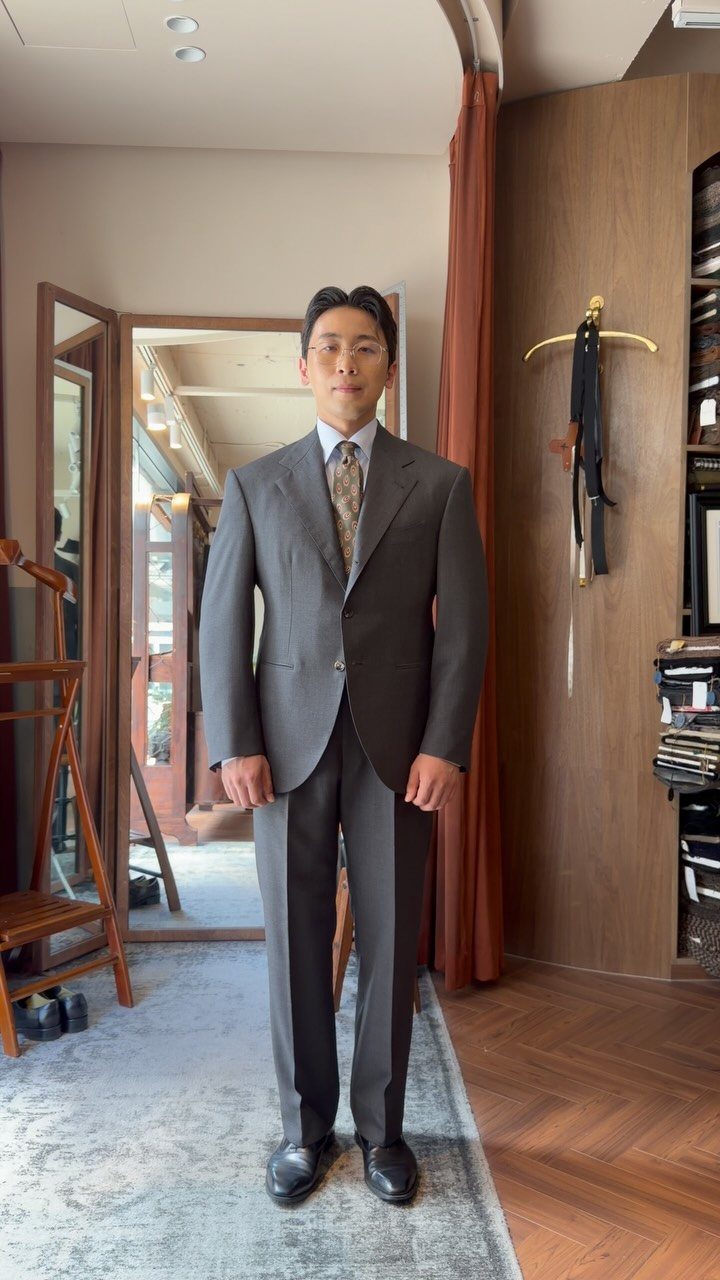
Charcoal sits between black and mid grey, which is why one suit covers a job interview, a wedding and a funeral.
It pairs with a white or light blue shirt, as here, and with nearly any tie, so the wardrobe around it can stay small.
I would buy this before navy or black. Black reads stiff in daylight, while charcoal looks relaxed in any light.
Spend on the fit: shoulders that sit flat and sleeves that show a little shirt cuff matter more than the label. Black leather shoes finish it.
8. Monochrome Outfits
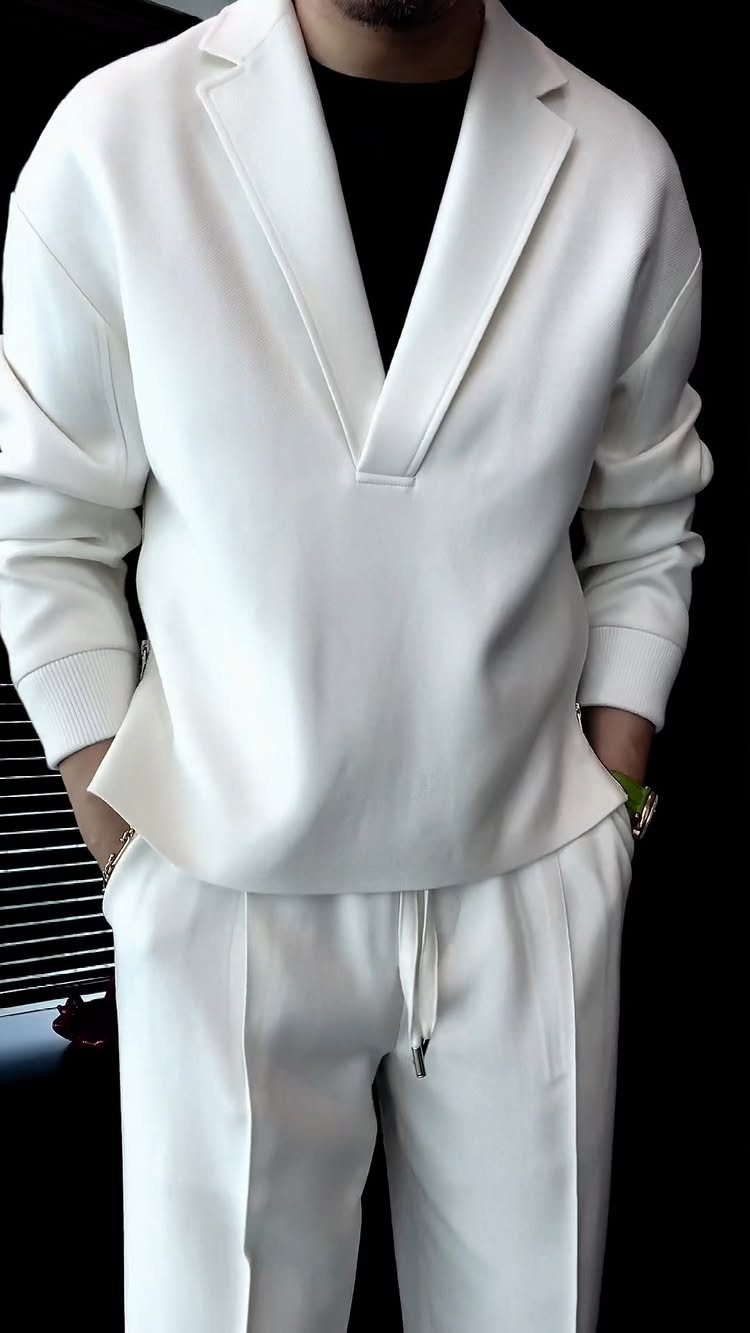
Head to toe in white makes getting dressed a one-step decision, and a structured V-neck over matching trousers looks more deliberate than a loose tee would. A black undershirt adds a dark edge at the neckline without breaking the palette.
Keep the 2 pieces close in shade, since white next to cream looks like a mistake.
Expect more laundry, because white marks easily. Black or navy in the same head-to-toe formula is the forgiving version.
9. Minimalist Athleisure Loungewear
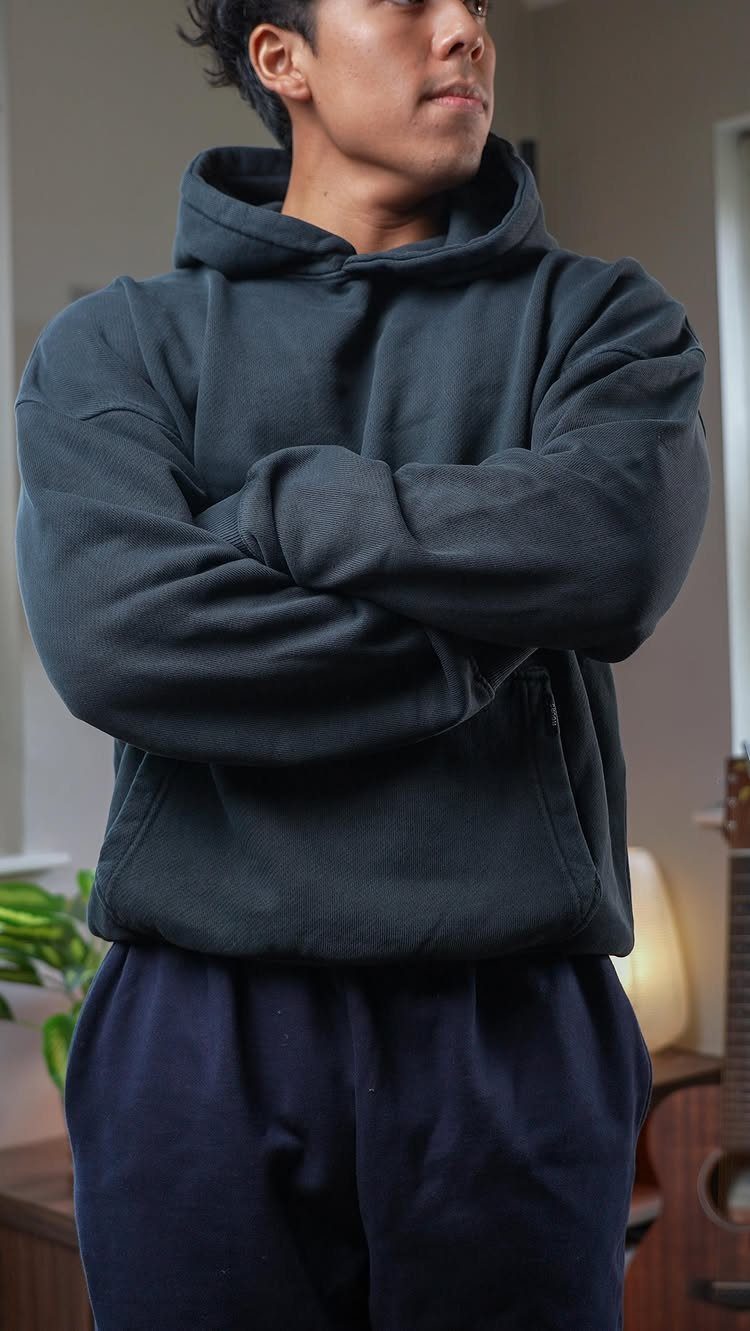
Loungewear can look planned. A textured charcoal hoodie with navy sweatpants uses two dark, quiet colors, so nothing fights for attention at home or on a coffee run.
Choose a hoodie with a little oversize in the body and a plain face with no logo or print. Sweatpants should be a solid color and taper slightly at the ankle, not pool over your shoes.
I like texture here because it keeps dark gray from looking flat. Both pieces mix with everything else you own in those shades.
10. Minimalist Bomber Jackets
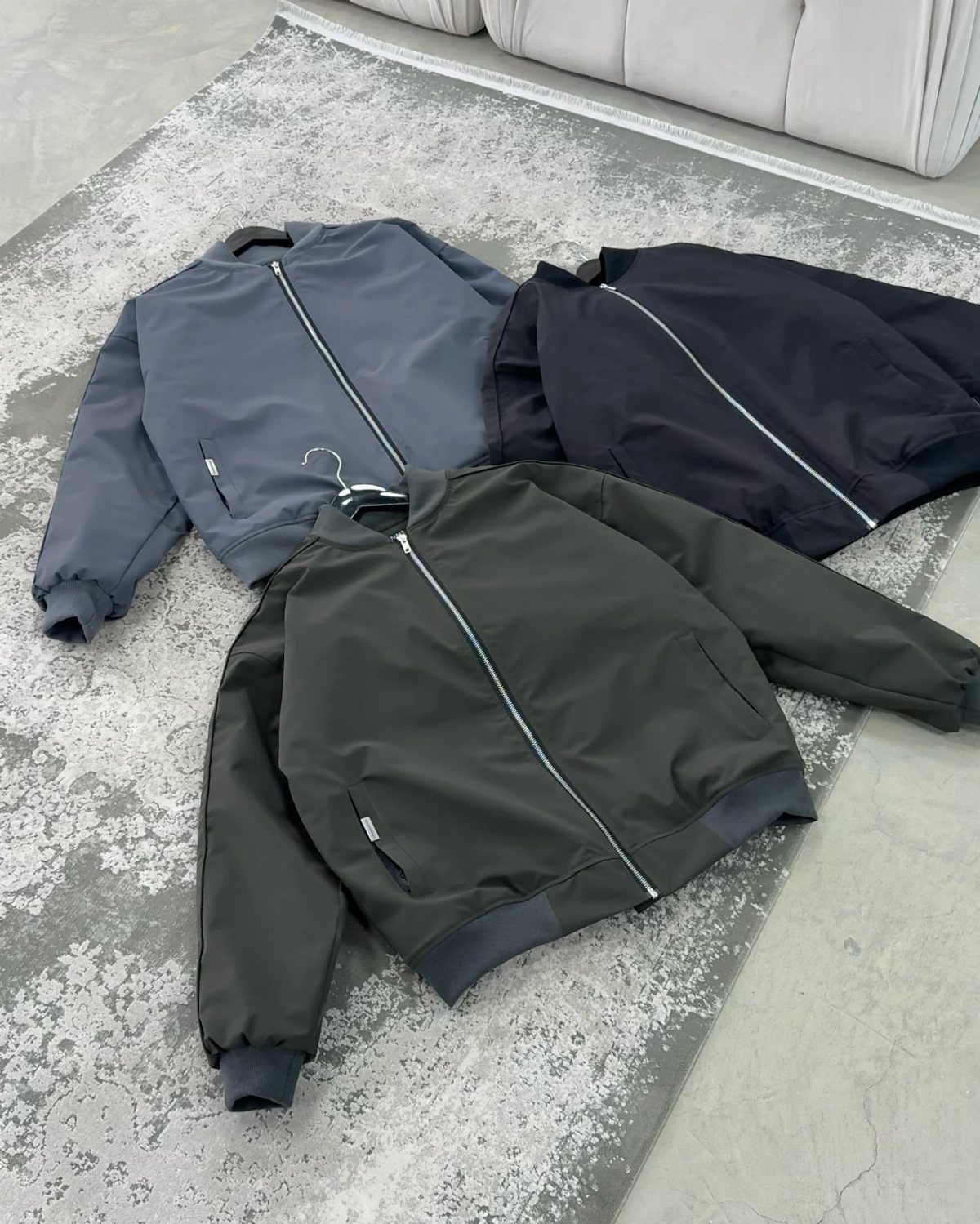
3 solid bombers in navy, black and olive cover most of what a man needs from a light jacket.
Choose a plain zip front with no patches, stripes or loud lining, so it works over a tee, a knit or a shirt.
If you buy only one, I would take navy or black, since both go with gray, white and denim without thought.
Olive is the second pick, and it suits beige and brown well. The fit should sit at the waist and skim the body, not balloon.
11. White Shirt and Tailored Trousers
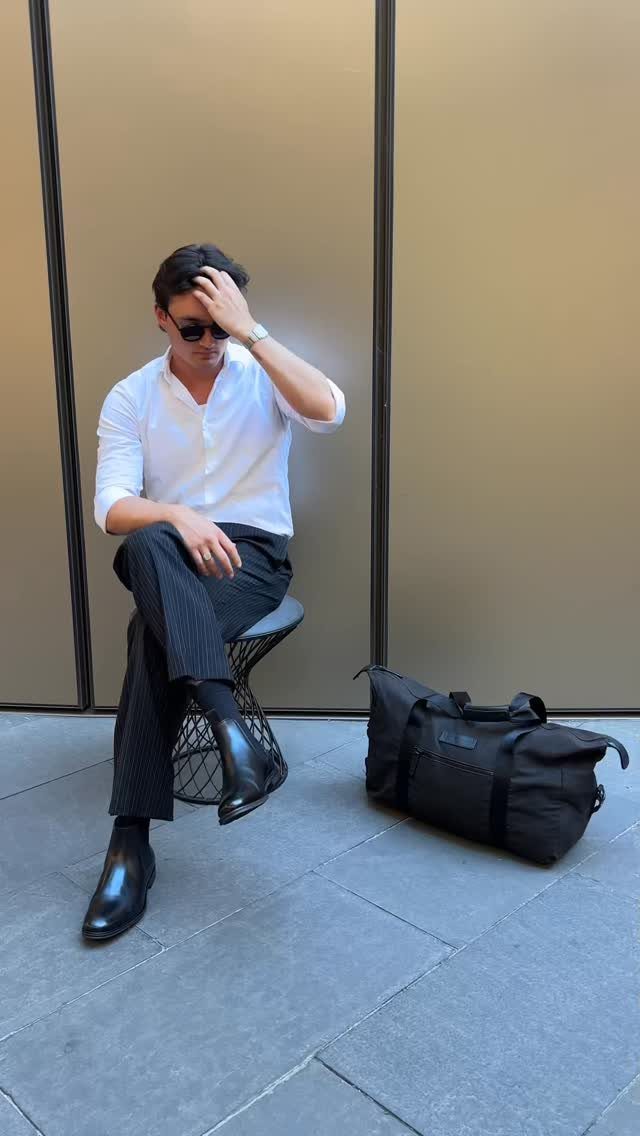
A crisp white button-down with dark tailored trousers is about as simple as dressing gets, and it works at a desk or a dinner. Subtle stripes in the trousers add interest without needing a patterned shirt.
Fit decides everything here.
The shirt should lie smooth across the shoulders, and the trousers should break cleanly over the shoe with no pooling. Black leather boots keep it sharp and a bit edgier than dress shoes.
Iron the shirt, because wrinkles stand out on white. Add sunglasses and you’re finished.
12. White Henley with Pleated Trousers
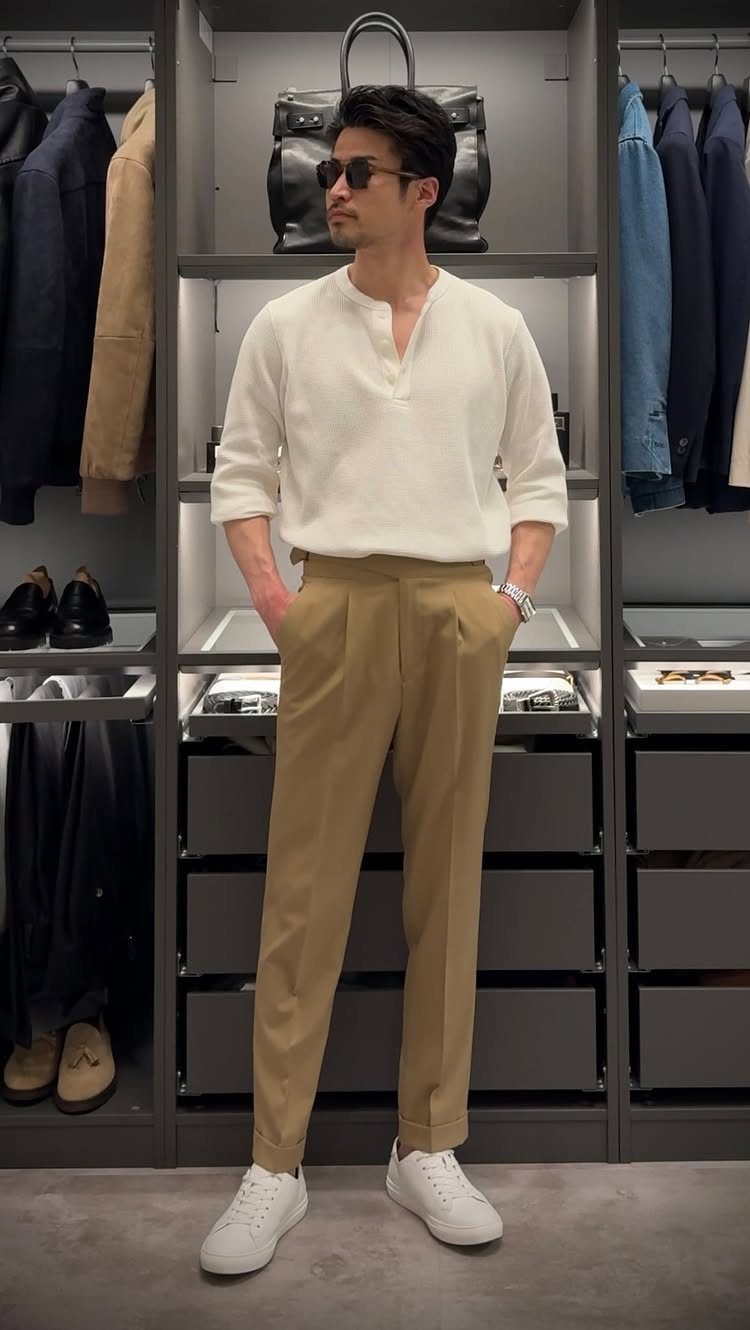
A long-sleeve white henley gives you a shirt with no collar and no tie, which makes it easy to wear with tan pleated trousers.
Pleats add room through the hip and thigh, so the trousers sit comfortably and still look tailored.
Choose a henley in a thicker cotton that doesn’t go see-through, and keep the placket to 2 or 3 buttons. White sneakers keep the outfit light.
I would tuck it in loosely so the pleats show. Tan marks easily, so brush off dust before you wear them.
Benefits of Minimalism
Fewer clothes means fewer decisions. When every shirt works with every pair of pants, mornings get quieter and you stop standing at the closet wondering what goes with what.
The savings come from buying less often. A loud, trend-chasing piece usually looks tired within a few weeks, but a plain navy knit or a gray wool trouser keeps working with everything else you own.
Buying with a plan also cuts out the emotional purchases that online trends push.
A smaller closet is easier to keep in order. With fewer items you can see what you own, plan outfits quickly and notice gaps before you buy anything.
Minimalism does not mean giving up personality. Layering, texture and smart combinations still leave room to look like yourself.
If budget is the worry, affordable basics under $100 are a reasonable place to start. Buy them with a purpose, and the closet gets smaller while the outfits get better.
But minimalism is more than just a style aesthetic or a passing phase—it’s a lifestyle choice that prioritizes quality over quantity.
Frequently Asked Questions
What does a minimalist wear?
A minimalist wears plain, solid pieces in a few neutral colors that all mix with each other: navy, white, black, beige and gray. Think white leather sneakers, mid-blue denim, a knit quarter-zip, chinos and a navy or black bomber.
What is the 3-3-3 rule for men?
The 3-3-3 rule is usually described as picking 3 tops, 3 bottoms, and 3 pairs of shoes, then mixing them into outfits. It forces you to pick pieces that work together instead of buying one-offs.
I like the idea, but 33 pieces is a rough guide; what counts is that each item pairs with most of the others, so a 30-piece closet that mixes well beats a 33-piece one that doesn’t.
What types of styles are there for men?
Within a minimalist wardrobe, the main styles are casual (denim, sneakers, polos, bombers), smart casual (chinos, white shirts with tailored trousers, henleys with pleated pants), formal (a charcoal suit), monochrome (head to toe in one shade) and loungewear.
All of them lean on the same short palette and plain, logo-free pieces. That is what keeps them easy to combine.
Is Mark Zuckerberg a minimalist?
Yes, he is known for a minimalist wardrobe, built on a small set of simple, repeated clothes.
It is a good example of the main benefit: fewer choices each morning. You can copy the approach without copying the exact outfit, by picking a few neutral pieces that all go together.





